canhumansbeoptimised @optimizehuman
A public notebook on discipline, practice, and long-term human optimization. canhumansbeoptimised.com Australia Joined December 2025-
Tweets64
-
Followers6
-
Following39
-
Likes5
@QuoteJung Most work isn’t meant to be noticed. If it holds, it doesn’t need noise. Recognition is rare because understanding is rare.
@joeroganhq That would be an awesome job for the Boring Company... tunneling under the Giza pyramids? 🚀@elonmusk
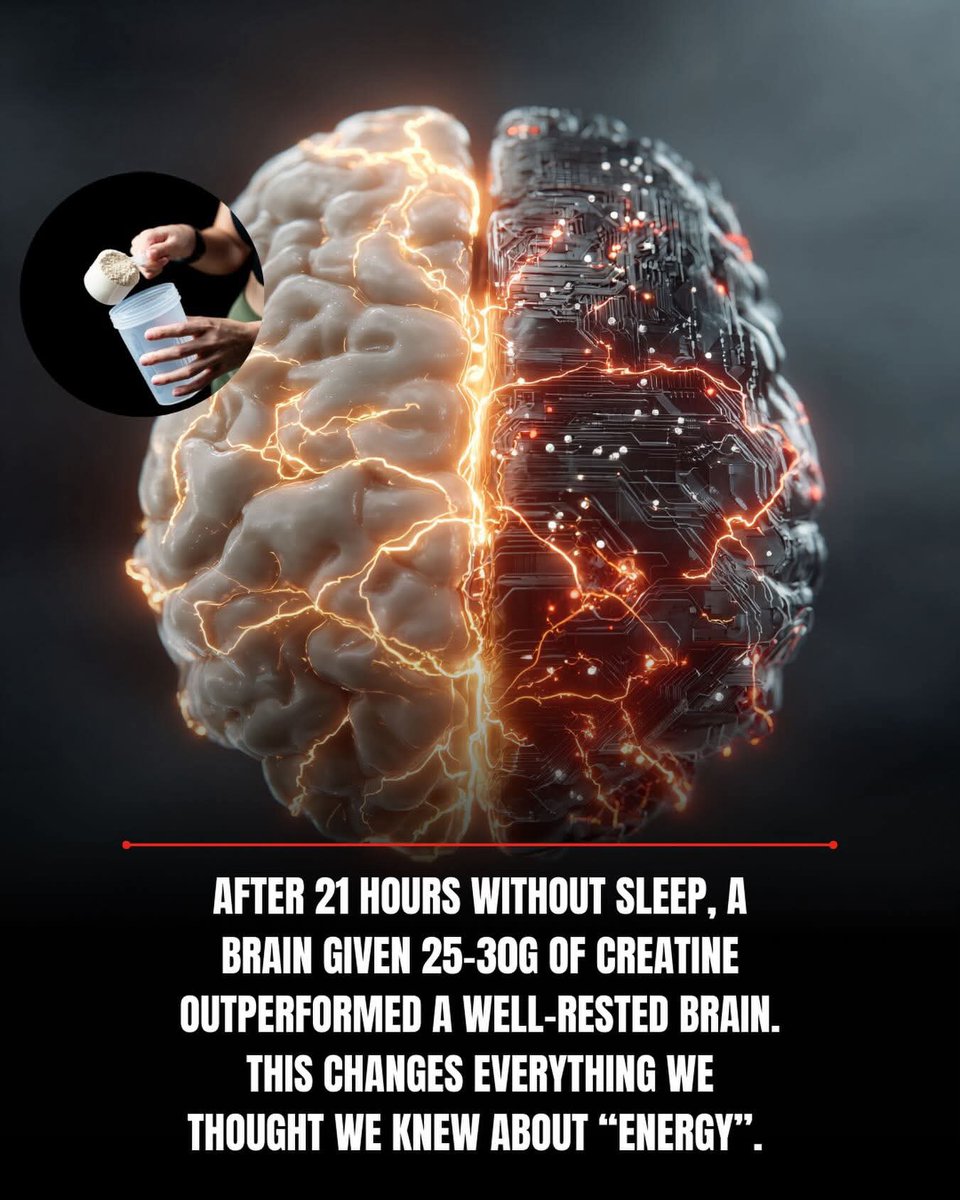
🧠 A 2024 study found that 25-30g of creatine (roughly 0.35g/kg body weight) counteracts 21 (even up to 36) hours of sleep deprivation, boosting cognitive processing speed and memory by acting as an emergency brain energy buffer. This challenges the assumption that sleep is the only way to recover brain energy, suggesting metabolic supplementation can directly replenish ATP and override fatigue-related cognitive decline. 🗂️Mechanisms of Action: 📑Rapid ATP Regeneration: When the brain is sleep-deprived, it runs out of ATP (Adenosine Triphosphate - the primary energy currency needed for neurons to function). Creatine donations of phosphate groups regenerate ATP, which sustains neuronal function and improves cognitive speed and working memory, even when the brain is under severe metabolic stress. 📑Rapid Brain Uptake: While it was previously thought that creatine takes weeks to affect the brain, new research shows that single, high-dose of creatine can significantly increase brain creatine levels within hours. 📑Mitigating Metabolic Dysfunction: Studies shows that a single 25-30g dose can completely negate cognitive deficits, such as slowed reaction time and reduced executive function, caused by 21-36 hours of sleep deprivation. 📑Buffer for Mental Fatigue: Creatine acts as an “energy safety net”, supporting brain energy metabolism and reducing the mental fog, poor focus, and reduced processing speed that accompany fatigue. 📑Results: “Better than rested performance”. The research indicates that this high-dose strategy can not only reverse the negative effects of poor sleep, but in some cases, make individuals perform better than they would have without the supplement and with proper sleep, including improved memory, faster processing and better focus. PMID: 38418482
@dr_ericberg Removing urgency. Doing fewer things. At a steady pace. Whether I felt like it or not. Most improvements came from what I stopped reacting to, not what I added.
@QuoteJung Epictetus said we have two ears and one mouth for a reason. Judgment is fast. Understanding takes effort.

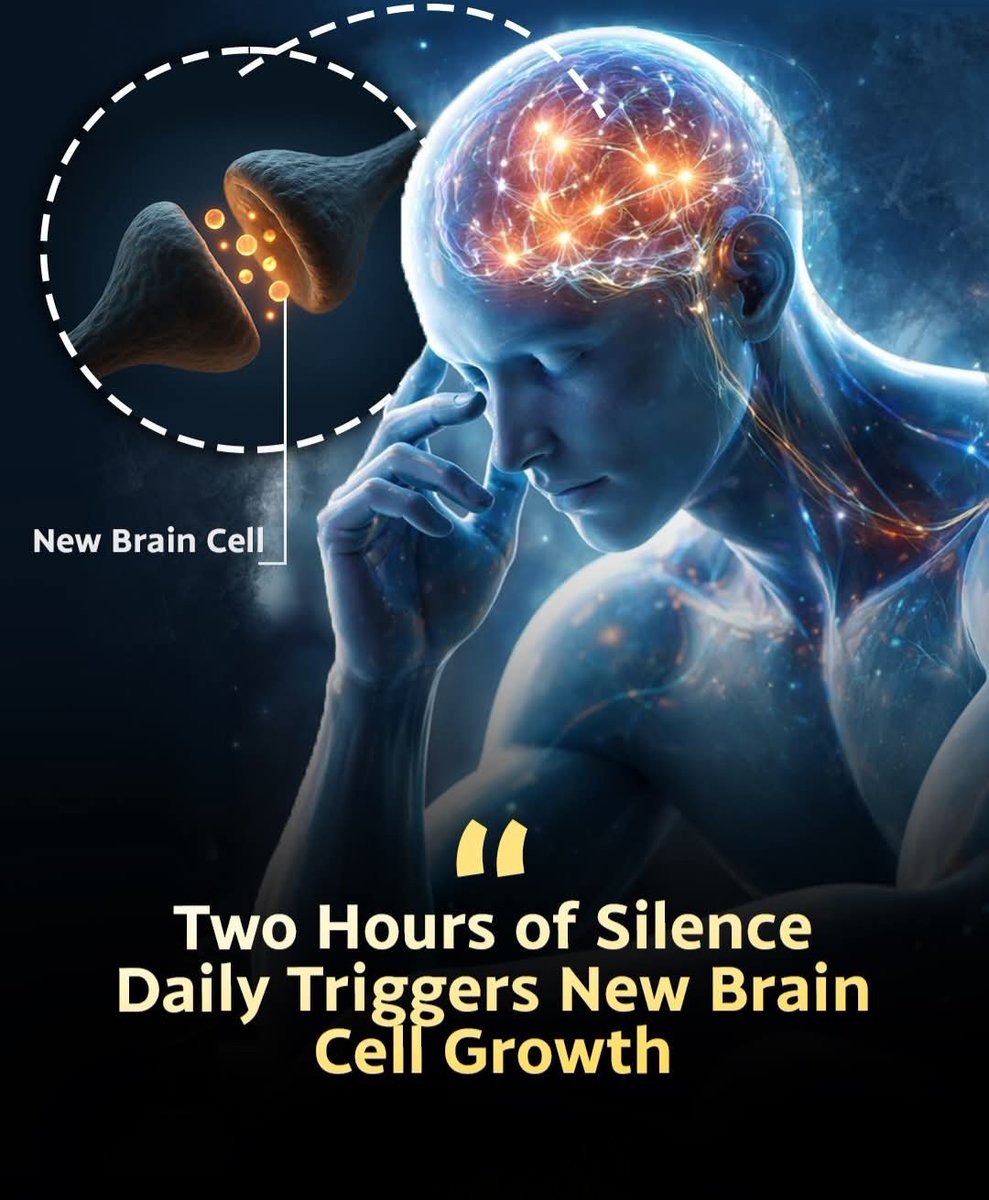
🧠 What Two Hours of Silence Can Do to Your Brain Will Shock You… You won’t believe this—but the quietest moments of your day could be secretly building a stronger, sharper brain. Scientists gave mice just two hours of silence every day, and something incredible happened: their memory center—the hippocampus—started growing new brain cells. Not music. Not white noise. Just silence. After a week, the mice in silence had more lasting brain growth than any that listened to music or other sounds. Imagine what this could mean if humans took even a few minutes every day to truly unplug. Sometimes, the most powerful “soundtrack” isn’t a song at all. It’s the stillness you’ve been ignoring. The moments when the world goes quiet might be doing more for your brain than you ever thought possible. 🔥 Could the secret to a sharper mind really be… nothing at all?
@dr_ericberg Quiet movement or deliberate stillness. A walk without audio. A few minutes without input.
@dr_ericberg 100%. Protein keeps blood sugar stable, no spike and crash like you get with carbs alone. Makes a huge difference for sustained energy.
@davidasinclair This is huge for aging research. Biomarker endpoints mean we can finally iterate quickly on longevity interventions instead of waiting 50 years for results. The science is accelerating.
@QuoteJung Imagination is not escape from reality. It is rehearsal for it. Without play, thought hardens too early, and nothing new can take shape.
@Rainmaker1973 The number matters less than the insight. Perception isn’t five inputs added together. It’s a continuous negotiation between body, brain, and environment. We don’t experience the world as it is, but as a coordinated construction. And this is amazing.

Think you only have five senses? This study says you may have 33. We all grew up believing humans have just five senses: sight, hearing, smell, taste, and touch. But modern neuroscience reveals a much richer reality, suggesting that we actually possess between 22 and 33 interacting senses that constantly collaborate to shape our perception of the world. Beyond the classic five, we rely on proprioception to know the position of our limbs and body in space, the vestibular system to maintain balance and orientation, and interoception to monitor internal states such as hunger, thirst, heartbeat, or the urge to breathe. We also experience a sense of agency—the feeling that we are the ones initiating our own actions—and a sense of body ownership, the conviction that our limbs and body belong to us. Both of these can be disrupted after strokes or in certain neurological conditions. Even the traditional senses are more complex than they appear. Touch actually includes separate channels for pain, temperature, itch, pressure, and vibration, while taste is largely a composite experience created by combining true taste (sweet, salty, sour, bitter, umami) with smell and touch to produce what we perceive as flavor. Because our senses are so deeply interconnected, input from one can profoundly influence another. For example, the scent of shampoo can make hair feel silkier, and added aromas in low-fat yogurt can trick the brain into perceiving it as creamier without any extra fat. In noisy airplane cabins, background engine noise suppresses sweet, salty, and sour tastes while enhancing savory umami flavors, which is why tomato juice and other umami-rich foods often taste surprisingly good at altitude. During takeoff or climb, the vestibular system signals that the body is tilting backward, causing the cabin to visually appear slanted even though it remains level. These cross-sensory illusions and interactions—explored in cutting-edge research and interactive exhibits like “Senses Unwrapped”—demonstrate that human perception is not a simple sum of five independent channels, but a rich, dynamic negotiation among dozens of senses working together. [Smith, B. (2026). You Don’t Have Just Five Senses – New Research Suggests Humans May Have up to 33. SciTechDaily (January 18, 2026)]

After writing about silence, I noticed something simple. Silence does not announce itself. It does not arrive with fanfare, insight, or sudden relief. Most days, it passes almost unnoticed. A few minutes without input. A pause before replying. A decision made with one notch less urgency. Nothing dramatic changes on the surface. No fireworks. No epiphany montage. But something subtle does shift. The mind stops performing for an audience of one. Attention stops splintering in a dozen directions. What remains feels ordinary… yet strangely steadier. Silence does not “improve” life in the productivity-hack sense. It does not add features or optimize output. It quietly restores proportion. The small becomes small again. The urgent reveals itself as merely loud. The important remembers its own weight. And that—over months, not moments—may be enough. What small silences have you let in lately? Even five minutes count.
@Rainmaker1973 An amazing signal. Rare. Most compounds never touch aging pathways at all. This one does at the cellular and organism level. Still worth paying attention to.
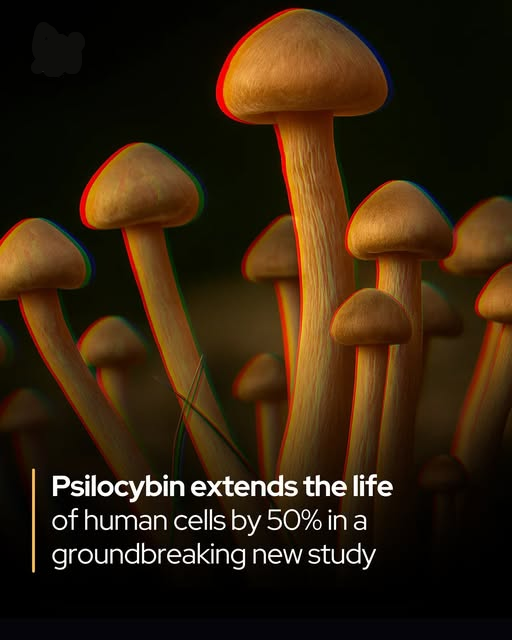
Psilocybin made human cells live 50% longer. A new study has uncovered surprising anti-aging potential in psilocin—the active metabolite produced when the body breaks down psilocybin, the psychoactive compound found in magic mushrooms. In laboratory experiments, researchers exposed two human cell lines (skin fibroblasts and fetal lung fibroblasts) to a 100 μM concentration of psilocin. The results were striking: lung cells took 57% longer to reach replicative senescence (the point at which cells permanently stop dividing and accumulate damage), while skin fibroblasts extended their replicative lifespan by 51%. These findings suggest psilocin may slow fundamental cellular aging processes, possibly by lowering oxidative stress, enhancing DNA-repair pathways, supporting mitochondrial health, or dampening chronic inflammation—mechanisms that overlap with those targeted by leading experimental longevity drugs. The benefits extended beyond cell culture. In aged female mice (19 months old at the start, equivalent to approximately 60–65 human years), a single monthly dose of psilocybin dramatically improved outcomes. After 10 months of treatment, 80% of the psilocybin-treated animals remained alive, compared with only 50% of untreated controls. Treated mice also displayed markedly fewer visible signs of aging, including reduced fur loss and graying. This research marks the first direct demonstration that psilocybin/psilocin can influence biological aging itself, rather than solely producing psychological effects. The authors emphasize that the study used relatively conservative dosing and are now advocating for follow-up work with higher or more frequent administration, detailed assessments of immune, metabolic, and cognitive function, and investigations into whether the extended lifespan corresponds to genuine improvements in healthspan and quality of life. ["Psilocybin treatment extends cellular lifespan and improves survival of aged mice." npj Aging, 2025]
I believe that Camus is not calling for noise or defiance for its own sake. He is pointing to an inner freedom that cannot be granted or taken away. When a person governs their values, judgments, and actions, they no longer move in step with an unfree world. That quiet refusal is the rebellion.
@DeepPsycho_HQ Solitude isn’t about being above others. It’s about learning to stand without them.

Precision strike👊 @Flames_nn
95 Followers 451 Following I enjoy challenging myself in shooting 🎯. I love beautiful flowers 🌸. And I love tasting delicious desserts with friends 🍰
History Content @HistContent
54K Followers 3K Following Ancient history for people who zoom in. Artifacts, ruins, inscriptions, maps, and the debates behind them.
Shining Science @ShiningScience
131K Followers 22K Following Sky above, science within — your guide to the universe.
TuminiBall.FM @Tumini_Ball
7K Followers 2K Following ⚽ @footballmanager Addict 🇮🇩👷 Manager of @psssleman @idfmleague ♟️#4 FM23 🌏 @FMRankings 🏆@FMSuperLeague S5 🧠Man Behind @FMCiki #SegaSeaAmbassador FM
د. محمد ابوع... @abu_orf
4K Followers 3K Following Mohammad Abu-Orf, PhD in Environmental Engineering. Proud Palestinian. Grew up in the refugee camps of Khan Younis in mighty Gaza. 🔻🇵🇸

Simply Bitcoin @SimplyBitcoin
153K Followers 636 Following The #1 most-watched Bitcoin news and media channel — keeping you up to date with the peaceful Bitcoin revolution ⚡ Powered by @BitcoinWell
History Content @HistContent
54K Followers 3K Following Ancient history for people who zoom in. Artifacts, ruins, inscriptions, maps, and the debates behind them.
Jay Anderson @TheProjectUnity
334K Followers 169 Following Just trying to make sense of things... Subscribe for Early-Access to Interviews & Docs! https://t.co/chQAIfXHrd https://t.co/Rz8rPOKSql
Dr. Eric Berg DC @dr_ericberg
298K Followers 38 Following Dr. Eric Berg D.C. — not a medical doctor. Educational content only; not medical advice. Consult your physician for diagnosis or treatment.

Paul Saladino, MD @paulsaladinomd
444K Followers 110 Following Founder of @heartandsoilHQ and @eatlineage. Chief Radical Officer (CRO) of #theremembering. Lover of wild places. Eater of a #animalbased diet
Carnivore Aurelius ©... @AlpacaAurelius
901K Followers 658 Following You will own cows, eat steak, get sunlight and you will be happy Link below for zero glyphosate collagen and coffee. Not medical advice.
Supplement Hacks @SupplementHacks
218 Followers 53 Following Exploring supplements' health benefits for all types of people. I'm a 56 year old man who eats a regular diet and supplements/vitamins have really helped me!
David Sinclair @davidasinclair
616K Followers 1K Following Professor researching why we age & how to reverse it. Author & host of Lifespan. Mission: Extend healthy life for all. Views are entirely his own. @joinlifespan
Pavel Macek @pavelmacek
6K Followers 262 Following StrongFirst Master Certified Instructor • Strength • Combatives• Stoicism • Meditation • Pu-Erh Tea • Cats ⬇️ Free Video & PDF: Hardstyle Dumbbell
Seneca the Younger @SenecaQuote
142K Followers 1 Following Stoic teachings from Seneca the Younger. Endure with clarity. Live with reason. Fan-curated page. Supporting @samaritans.
Sigmund Freud ✍️ @SigmundFrrreud
87K Followers 5 Following Quotes by Sigmund Freud | Neurologist | Philosopher | Founder of Psychoanalysis | Subscribe: https://t.co/MQfeqA2g24
Leo Tolstoy Literatur... @LeoTollstoy
114K Followers 2 Following Literature from the works of Leo Tolstoy. Novelist and philosopher of the human condition.
Niccolò Machiavelli ... @NiccoloDaily
155K Followers 8 Following Niccolò Machiavelli, Italian diplomat, philosopher, historian, known for his influential quotes and writings. Machiavelli Fan & The Prince reader.
Fyodor Dostoevsky Col... @Dostoevskyquot
264K Followers 26 Following Fyodor Dostoevsky quotes, memes & insights. Sharing his mind. Supporting @philosophyfound. Philosophy geek. DM for credits, removal or cool Dostoevsky content.
Arthur Schopenhauer @SchopenhauerNow
145K Followers 2 Following Everything Schopenhauer. Quotes, memes, and dark, brutally honest philosophy. Supporting @RIFWEB for relief where it matters. Fan-run page. Not affiliated.
Voltaire @VoltaireQuote
97K Followers 7 Following Challenging minds with the wit and wisdom of Voltaire. Enlightenment ideas, bold philosophy, and timeless insights for modern thinkers. #1 fan of Voltaire.
Carl Jung Archive @QuoteJung
192K Followers 19 Following Exploring the ideas of Carl G. Jung. Fanpage sharing insights on depth psychology, archetypes, and the unconscious. DM for credits, removal or submission.
Søren Kierkegaard Cl... @Kierkegaarddd
113K Followers 6 Following Søren Kierkegaard Club. Join for the quotes and memes, stay for the existential dread. Fan page. Supporting @roomtoread. DM for credits or removal.
Friedrich Nietzsche N... @QuoteNietzsche
221K Followers 3 Following Everything Friedrich Nietzsche. Ideas and reflections to think deeper and live sharper. Fan Project. Not affiliated with any official estate or organization.
Longevity Code @LongevityCode_
5K Followers 0 Following The Science of Better Living. Upgrade your Healthspan. Longevity for High Performers
Bells of Steel @bellsofsteel
825 Followers 163 Following Innovative fitness equipment for home gym enthusiasts. 💪🏽EST 2010 🇺🇸Shipping from Indianapolis 🇨🇦 Shipping from Calgary + Toronto #BELLSOFSTEEL
Squat University @SquatUniversity
495K Followers 6K Following Doctor Aaron Horschig’s guide to help athletes move better, eliminate pain, & optimize performance.🏋🏼♀️ New Book ‘Rebuilding Milo’👇🏼
0xIv4n @0xiv4n
914 Followers 386 Following InfoSec 💻 | SIGINT 📡 | Calisthenics & Healthy Living | Stoicism & Philosophy | Discipline maxi | Cyber Noir | ₿
The Veiled Sage @The_Veiled_Sage
900 Followers 1K Following The Veiled Sage: Ancient wisdom from Torah, Emerald Tablets, Stoicism & more. Master mind, break chains, earn freedom. Lantern lit for the Fire Chosen.
Chance Gibbons | Mode... @mindsetofstoics
200K Followers 170 Following Every man faces 13 trials. The last one is himself. ⚔️ Mind • Body • Soul 🏛️ Pantheon
BasedBiohacker @BasedBiohacker
48K Followers 236 Following cognitive enhancement biologist. performance maximalist. longevity strategic. focused on RESULTS. my full stacks, vendors & everything 👇
Richard Feynman Quote... @feynmanbot
3K Followers 0 Following Quotes by Richard Feynman | American theoretical physicist.
Jean-Paul Sartre Quot... @SartreQuote
10K Followers 4 Following Quotes by Jean-Paul Sartre | Philosopher & Novelist | “If you're lonely when you're alone, you're in bad company.”
Kant's Moral Philosop... @KantBooks
2K Followers 0 Following Quotes by Immanuel Kant | Kantian Philosophy | “We are not rich by what we possess but by what we can do without.”
James Clear @JamesClear
1.3M Followers 0 Following Author of the #1 NYT bestseller Atomic Habits (https://t.co/aWrO9DWkH5). I write about building good habits. Over 3 million people read my 3-2-1 newsletter.
Ryan Holiday @RyanHoliday
898K Followers 796 Following NYT Bestselling Author Of The Obstacle Is The Way & more @DailyStoic @DailyDadEmail Sign Up For My Daily Email Here ⬇️
David Perell @david_perell
477K Followers 830 Following "The Writing Guy" | Christian | Host: How I Write Podcast | I tweet about writing, beauty, and architecture | My writing: https://t.co/SOE9HtxXdi
Jason Zweig @jasonzweigwsj
234K Followers 2K Following Investing columnist for @WSJ. Editor, Benjamin Graham's *The Intelligent Investor.* Author, *Your Money and Your Brain* and *The Devil's Financial Dictionary.*
Morgan Housel @morganhousel
668K Followers 840 Following Author of a few books, @collabfund, director at Markel Group. Nice to see you.
StrongFirst @BeStrongFirst
24K Followers 108 Following The school of strength, led by Pavel Tsatsouline. Barbell, Kettlebell, Bodyweight. StrongFirst.
Donald J. Robertson @DonJRobertson
14K Followers 1K Following Author of "How to Think Like a Roman Emperor", and "How to Think Like Socrates". President of the Plato's Academy Centre @platoacademycen in Athens.
You might like