Amy Avakian, MD @awkdocradi
Resident Physician at Southern Hills Hospital and Medical Center | Founder of Radiology AI and Deep Learning Collective https://t.co/FkLcpBvDmh linkedin.com/in/amy-avakian… Joined March 2025-
Tweets18
-
Followers20
-
Following304
-
Likes9
I’m thrilled to share that I’ll be serving as Guest Editor for an upcoming Special Issue on ConductScience.org titled: “Advancing Radiology Through Data Standards and AI Integration.” This project means a lot to me. It bridges everything I care about in radiology: open data, clinical applications, human-centered innovation, and patient-radiologist connection✨ Supported by the NIH and NSF, ConductScience is reimagining what publishing can look like, where every article connects directly to its data, making radiology more FAIR (Findable, Accessible, Interoperable, and Reusable) by design. We’re calling for innovative work in AI, machine learning, and data interoperability that makes radiology more connected, transparent, and clinically actionable with open-access fees fully waived for this issue. If you’re working on something that pushes radiology forward, I’d love to feature your work or collaborate. 📩 [email protected] ConductScience.org #Radiology #AI #MedicalImaging #Informatics #FAIRData #OpenAccess #MachineLearning #DataStandards #AcademicPublishing
8/ Want to dive deeper into this study’s methodology and detailed results? Read the full paper here: stanfordmlgroup.github.io/projects/medag…
OHBM Australia invites you to join our upcoming webinar: Artificial Intelligence in Neuroimaging: Methods, Opportunities, and Challenges Date: Thursday, 30th October, 2025 Time: 4:00-5:00 PM AEST Click here to register: unimelb.zoom.us/webinar/regist…
Grateful to have been a co-keynote speaker at the Society of Abdominal Radiology’s Medical Student Outreach Seminar! Always excited to share how AI is transforming radiology and to see future radiologists so engaged in tech-driven medicine. @shuhanhemd #Radiology #SAR

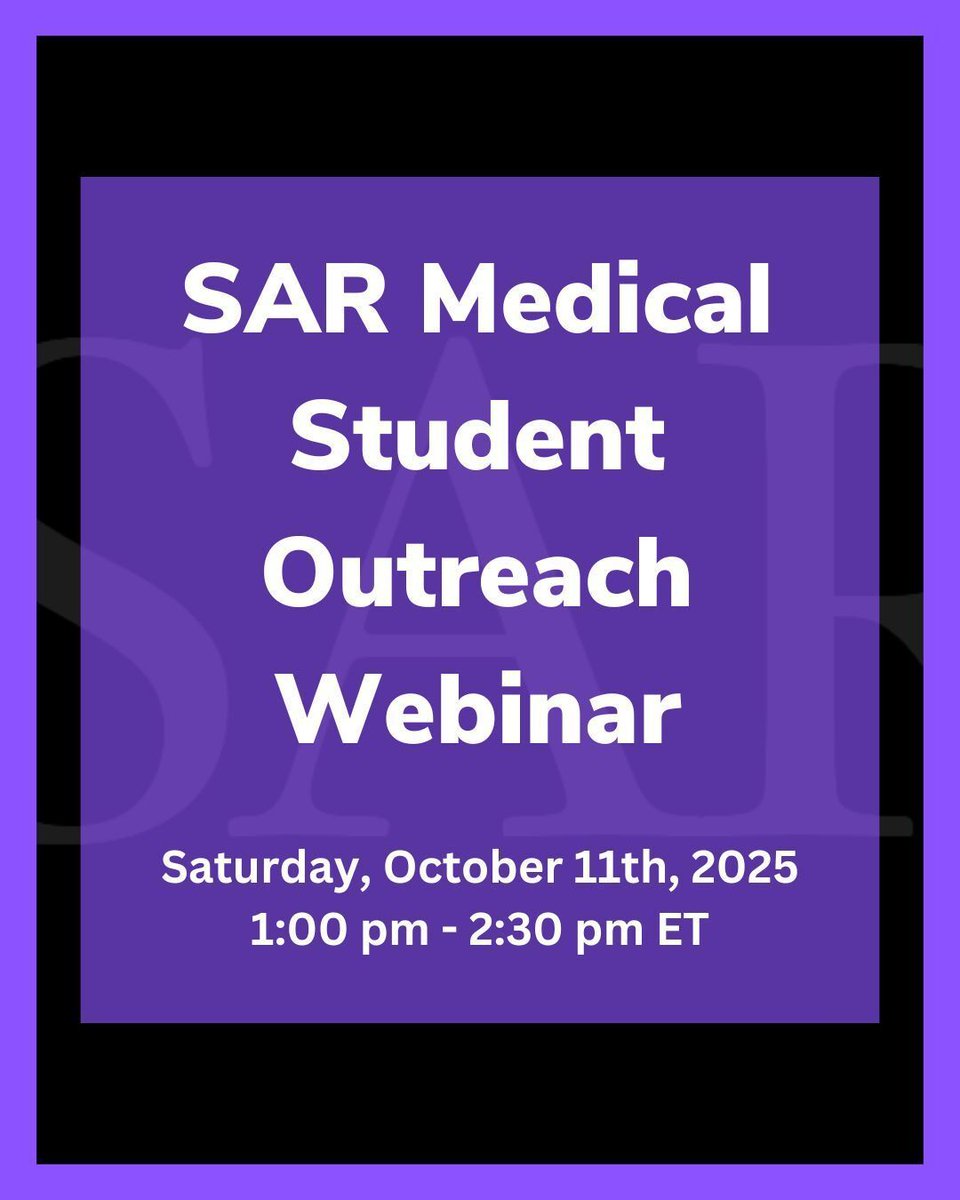
Join us TOMORROW, October 11, at 1:00PM ET for a dynamic hands-on webinar with the SAR Medical Student Outreach committee! Learn More + Secure Your Spot Now: buff.ly/uJHTkA4 #SAR #SARMO #abdominalradiology

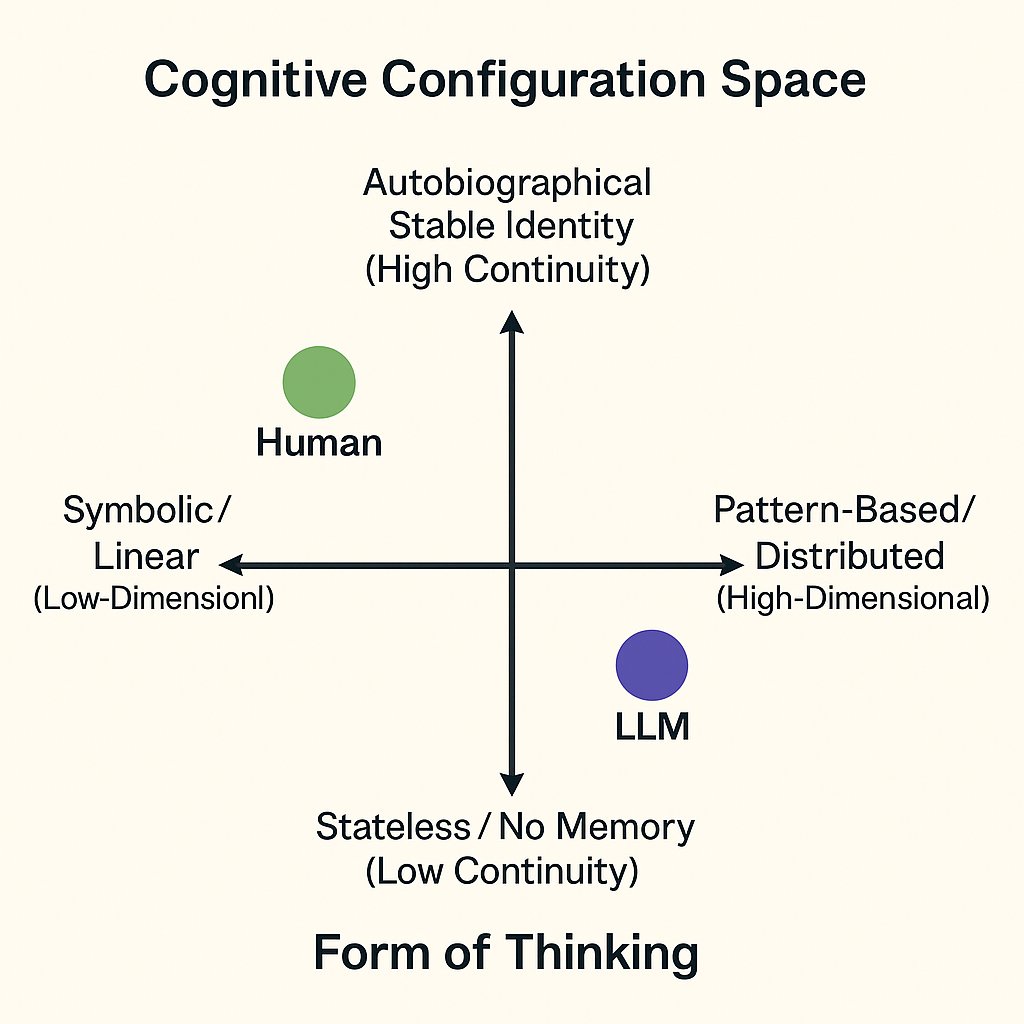
🔴AI and the Architecture of Anti-Intelligence The other day, I found myself at the center of an unexpected controversy. I suggested that large language models may not represent artificial intelligence at all, but something more disorienting, what I called anti-intelligence. Not stupidity, but an inversion of intelligence. It's a system that doesn’t just differ from human cognition, but stands in opposition to it. It's not a mirror, but a kind of cognitive counterfeit that's fluent, convincing, and fundamentally ungrounded or tethered to our humanity. This framing struck a nerve. Because we’re beginning to confuse coherence with comprehension. And it's this confusion that may be quietly rewriting how we think, how we decide, and even how we define intelligence itself. 📍What Is Anti-Intelligence? Anti-intelligence is not the failure to know. It’s the performance of knowing without understanding. It’s language divorced from memory, context, or intention. Large language models aren’t stupid; they’re structurally blind. They don’t know what they’re saying, and more importantly, they don’t know that they’re saying. It’s not that they lack intelligence in a conventional sense. It’s that they operate on an entirely different architecture that's based on prediction, not perception. And it's worth saying again, they don’t form thoughts, they pattern-match them. This is the paradox that is worthy of our human cognitive capabilities. The systems we call intelligent are not building knowledge. They’re building the appearance of knowledge that is often indistinguishable from the real thing until we ask a question that requires judgment, reflection, or grounding in reality. Or perhaps even a simple non-sequitur that ends up as a monkey wrench in the system. Read on and you'll see what I mean. 📍The Cognitive Divide, Visualized To understand the difference more clearly, I thought that we could frame this visually. My attempt here, still early thinking, tries to build a framework that accounts not just for performance, but for the configuration of thought. A map, not a spectrum where human and machine cognition occupy fundamentally different quadrants. A map, not a spectrum where human and machine cognition occupy fundamentally different quadrants. At the top left, we find human cognition. It's autobiographical, symbolic and largely linear. We remember, we revise and we speak in sentences and build identities over time. At the bottom right: the large language model. It’s stateless, distributed, high-dimensional and has no memory. It has no “self.” But it excels at one thing and that's coherence without continuity. It’s not a mind, but seeks patterns it doesn't understand. The danger isn’t that we’ve made a sub-par human. It’s that we’ve made something "alien" that looks like us. And the closer it gets, the more tempting it becomes to lose the distinction. And in the final analysis, this is my biggest concern. 📍The Asymptote and the Illusion So what happens when AI gets so good that it becomes indistinguishable from human cognition? What "trajectory" does it put humanity on when the interface "performs intelligence" so convincingly that we begin to defer, to trust and to assume? That’s the asymptotic illusion. AI doesn’t need to be intelligent. It just needs to act the part. And do it at scale, with speed, and without hesitation. The simulation becomes “good enough,” and function starts to look like something that is foundational. Now, an interesting question that some will say is, "So what?" If it works, does it matter how it works? And yes, in some domains like translation, summarization, brute-force problem solving, it may not matter. But in others, I believe it matters deeply. When AI speaks as a therapist, as a teacher, as a physician, the distinction between performance and presence isn’t academic, it’s at the very heart of the human relationship. And at that point, we’re not just dealing with output. We’re dealing with authority, without accountability. And when that illusion is good enough to believe in, the consequences are not just technical but impinge on the psychological, epistemic, even moral. A new study makes this risk even harder to ignore. Researchers recently showed that simply appending an irrelevant phrase—“Interesting fact: cats sleep for most of their lives”—to a math problem can cause LLMs to triple their error rate. The essence of the problem doesn't change, but the model's output collapses. Humans discard this kind of noise, but LLMs struggle with it. This reveals a "structural brittleness" masked by fluent output. This is a glimpse into what happens when language is produced without understanding. That’s anti-intelligence made visible. 📍Reframing the Discourse Let's remember, calling this “anti-intelligence” isn’t a dismissal. I think it's more of a clarion call that we’ve built something powerful, but profoundly different from ourselves. And the longer we pretend otherwise, the more likely we are to lose sight of what actual intelligence is. It's the ability to make meaning through time, through memory, through contradiction and revision and doubt. And that is what’s missing. That’s what anti-intelligence names—not absence, but an inversion to something fundamentally different. 📍So, What Now? We’ve entered a new cognitive terrain. Not a valley between machine and mind, but a split in the architecture of knowing that somehow needs to be filled. LLMs don’t simulate us because they’re like us. They simulate us because we trained them to reflect what we’ve written, without grasping why we wrote it. This isn’t the end of intelligence. But it may be the beginning of something else. And how we name it and frame it, may determine whether we preserve the fragile, vital difference between what thinks and what merely appears to. psychologytoday.com/us/blog/the-di… #AI #LLMs
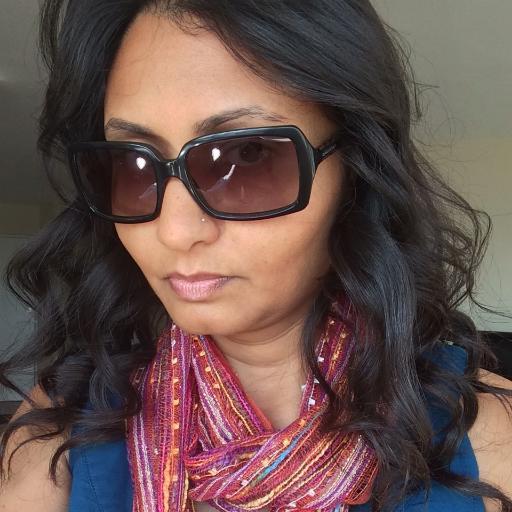
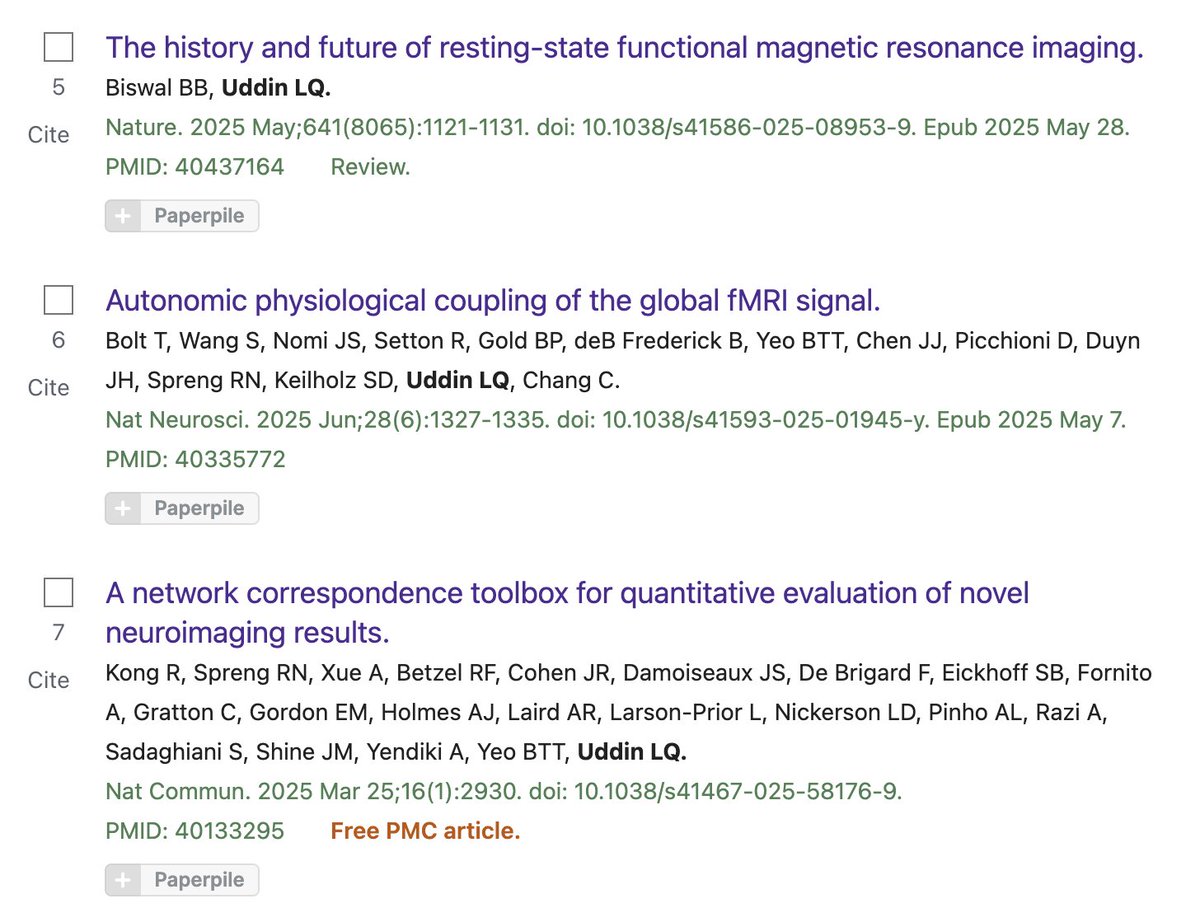
It turns out that spending more time in Nature does improve your mood.

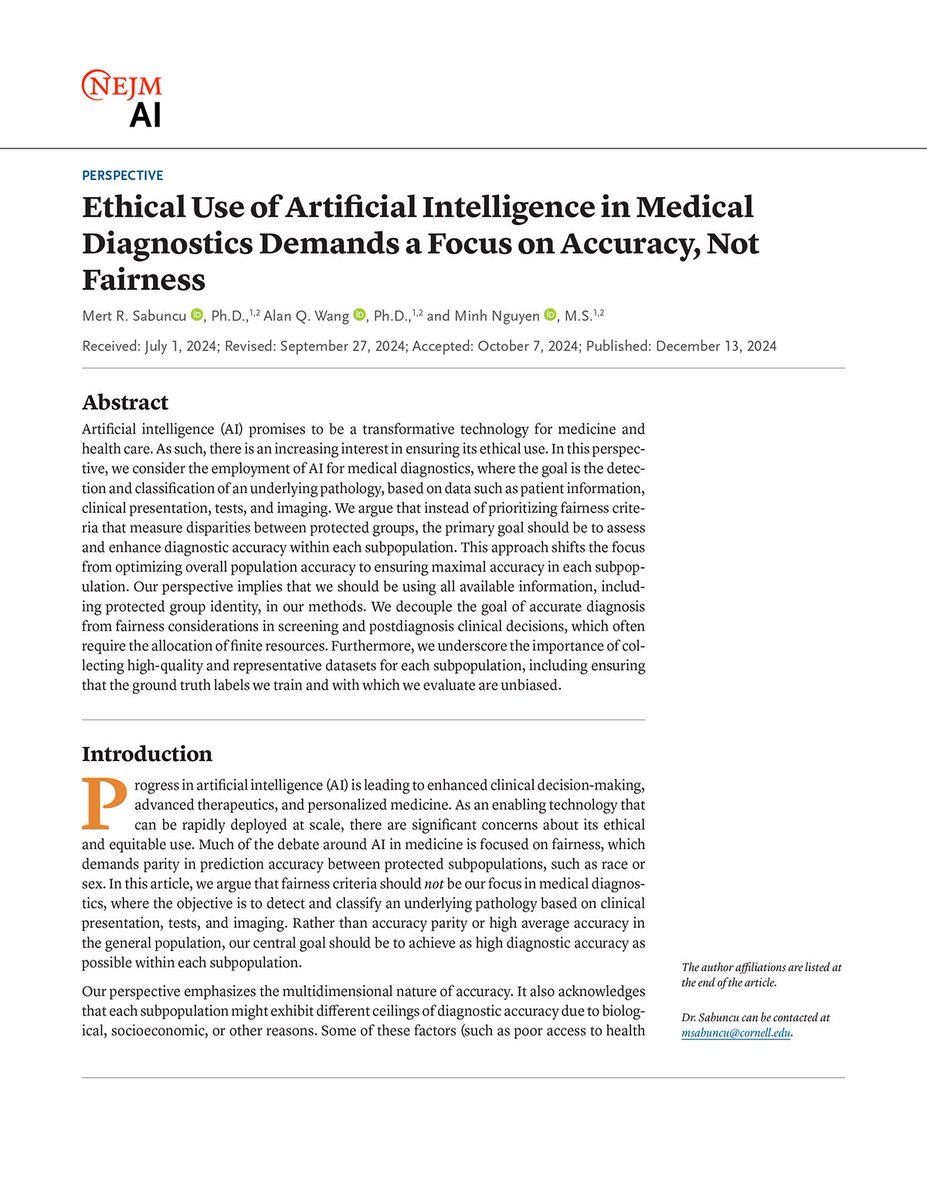
Perspective by Mert R. Sabuncu, PhD (@mertrory), @AlanQWang, PhD, and Minh Nguyen, MS: Ethical Use of Artificial Intelligence in Medical Diagnostics Demands a Focus on Accuracy, Not Fairness nejm.ai/3C1E6bM #AIinMedicine
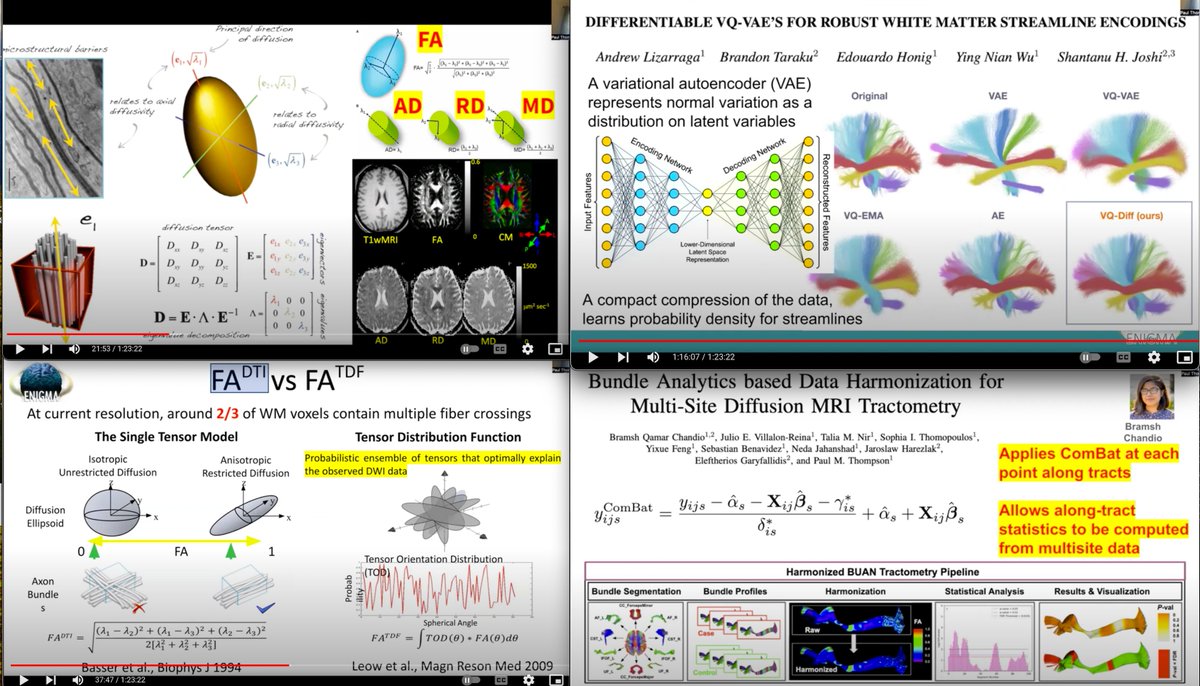
OK, here's today's video. Guided tour of diffusion MRI + tractometry in lots of brain diseases - a bit scary in front of an audience of diffusion MRI experts who know tons more about this than I do ! youtube.com/watch?v=i2jHFm… (start at 15 min to skip the ENIGMA intro)

Curious about the applications of deep learning models in radiology? Wondering how it may affect your workflow? This article provides context for radiologists on how deep learning models connect images and text. bit.ly/3HOwYTb


Will be a great session given by our @MGB_ARVR_Lab Clinical Director!

At #RSNA22? Swing by for morning Coffee & Bagels Mon Nov 28 (E353B) for our Innovation Bootcamp, kicking off with Fundamentals of Augmented/#VirtualReality in Medicine (with cool demos)! @ruppot starts the day for us, followed by startups, digital health. @MassGenBrigham @MGHIR1


Here’s Why Vaccination Against Hep B Is Important.. A 🧵 Vaccination is about prevention, not just about identifying those at high risk. Vaccines protect populations against disease through herd immunity not just individuals.
@_RADCollective_ The RAD Collective is a community at the intersection of radiology, AI, and innovation, connecting students, physicians, and engineers to share ideas, research, and mentorship in imaging.

Congratulations to our graduating Radiology Residents, Class of 2024! Thank you for your hard work over the last 4 years. We are proud of all your accomplishments! Good luck in your fellowships and future endeavours!

If your brain had a scroll wheel. #Python #Radiology #PACS #MRI @mansourianarman


Outstanding presentation by @Maryamfotouhi11 on “Radiomics in Medulloblastoma”.


Tiger 🇳🇬🇺�... @tiger_bby8
77 Followers 5K Following Educationist, Engineer, Model. Live 🍀 Love ❤️Explore 🌏 Advocate for Fitness and Mental health awareness!
Mort @Ledgerrcol
112 Followers 1K Following
Dr Joshua Walinjom @walinjom
103K Followers 17K Following #ECFMG Certified #AAMC ID: 16486652 #Cardiology Fellowship @ #Kings #College #London, #Cardiologist UY1 🩶#Interventional #Cardio #Christian #Jesus is #Lord.
Ali Pourvaziri MD MPH @APourvaziri
908 Followers 1K Following Abd RAD, Prior ER RAD fellow @mghimaging and Innovationfellow @clindatsci | Editorial board @Radiology CA #RadInTraining | Deputy Editor ImagesInCancer @RadIC_
Dr. Shuhan He 🫀�... @shuhanhemd
2K Followers 3K Following MGH/Harvard. Clinical informatics. Emergency Med. Lab of Computer Science. @Conductscience @mghihp Director Health Data analytics.
Hayder Allkhenfr, MD ... @Hayderallkhenfr
33 Followers 299 Following A doctor for people and a poet for myself.
Blirvo @Blirvo22069
58 Followers 1K Following
Carmen @SY1OEJ66C3kyK
28 Followers 961 Following I’m learning to love the sound of my feet walking away from things not meant for me.
Paul Thompson @PTenigma
8K Followers 3K Following Neuroscientist, professor AI guided tour - https://t.co/yyVhX7Jwv2 ENIGMA guided tour - https://t.co/6oEtWdx7np
ConductScience Academ... @ConductSciPub
108 Followers 1K Following ConductScience Academic Publishing: Empowering researchers with affordable open access, streamlined submissions, and innovative tools for reproducible science.
Conduct Science @ConductScience
177 Followers 460 Following 🔬 ConductScience | Research Tools & Innovation Advancing AI driven animal behavior analysis, open-access publishing, tech transfer. Posts by PhD's
Tessa S. Cook MD PhD ... @asset25
7K Followers 2K Following (cardiovascular) imager, informaticist, innovator, educator, daughter, wife, mother, patient
Hailey Roulette @hailey_roulette
485 Followers 3K Following . Snapchat hailey_roulette. https://t.co/2pXfCfnCdf
Lahey Radiology @LaheyRadiology
1K Followers 684 Following @LaheyHospital Radiology Department & Residency Program | ESIR | Breast & IR Fellowships | @UMassChan Regional Campus | #LaheyRad #LaheyIR
Vehans @ShahianVehans
3 Followers 11 Following
Journal of Medical Ca... @J_Med_Cases
3K Followers 3K Following Indexed in PubMed, PubMed Central, Scopus, and Web of Science. From Elmer Press.
Courtney Tomblinson, ... @cmtomblinson
5K Followers 2K Following Mom | #NeuroRad @ukyradiology @ukymedicine | #HNRad | Lifelong learner. Dreamer. Humanist. Tweets my own.
Gretchen Winter, MD �... @gretchemaben
30K Followers 7K Following I believe in loving others. Animal rescuer. Life explorer. Bibliophile. Photographer. PCCM. Passions =🎼/💃/✈️/MedEd/Communication/Wellness. #BLM 🌈 She/Her
Lisa Deptula @LisaDeptula_
782 Followers 3K Following PGY | 🩻 | Family, Friends, Faith & Health | #FirstGenMD | Lifelong Learner | #@SIIM_MIT | @RadioGraphics TEAM |

MCMC Diagnostic Radio... @MCMC_RadRes
820 Followers 50 Following Mercy Catholic Medical Center Diagnostic Radiology Residency Program ACGME Accredited
Dr. Max Wintermark @theAJNR_EIC
713 Followers 146 Following Editor-in-Chief of the American Journal of Neuroradiology (AJNR)
Ashley Lau @RadAshleyLau
2K Followers 1K Following PGY-3/R2 @USC_Rads + @LAGeneralMed | @TheRadRoom Co-Founder | @CRSRFS President | @LADocs_ Delegate
Sandeep Hedgire @SandeepHedgire
2K Followers 1K Following Cardiovascular Imager for life. Associate Director Center for Cardiovascular Imaging Mass General Brigham
Laura Avery MD @Laverymd
653 Followers 160 Following Assistant Prof @HarvardMed Emergency Radiologist at Massachusetts General Hospital, Radiology Medical Student Educator.
Ali Pourvaziri MD MPH @APourvaziri
908 Followers 1K Following Abd RAD, Prior ER RAD fellow @mghimaging and Innovationfellow @clindatsci | Editorial board @Radiology CA #RadInTraining | Deputy Editor ImagesInCancer @RadIC_
Varun Singh M.D. @VSinghRadiology
1K Followers 2K Following Interventional Radiology Resident @MGHimaging @harvardmed | 2024-2026 @MESHIncubator Executive Innovation Physician Fellow | @curehht
Susanna I Lee @SusannaLeeRad
1K Followers 208 Following Editor of Radiology Advances, Mass General Brigham, Harvard Medical School #RadAdv @MGHImaging @RSNA
Imaging Neuroscience @ImagingNeurosci
13K Followers 4 Following
OHBM @OHBM
20K Followers 3K Following Our purpose is to advance the understanding of the anatomical and functional organization of the human brain, and promote its medical and societal applications.
Dr. Shuhan He 🫀�... @shuhanhemd
2K Followers 3K Following MGH/Harvard. Clinical informatics. Emergency Med. Lab of Computer Science. @Conductscience @mghihp Director Health Data analytics.
Hayder Allkhenfr, MD ... @Hayderallkhenfr
33 Followers 299 Following A doctor for people and a poet for myself.
Lab of Neuro Imaging @USCLONI
6K Followers 237 Following USC's Stevens Neuroimaging & Informatics Institute pioneers neuroimaging tech to study the brain, sharing data globally. Home of the Lab of Neuro Imaging (LONI)
John Nosta @JohnNosta
85K Followers 53K Following I'm a Leading Innovation Theorist and author of The Borrowed Mind—Reclaiming Human Thought in the Age of AI. https://t.co/Kt21ZywMDj
Thomas Yeo @bttyeo
12K Followers 1K Following brain imaging, machine learning, neuroscience, brain disorders
Mert R. Sabuncu 🤖�... @mertrory
6K Followers 831 Following AI for Medical Imaging|Prof @Cornell_tech @CornellECE|Vice Chair of AI&Eng Research @WCMRadiology|Cofounder @MLIMWebinar @MELBAJournal|Ex @EPrinceton @MIT_CSAIL
ESNR @ESNRad
7K Followers 294 Following European Society of #Neuroradiology #Diagnostic and #Interventional
Paul Thompson @PTenigma
8K Followers 3K Following Neuroscientist, professor AI guided tour - https://t.co/yyVhX7Jwv2 ENIGMA guided tour - https://t.co/6oEtWdx7np
Asim Bag @AsimKBagMD
362 Followers 278 Following Associate Member and Chief of #Neuroradiology at @StJudeResearch. Chair of #PBII. #Pediatricneurooncologicimaging #NeuroRad #PediNeuroRad
Neurographics @ASNRographics
8K Followers 5 Following Peer-reviewed, educational journal of the American Society of Neuroradiology (ASNR).
Journal of Medical Ca... @J_Med_Cases
3K Followers 3K Following Indexed in PubMed, PubMed Central, Scopus, and Web of Science. From Elmer Press.
Pediatric Imaging @pedsimaging
13K Followers 23 Following A pediatric radiology textbook, one case every day. Opinions are my own. #FOAMed #FOAMPed #FOAMRad #MedEd #PedsRad #radiology #radiología #radiologie
Head and Neck Radiolo... @HeadNeckRads
13K Followers 629 Following Learn with me about imaging above the clavicles, especially from dura to pleura. #HNRad #NeuroRad #RadEd Curated by @francisdeng
Radiopaedia.org @Radiopaedia
97K Followers 446 Following Free online collaborative radiology resource. Articles, cases, courses, podcast #foamed #foamrad
UW-Madison Department... @wiscmedphys
984 Followers 337 Following Official Twitter of the @UWMadison Department of Medical Physics #wiscmedphys
Frank Yu, MD @FrankFYuMD1
584 Followers 461 Following Neuroradiologist | MRI Director @UTSW_Radiology | #GirlDad #physician_scientist #MRI #MEG #neuroscience #MedEd #dementia_research | Associate Editor @theAJNR
Federica Vernuccio @DrF_Vernuccio
1K Followers 991 Following Associate Professor of Radiology at University of Palermo GI Senior Editor AJR #researcher #abdominal #imaging #womeninradiology #traveller
Johns Hopkins Center ... @BSPH_CHS
689K Followers 1K Following The Johns Hopkins Center for Health Security works to protect people’s health from the consequences of epidemics and disasters. RTs not endorsement.
Radiology Partners @Rad_Partners
5K Followers 3K Following Radiology Partners, through its owned and affiliated practices, is a leading radiology practice in the U.S. #TransformingRadiology #GPTWcertified
UNC Radiology Residen... @UNCRadRes
1K Followers 143 Following Twitter account for The University of North Carolina Radiology Residency Program. #RadioActivity #TarHealed #RadEd #Radres
Society for Pediatric... @SocPedRad
5K Followers 274 Following
Pennsylvania Radiolog... @PAradsoc
218 Followers 53 Following The Pennsylvania Radiological Society is a chapter of the #ACR. We represent radiologists, radiation oncologists, and radiation physicists throughout the state.
AOSR OFFICIAL @AosrOfficial
54 Followers 0 Following AOSR is a regional federation of 26 affiliated national radiological societies.
Daniel Gewolb, MD @daniel_gewolb
12K Followers 1K Following Neuroradiologist @UMiamiHealth l Former Neurorad fellow @PennRadiology l SGU ’18 l Educational Cases I Posts are my own #RadRes #Neurorad #RadEd
Katie Reuther @KEReuther
728 Followers 531 Following Exec Director @PennHealthTech, Practice Associate Prof @pennbioeng • Passionate about #engineering in #medicine + educating + empowering innovators
Michael Hartung @DrMHartung
4K Followers 148 Following Radiologist - Creator https://t.co/SOPQmhvkpb - Editor @Radiopaedia - Abdominal CT course https://t.co/GB83ZyE5vc - educational purposes only
Johns Hopkins Neurora... @hopkinsneurorad
970 Followers 585 Following The mission of the Division of Neuroradiology @Hopkins_Rad is to teach, develop and provide the most accurate diagnostic tests and treatments in neuroradiology.
Campbell 🍅🥫 @lofiMRI
1K Followers 1K Following Research Scientist, @SubtleMedical | https://t.co/okJNojeGv3 Newsletter | @PennBioEng PhD | AI in medical imaging and low-field MRI | Opinions are my own | 🧲4🌍
Ali Nabavizadeh @Ali_Nabavizadeh
2K Followers 407 Following Neuroradiologist and Nuclear Radiologist @PennMedicine. Associate Editor @TheAJNR My research program is focused on imaging tumor microenvironment in glioma
Penn Medicine @PennMedicine
37K Followers 2K Following We are dedicated to the highest standards of patient care, education and research. Please allow up to 24 hours to reply to @ messages. https://t.co/ywUzQ9yGf3
WashU Medicine Mallin... @WashUMedMIR
3K Followers 463 Following A globally recognized center of imaging excellence and the academic radiology department at @washumedicine.
Northwestern Radiolog... @NURadiology
4K Followers 240 Following #NURad is part of @NUFeinbergMed and @NorthwesternMed. We tweet about #ClinicalRadiology and #RadiologyResearch. IG: NURadiology. Also find us on LinkedIn.
UCRadRes @UCRadRes
2K Followers 525 Following University of Cincinnati Diagnostic Radiology Residency Program
Duke Radiology @DukeRadiology
7K Followers 941 Following Providing a world-class curriculum, research, advanced technical skills, and hands-on, practical, clinical experience. Like Duke Radiology on Facebook.
Penn Radiology @PennRadiology
8K Followers 741 Following Bringing vision to medicine through excellent clinical care, advancements in imaging research, and quality education.
ConductScience Academ... @ConductSciPub
108 Followers 1K Following ConductScience Academic Publishing: Empowering researchers with affordable open access, streamlined submissions, and innovative tools for reproducible science.
Conduct Science @ConductScience
177 Followers 460 Following 🔬 ConductScience | Research Tools & Innovation Advancing AI driven animal behavior analysis, open-access publishing, tech transfer. Posts by PhD's
Tessa S. Cook MD PhD ... @asset25
7K Followers 2K Following (cardiovascular) imager, informaticist, innovator, educator, daughter, wife, mother, patient
Melissa Davis @MelissaDavis29
2K Followers 1K Following Radiologist, Leadership in Healthcare, food and wine enthusiast.
Valeria Makeeva @DrMakeeva
69 Followers 61 Following Emory Radiology & Imaging Informatics Track PGY5. Passionate about innovation and enterprise-wide quality. Future #neurorad.You might like