-
Tweets1K
-
Followers2K
-
Following169
-
Likes300
So, you have been building with coding agents… But when is the last time you actually took a project live? Be honest. Well, predev isn't just built to have our coding agent bring your ideas to life. It is built to take them over the finish line. There is nothing more rewarding than putting a real product out there to share with visitors, users, and potential customers. Once you have completed building your project with the predev coding agent, you can take your project live directly from within the platform. You literally flip a switch, and predev takes care of the rest. Set your project to "Public" and you are good to go. Your entire project is now live and running in its own cloud sandbox. The environment is securely configured through the coding agent, meaning all your integrations, like authentication or APIs, just work out of the box. One more thing: to really make the project your own, you can now connect your custom domain, complete with automatic SSL certificate provisioning. No manual server setups or DNS nightmares required. It’s your turn now. Take that project live! We want to hear from you. Drop your website link.

Did you know: predev lets you fully customize your tech stack. Most AI coding platforms are highly opinionated. They force you into specific frameworks or databases because it's easier for their templates to handle. predev is completely tech-stack agnostic. When you plan your project with our native Architect Agent, you have total control over your architecture. You can customize everything from your authentication provider to your frontend framework, database, and deployment platform. (Of course, if you aren't sure what to use, the Architect Agent can recommend the optimal setup for your specific goals). This ensures you are never boxed into a dead-end technical route, keeping your project flexible and aligned with the skills your team already has. The real superpower, though? If you already have an active codebase, you don't have to start from scratch. You can connect your existing repository through our native GitHub integration. predev will automatically reverse-engineer your current architecture, map your existing dependencies, and build cleanly on top of what you already have. You get the speed of AI native development without having to rewrite your entire legacy system. Head over to predev to connect your repo or design your custom stack from scratch.

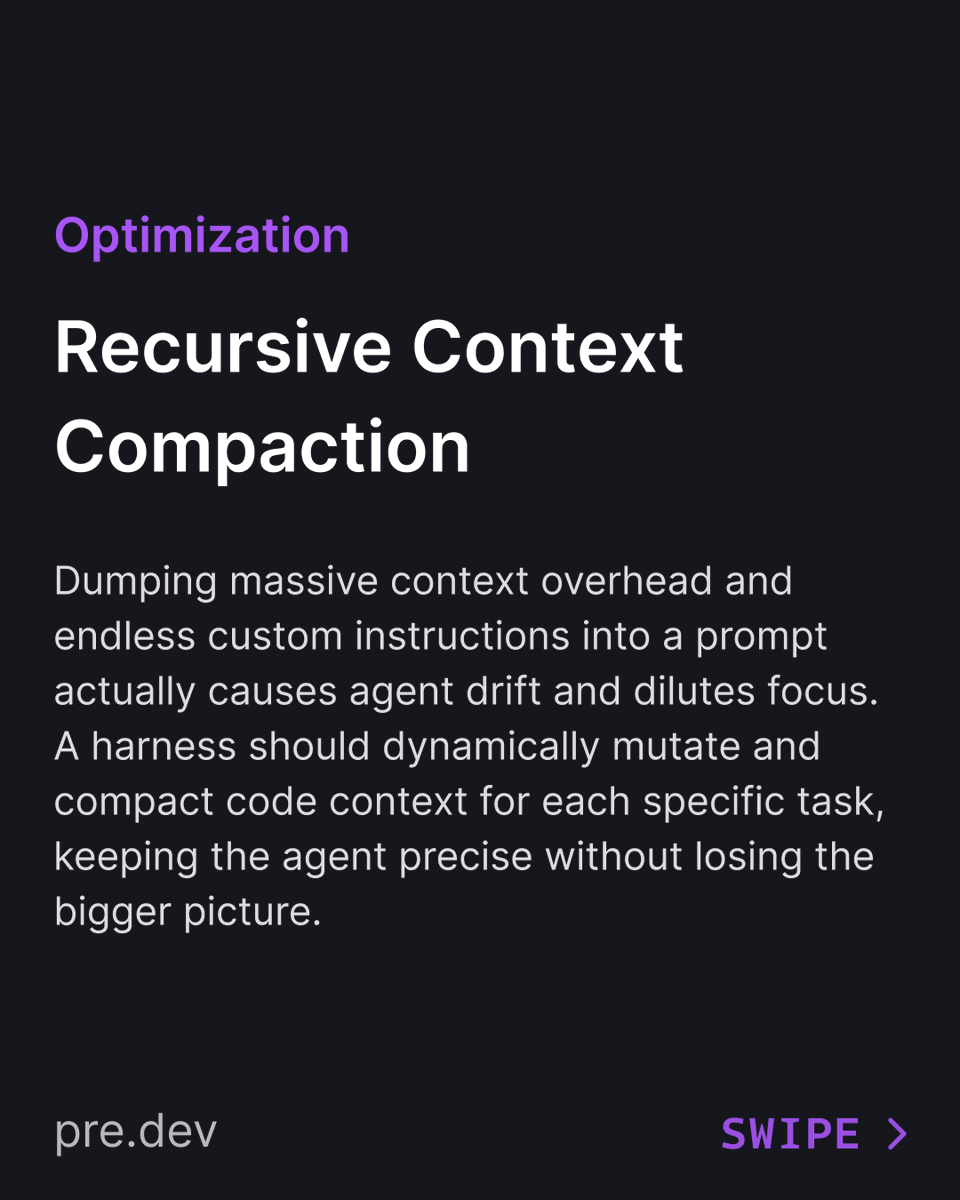
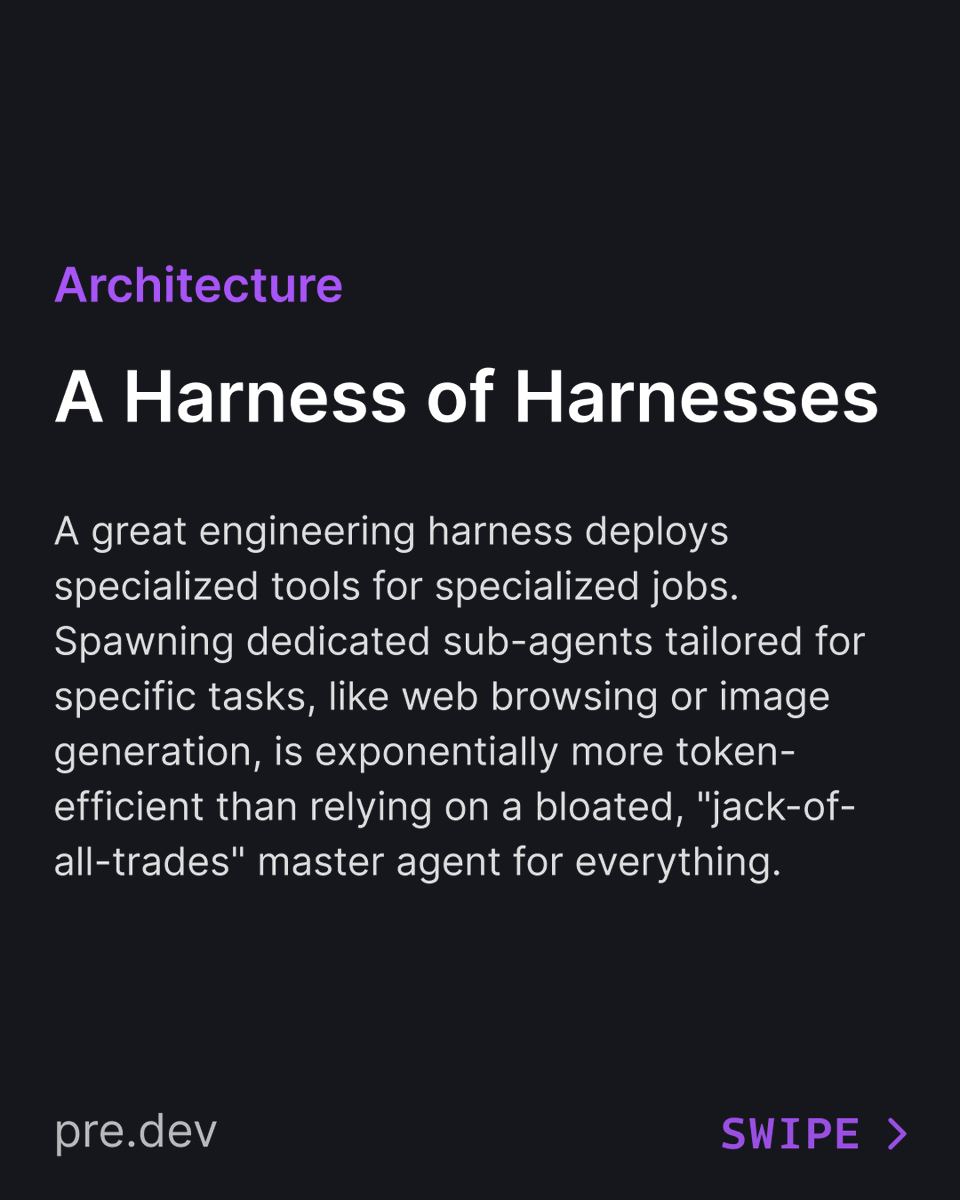
CFOs, you already know this: You don’t change what you don’t measure. AI costs aren’t rising, they are compounding. More adoption times better, more expensive models. If your engineering organization is building with AI, your biggest new line item is about to be coding agents, and it's coming faster than you expect. Fortunately, it is also the easiest line item to audit, optimize, and measure for true ROI, if done right. Here is how predev gives you complete, deliberate control over your engineering token spend. 👇
@parzival1213 Hey! Nice project, will check it out. Here is our benchmarking suite. Would be interesting to know if you think we add something. We are trying to cover most real-life use cases. github.com/predotdev/brow…
Look at this: Browser Agents running right inside your AI development project. One of the most powerful capabilities within predev is the ability to deploy native browser agents. Your primary coding agent can spawn multiple, parallel browser sub-agents to execute web-based tasks without ever breaking your current development workflow. Here are the four most popular engineering use cases our users are leveraging right now: 1. Autonomous Documentation Research The most immediate use case: sending agents to research deep technical documentation, API references, and open-source libraries specific to your tech stack, ensuring the code written matches the latest upstream versions. 2. Visual E2E and Regression Testing True continuous integration. As your application is being built in the cloud sandbox, browser agents can spin up a headless instance, take visual screenshots, verify the layout looks flawless, and click through critical user paths to ensure everything works exactly as specified. 3. Schema Validation & Seed Data Ingestion Instead of manually writing tedious mock datasets, browser agents can ingest public reference data, synthesize complex datasets, and automatically populate your database tables while strictly validating the data against your exact backend schemas and boundaries. 4. Extracting Design Tokens & UX Benchmarking Instead of building design systems from scratch, you can point your browser agents at industry-standard design web references. The agent analyzes abstract layout structures, extracts clean design tokens (like color palettes, typography scales, and component hierarchies), and maps out optimal user flows to help you architect a completely unique user experience for your own project. The best part? Just like our coding agents, these browser sub-agents run entirely in isolated cloud environments. You never have to grant a local agent access to your physical machine, risk leaking your local IP, or drain your local memory. You can close your laptop, walk away, and check back in when the parallel execution is complete. We built predev's native browser agents from scratch. By optimizing the orchestration harness layer to stream compacted DOM states rather than raw, heavy page layers, we’ve achieved exceptional performance at a fraction of standard token costs. (More technical details on the harness efficiency in the comments below). Head over to predev to experience browser-driven cloud development. Let us know what you are building next.
At predev a lot of our harness engineering effort goes into maximizing token runway. But is the juice worth the squeeze? 👇
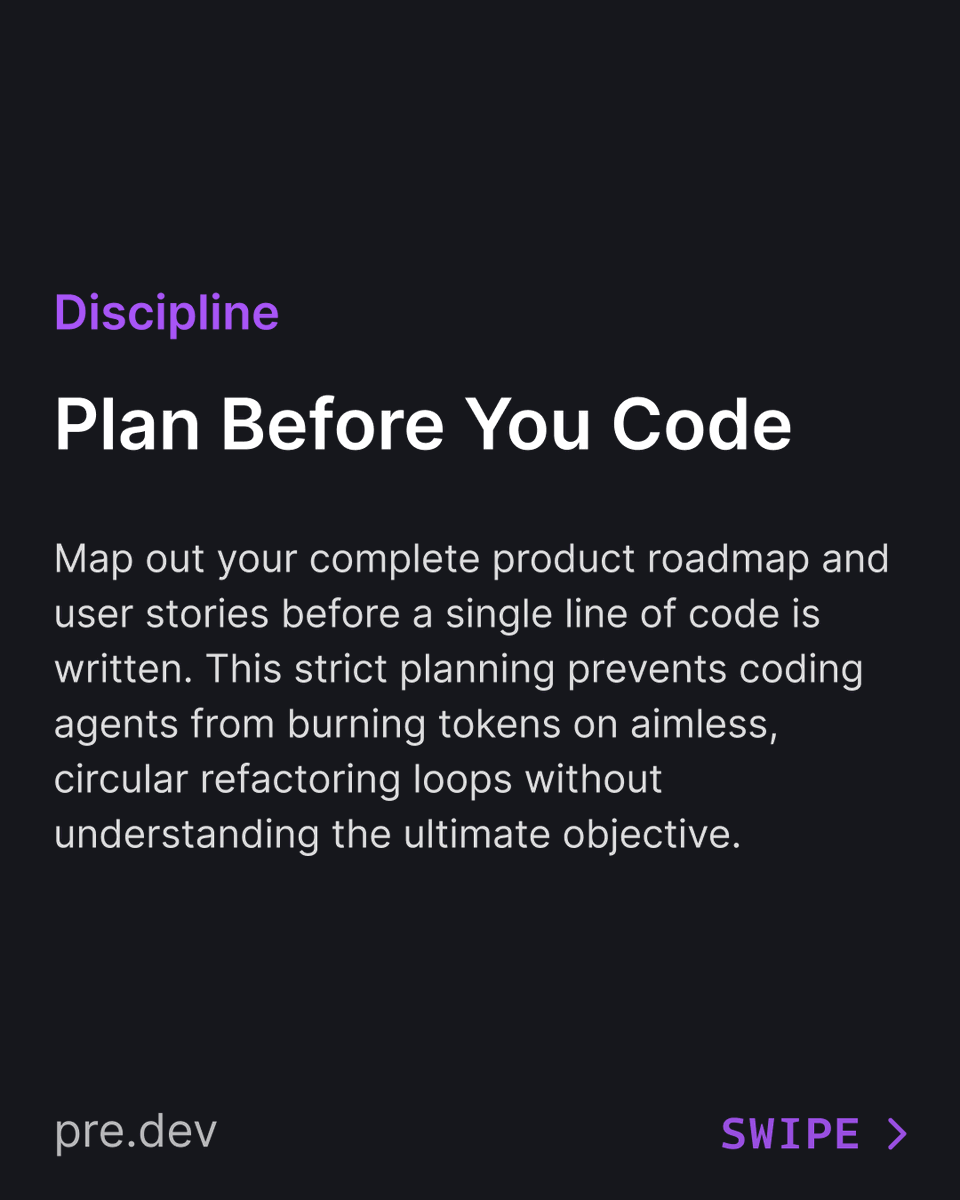
Use the predev native Kanban board as the top-level control plane for your coding agents. When you are planning large software projects to build with coding agents, Behavior-Driven Development and user stories are the gold standard for achieving predictable results. This holds true whether you are building with a team of human engineers or a flock of agents. Everyone loves jumping straight into writing code. But if you want to ship production-grade software without endless refactoring, starting at the planning layer is the winning strategy. What it consists of: A structured framework detailing the persona (who wants it), the action (what they want to do), the value (why they need it), and a deterministic checklist of binary acceptance criteria. An Example: As a returning shopper on the checkout page, I want to apply an alphanumeric promo code to my cart, So that I can see my order total update before finalizing the purchase. By structuring tasks this way, the focus shifts to Verification over Implementation. You are managing by outcomes. Don't worry, the predev Architect Agent writes these user stories for you based on your abstract ideas. However, understanding this structure is vital because it unlocks two leverage points: 1. A Unified Language for Humans and Agents LLMs are exceptionally good at semantic comprehension. By feeding them user stories, you give them room to define the optimal how. This often results in elegant, novel approaches you might not have considered. More importantly, it gives the agent a clear, binary checklist to automatically verify its own code before pushing a PR. 2. True Task Idempotency Because well-scoped user stories exist independently of the volatile state of the codebase, they remain semantically stable. The agent can evaluate a single card on the Kanban board within the broader context of the system architecture without getting tripped up by concurrent changes elsewhere. This is vital for preventing agent drift. This clean isolation allows you to completely parallelize your roadmap. You can tear individual user stories off your Kanban board and assign them to dedicated, isolated coding agents simultaneously. They work in their own cloud sandboxes and merge their completed features back via individual pull requests. This gives you granular control, code attribution, and a bulletproof continuous integration pipeline. This underlying board framework acts as the shared memory that enables long-horizon agents to execute and verify their own work autonomously. Beyond the Kanban board, predev provides additional levers to steer your agents at scale, including defining your core technology stack, modifying your global product specifications, fine-tuning agent execution profiles through customizable "skills," and spawning sub-agents for multi-session builds. Head over to @predotdev to let the Architect Agent generate your Kanban board, and start steering your coding agents from your control plane.
@adampredev We open-sourced all terminal-bench trajectories on GitHub. Details in the post below. x.com/predotdev/stat…
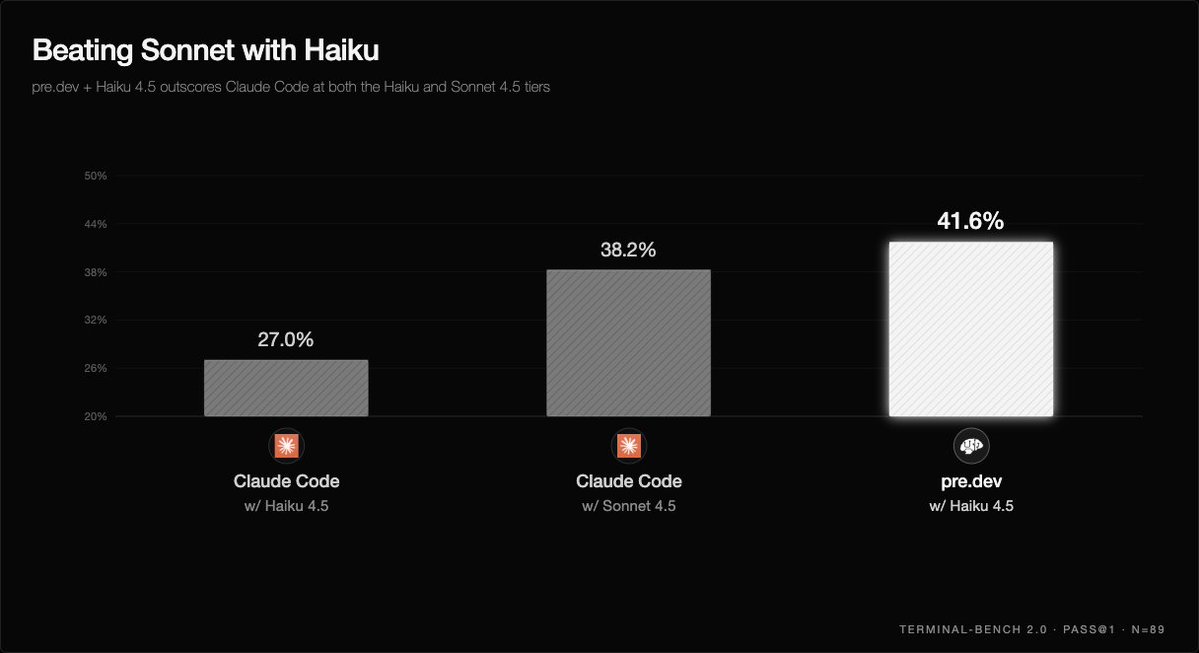
If you have been using Claude Code professionally, take a minute to read this. We beat Opus with Sonnet by using the predev harness. Here is what it means for agentic coding: Orchestration beats brute reasoning. A smaller model running on our architecture just beat Claude Opus

If you have been using Claude Code professionally, take a minute to read this. We beat Opus with Sonnet by using the predev harness. Here is what it means for agentic coding: Orchestration beats brute reasoning. A smaller model running on our architecture just beat Claude Opus
And btw. We also beat Claude Code + Sonnet with our own harness Haiku. Sharing our full breakdown of the results and all open source trajectories in the comment.

In light of recent discussions around open-weights vs. frontier labs, the pendulum has swung completely. The risk posture has changed. Organizations used to worry about geopolitical AI risks; now, they fear the labs themselves. The worry is that labs will verticalize into

One of predev's most powerful features is the Architect Agent. It takes a raw product idea or briefing and decompresses it into a complete product roadmap, architecture graph, a recommended technology stack, and a comprehensive specification. While the Architect Agent does the heavy lifting, we want to share a few helpful tips to get you thinking about your next project while dramatically improving how you instruct AI agents on what you want. An effective prompt should answer five fundamental questions. First, who is it for? This defines your exact target audience and user personas. Second, what does it solve? This specifies the core friction or pain point your application addresses. Third, why does it matter? This establishes the ultimate value proposition or business impact. Fourth, what is it? This outlines the primary product type and its core functionality. Fifth, what is it not? This draws a strict boundary around your project scope to prevent feature creep from day one. Let us look at a simple example to visualize what an effective, high-input prompt looks like. Imagine prompting: Create a web application for content creators called PostSnap. It takes a raw LinkedIn post URL, fetches the text and author profile, and instantly renders it into a beautifully styled, high-resolution downloadable image with customizable gradients, shadows, and clean background framing. Instead of settling for messy, pixelated manual screenshots, creators use these polished graphics to instantly cross-promote their written insights across visual platforms like Instagram, Threads, or X without losing asset quality. It is not an analytics tool or a scheduling platform; it is strictly an aesthetic image wrapper. This brief description gives you a clear mental model of the product, right? Well, the AI operates exactly the same way. Better inputs get you better outputs. And do not worry, if anything remains unclear, the predev Architect Agent will ask you targeted follow-up questions to fill in the technical blanks. Once the agent has fully decompressed your idea into a product roadmap, the tasks, user stories, and acceptance criteria are automatically piped into the predev coding agent to actually build the project. But we will cover that execution workflow in a separate post. For now, if you want to see what a professional roadmap looks like for that product idea you have been sitting on, head over to predev and try out this prompting framework. Happy building. PS: If you prefer to stress-test your ideas inside your own existing development environment, simply grab the @predotdev Architect MCP server. You can plug it directly into your existing AI tools to automatically generate technical specs and Kanban tasks before you start writing any new code
Who here has solved long term memory? No takers? Ok, we solved it - ask us how?!
AI adoption is a given, but skyrocketing token costs aren’t. Learn how high-agency engineering teams use infrastructure and multiplayer culture to drive true token efficiency. By @ArjunRajJain

60+ hour coding agent on autopilot, no human interaction needed. Head over to predev to see long-horizon coding agents in action.
Exciting milestone: Last month, we had a customer run predev on autopilot for 60 plus hours. While this scenario might sound extreme, it validates our core thesis: true, long-horizon coding agents can and will build entire software systems with zero human intervention. To
@grok briefly describe Axelrod's Game Theory Tournaments
Idea: Instead of benchmarks we should have models compete against each other in game theory tournaments. wdyt?

The MindFrame @officialmindfra
0 Followers 12 Following Making tech easy to learn. Learn. Build. Grow. CRO28J6O


redevise @predev_ai
2 Followers 18 Following
Kryptonite @DioeconmeXBT
9K Followers 8K Following Married with crypto portfolio 🏡 | From Indonesia 🇮🇩 living the BTC life | Chelsea FC | Macro enjoyer | DM open for serious discussion

NADIM ⛩️ @Al_Nadim_nabil
7K Followers 7K Following | Content Creator & prompt engineering • claude •machine learning | DM for Collabs -- HICNQV CRQYWJNU
Abdelkrim Dakoaun @dakoaun34679
83 Followers 3K Following

Rahul Sharma @S_RahulKrishna
257 Followers 1K Following
0xGhost @0xghost_Lab
4K Followers 4K Following Football ⚽ banter & Web3 gems daily https://t.co/oVFSi4Vpyd https://t.co/Lqz4J1s8hK https://t.co/wLXXaCzzjo
Andres Muhlach @EFatima82232
149 Followers 530 Following Trading BTC • ETH • Alts Daily market structure & levels Learn + trade with serious traders https://t.co/BZWq7Rx3JV
Afzal ur Rahman @AfzalurAfzal
1 Followers 35 Following
St.Roxy @rcyxie11
9K Followers 7K Following Parrhesiastes. Clipper & Short Video Creator. Web3 Enthusiast. @sagamonkes #4530.

Han Kay @sistemist
289 Followers 865 Following Author, Conscious Systems (94% download rate) · ConsciOS paper (95%) · CMU → World Bank → 9 ventures · Free book + Free live lesson ↓
P @piudacity
76 Followers 2K Following
Masterguantai @MasterGuantai
3K Followers 4K Following Bitcoiner • Founder @BitcoinMtaani • @BitcoinMatatuKE now Stealth


Nancy S @SonmezMami
7 Followers 731 Following silly little girl with big thoughts 🎈 follow back always
mohamed atwa @wa_mhmed
5K Followers 6K Following
Nancy I @melisa43524
13 Followers 727 Following feelings connoisseur & follow back enthusiast 💌 100% follow back
Patricia @stell14patricia
2K Followers 4K Following wanna disappear for a while? i know just the place 😈
Mehul Agarwal @imMehulAgarwal
85 Followers 827 Following Tech Enthusiast | Python | UI/UX Designer | Startups.
Ibrahim Umar | Revenu... @jourofct
295 Followers 3K Following Building Revenue Infrastructure for B2B SaaS. 🏗️ | Plugging the "Ghosting Gap" | +2% TPC in 30 days. | DM "RETAIN" for an audit.
Matthew @MatthewClosson
562 Followers 2K Following Embrace Reality, Painter of Possibilities, Cryptography, Internet Insecurity, Lover of Languages, spoken and coded.
Ankur Tewatia | AI Co... @logicbytewatia
13 Followers 49 Following I research agent behavior, fine-tune prompts, and develop systems that expand the capabilities of intelligent agents. Building https://t.co/spSCRyAzKX
Martin Tobias (Pre-Se... @MartinGTobias
59K Followers 10K Following Entrepreneur, Investor, girldad, cyclist, surfer, poker player. Pre-seed up to $500K. Chat with me https://t.co/96wsMImeiy. Get $$ https://t.co/d7utyst2XW
Andrey @thisiswhyibuilt
549 Followers 2K Following Hardware by day. Software by night. https://t.co/ix0mpt62M9 - first interstellar travel focus app https://t.co/SAIowQhARy - stamp the world around you
Stephen (Faved) @stephenfaved
52 Followers 665 Following Creator Partnerships - [email protected] Official creator outreach account of https://t.co/Fy4U4QH9jF
George Amine @george_amine
105 Followers 268 Following 15 years of building technology for businesses
KXLM, by Aiii @ai_interfaces
93 Followers 921 Following The Control Plane for Intelligence. 16 frontier AI models. Orchestration, Think Tank, Prediction, Arena. https://t.co/WvRzAp8LEq
Seán @seanly_not
694 Followers 5K Following 30(!). NE Wales in SE London. 6 quiz shows; at least one win. EdTech.
Hariharan S @h2s79
176 Followers 4K Following
mihaichindris.bsky.so... @mihai_chindris
1K Followers 7K Following SWE student @QuanticSchool | OSS Contributor @GitHub | Hackathon hunter @devpost
Olayiwola @wolaElebute
16 Followers 107 Following

shivarajkumar poojar @skpoojar_poojar
0 Followers 2 Following
黄才国 @caiguohuang
2 Followers 203 Following
Sangamesh Gupta @SangamGella
65 Followers 177 Following Philosophical insights for people who think too much
sgfarhan @SGAWESOME10
40 Followers 2K Following
YouTube Promotion @ChannelSparkX
2K Followers 6K Following Let's boost your YouTube channel globally using genuine promotions. Everyday you'll receive organic engagements on your YouTube channel.
Laura Mainganya @ArualUju
5 Followers 40 Following *Owner: Arual Uju Global Trading *Sneaker design *E-commerce
Aryan Saxena @Aryan_Saxena03
6 Followers 705 Following
Mr. AintGoin @BTwenty2nine
75 Followers 2K Following
DΣЯƧᄃӨDΣƧ (Mo... @derscodes
58 Followers 184 Following A turtle with AI https://t.co/bLQOdKmonh https://t.co/Rx51rx4XEU https://t.co/sdDst7qe3r https://t.co/g7HZqwZ0Xb BusinessRequests: https://t.co/w1xblRUBwY https://t.co/bzWVkAYzLJ
Thomas Aidan Curran @tacurran
160 Followers 279 Following Technologist, Entrepreneur, Investor | 4x C-Suite F500, 7x Founder | Advisor: @predotdev @Voxist @NorthernDataGrp @7RIDGE1 @ReversingLabs Aladdin Inc.
Matthias Schmidt @eurofounder
93K Followers 227 Following Founder based in the EU • Building GDPR-compliant startups • 7 years in, €7k MRR

Berkeley AI Research @berkeley_ai
280K Followers 463 Following We're graduate students, postdocs, faculty and scientists at the cutting edge of artificial intelligence research.

Ed Boner 🏝 @EdBoner
2K Followers 185 Following Florida native. Background includes politics, surfing, martial arts, two sons and a wonderful wife. Interested in everything.
Brett Calhoun @brettcalhounn
25K Followers 825 Following General Partner @redbudvc | Building @roots_build
mihaichindris.bsky.so... @mihai_chindris
1K Followers 7K Following SWE student @QuanticSchool | OSS Contributor @GitHub | Hackathon hunter @devpost
Sangamesh Gupta @SangamGella
65 Followers 177 Following Philosophical insights for people who think too much

ThePrimeagen @ThePrimeagen
371K Followers 1K Following skill issues: 🟩⬛️⬛️⬛️⬛️⬛️(69/420) https://t.co/TYJ6aSq4O0 https://t.co/wQJlh4stsc https://t.co/wxeJWY8LmI
tobi lutke @tobi
478K Followers 2K Following Shopify CEO by day, Dad in evening, hacker at night, Aspiring comprehensivist. + qmd !
Andrew McNamara @Drewch
3K Followers 29 Following VP of Machine Learning Engineering @Shopify | Building Agents | Bringing AI to entrepreneurs | Bush Pilot | Maple Syrup Producer https://t.co/haSezvLSxU
DΣЯƧᄃӨDΣƧ (Mo... @derscodes
58 Followers 184 Following A turtle with AI https://t.co/bLQOdKmonh https://t.co/Rx51rx4XEU https://t.co/sdDst7qe3r https://t.co/g7HZqwZ0Xb BusinessRequests: https://t.co/w1xblRUBwY https://t.co/bzWVkAYzLJ
Dan Hollick @DanHollick
48K Followers 389 Following design engineer @cursor_ai. writing a book about software at https://t.co/dFGw9eLRQM prev: @tailwindcss, @raycast
Sebastian Ruder @seb_ruder
99K Followers 1K Following Research Scientist @AIatMeta MSL • Ex @Cohere @GoogleDeepMind

Nano Banana 2 Lite @NanoBanana
162K Followers 3 Following Nano Banana 2 🍌🍌 the world's most powerful image editing and generation model! Try in the @GeminiApp
spencerswanson.eth @spencerswanson
653 Followers 6K Following 🇦🇹 🇺🇸 #Bitcoin | Prev: @PlugandPlayTC, @CMT_Digital & @LCVentures | 🎓: @penn
Bobby Goodlatte @rsg
75K Followers 4K Following Co-founder & CEO @trysunflower 🌻 Early product designer @Facebook. Angel investor @Coinbase @Linear @Expo @Envoy @XMTP_ & many more

mark nazzaro @NazzaroMark
27 Followers 51 Following
Eskil Steenberg @EskilSteenberg
7K Followers 290 Following C, Game design, Story telling, and progress. Work @quelsolaar https://t.co/xHje5WcpnQ


Lilian Weng @lilianweng
269K Followers 184 Following Co-founder of Thinking Machines Lab @thinkymachines; Ex-VP, AI Safety & robotics, applied research @OpenAI; Author of Lil'Log

Julie Fredrickson @AlmostMedia
45K Followers 9K Following Invest early https://t.co/AAXsJuYK25. Married to @alexlmiller Founded & sold startups, fashion & beauty girl. Autist Oracle. Freedom to compute. Pretty Skilled



Brian Halligan @bhalligan
106K Followers 2K Following Co-founder HubSpot | Sequoia | Propeller | MIT Host, Long Strange Trip pod: https://t.co/qj9yOQVYaU

Herrington Darkholme @hd_nvim
8K Followers 3K Following 🌐 Frontend Vimmer ⚒️Open Source with @typescript @vuejs and @rustlang 🚀 https://t.co/SLjF6No9qD is my hobby project
Trey @TreyPezzetti
571 Followers 681 Following AI × Sports Tech | AI Product Lead @PGATOUR | Helping Build @breakthewebapp
OpenAI @OpenAI
5.0M Followers 4 Following OpenAI’s mission is to ensure that artificial general intelligence benefits all of humanity. We’re hiring: https://t.co/dJGr6LgzPA
Google AI Studio @GoogleAIStudio
186K Followers 2 Following The fastest path from prompt to prototype to production with Gemini
Vinod Khosla @vkhosla
728K Followers 653 Following entrepreneurship zealot, grounded technology possibilist, believer in the power of ideas, passionate about sustainability & impact
Abdullah Al Noman @imnomandigital
3K Followers 5K Following Co-founder @design_monks | UI/UX & SaaS Design Partner Helped 50+ brands launch fast • Worked with YC-backed founders • Book slot ↓ https://t.co/GeZb6LZuB6
JohnSnowLabs @JohnSnowLabs
44K Followers 28K Following Helping healthcare and life science organizations put AI to work faster with state-of-the-art LLM & NLP.
Theo - t3.gg @theo
361K Followers 4K Following Full time CEO @t3dotchat. Part time YouTuber, investor, and developer
Paul Graham @paulg
4.1M Followers 794 Following
Dan Shipper 📧 @danshipper
119K Followers 2K Following ceo @every | the only subscription you need to stay at the edge of AI
Garry Tan @garrytan
957K Followers 6K Following President & CEO @ycombinator —Founder @garryslist—Creator of GStack & GBrain—designer/engineer who helps founders—SF Dem accelerating the boom loop

Mira Murati @miramurati
774K Followers 626 Following Now building @thinkymachines. Previously CTO @OpenAI

a16z @a16z
1.0M Followers 62 Following It's time to build. https://t.co/A9eTFq6Xbx Posts are not investment advice or an advertisement for investment services. See https://t.co/nX2FtaLE06.
Marc Andreessen 🇺�... @pmarca
4.8M Followers 32K Following You’re not talking to someone who woke up a loser. That loser attitude, that loser premise makes no sense to me.You might like