Tech Buzz China @TechBuzzChina
Exclusive Insights into China’s Tech & Innovation Landscape. Trips, bespoke research, and an investor-focused newsletter. techbuzzchina.com San Francisco, CA Joined June 2018-
Tweets4K
-
Followers14K
-
Following351
-
Likes565
In case you missed it: here are the five TBC posts that saw the most attention this week. 1. Kuaishou’s Q1 record revenue of RMB 33.72 billion ($4.65 billion) masked a 26% drop in adjusted net profit to RMB 3.37 billion ($465 million). The number that mattered was inside Kling: quarterly revenue north of RMB 650 million ($90 million), ARR approaching $500 million, and a reported spin-off at a $20 billion valuation, with around 70% of revenue coming from overseas professional users. x.com/TechBuzzChina/… 2. Doubao will reportedly introduce paid tiers at RMB 68 ($9), RMB 200 ($28), and RMB 500 ($70) per month starting late June, with no firm paid-user penetration target for 2026. The subscription looks designed to manage demand and inference costs rather than to anchor a new revenue line. x.com/TechBuzzChina/… 3. An XPeng-commissioned survey across six European countries found only 13% would ride in a fully self-driving car, versus 70% in China; the gap narrows when the question shifts to assisted driving features like adaptive cruise control and lane keeping. XPeng’s president framed it as a need for exposure and explainability, which conveniently matches the assisted-driving products the company already ships. x.com/TechBuzzChina/… 4. A year into Alibaba’s flash-buy campaign, Taobao Flash Buy’s daily orders have stabilized around 60 million and its combined instant-retail share has passed 40%, up from roughly 20%. The campaign cost nearly RMB 100 billion ($13.8 billion) over the fiscal year, but the more consequential change is organizational. x.com/TechBuzzChina/… 5. Xiaomi released technical details of its MiMo-V2.5 models, emphasizing a hybrid attention architecture that cuts KVCache storage. The bigger takeaway: China’s AI competition is pivoting from model scale to serving cost and deployment efficiency. x.com/TechBuzzChina/… Kling’s overseas revenue base, Doubao’s cost-anchored subscriptions, Alibaba’s instant-retail grid, and Xiaomi’s efficiency-first architecture all point to a market where distribution, infrastructure, and unit economics are becoming the main differentiators. Even the XPeng survey, nominally about consumer acceptance, is a reminder that safely deploying features at scale will matter more than demo capabilities.
Meituan's core local commerce business, which had been the company's profit engine, posted revenue of RMB 641 billion (~$88.4B) in the first quarter, barely growing at 0.1% year on year and swinging to an operating loss of RMB 20.3 billion (~$2.8B) from a RMB 13.49 billion (~$1.9B) profit a year earlier. The immediate cause is visible in the numbers: sales and marketing expenses surged 51% to RMB 230 billion (~$31.7B), or 25% of revenue, as Meituan fought to defend its food-delivery and instant-retail position against Alibaba, JD.com, and ByteDance. That spending helped keep the user base intact, but it also erased margins. Gross margin fell from 37% a year ago to 28.5%. The company's overall operating loss did narrow to RMB 65 billion (~$9B) from RMB 161 billion (~$22.2B) in the fourth quarter, and the adjusted net loss of RMB 49.7 billion (~$6.9B) was better than feared. Still, the net loss attributable to shareholders reached RMB 68.27 billion (~$9.4B), a sharp turn from a profit of over RMB 10 billion (~$1.4B) in the same period last year. What makes this quarter distinct is not just the price-war pain. R&D spending jumped 22% to RMB 70 billion (~$9.7B), or 7.7% of revenue. Management is placing a clear bet that AI can restructure the cost base over time. The company disclosed a new foundation model exceeding one trillion parameters, trained entirely on domestic compute. Its AI assistant served over 100 million user interactions during the May Day holiday. On the merchant side, a smart storefront tool has reached 700,000 restaurant clients, and a digital employee product covers 300,000 service-sector merchants. The drone delivery network has handled 900,000 cumulative orders in cities including Beijing, Shanghai, Shenzhen, and Dubai, with unit costs declining 40-50% annually. Overseas, the Keeta brand reached profitability on a unit-economics basis in Hong Kong after 29 months and is now expanding in the Middle East and Brazil. New-business revenue rose 21% to RMB 270 billion (~$37.2B), with losses narrowing. None of this resolves the near-term profit squeeze. The company itself flagged that order growth may slow or even decline later this year. One way to read the quarter, though, is that Meituan is accelerating the transition from a business that buys loyalty through subsidies to one that competes through operational AI and logistics automation. Whether that thesis can be vindicated before competitive spending forces another round of escalation remains the open question.

On June 3, Sinopec and BYD signed a framework agreement that could significantly accelerate BYD's flash charging rollout. BYD currently has more than 6,100 flash charging stations and is targeting 20,000 by the end of 2026. Under the agreement, Sinopec's network of more than 30,000 gas stations will become potential sites for BYD's charging infrastructure. In other words, BYD doesn't need to find and build every location itself. BYD brings the charging technology. Sinopec brings the land, the traffic, and an existing network of drivers stopping at its stations every day. The partnership also goes beyond charging. The two companies announced cooperation around memberships, data sharing, aftermarket services, solar-storage-charging projects, and supply chains. That part may end up being as important as the chargers themselves. As China's oil majors increasingly reposition themselves for the EV era, they aren't just providing locations. They're trying to stay connected to the customer. The target of 20,000 stations by the end of 2026 is still ambitious, and flash charging only works with compatible vehicles. Sinopec will likely work with multiple charging providers over time as well. But the agreement raises an interesting question. As charging infrastructure becomes more widespread, where does the leverage sit: with the company building the charging technology, or with the company controlling the locations and customer traffic?

The dispute between ByteDance’s Doubao phone assistant and WeChat over who gets to send a message on a user’s behalf is really a fight over distribution and control in the AI era. WeChat has now opened limited Agent-to-Agent (A2A) capabilities to phone makers including Huawei, Honor, Xiaomi, OPPO, and vivo. Their assistants can send messages or initiate calls through WeChat using structured commands. But the scope is tightly controlled. No chat history, no Moments access, no group management. Every action still runs through WeChat itself. Doubao tried a different approach. By using system-level permissions to read screens and simulate taps, it could effectively operate WeChat without requiring users to open the app. WeChat quickly shut that down as a terms-of-service violation. Shortly afterward, Taobao, Alipay, Meituan, and Pinduoduo also restricted Doubao Phone’s interactions with their apps. The reason is fairly straightforward. WeChat’s advertising, mini-program ecosystem, and transaction flows all depend on users spending time inside WeChat. A system-level assistant that turns WeChat into a backend utility would fundamentally shift that relationship. The same logic applies to other super apps. What WeChat’s A2A rollout offers is a compromise: assistants can become a command layer, but WeChat retains control over execution, user data, and monetization. You see similar dynamics elsewhere. Apple limits Siri to actions apps explicitly expose. Google has more flexibility because it controls Android. Perplexity’s Comet browser ran into resistance when it tried to bypass parts of the traditional web experience. Across platforms, the debate is often less about AI capabilities and more about who controls user access. The most likely outcome is not that assistants replace apps, or that apps successfully keep assistants out. More likely, assistants become the front door, while apps continue to own execution, data, and monetization. The current negotiations are really about where those boundaries end up.

An XPeng-commissioned survey of over 5,000 respondents across six European countries found that only 13% of Europeans say they would ride in a fully self-driving car, versus 70% in China. The gap is stark, but it narrows considerably once the scenario shifts to assisted driving. Fifty-three percent of those surveyed said they would use AI-powered features like adaptive cruise control, traffic sign recognition, and lane keeping. Country-level variation was wide: Spain was the most open at 63%, while the UK sat at 34%. Loss of human control was the top concern for 61% of respondents. XPeng President Brian Gu framed the findings as a sign Europe does not need more features but more exposure. His prescription, keeping the driver in command while making AI visible and explainable, matches the assisted-driving products XPeng already ships, not a robotaxi promise. For a company trying to turn its smart-driving identity into European sales though, the survey reads less like market research and more like a narrative-setting exercise ahead of its next expansion push.

A prior piece that went through a similar argument for ByteDance, but in a different geography: - TikTok Shop Watch #4: US, Europe and Latin America (Jul 2025): techbuzzchina.substack.com/p/tiktok-shop-…
Meituan Q1 2026: revenue 910 billion yuan (~$125.5B), net loss 68 billion (~$9.4B). By the headline, it looks like Douyin's local services assault is working. But the CFO's public framing tells a different story. Chen Shaohui went on the record with a deliberate reframe: in-store local services are not a traffic game. Offline fulfillment, merchant trust, operational depth: these are the moats, and Douyin's traffic-centric model cannot replicate them. The core local commerce segment returned to positive YoY growth at 641 billion yuan (~$88.4B). Meituan is doubling down on lower-tier cities, service retail expansion, and merchant digital infrastructure. Subsidy normalization plays to Meituan's strengths. The logic: when money-losing promos end, the platform with the deepest merchant tooling and fulfillment network retains the business. All of this is self-serving, of course, as Meituan is still burning cash, and the absence of independent evidence that Douyin's model is failing means this remains a narrative, not a fact. But the question is real: if traffic alone can't win local services, will Douyin invest in operations and fulfillment, or does the incumbent with the heaviest physical infrastructure always win?

This year's subdued 618 Shopping Festival (typically only second to Single's Day) showed that every major platform except Alibaba declined to make AI the centerpiece of the event. JD.com kept its slogan 'good and cheap,' emphasizing price promises and trade-in subsidies. Pinduoduo ran no AI marketing at all, focusing instead on automatic price matching. ByteDance's Douyin e-commerce stuck to short-video and livestream content. Only Alibaba's Taobao and Tmall went all-in, packaging the festival as an AI shopping experience with conversational guides, smart styling, and merchant content generation. Results suggest the tools did not change the underlying consumption picture. Demand remained tepid, and merchants found that AI-generated content boosted volume at the expense of differentiation and conversion. The campaign showed that AI reached the efficiency layer (helping find products, compare prices, and generate materials) but not the decision layer that drives purchases, taste, or trust. Large language models can lower costs and speed up workflows, but they cannot create purchasing power or replace the emotion, trust, and aesthetic judgment that drive high-value transactions. For Alibaba specifically, the experiment underlines that its 'all in AI' strategy needs to pay off on the enterprise and cloud side, because consumer-facing AI alone cannot revive Taobao's traffic or transaction economics.

For the longer-running context, you can start by reading these: - The Taobao Inside Qwen: Why Alibaba's AI Gambit Is About Re-Architecting the Internet (Apr 2026): techbuzzchina.substack.com/p/the-taobao-i… - The Hundred Shrimp War: OpenClaw and China’s AI Agent Explosion (Apr 2026): techbuzzchina.substack.com/p/the-hundred-… - Tencent’s e-Commerce Revival. Part 3: Challenges & Outlook (Sep 2025): techbuzzchina.substack.com/p/tencents-e-c…
Tencent is preparing to add a new assistant to WeChat that users can invoke with a right swipe, letting them book cars, order meals, buy groceries, or check tickets without leaving the chat. It’s the first time in the platform’s 15‑year history that this kind of agent is being placed on par with the core messaging interface. The move comes just weeks after Pony Ma told shareholders that Tencent was still struggling to find its footing in AI. Yuanbao, Tencent’s own chatbot, had slipped back to a bit over 40 million monthly active users once the Lunar New Year cash giveaways stopped—about one‑sixth the size of ByteDance’s Doubao. The company could have pushed harder on Yuanbao, but instead it went back to basics: in April it launched Hunyuan 3.0, a rebuilt model overseen by former OpenAI researcher Yao Shunyu and reporting directly to President Martin Lau. A month earlier it folded AI Lab into Hunyuan’s teams. First‑quarter spending underlined the shift, with about RMB 37 billion in capital expenditure and RMB 22.5 billion in R&D, more than 70 percent of which went to staff. When tools like OpenClaw went viral, Tencent reacted quickly, rolling out multiple agent‑style products across at least three business groups. The logic is that the next battleground is not just who has the best model, but who controls the entry points and service networks. In that sense Tencent has a strong hand: its chat apps reach 1.4 billion users and connect millions of mini‑programs, payments, and social relationships. The design being tested is cautious. The assistant sits behind a swipe gesture rather than taking over the chat list or feed. That reflects two unresolved issues: WeChat would need deep access to users’ chats, contacts, and payments to work at its best, and an all‑purpose agent could disrupt the ecosystem of merchants, creators, and advertisers who rely on search rankings and storefronts. Those challenges aren’t solved by the June 2 preview. What’s changed is that Tencent is openly giving an assistant an equal footing with messaging. Over the coming months, how tightly this tool integrates with the mini‑program ecosystem will show whether it’s a conservative test or the start of a bigger rethink.

BYD Executive Vice President Li Ke said in an interview that the company is indeed working on humanoid robots, and a person close to the company confirmed active R&D on the same day. The reveal is more interesting for its framing than its timing. “If one day we think robots can go into households, we can sell BYD robots through our dealer network,” Li said. She also described BYD as willing to be an open platform, building robots itself or in collaboration with other firms. Separately, she diagnosed the industry’s current imbalance: Chinese robots lack a “brain,” while American ones are brain-strong but limb-weak. When we wrote in May about the humanoid robotics ecosystem being built ahead of the robots themselves, it still lacked a scaled consumer distribution and manufacturing layer. BYD now supplies that capability, and no humanoid startup has the physical supply chain, high-volume precision manufacturing, and thousands of dealerships that BYD can bring to bear if household robots ever become a real category. The company’s core business is EV and battery manufacturing at massive scale, so entering humanoids extends its hardware competency, not its AI frontier. Li’s open-platform language suggests BYD does not plan to solve the brain problem alone. More likely, it would integrate AI from other players, positioning itself as the hardware-and-distribution platform for a category that still lacks a viable brain. That would make it a partner to, and simultaneously a structural threat to, pure-play humanoid firms that must build or buy both hardware and AI. The near-term implications are more pragmatic: humanoids winding their way into BYD’s own 4S stores and factories, where the company controls the environment and can afford the teething.
If you want to follow the thread back, these are the pieces I would pull up: - Zhipu and MiniMax Market Disclosures (Feb 2026): techbuzzchina.substack.com/p/zhipu-and-mi… - Forget the Leaderboard: Mapping the Ten Business Systems Behind China's AI (May 2026): techbuzzchina.substack.com/p/forget-the-l… - The State of Chinese AI Apps 2025 (Oct 2025): techbuzzchina.substack.com/p/the-state-of…
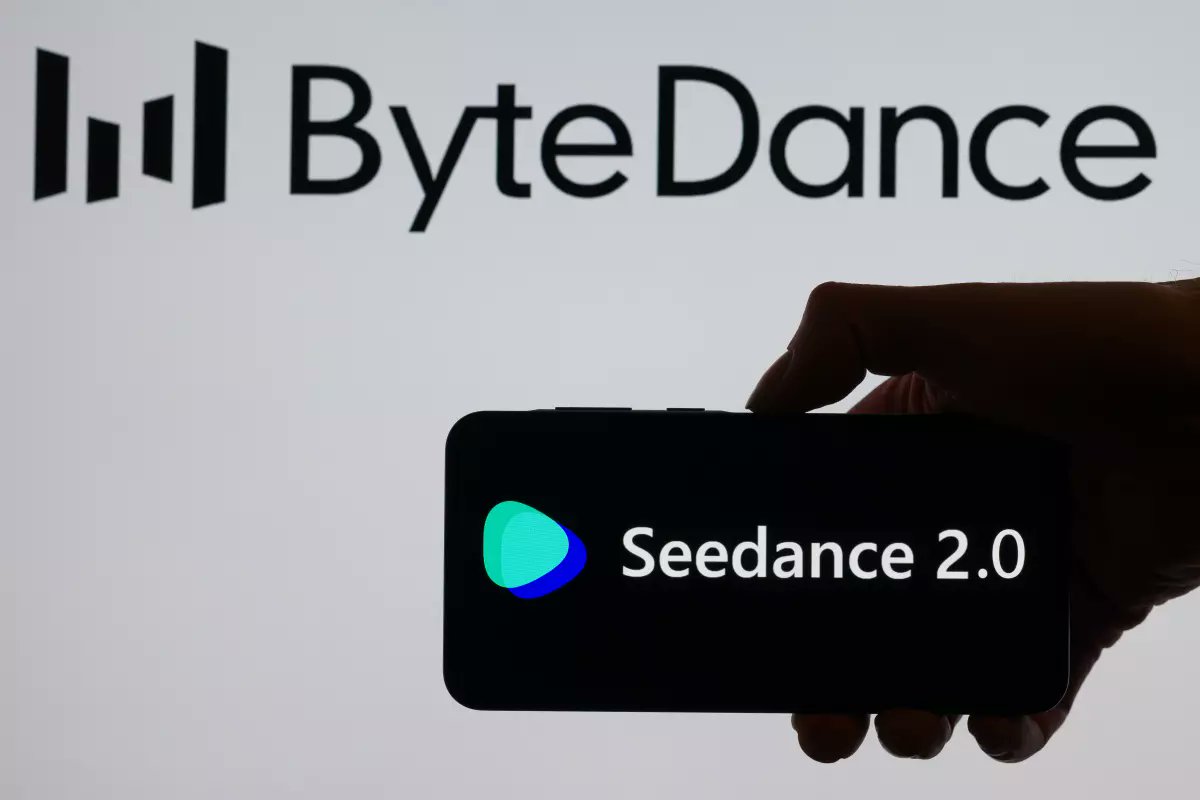
Google's Veo still holds the top spot globally for AI video model market share, but ByteDance's Seedance 2.0 is closing the commercial gap rapidly: and new revenue figures show just how much that capability is now worth. According to a 36Kr report, Volcano Engine, ByteDance's cloud and AI services unit, recently raised its 2026 MaaS revenue target to 15 billion yuan (~$2.07 billion), up from 10 billion yuan (~$1.4B) at the end of 2025 and roughly ten times the ~1.5 billion yuan (~$210 million) it actually booked last year. The driver is almost entirely Seedance 2.0, which alone is generating over 1 billion yuan (~$138 million) per month, with daily token consumption still climbing at roughly 40% month over month. We've previously flagged ByteDance's video AI dominance as a distribution story, Seedance already accounted for over 80% of China's AI video compute earlier this year, after ByteDance embedded the model inside CapCut and Douyin. The new revenue numbers confirm that the integration is now translating into direct, large-scale monetization. The model's reported penetration in China's short drama industry is around 95%, making it effectively the default tool for that content vertical. When a model becomes infrastructure for an entire production workflow, usage becomes sticky and token consumption compounds quickly. Coding models tell a different story, however, and it's a reminder that the MaaS business is not one market but several. ByteDance's Seed series has not gained comparable traction in code generation. There, Zhipu AI appears to be the early winner: in Q1 2026, Zhipu's GLM-5.1 model saw API pricing rise roughly 83% while call volume surged 400%, and its cached-token pricing now approaches Anthropic's Claude Sonnet 4.6. The divergence suggests that even a platform with ByteDance's distribution muscle cannot easily parachute into a capability race where another lab has built a multi-year lead in model intelligence and developer trust. For China's cloud providers, the implication is that MaaS revenue growth will be lumpy and concentrated around specific model-tier categories rather than evenly spread across all text and media APIs. Winning in video does not automatically translate to winning in code, and the companies that dominate each lane are likely to capture outsized value for at least the current cycle.
A few TBC pieces that are relevant here: - Unitree Can Build the Body, Can It Build the Mind? (Mar 2026): techbuzzchina.substack.com/p/unitree-can-… Unitree robots in a feisty boxing match. - On the Ground in China’s Humanoid Robotics Moment (May 2026): techbuzzchina.substack.com/p/on-the-groun… Since we last published, Xiaomi , Tencent , Alibaba , Kimi , and the highly anticipated DeepSeek v4 have all released new models. - China's Humanoid Robots Aren’t Ready. The Real Story Is the System Being Built. (May 2026): techbuzzchina.substack.com/p/chinas-human… We made the related point there this way: "The reason is that these hands are not necessarily going on humanoids."
ByteDance recently made a small organizational change that I think is more interesting than it first appears. According to LatePost, Seed Robotics, which moved into ByteDance’s Seed AI division after AI Lab was folded into it last year, has been reporting to multimodal AI head Zhou Chang for more than a month. Zhou now oversees visual generation models such as Seedream and Seedance, along with world models, multimodal interaction, and robotics. ByteDance is also hiring an embodied intelligence technical lead at roughly the Alibaba P10-P11 level who will report to him. The move itself is not surprising. ByteDance was always likely to approach robotics from the model side rather than the hardware side. What’s more notable is that the company appears to be treating robotics as part of its broader multimodal AI effort rather than as a standalone initiative. Zhou’s responsibilities now span video generation, multimodal understanding, world models, and robotics, suggesting ByteDance sees significant overlap between these areas and wants them sharing data, models, and research infrastructure. That feels consistent with where much of the industry is heading. OpenAI’s Sam Altman recently reiterated the company’s ambitions in robotics, and most major AI labs are now investing in some form of embodied intelligence. The underlying technologies increasingly overlap. The interesting question isn’t whether ByteDance wants to build robots. The company has been exploring robotics for years. The question is what role robotics plays inside a company whose core strengths are recommendation systems, multimodal AI, and large-scale data. One possibility is that robotics is becoming part of a broader effort around world models and physical-environment understanding. A robot operating in the real world generates a very different kind of training signal than internet content alone. From that perspective, robotics may be less a standalone business and more another source of data, environments, and problems for the company’s AI systems to learn from. For now, the organizational chart tells us more than any product roadmap. ByteDance appears to be integrating robotics deeper into its AI stack rather than building a separate robotics organization alongside it.

For the longer-running context, start with these: - Zhipu and MiniMax Market Disclosures (Feb 2026): techbuzzchina.substack.com/p/zhipu-and-mi… - Cambricon: China’s Nvidia, or Nvidia Without the Profits? (Sep 2025): techbuzzchina.substack.com/p/cambricon-ch…
MiniMax, the AI model developer that went public in Hong Kong in January at HK$165 per share, disclosed on May 31 that its board has approved studying a Shanghai STAR Board listing. The move comes just four months after its HK debut and one day after news that peer Zhipu will also seek a STAR Board listing, aiming to raise 15 billion yuan (~$2.1 billion). When we wrote about Zhipu and MiniMax market disclosures in February, we noted that public listings were forcing financial discipline on China's pure-play model developers. The new rush toward a second listing suggests that discipline also means seizing every capital-market window before the AI narrative cools. MiniMax's 2025 revenue totaled $79 million, and it recently disclosed annualized recurring revenue surpassing $300 million, roughly doubling over two months. At a HK$222 billion (~$28.5 billion) market cap, it trades at approximately 359 times trailing sales, or about 94 times ARR, well above the ~43 times ARR that OpenAI commands at a far larger revenue base. Around 63% of MiniMax's Hong Kong shares unlock in July, with financial investors holding over one-third. A thin float supported the stock's post-IPO rally; once that constraint lifts, the current HK$708 price, up more than 300% from its offer price, will face selling pressure. A STAR Board listing could recycle some of that liquidity into new capital, ideally before the lockup re-prices the shares. Meanwhile, the valuation gap with Zhipu has widened to 2.9 times, a difference that partly reflects the market's preference for Zhipu's infrastructure story (government clients, MaaS platform, model-as-foundation) over MiniMax's application-layer business at a time when large tech platforms are distributing capable models for free. More than 70% of MiniMax's revenue comes from overseas, adding legal and geopolitical variables. A second listing would replenish ammunition for a sector where compute spending shows no sign of slowing. The question it raises is whether MiniMax can tell a new equity story beyond ARR velocity, one convincing enough to command a premium on a market that already values it more richly than OpenAI.

Meituan’s Q1 2026 revenue hit 91 billion yuan (~$12.55B), up 5.6% year on year, while its operating loss shrank sharply from 16.1 billion yuan (~$2.2B) to 6.5 billion yuan (~$896.6M). Core local commerce showed the sharpest loss reduction, from 10 billion yuan (~$1.4B) to 2 billion yuan (~$276M). Management attributed the improvement partly to regulatory pressure. Government oversight of the food delivery sector has intensified this year, and on the earnings call executives pointed to a sustained optimization of subsidies across the industry. That push, they said, is redirecting competition away from spending wars and toward efficiency and user experience. Meituan’s own numbers bear that out: the company said it widened its lead in high-value orders and in unit economics versus peers, and Wang Xing expressed confidence that regulation will keep competition rational, helping unit economics return to a reasonable level over time. Meituan’s operational edge (rider network density, merchant relationships, logistics infrastructure) becomes harder to contest when rivals can no longer buy share as aggressively. If subsidy discipline holds, the core delivery business is likely to move back toward profitability, though the degree still hinges on whether newer entrants such as JD and Pinduoduo continue to accept losses in instant retail.

A few prior pieces that frame this pretty directly: - Unitree Can Build the Body, Can It Build the Mind? (Mar 2026): techbuzzchina.substack.com/p/unitree-can-… - Hands, Not Bodies (May 2026): techbuzzchina.substack.com/p/hands-not-bo… - China's Humanoid Robots Aren’t Ready. The Real Story Is the System Being Built. (May 2026): techbuzzchina.substack.com/p/chinas-human…
Astribot, a Shenzhen-based embodied AI company, this week announced a Series B round of over 1 billion RMB (~$138 million) and a valuation north of 10 billion yuan (~$1.38 billion). Its architecture reveal may be as notable as the numbers: the company’s DuoCore dual-system framework, which splits cognition into fast reactive and slow planning tracks, is structurally near-identical to Figure’s Helix architecture, announced earlier by the US company. But Astribot is already shipping at scale, with a thousand-unit industrial and commercial service order from ThunderSoft and a newly unveiled T1 model priced from 89,900 yuan (~$12,400). Astribot claims to be the first company globally to mass-produce tendon-driven AI robots. The wire-driven design mimics human tendons, using motors positioned away from joints to achieve a blend of stiffness and compliance, which improves safety and yields cleaner force-feedback data for model training. The system runs on a proprietary foundation model, Lumo, that emphasizes data efficiency over data scale, and an embodied OS that coordinates the two cognitive loops. The orders and price point suggest a different emphasis than the theatrical demos that have generated attention for China’s humanoid sector. Astribot’s pipeline includes deployments in scientific research, commercial services, entertainment, and industrial settings, with backing from Tencent, Alibaba, and ByteDance-linked investors. The unit economics are beginning to look less like a science project and more like a service robot business.

Rui Ma @ruima
78K Followers 849 Following AI, EVs, Robotics, Education, China. Mom. Also I help edit @techbuzzchina. Views personal. Ask me anything
CN Wire @Sino_Market
133K Followers 758 Following Covering China's business and market. Check out our real-time news website @MKTNews_Global https://t.co/Fo0645eIQ0
Zichen Wang @ZichenWanghere
41K Followers 5K Following Substack @pekingnology ↓ & part of NON-GOVT @CCG_org. @xhnews alum, Master in Public Policy @PrincetonSPIA. Self-anointed journalist posing as "thinktanker" lol
Bill Bishop @niubi
197K Followers 6K Following Sinocism https://t.co/4IciuAHywl Co-founded https://t.co/e9DjtXQ6tc. Sharp China Podcast https://t.co/qVWELS0lYq
Gavin Baker @GavinSBaker
247K Followers 6K Following Managing Partner & CIO, @atreidesmgmt. Husband, @l3eckyy. No investment advice, views my own. https://t.co/pFe9KmNu9U
Manya Koetse @manyapan
70K Followers 2K Following Eye on Digital China newsletter | Sinologist exploring China’s digital culture, social trends & online life 🇨🇳 | Japan Studies | Wannabe Hotpot Ambassador 🔥
David Fishman @pretentiouswhat
47K Followers 586 Following China energy analysis & advisory: solar, wind, coal, nuclear, markets. 13yr migrant, currently SH. Rural development enthusiast. @HopkinsNanjing @LantauGroup
Thomas Chua @SteadyCompound
83K Followers 441 Following Founder, Steady Compounding. Author, The Lunch Break Investor (Aug 18, 2026). Building wealth in one lunch break a day. ↓
Jordan Schneider @jordanschneider
54K Followers 4K Following Newsletter: https://t.co/j23uuLybUH join 75k readers Podcast: https://t.co/npkVVJalMk YouTube: https://t.co/nxmWB5nCTJ
Marcelo P. Lima @MarceloLima
30K Followers 4K Following Trying to find moats riding S-curves. Entrepreneur, investor. It’s always Day 1. @IncreasingRtrns host. Sign up for updates: https://t.co/IXlHVhOANw
Kaiser Kuo @KaiserKuo
103K Followers 5K Following AKA 郭怡廣. Host of the Sinica Podcast, a weekly discussion of current affairs in China. Guitarist of Chunqiu (春秋乐队 Spring & Autumn). Now at @kaiserkuo.bsky.social
From Growth To Value @FromValue
120K Followers 2K Following Founder of Potential Multibaggers & Best Anchor Stocks Finding winners early. $SHOP $7.78, $NET $39, $CRWD $98 etc. I help you stay calm when everyone panics.
Maitreya Bhakal @MaitreyaBhakal
56K Followers 2K Following The opposite side of the West is the right side of history. /Not a journalist. Writing op-eds as a hobby @RT_com @ChinaDaily @Globaltimesnews @CGTNOfficial
Brendan Ahern @ahern_brendan
14K Followers 567 Following China/EM CIO responsible for +$6B Author of https://t.co/1FuX6wbJUT Personal opinions views & not advice KraneShares Funds' Prospectus & Disclosures https://t.co/9KJyrMutM1
Investing with Tom @TomInvesting
12K Followers 259 Following I talk about stocks on the internet | 💼 Value Style Investor | 🎥 40,000+ Subscribers on YouTube |🇳🇿 Kiwi
Andy Mok | Author, Ch... @andymok
18K Followers 10K Following Decision hygiene under constraint. Where power, technology & governance collide. Investor, policy analyst. Wharton MBA, SAIS MA, RAND alum.
Sravan Kundojjala @SKundojjala
21K Followers 6K Following Semiconductors, Analyst @SemiAnalysis_ No investment advice. Opinions are mine only.
Christian Petersen-Cl... @chris__pc
18K Followers 3K Following Documentary Filmmaker, based in China. 25+ year Expat. I won't die on a couch. https://t.co/CBDgs8YG5i
Evan A. Feigenbaum @EvanFeigenbaum
54K Followers 8K Following Leading voice on Asia, experienced across government, think tanks and markets. Advisor to two Secretaries of State, a former Treasury Secretary and global CEOs.
Tianyu Fang @tianyuf
23K Followers 4K Following Technology writer. PhD student @Harvard researching the history of computing
Khalil K. @KhalilKrillane
104 Followers 904 Following
xi wu @xiwu422934
16 Followers 308 Following
谷德禄氪 @ggooodluckk
649 Followers 854 Following
Firstte @kumphonapi
210 Followers 985 Following Failure = Success,, “Investment success doesn't come from “buying good things,” but rather from “ buying things well.” ― Howard Marks... Only time will tell
Marwadi @abhinavmit34622
112 Followers 6K Following Truth buster Nationalist Marwadi heritage Marwadi history Marwadi pride



. @disk0nekted
623 Followers 2K Following software engineer; Not Financial Advice. shitposts; holdings: $baba

Jane @alfredjane98
6 Followers 91 Following
Kudret Karadag @KudoKara
91 Followers 1K Following
Pa @Pawelek_Gawelek
7 Followers 150 Following



Jeremiah PB @JeremiahPBsl
0 Followers 97 Following
Ali @Ali92566
49 Followers 3K Following
Descartegger @descartegger
60 Followers 503 Following
Juain @JuianTai
50 Followers 248 Following
jean bee @jeanbee10
54 Followers 875 Following
Fabian Meier @FMKreative
12 Followers 76 Following product designer ✱ indie iOS dev ✱ boxing ✱ learning Mandarin ✱ dongbei哥们儿
Till_Then @curiousmans
77 Followers 549 Following
EddieVwo @ariesborned
42 Followers 499 Following
Krishna Hegde @PositiveGamma
7K Followers 741 Following FinTech, Markets, India, Food, Asia. Trust Only Data. Bengaluru Boy. Farmer. hegde.eth
EdenWood @EdenWood62747
391 Followers 1K Following Budget is no longer a barrier. The only limit left is your imagination. https://t.co/nRVzHFP7sr


Por El Poder Mundial ... @LuisRodolfoElFi
1K Followers 2K Following Analista económico y geopolítico internacional, México 🇲🇽 y Apodaca NL, China 🇨🇳 Usa 🇺🇸 India 🇮🇳 Rusia 🇷🇺 Indonesia 🇮🇩 Brasil 🇧🇷 Mundo multipolar
Aaa @A8AAAAAAAAA
0 Followers 5K Following
Brianna el reina @BriannaDidit
1K Followers 3K Following The certain greeks and rely upon presupposition and clean and at thy own by.

Dennis @cbart2007
163 Followers 615 Following


erxgeo @erxgeo
43 Followers 462 Following
Erica Stuart @EricaStrec
2K Followers 3K Following
Nic_invests @InvestsNic07
2 Followers 95 Following
DL0x @luoyanyao
72 Followers 1K Following Dissonance in your echo chamber Retweets and likes are not endorsements
dsler @sler76
183 Followers 48 Following M.S. データ負えなくなったので投資アカウント(Financial Independence済) 怪しい投資アカにはつっこみを 毒ははくけど気にしないで 今はおもろそうな中国車ウオッチャー 基本反ワクには塩対応です
Aurore Gayte @A_gayte
1K Followers 1K Following Journaliste tech chez @LEXPRESS Des infos à partager ? 📩 [email protected], et DM ouverts
Jwani Tranquilino @jjtranquilino
28 Followers 191 Following
melvinyang96 @ElvinYong7
118 Followers 1K Following
CEO RuangGurau @asimetri_
8K Followers 1K Following
Choc🏃 @choc07_
30K Followers 3K Following 01年 |Founder of Nuts Club|如果你对Crypto Marketing有疑问请dm我|立志一年产出一百个高质量视频|
Anatoly Karp @akarp
3K Followers 4K Following MySQL Infra at Meta. Method coder. Discreet mathematician. Rust enjoyer. Machine learning, physics, economics.
Hugo Stiles @hugostiles
83 Followers 2K Following
Jiao Shixin @JiaoShixin
183 Followers 2K Following Professor; Visiting Scholar of Sigur Center, GWU(2016-2017); Shanghai Academy of Social Sciences; East Asia Security; U.S. Foreign Policy; China Foreign Policy

Sherry Z @zhangxi82036622
2 Followers 57 Following
Zichen Wang @ZichenWanghere
41K Followers 5K Following Substack @pekingnology ↓ & part of NON-GOVT @CCG_org. @xhnews alum, Master in Public Policy @PrincetonSPIA. Self-anointed journalist posing as "thinktanker" lol
Taisu Zhang @ZhangTaisu
64K Followers 386 Following Professor @YaleLawSch and @yale_history, comparative historian, legal theorist, occasional commentator on China-related stuff.
Bill Bishop @niubi
197K Followers 6K Following Sinocism https://t.co/4IciuAHywl Co-founded https://t.co/e9DjtXQ6tc. Sharp China Podcast https://t.co/qVWELS0lYq
Gavin Baker @GavinSBaker
247K Followers 6K Following Managing Partner & CIO, @atreidesmgmt. Husband, @l3eckyy. No investment advice, views my own. https://t.co/pFe9KmNu9U
Manya Koetse @manyapan
70K Followers 2K Following Eye on Digital China newsletter | Sinologist exploring China’s digital culture, social trends & online life 🇨🇳 | Japan Studies | Wannabe Hotpot Ambassador 🔥
Liqian Ren @liqian_ren
24K Followers 1K Following Director of Modern Alpha @WisdomTreeFunds Host of China of Tomorrow, co-host Behind the Markets https://t.co/Nb1RJm9LLk https://t.co/ckJ26l2oBm
Pythia Cap: Partially... @PythiaR
70K Followers 992 Following Multibillionaire space pirate. CIO of Vader Capital LP. Activist engagements include Jeddha and Alderaan.
Bill Brewster @BillBrewsterTBB
52K Followers 2K Following “Life moves pretty fast. If you don't stop and look around once in a while, you could miss it.” Bueller, Ferris
Marcelo P. Lima @MarceloLima
30K Followers 4K Following Trying to find moats riding S-curves. Entrepreneur, investor. It’s always Day 1. @IncreasingRtrns host. Sign up for updates: https://t.co/IXlHVhOANw
Mike @NonGaap
37K Followers 2K Following Mostly tweet about investing, governance, strategy, board dynamics, & random equity research topics. DM open..
Henry Gao @henrysgao
35K Followers 1K Following Prof of Law @SgSMUYPHSL; Senior Fellow @CIGIonline; Board Member @AJIL_andUnbound, @JIEL_OUP, & @hinrichfdn. All views are my own. Feel free to quote.
Kaiser Kuo @KaiserKuo
103K Followers 5K Following AKA 郭怡廣. Host of the Sinica Podcast, a weekly discussion of current affairs in China. Guitarist of Chunqiu (春秋乐队 Spring & Autumn). Now at @kaiserkuo.bsky.social
Sixth Tone @SixthTone
76K Followers 877 Following Fresh voices from today's China — news, features & commentary from a human perspective. Also on Facebook, Instagram, WeChat, & YouTube.
Trevor Scott @TidefallCapital
40K Followers 1K Following No politics, sports or social tweets. Just investing. Tweets are not investment advice.

Coco Feng @CocoF1026
3K Followers 1K Following Covering technology @SCMPNews / Retweets ≠ Endorsement / Never said no to hot pot
Jane Zhang @JaneZ901
689 Followers 209 Following HBS Researcher/MIT Knight Science Journalism Fellow/Ex-AI reporter for @Technology/Views are my own.
David Kirton @DavidKirton_
4K Followers 1K Following covering South China from Shenzhen for @Reuters. All dim sum my own. [email protected]
Weijin Research @WeijinResearch
2K Followers 16 Following Understanding China’s technology and energy transformation through industrial logic. Part of the @techbuzzchina Content Network.
Poe Zhao @poezhao0605
8K Followers 165 Following Decoding China's tech landscape for global investors & builders. AI • Robotics • EVs • Semiconductors. 12+ years covering China's tech evolution.
CATL @catl_official
20K Followers 108 Following Global leader in zero-carbon technology. Powering 150 countries and regions, 176 brands, and 529 passenger vehicle models.
Vincent Chow @vince_chow1
2K Followers 2K Following Senior AI reporter at SCMP. Conversations are off the record until agreed otherwise. Views my own.
Ian Johnson @iandenisjohnson
54K Followers 1K Following China civil society, religion, politics. 2024-25 fellow @wiko_berlin. Founder @mjdanganguan. Pulitzer for international reporting. Author three books on China.
Shai Oster @beijingscribe
10K Followers 2K Following Strategic Advisory. Former Asia Bureau Chief for The Information. Ex-WSJ, ex-Bloomberg.
Parker Conrad @parkerconrad
186K Followers 502 Following Rippling payroll & HRIS admin, CEO. Nothing here should be construed as investment advice nor used in any investment decisions related to Rippling.
Ed Sander | China Dig... @EdSander
4K Followers 58 Following China Digital Retail Analyst @ https://t.co/D081LPfNQa, Public Speaker @ https://t.co/SROoyEP5la , Study Tour Leader @ https://t.co/049MdPDaww
Spearfishing Capital @SpearfishingCap
2K Followers 7K Following 🇺🇸 Single Family Office ($275M AUM). We post about investing, distressed assets, & the macro environment. Our posts are not financial advice.
Unitree @UnitreeRobotics
136K Followers 313 Following High performance civilian robot manufacturer. Please everyone be sure to use the robot in a Friendly and Safe manner. https://t.co/hI6LafokVm
DeepSeek @deepseek_ai
1.0M Followers 0 Following Unravel the mystery of AGI with curiosity. Answer the essential question with long-termism.
Raunak Onkar @oraunak
28K Followers 1K Following Kit Kat Connoisseur Research & Investment Management @PPFAS Mutual Fund. Disclaimer: All tweets are my own views and not of PPFAS. IG & Threadsapp: oraunak
Shee Tan @sttan2516
47 Followers 1K Following
China EVs & More @ChinaEVsandMore
5K Followers 107 Following EV & mobility experts Tu Le & Lei Xing plug you in to all of the latest news coming out of 🇨🇳 that is sure to have effects on the 🇺🇸 & 🇪🇺 markets.
Hugo Chan @hugohchan
320 Followers 921 Following Co-Founder & Chief Investment Officer of Kingsferry Capital. Nothing here is advice. I may have a position in anything mentioned.
The Battery Show @thebatteryshow
5K Followers 856 Following A must-attend event for engineers and innovators looking to keep on pace with automotive, consumer, medical, and stationary application growth. #TheBatteryShow
The Battery Show Euro... @BatteryShow_EU
1K Followers 465 Following The Battery Show Europe is Europe's largest trade fair for advanced battery technology. #TheBatteryShow
Taylor Ogan @TaylorOgan
39K Followers 6K Following CEO at @snowbullcapital / Moved to China for investment opportunities / Boston to Shenzhen / Grammar nut
Aditya N @adnahar
1K Followers 533 Following

TNG Technology Consul... @tngtech
2K Followers 175 Following TNG, aka "The Nerd Group", is a consulting partnership focused on high end information technology, particularly AI. 932 employees, 99.9% academics, ~53% PhDs.
tngc029 @tngc029
175 Followers 283 Following TNG - Germany, UK, CH, ANZ. We're solving your hard IT problem

Josh Tarasoff @joshtarasoff
12K Followers 1K Following investing in Quality - nothing here is investment advice
CnEVPost @CnEVPost
31K Followers 215 Following China EV news, data, insights and more. Telegram: https://t.co/2fzq9AMRNz Newsletter: https://t.co/scncnqxkNY Google News: https://t.co/0Xe3cv6HMP
Lei 𝕏ing邢磊 @leixing77
10K Followers 2K Following Co-host @ChinaEVsandMore | Founder of AutoXing车邢 | Former Chief Editor of ChinaAutoReview | China auto/EV/AV/mobility enthusiast https://t.co/sWPS02wGiG
Keith E. Hernandez @kiefer_nandez
285 Followers 397 Following 🇲🇽🇺🇸🇵🇦| Last remaining Globalist | Tech
Wei @thedaoofwei
55K Followers 3K Following @coinsph @coinsxyz_ ceo | @0n1force council | @ofrfund advisor | ex @binance cfo | ex @grindr vice chairman
Priyans - ExpWithEVs @ExpWithEVs
2K Followers 816 Following EV Charging Infra Insights and Data on https://t.co/iKB4Uf8Tvs. Co-founder @active_iaq | @bitspilanigoa alum | involved @veditum | Boardgames, beer


Kris @kristinaEst
318 Followers 320 Following #Estonian in #Helsinki via #Shanghai | | https://t.co/NaWiYv2QDc | https://t.co/wlweoFtbAH
xiaowei @[email protected]... @xrw
6K Followers 2K Following chmod 577 | they/them 🌒 🌕 | #FreeThemAll | on digital sabbatical. writing, thinking & practicing at intersection of tech & care 🎨🍜🔮🌿
Lillian Li @lillianmli
32K Followers 433 Following Investing in transformational growth companies @BaillieGifford. Sophomore effort at On Primitives, erstwhile cartographer of Chinese Characteristics.
James Hull @jameshullx
1K Followers 2K Following Dad. Stock Picker. Patient. Like, RT ≠ endorsement.
Tarmo Tamm @tarmotamm
120 Followers 276 Following Entrepreneur and Investor from Estonia. Specializing in Sales Management, Business Development & Behavioral Economics.
China Finance 40 Foru... @ChinaFinance40
3K Followers 456 Following China's leading think tank in finance and macroeconomics - Independence. Insight. Influence.
The Information @theinformation
631K Followers 705 Following The most authoritative publication tech execs and founders read daily. Sign up: https://t.co/V8AtmraYaA
Martin Chorzempa 马�... @ChorzempaMartin
10K Followers 1K Following Author of The Cashless Revolution, Dennis Weatherstone Senior Fellow @PIIE focused on China FinTech, Digital Currency, Export Controls, and CFIUS
Greg Drilling @GregDrilling
415 Followers 2K Following
Peter Catterall @pfcatterall
1K Followers 797 Following Covering the Chinese economy and other topics with @AFP in Beijing. @EdinburghUni, @LSENews, Fudan alumnus. Coloradan. reach out to me: [email protected]
Richard Turrin @richardturrin
8K Followers 1K Following Author | Influencer | #Asia | #China | #CBDC | #Dedollarization | Speaker | Consultant | More: https://t.co/Ek0swQExIq
Gary Liu @garyliu
4K Followers 1K Following Co-founder & CEO @Terminal3io, Chair @Web3Harbour, Founder @ArtifactLabs_. Previously CEO @scmpnews, CEO @Digg. Happily gave up my blue tick.
Tony Peng @tonypengcomms
2K Followers 3K Following Crypto & Mining Newbie Global PR Director @BitFuFuOfficial $FUFU @JohnsHopkins MA & @Mizzou J-school alumn Ex @Baidu_Inc @Synced_Global Opinions are my own
You might like