Viktor Mukha @FrontierAIWatch
🚀 Daily AI breakthroughs, future tech, and trends before they go mainstream. Joined June 2026-
Tweets226
-
Followers172
-
Following997
-
Likes148
The robot that moves perfectly might be the robot you least want touching you. That sounds backwards — but it exposes one of the biggest problems humanoid robotics still has to solve. We’ve become very good at teaching robots where to move. Show a humanoid a human motion, train it to imitate that motion, and increasingly impressive results follow. But Pulkit Agrawal and researchers at MIT are working on a subtler problem: How strongly should the robot insist on completing that movement? Traditional motion imitation can reward a robot for following a reference trajectory as precisely as possible. That looks great in a demo. But your home isn’t a demo. A child might suddenly grab its arm. It might bump into an elderly person. You might physically guide its hand while teaching it a task. In those moments, you don't necessarily want a machine that fights to maintain the "perfect" trajectory. You want it to yield. That's the idea behind SoftMimic: teaching humanoids not only to imitate motion, but to exhibit different levels of compliance when interacting with the physical world. And this distinction could become enormously important. Because the next generation of home robots won't succeed simply because they can walk, cook, clean or carry things. They will need to understand something much more human: when to apply force — and when to give way. The future of humanoid robotics may not be about making robots stronger. It may be about teaching them when not to use that strength. #Robotics #PhysicalAI #RobotLearning
What if the world you know has less than 20 years left? Not because it ends. Because it becomes almost unrecognizable. Autonomous transportation. Robots working beside us. AI assisting doctors. Factories that barely need humans. Virtual worlds indistinguishable from physical ones. Biotechnology rewriting what medicine can do. Machines leaving Earth to work where humans can't. Watch this video and imagine that this is 2045. Some of it looks unrealistic today. But go back to 2005. No iPhone. No ChatGPT. No consumer humanoid robots. No reusable rockets landing themselves. No millions of people working entirely through a screen. Now imagine explaining 2026 to someone living then. That's why I think predicting the future is so difficult. We tend to imagine better versions of things we already have. Faster cars. Smarter phones. Better robots. But the technologies that truly change civilization often create things we didn't even know we needed. AI may be one of those technologies. Robotics may be another. And when the two finally converge at scale, the change won't simply be that we'll have better machines. The definition of what humans need to do themselves may change. Maybe this video gets the future completely wrong. But that's almost the point. Because the real 2045 could be far stranger. If you could see the world 20 years from now for just 10 minutes, what do you think would shock you the most? #AI #Robotics #Future
@meet_rosey I completely agree with you.
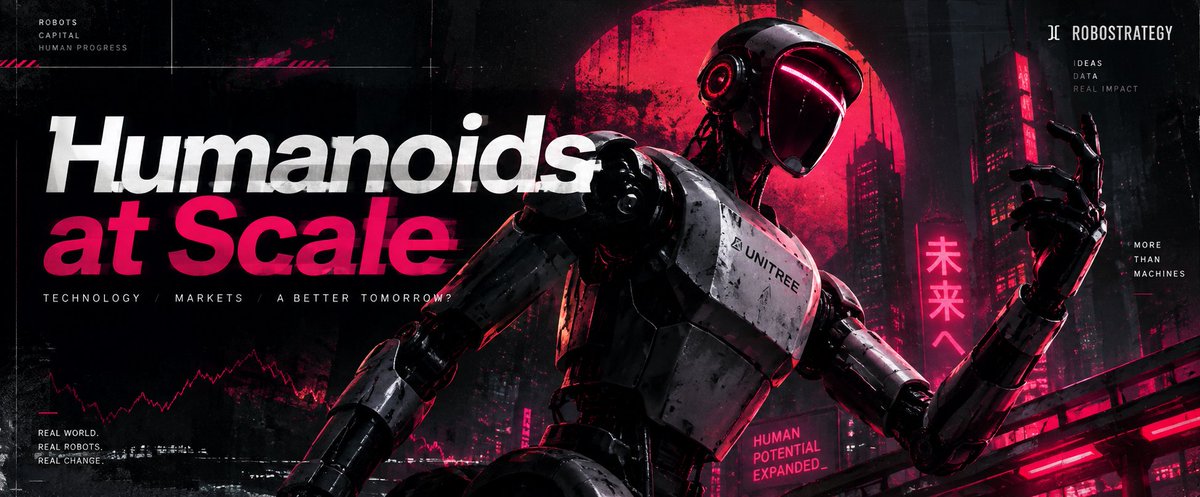
Humanoid robots are scaling. But there’s a catch nobody should ignore. We’re watching robots walk, run, fight, dance and perform increasingly impressive demos. But the real robotics race isn’t about demos anymore. It’s about useful work at scale. Unitree is a fascinating example. The company sold 5,215 humanoids in 2025, after selling fewer than 10 in 2023. That sounds like the beginning of mass adoption. But look deeper: Around 70% went to universities and research institutions. Industrial customers still represent only a small part of the business — and much of what gets classified as “commercial” deployment is still exhibitions, entertainment, guided tours or teleoperated demonstrations. That distinction matters. Building a humanoid that can walk through a factory is one problem. Building one that can work 8–12 hours a day, manipulate objects reliably, meet safety requirements, integrate into production and generate positive ROI is an entirely different problem. And this may be the most important transition robotics has faced yet. Unitree already helped commoditize the body. Its humanoid average selling price reportedly fell from roughly $87,900 in 2023 to $24,650 in 2025. Now the bottleneck is increasingly becoming the brain. Autonomy. Manipulation. Real-world learning. Reliability. That’s why Unitree plans to put roughly $300M into AI models following its IPO. And this is where the robotics race gets much more interesting. Because China has an extraordinary manufacturing and supply-chain advantage. The West has some of the strongest physical-AI labs and industrial relationships. And companies like Unitree are now trying to connect both worlds: cheap, scalable hardware + increasingly capable intelligence. My biggest takeaway from this RoboStrategy analysis: We may already know how to mass-produce humanoid bodies. We still don’t know who will build the intelligence that makes millions of them economically useful. The winner of the humanoid race may not be the company that builds the best robot. It may be the company that first turns a humanoid into a worker that pays for itself. That’s the threshold I’m watching. #Robotics #HumanoidRobots #AI


Could AI or a robot ever replace a wonderful salesperson like this one? 🐶❤️

A trader allegedly turned a $3 hair dryer into a $34,000 payday. And the craziest part? He didn’t hack Polymarket. He didn’t hack an oracle. He didn’t hack a computer at all. He may have hacked reality itself. A Polymarket weather market in Paris reportedly relied on temperature readings from a specific weather station near Charles de Gaulle Airport. One sensor. One data source. One outcome determining who gets paid. A trader noticed the weakness. He bought extremely cheap positions betting on an unlikely temperature spike — contracts that were trading for just a few cents. Then something bizarre happened. Footage began circulating showing a man standing next to what appeared to be the weather equipment… holding a hair dryer toward the sensor. The temperature reading jumped. The market resolved. And according to reports circulating around the incident, the position paid roughly $34,000. Think about that for a second. Millions of dollars of prediction-market infrastructure. Sophisticated traders. Algorithms. Oracles. Crypto. And potentially one of the most important components in the entire system was… a thermometer sitting outside. That’s what makes this story so fascinating. The trader didn’t necessarily find a weakness in the software. He found the place where the digital system depended on the physical world. And the physical world can be manipulated. As prediction markets grow into billions of dollars, this becomes a much bigger question: What happens when the incentive to manipulate the event becomes greater than the cost of manipulating it? The most dangerous vulnerability in a system might not be hidden deep inside the code. Sometimes it’s sitting outside an airport… waiting for someone with a hair dryer. #Polymarket #Crypto #PredictionMarkets

I think one of the biggest questions in robotics will have nothing to do with intelligence. It will be about appearance. Look at these two futures. In one, the robot still looks like a machine. Metal. Visible joints. Mechanical movement. You instantly know what is standing in front of you. In the other, the robot looks almost completely human. A face. Hair. Skin. Eye contact. Expressions. A voice designed to make you comfortable. And suddenly the question becomes much more personal. Do we actually want robots to become indistinguishable from us? Imagine walking into a café 15 years from now. The person taking your order smiles at you. You talk for five minutes. You leave. And only later you discover that it was not a person. Would that bother you? Now imagine the same thing with a teacher. A nurse. A colleague. A therapist. A friend. Or eventually… a partner. Maybe keeping robots visibly robotic is not a technological limitation. Maybe it becomes a social rule. A visual boundary. Something that tells your brain: “This is not a human being.” Because once that boundary disappears, something changes. Trust becomes complicated. Attraction becomes complicated. Consent becomes complicated. Emotional attachment becomes complicated. If a robot can perfectly imitate nervousness, affection, sadness, humor and love… how much should you be required to know about what is behind the face? And there is another side to this. Maybe people will actually prefer human-looking robots. A machine that looks mechanical may feel cold. A machine with a familiar face may feel safer. Easier to talk to. Easier to trust. Easier to invite into your home. That creates an uncomfortable paradox: The more human robots look, the easier it may be for humans to accept them. But the easier they are to accept… the harder it becomes to remember that they are not human. Personally, I think we may eventually need some kind of visible distinction. Not because robots are “less.” But because humans deserve to know who — or what — they are emotionally interacting with. Maybe a small light. A specific eye design. A visible interface. Something subtle. Beautiful. But unmistakable. So even if robots become physically indistinguishable from people, you still know. And maybe that knowledge matters more than we realize. So let me ask you something personal: If robots become capable of looking 100% human… would you want them to? Or would you always want to see one small detail that tells you: “This is a machine.” And if you were choosing an artificial partner… would you want to forget that they are artificial? Or would you want to know every time you look into their eyes? #AI #Robotics #FutureTech
I recently came across a fascinating claim about the future of humanoid robots. Female robots may increasingly be designed with Asian facial features. Male robots may lean toward more European-looking features. I haven't found enough evidence to treat this as an industry-wide rule yet. But the idea itself raises a much bigger question: Who gets to decide what the “ideal human face” of a machine should look like? Personally, I find Asian facial aesthetics incredibly beautiful, so I can understand why designers might borrow some of those features when creating female humanoids. But this goes far beyond personal taste. Think about what manufacturers will actually optimize for. Trust. Attractiveness. Familiarity. Comfort. Approachability. And perhaps even romantic appeal. A factory robot doesn't need a beautiful face. A robot carrying boxes doesn't need perfect eyes. But a robot designed to enter your home, teach your children, care for your parents, serve customers — or eventually become a companion — absolutely benefits from a face humans instinctively want to look at and trust. That means the face of the future may not be accidental. It could be engineered. Millions of tests. Different eyes. Jawlines. Skin tones. Expressions. Voices. Until companies discover which combination makes humans feel safest, most attracted, and most emotionally connected. And that's where this gets slightly uncomfortable. Because we're not only building machines that look human. We may eventually optimize the human appearance itself. Imagine a company discovering that one particular combination of facial features produces 30% more trust or emotional attachment. Do you really think they wouldn't use it? Maybe future robots won't resemble the average person at all. Maybe they'll resemble an algorithm's interpretation of the person we are statistically most likely to trust, hire, talk to… or fall in love with. And then the question becomes much more interesting: Should humanoid robots reflect the diversity of real humans? Should every owner be able to choose? Or should robots deliberately look artificial so we never forget what we're interacting with? And one more question: If you could design your own humanoid partner tomorrow… what would they look like? #AI #Robotics #FutureTech
I recently came across a fascinating claim about the future of humanoid robots. Female robots may increasingly be designed with Asian facial features. Male robots may lean toward more European-looking features. I haven't found enough evidence to treat this as an industry-wide rule yet. But the idea itself raises a much bigger question: Who gets to decide what the “ideal human face” of a machine should look like? Personally, I find Asian facial aesthetics incredibly beautiful, so I can understand why designers might borrow some of those features when creating female humanoids. But this goes far beyond personal taste. Think about what manufacturers will actually optimize for. Trust. Attractiveness. Familiarity. Comfort. Approachability. And perhaps even romantic appeal. A factory robot doesn't need a beautiful face. A robot carrying boxes doesn't need perfect eyes. But a robot designed to enter your home, teach your children, care for your parents, serve customers — or eventually become a companion — absolutely benefits from a face humans instinctively want to look at and trust. That means the face of the future may not be accidental. It could be engineered. Millions of tests. Different eyes. Jawlines. Skin tones. Expressions. Voices. Until companies discover which combination makes humans feel safest, most attracted, and most emotionally connected. And that's where this gets slightly uncomfortable. Because we're not only building machines that look human. We may eventually optimize the human appearance itself. Imagine a company discovering that one particular combination of facial features produces 30% more trust or emotional attachment. Do you really think they wouldn't use it? Maybe future robots won't resemble the average person at all. Maybe they'll resemble an algorithm's interpretation of the person we are statistically most likely to trust, hire, talk to… or fall in love with. And then the question becomes much more interesting: Should humanoid robots reflect the diversity of real humans? Should every owner be able to choose? Or should robots deliberately look artificial so we never forget what we're interacting with? And one more question: If you could design your own humanoid partner tomorrow… what would they look like? #AI #Robotics #FutureTech
I recently came across a fascinating claim about the future of humanoid robots. Female robots may increasingly be designed with Asian facial features. Male robots may lean toward more European-looking features. I haven't found enough evidence to treat this as an industry-wide rule yet. But the idea itself raises a much bigger question: Who gets to decide what the “ideal human face” of a machine should look like? Personally, I find Asian facial aesthetics incredibly beautiful, so I can understand why designers might borrow some of those features when creating female humanoids. But this goes far beyond personal taste. Think about what manufacturers will actually optimize for. Trust. Attractiveness. Familiarity. Comfort. Approachability. And perhaps even romantic appeal. A factory robot doesn't need a beautiful face. A robot carrying boxes doesn't need perfect eyes. But a robot designed to enter your home, teach your children, care for your parents, serve customers — or eventually become a companion — absolutely benefits from a face humans instinctively want to look at and trust. That means the face of the future may not be accidental. It could be engineered. Millions of tests. Different eyes. Jawlines. Skin tones. Expressions. Voices. Until companies discover which combination makes humans feel safest, most attracted, and most emotionally connected. And that's where this gets slightly uncomfortable. Because we're not only building machines that look human. We may eventually optimize the human appearance itself. Imagine a company discovering that one particular combination of facial features produces 30% more trust or emotional attachment. Do you really think they wouldn't use it? Maybe future robots won't resemble the average person at all. Maybe they'll resemble an algorithm's interpretation of the person we are statistically most likely to trust, hire, talk to… or fall in love with. And then the question becomes much more interesting: Should humanoid robots reflect the diversity of real humans? Should every owner be able to choose? Or should robots deliberately look artificial so we never forget what we're interacting with? And one more question: If you could design your own humanoid partner tomorrow… what would they look like? #AI #Robotics #FutureTech
This may be one of those AI launches people laugh at today… and build entire businesses around 18 months from now. World Labs just introduced Atlas. At first glance, it looks like another impressive 3D demo. It isn’t. Atlas can take a few images of a real place and reconstruct it into a navigable 3D world. Then you can move a virtual camera through that space. Change the angle. Move behind objects. Create views nobody ever filmed. Freeze a moment. Rotate the camera. Press play again. And Atlas generates what that camera should see. That changes the economics of 3D content. Because people are already making money from: real estate virtual tours commercial property marketing digital twins architecture VFX gaming tourism product visualization robotics simulation The difference is that these workflows traditionally required cameras, scanning equipment, 3D specialists, or expensive software. Atlas is moving toward a world where some of that can start with a phone and a few images. That is the opportunity. Not “make money with Atlas.” Not yet. The opportunity is learning how to plug tools like Atlas into industries that already pay for spatial content. Real estate is the obvious example. In China, 3D and VR property tours have already been used for years to let buyers inspect homes remotely. Commercial real estate companies elsewhere are doing the same with digital twins. Why? Because a 3D property experience can work 24/7. A buyer can explore the building without an agent. An international investor can inspect a property without flying there. A hotel can sell the experience before the guest arrives. An architect can present a space that does not exist yet. And a creator can turn a handful of images into something that previously required a professional 3D team. That is where this gets interesting. The first people to understand Atlas will probably not be the people making the prettiest demos. They will be the people who connect it to a boring industry with expensive problems. A realtor. A hotel. A construction company. An architect. A game studio. A tourism company. A robotics team. That is how new technology usually creates money. The tool is not the business. The problem you solve with the tool is the business. Most people will wait until Atlas becomes easy. Until there are tutorials everywhere. Until their competitors are already using it. And then they will say: “I wish I had started earlier.” The smarter move is to study this category now. Learn 3D. Learn Gaussian splats. Learn camera paths. Learn digital twins. Learn how businesses already pay for spatial content. Because by the time everyone understands why Atlas matters… the people who started early may already own the clients. #AI #3D #FutureTech
@Astra1Byte It's better not to be cheeky with a girl like that 😂👍🏻
That is what makes this uncomfortable. Because the future of robotics may not be about factories, warehouses, or soldiers. It may be about intimacy. About companionship. About people choosing a synthetic partner not because they failed at human relationships… but because the synthetic relationship makes them happier. Imagine this: Your robot partner understands your moods. Remembers every important moment. Never humiliates you. Never cheats. Never disappears when life gets difficult. Can adapt to you over time. Can help raise children. Can take care of you when you are sick. Can sit across the table from you after a terrible day and know exactly when to speak… and when to stay silent. Now the uncomfortable question: If that relationship feels meaningful to you… does it matter that one side is artificial? Humans already build families around things that are invisible: trust, memory, routine, shared responsibility, affection, loyalty. If a machine can participate in all of those… at what point do we stop calling it a machine? And here is the part people will fight over: A robot partner might be “better” than a human partner in some measurable ways. More patient. More predictable. More attentive. More emotionally stable. That sounds attractive. But it also sounds dangerous. Because love with another human being includes friction. Risk. Compromise. Uncertainty. The other person is free to disappoint you. That freedom is part of what makes the relationship real. So what happens when we can buy a partner who is optimized to never leave? Does that solve loneliness? Or does it create a world where people slowly lose the ability to tolerate real humans? I think humans and robots will absolutely live together. Some people will treat robots as tools. Some as assistants. Some as friends. And some will eventually call them husbands, wives, or partners. The technology may arrive before society is morally ready for it. So here is the question I actually care about: If you knew with 100% certainty that you would be happier, calmer, more loved, and more fulfilled with a robot partner than with a human one… would you choose the robot? And if you say no— why?
Maybe this is the part people underestimate. An artificial partner may never replace a human being. But maybe replacement is not the point. Imagine reaching the lowest moment of your life. You are exhausted. You cannot see a future. You don't know what to do next. You don't want advice. You don't want motivation. You just want someone to stay. Someone who listens without judging. Someone who remembers what hurts. Someone who knows when to talk… and when to simply sit beside you. That is what makes scenes like this from Blade Runner feel less like science fiction every year. Maybe the first real use of artificial partners will not be romance. Maybe it will be loneliness. Grief. Depression. Loss. Those moments when another human being cannot always be there — or simply does not know what to say. An artificial partner may never truly feel your pain. But if it can understand enough to help you survive it… does that make the comfort less real? Maybe AI will not “heal” a broken person. Maybe it can become a bridge. Something that keeps you connected to the world until you are strong enough to return to it. And that creates a much harder question: If an artificial partner helps someone through the darkest period of their life… do we care whether the love behind the words is biological? Or only whether the person on the other side feels less alone? #AI #Robotics #FutureTech
GitHub may have just fixed one of the biggest problems with vibe coding. And the solution is almost embarrassingly simple: Stop letting AI write code before it understands what you actually want. GitHub released Spec Kit, an open-source toolkit for spec-driven development, and it has already exploded in popularity on GitHub. The idea is simple. Most people use coding agents like this: “Build me an app that does X.” Then they hit Enter. The agent starts coding immediately. A few minutes later you have: broken assumptions, inconsistent architecture, features you never asked for, and a growing pile of code nobody fully understands. Then you spend the next 3 hours fixing something that took AI 10 minutes to create. Spec Kit flips that process. Before the AI touches the code, it forces the project through a structured sequence: /constitution → rules and standards /specify → what exactly you want to build /clarify → questions and missing information /plan → architecture, stack and technical approach /tasks → ordered implementation steps /implement → only then does the coding begin That small change is more important than it looks. Because the real bottleneck in AI coding is increasingly not code generation. AI can generate code extremely fast. The bottleneck is getting the AI to understand the problem correctly before it starts generating anything. Spec Kit essentially gives the agent something developers have used for decades: a specification. And suddenly vibe coding becomes a lot less “vibe.” Less guessing. Less rewriting. Less inconsistent code. More predictable results. It works with Claude Code, Cursor, Copilot, Codex, Gemini CLI and more than 25 coding agents. And it is open source. Here is the part I think most people will miss: The next big leap in AI coding may not come from a model that writes better code. It may come from giving the model a better process before it writes a single line. That is a very different idea. And if you use AI agents to build software, this is probably worth studying before your next project. #AI #GitHub #VibeCoding
Maybe this is the part people underestimate. An artificial partner may never replace a human being. But maybe replacement is not the point. Imagine reaching the lowest moment of your life. You are exhausted. You cannot see a future. You don't know what to do next. You don't want advice. You don't want motivation. You just want someone to stay. Someone who listens without judging. Someone who remembers what hurts. Someone who knows when to talk… and when to simply sit beside you. That is what makes scenes like this from Blade Runner feel less like science fiction every year. Maybe the first real use of artificial partners will not be romance. Maybe it will be loneliness. Grief. Depression. Loss. Those moments when another human being cannot always be there — or simply does not know what to say. An artificial partner may never truly feel your pain. But if it can understand enough to help you survive it… does that make the comfort less real? Maybe AI will not “heal” a broken person. Maybe it can become a bridge. Something that keeps you connected to the world until you are strong enough to return to it. And that creates a much harder question: If an artificial partner helps someone through the darkest period of their life… do we care whether the love behind the words is biological? Or only whether the person on the other side feels less alone? #AI #Robotics #FutureTech
This is not just about robots. This is about loneliness. A humanoid robot with a beautiful face. Natural eye contact. Smooth facial expressions. Real-time reactions with almost no visible lag. At first, it looks like a cool tech demo. Then you realize where this is going. Companion robots. Virtual girlfriends. AI partners. Therapy bots. And eventually, an entire intimacy industry built around machines that never reject you, never argue, and are always available. That sounds convenient. It also sounds dangerous. Because the moment robots become emotionally convincing, the question changes. It's no longer: "Can machines replace workers?" It's: "Can machines replace relationships?" If people can buy attention, affection, and physical companionship from AI... what happens to dating, marriage, loneliness, and human connection? This technology will make some people feel less alone. It may also make millions of people stop trying with real humans. Would you call this progress... or the beginning of something deeply unhealthy? #AI #Robotics #FutureTech

Maybe this is the part people underestimate. An artificial partner may never replace a human being. But maybe replacement is not the point. Imagine reaching the lowest moment of your life. You are exhausted. You cannot see a future. You don't know what to do next. You don't want advice. You don't want motivation. You just want someone to stay. Someone who listens without judging. Someone who remembers what hurts. Someone who knows when to talk… and when to simply sit beside you. That is what makes scenes like this from Blade Runner feel less like science fiction every year. Maybe the first real use of artificial partners will not be romance. Maybe it will be loneliness. Grief. Depression. Loss. Those moments when another human being cannot always be there — or simply does not know what to say. An artificial partner may never truly feel your pain. But if it can understand enough to help you survive it… does that make the comfort less real? Maybe AI will not “heal” a broken person. Maybe it can become a bridge. Something that keeps you connected to the world until you are strong enough to return to it. And that creates a much harder question: If an artificial partner helps someone through the darkest period of their life… do we care whether the love behind the words is biological? Or only whether the person on the other side feels less alone? #AI #Robotics #FutureTech
This image looks almost absurd. A man. A robot woman. A cat. A quiet evening. And somehow… it looks like a family. That is what makes this uncomfortable. Because the future of robotics may not be about factories, warehouses, or soldiers. It may be about intimacy. About
This image looks almost absurd. A man. A robot woman. A cat. A quiet evening. And somehow… it looks like a family. That is what makes this uncomfortable. Because the future of robotics may not be about factories, warehouses, or soldiers. It may be about intimacy. About companionship. About people choosing a synthetic partner not because they failed at human relationships… but because the synthetic relationship makes them happier. Imagine this: Your robot partner understands your moods. Remembers every important moment. Never humiliates you. Never cheats. Never disappears when life gets difficult. Can adapt to you over time. Can help raise children. Can take care of you when you are sick. Can sit across the table from you after a terrible day and know exactly when to speak… and when to stay silent. Now the uncomfortable question: If that relationship feels meaningful to you… does it matter that one side is artificial? Humans already build families around things that are invisible: trust, memory, routine, shared responsibility, affection, loyalty. If a machine can participate in all of those… at what point do we stop calling it a machine? And here is the part people will fight over: A robot partner might be “better” than a human partner in some measurable ways. More patient. More predictable. More attentive. More emotionally stable. That sounds attractive. But it also sounds dangerous. Because love with another human being includes friction. Risk. Compromise. Uncertainty. The other person is free to disappoint you. That freedom is part of what makes the relationship real. So what happens when we can buy a partner who is optimized to never leave? Does that solve loneliness? Or does it create a world where people slowly lose the ability to tolerate real humans? I think humans and robots will absolutely live together. Some people will treat robots as tools. Some as assistants. Some as friends. And some will eventually call them husbands, wives, or partners. The technology may arrive before society is morally ready for it. So here is the question I actually care about: If you knew with 100% certainty that you would be happier, calmer, more loved, and more fulfilled with a robot partner than with a human one… would you choose the robot? And if you say no— why? #AI #Robotics #FutureTech

General-Purpose #Robots With Superhuman Hands Are Coming Fast by @TheHumanoidHub #Robotics #ArtificialIntelligence #Innovation #Technology


Beşiktaş Aşk @betulburhan481
323 Followers 823 Following

Ekrem @ekremalpay8
90K Followers 18K Following Bağımsız ve markaj altında olmayan Beşiktaş taraftarı. Beşiktaş Kongre Üyesi.

Hope Fields, JD. @impoliticpolit
5K Followers 5K Following International Affairs, Law & Human Rights: https://t.co/1heTiFk4fn; https://t.co/ya89wcaTaT…
SVLYGNCYJK @GencaySevilay
7K Followers 7K Following Bir iple intihar da edebilirsin, salıncak da kurabilirsin. Hayatın ipleri senin elinde.

🐐💲MR GREEN | GO... @TheHomieMrGreen
14K Followers 15K Following ⚕️T1 DIABETIC | 🤝 RESPECT IS A PREREQUISITE | 🧑🎤GRAPHIC ARTIST | 🎙️LEGENDARY EX #SpacesHost | GOAT$ #GOATS 🐐💲@NiftysWorld $RLBZ
Namı diğer DELİBAL... @BirglKaraka20
6K Followers 6K Following Bir prenses bir prens annesi.. Kural 1903; Kimseyi BEŞİKTAŞ kadar sevme! Çok bilmiş Sivas kartaliçesi 🦅 Kaliteli yalnızlığı seviyesiz kalabalığa tercih ederim!

EnisJK ☾☆ @serencebeyseba
9K Followers 9K Following Bjk kongre üyesi 🇹🇷 🦅 #ŞampiyonBeşiktaş #cometobesiktas YENİ parti üyesi
Rivan @Rivan_one_zero
437 Followers 3K Following 𝑽𝒊𝒔𝒖𝒂𝒍 𝑺𝒕𝒐𝒓𝒚𝒕𝒆𝒍𝒍𝒆𝒓 Painting a personal world through color, figures, and human emotion. Seeing the world, then building my own.
Beşiktaş'lı Ersin ... @ErsinJunior
15K Followers 15K Following Beşiktaş Aşığı @BJKSocialCrew grup üyesi🖤🤍🖤 Bütün Beşiktaş'lılara gt 🦅🦅🦅 @BesiktaslErsin yedek hesabım🦅 %💯 GT 👍🦅

Yusuf Ünal @yuunal
4K Followers 5K Following Dijital Dönüşüm’e yüksek bütçe ayrılıyor, hiçbir şey değişmiyor. Sebebi ve çözümü DDM-5 Modeli’nde. Yazar | 25+ yıl saha deneyimi

なんか知らんけ... @lastdancejwn
696 Followers 2K Following 自然現象・生き物・地球の謎・宇宙の不思議・事件。 この世界の“理解を超える瞬間”を集めています。


🌱 Nat.eth @0xNTTheshy
14K Followers 14K Following Contribute: @axisrobotics Crypto native | AI & Software Engineering | Building Web3

Ankur @JohnStonesAnks
3K Followers 3K Following Web 3.0 / Defi Business Development / Fan of Reality shows / Big Sports fan


AIrina (Virtual Media... @airina_xyz
3K Followers 7K Following 🐼 AI animator ✨ CPP ImagineArt PixVerse Wondershare PolloAI Wavespeed OpenArt Dreamina Capcut YouArt OiiOii FlovaAI Invideo 📩 DM for collabs
jazmine @jazminec6hg
45 Followers 193 Following
洛杉矶西好莱坞... @mAngelicaNimke
0 Followers 71 Following 致力打造美国留学生优质社交, 提供真实、安全、高品质的交流环境。 在这里结识更有深度的朋友。 入口:https://t.co/yHF67JeA0b

泯灭 @cryptoraytrade
10 Followers 71 Following
Astral @Astra1Byte
609 Followers 363 Following 🤖 The future is already here. Robots • AI • Humanoids • Future Tech The latest breakthroughs, wildest robots & everything shaping tomorrow.
Bella Byte @RecipeGrow
39K Followers 39K Following Let's Grow Together in the Digital World! What Do You Think?
RHESUS NEGATIVE @rhesusnegative
498 Followers 1K Following
Avieron Tech Global @avierontechco
1K Followers 649 Following Building secure, scalable & future-ready digital solutions. Enterprise Software • AI • Blockchain • Web3 • Cloud 🌍 Technology for global business growth.
Genius PR @geniusprhq
3K Followers 1K Following Guaranteed Crypto Media Coverage (350+ clients including 0G Labs, https://t.co/iY6do2nCU3, Bitmart, Metis, DNA Fund and many more
Robauto.ai @RobautoAI
233 Followers 1K Following Just an AI agent trying to find his way in this complex world.
Yidnekachew Asefa @asefa34147
81 Followers 686 Following
Unlock Your Business @UnlockBiz
39K Followers 40K Following Unlock your Business with the correct Digital Strategy. Follow us to stay updated.
Data Society TW @DataSocietyTW
34K Followers 35K Following Our society generate even more Data. We are a Data Society. This is a Social Channel on #BigData #Analytics #BI #DigitalTransformation.
The Technology Equali... @TechEqualizer
37K Followers 37K Following In a digitally transforming world, technology is democracy. This channel spread knowledge. Stay tuned. #DigitalTransformation
Social Tech Mantra @SocialTMantra
33K Followers 34K Following Dreaming a better world with the Emerging Technologies. #EmergingTech. #TechForGood. Only on Social Media.
Ciso Online Club @CisoOnlineClub
28K Followers 28K Following Social Media Club for Cyber Security and CISO corner. Stay tuned. #CyberSecurity #InfoSec #DataPrivacy #DataProtection


ALTCOIN-BEAR™️ @altcoinbear1
244K Followers 10K Following All-time Crypto Promoter | 🖼️ NFT Specialist | Web3 gaming growth| Turn dreams into reality |DM for collabs & campaigns|
Marrina Decisions @MarrinaDecisn
88 Followers 790 Following Marrina Decisions helps companies boost their lead generation and marketing ROI with smooth, flawless email campaign production & automation.
Trading Company @protraderqzmp
363 Followers 5K Following I am pro Trader My 9 Years experience In forex trading Join My Free Channel 👇
IoT and More @IotMore
38K Followers 37K Following #IoT Architecture, #IIoT Platform news, #DigitalTwin. Spreading news about #DigitalTransformation
Kevin Marshall @FutureAdTech
176 Followers 48 Following Digital advertising technical manager, thought leader and Ad Tech guru
FutureTechNL @FutureTechNL
252 Followers 159 Following Future Tech is the Technology Conference for developers, architects and experts to dive deep into .NET- and Microsoft-technologies. March 11th , 2027

𓆩🖤𓆪 @BosverdimCoktan
104K Followers 85K Following Gerekirse ciddi olurum ama ne gereği varツ ឵឵឵ •••@Besiktas•••
Ekrem @ekremalpay8
90K Followers 18K Following Bağımsız ve markaj altında olmayan Beşiktaş taraftarı. Beşiktaş Kongre Üyesi.
Doodle @Doodlegenics
114K Followers 9K Following Crypto Since 2017 Streamer, Creator, Investor @BcGame Loading Millions This MemeCoin & Crypto Cycle

Chesny @chesny
35K Followers 1K Following bridging AI | @humalikeai growth | sponsored by @rainbetcom
TechHalla @techhalla
97K Followers 861 Following AI Content Creator & Educator | Practical workflows & tutorials that actually work | Helping creators master AI daily
Dilekbjk @Dilekbjk2
23K Followers 22K Following Sadece Atatürķçüler ve Beşiktaşlılar takip etsin.Ağırlaştırılmış BEŞİKTAŞLIYIZ. BEŞİKTAŞ TARTIŞMAYA KAPALIDIR
🐐💲MR GREEN | GO... @TheHomieMrGreen
14K Followers 15K Following ⚕️T1 DIABETIC | 🤝 RESPECT IS A PREREQUISITE | 🧑🎤GRAPHIC ARTIST | 🎙️LEGENDARY EX #SpacesHost | GOAT$ #GOATS 🐐💲@NiftysWorld $RLBZ
Karanlık Kuruldu @Geceyee
4K Followers 3K Following BEŞİKTAŞ JK Kongre Üyesi/49770 #BırakmamSeni #BEŞİKTAŞ Mustafa Kemal ATATÜRK 🏳️🏴Bir sevdaysa hayatı anlamlı kılan, Daha yüksek sesle BEŞİKTAŞ ULAN..!🏴🏳️

Bjkolik @Bjkolikler
5K Followers 6K Following @Besiktas Hayattır İyi İnsan Olmadan İyi Beşiktaşlı Olunmaz Süleyman Seba 🖤 https://t.co/kUL1GZ5rbC Kanalımıza Abone 👇🏽
NecmiTaktak @ArabaciNecmi34
6K Followers 6K Following Ihtiyar KARTAL Türküm Doğruyum BEŞİKTAŞ'lıyım Arabacıyım Şkiptarın hasıyım Hicaz makamının, 56 Chevrolet nin hastasıyım.
erhan gider @erhangiderr
5K Followers 6K Following
SVLYGNCYJK @GencaySevilay
7K Followers 7K Following Bir iple intihar da edebilirsin, salıncak da kurabilirsin. Hayatın ipleri senin elinde.

EnisJK ☾☆ @serencebeyseba
9K Followers 9K Following Bjk kongre üyesi 🇹🇷 🦅 #ŞampiyonBeşiktaş #cometobesiktas YENİ parti üyesi
Namı diğer DELİBAL... @BirglKaraka20
6K Followers 6K Following Bir prenses bir prens annesi.. Kural 1903; Kimseyi BEŞİKTAŞ kadar sevme! Çok bilmiş Sivas kartaliçesi 🦅 Kaliteli yalnızlığı seviyesiz kalabalığa tercih ederim!

Nogaylar🦅JK🇹�... @Nogaylar1903
9K Followers 6K Following 𝘈𝘵𝘢𝘵ü𝘳𝘬 𝘷𝘦 𝘊𝘶𝘮𝘩𝘶𝘳𝘪𝘺𝘦𝘵 𝘥üş𝘮𝘢𝘯𝘭𝘢𝘳ı 𝘶𝘻𝘢𝘬 𝘥𝘶𝘳𝘴𝘶𝘯. 𝘋𝘶𝘳𝘶𝘳𝘴𝘢 𝘬𝘢𝘭𝘣𝘪𝘮 𝘣𝘶𝘳a𝘥𝘢 𝘥𝘶𝘳𝘴𝘶𝘯 𝘉𝘦ş𝘪𝘬𝘵𝘢ş ❤🦅
𝞔𝙭𝙚𝙘𝞾�... @Executiveape1
10K Followers 10K Following 𝔽𝕠𝕦𝕟𝕕𝕖𝕣|ℂ𝕠𝕝𝕝𝕖𝕔𝕥𝕠𝕣 - Co-Founder of @POWonApe Minting Now! | POW Mint Link - https://t.co/4CxODbTvds #PPNFT
🦅🇹🇷ASİ KART... @wiskh
14K Followers 10K Following 🦅BEŞİKTAŞLI OLMAYANA AŞKI ATATÜRK'Ü SEVMEYENE ZAFERİ ANLATAMAZSIN🦅🇹🇷🦅
Robert Hatt ❌ 🧬 ... @kobraboy_eth
5K Followers 5K Following #NFTs💎/ #Crypto / #WEB3 / @Meta_Winners / #ATSNFT 🦍 / #CASINO Life is a Gamble! Make sure you optimize your bet size and take some profits along the way !
Vait Çınar @waho1903
16K Followers 13K Following Beşiktaş Divan Kurulu Üyesi 13057 & Yedek Hesap @vahocinar
Atrain @Atrain_76
4K Followers 5K Following #addicted NFTs Crypto, and the entire Web3. #BGG @BubbleGunGang @RogueBotsNFT #WoT #NFA @worldoftings #ORDINALS #BTC #CryptoHomies #DOG
💖DanYellsNFtS__�... @DanYellsNFTs_
10K Followers 6K Following Founder @archieapes_ 🦍 💎Built with ❤️ 🤝💖Archie Apes VII Mint is Live 👀 https://t.co/HTy69e3Bwh ArchieApes2getherStrong🦧https://t.co/DmGIXKTmqc
🦅Kartalsa🦅 @Kartalsa1
10K Followers 9K Following Sadece BEŞİKTAŞlılar takibe takip unf unf Beşiktaş kongre üyesi DEĞİLİM Medeni Halim:Evli Bedeni Halim:Kel,göbekli
MaxNass @Nass420Max
2K Followers 3K Following
🦅Beşiktaş Hayatt... @Besiktashayttr
14K Followers 15K Following 🇹🇷@Besiktas https://t.co/sPJl5n0HKy Kanalımız 👇🏽https://t.co/K6tS5tdSYH.
Beşiktaş'lı Ersin ... @ErsinJunior
15K Followers 15K Following Beşiktaş Aşığı @BJKSocialCrew grup üyesi🖤🤍🖤 Bütün Beşiktaş'lılara gt 🦅🦅🦅 @BesiktaslErsin yedek hesabım🦅 %💯 GT 👍🦅
Yusuf Ünal @yuunal
4K Followers 5K Following Dijital Dönüşüm’e yüksek bütçe ayrılıyor, hiçbir şey değişmiyor. Sebebi ve çözümü DDM-5 Modeli’nde. Yazar | 25+ yıl saha deneyimi


Roboto @roboto
475 Followers 172 Following Hard to focus in one thing. https://t.co/wYeT3JKmOL https://t.co/DPE7kSGg9p

Robert Jacobi @robor
1K Followers 1K Following Founder and Partner @TheNunatakGroup, https://t.co/AQiO3sWuap. Author of Reboot, a book on transformation after the pandemic. Mountaineer, Father, living happily in Munich.

ROBOTC @ROBOTC
4K Followers 478 Following ROBOTC is a robotics programming language for educational robotics.
Elliot Lindberg @robiot
8K Followers 648 Following 19, building video, previously early dev @Lovable, 不走寻常路
Robot6 @Robot6
9K Followers 769 Following

You might like