برگ روی زمین @Behroo7
MA in Economics - Life long student of economics - co-contributer to 2021 UN EMG Green and Inclusive Recovery - Interested in interplay of finance and macro Ontario, Canada Joined October 2014-
Tweets6K
-
Followers117
-
Following644
-
Likes29K
افزایش ۱۰۰ درصدی معافیت مالیاتی حقوقبگیران ، اصناف و مشاغل در بودجه ۱۴۰۴ نهایی شد. این سیاست که به طور مستقیم بر معیشت مردم تأثیر مثبت خواهد داشت، با پیشنهاد وزارت اقتصاد و برمبنای یکی از وعده های رئیس جمهور، به تصویب مجلس و تأئید نهایی شورای نگهبان رسید.

Exploring past episodes of technological disruption in the US labor market, with the goal of learning lessons about the likely future impact of AI, from @ProfDavidDeming, Christopher Ong, and @LHSummers nber.org/papers/w33323


Tariffs are neither a Swiss Army knife for domestic problems nor an effective stick to discipline other nations (as Trump believes). But they can be useful as a shield allowing other (social, environmental, industrial) policies to do their work. My latest project-syndicate.org/commentary/tru…
Outlining several unexplored areas in international trade, from @pol_antras nber.org/papers/w33312

Even before @realDonaldTrump was elected, the old manufacturing-export model of economic development had come under strain. Perhaps now developing countries will get serious about exploring the alternatives, reflects Raghuram G. Rajan. bit.ly/4055Ns2
The @POTUS decision to block Nippon Steel's buy of US steel is bad economics and foreign policy both. It threatens jobs here, encourages protectionism elsewhere, & undermines what has been a defining alliance-first approach to the world. A stain on Biden's legacy.
President Biden claiming Japan's investment in an American steel company is a threat to national security is a pathetic and craven cave to special interests that will make America less prosperous and safe. I'm sorry to see him betraying our allies while abusing the law.
This is a thread about remaking the tech sector. Silicon Valley still claims the mantle of “disruption”, as if it is made up of competitive small companies rushing to innovate in order to edge into established industries. The truth is that Silicon Valley is now home to the largest corporations humanity has ever seen. At the beginning of the 20thcentury, when US society and lawmakers were alarmed about the growing power of “trusts” (large corporations), the two leading companies, Standard Oil and US Steel, had market capitalizations of around $1 billion, which in today’s currency would be worth about $32 billion. In comparison, Alphabet/Google’s and Amazon’s market valuations are hovering around $2.3 trillion, Apple’s is above $3.6 trillion, and Microsoft’s is close to $3 trillion. Today’s tech giants also have revenues that are more than 100 times those of early 20th century trusts, including Standard Oil and US Steel. Tech boosters might argue that this is because of the innovativeness of these companies or an inevitable consequence of network economies, generating winner-take-all dynamics for companies that acquire the biggest clientele or the largest amount of data about users. The truth is more nuanced. Tech companies have been innovative. Nevertheless, there is recent evidence suggesting that they have done so by employing a large fraction of the supply of innovators and scientists, and once an innovator starts working for these large corporations, they are less innovative than they used to be in smaller companies: ufukakcigit.com/s/Akcigit_Gold… Worse, tech giants have also grown their size partly by aggressively acquiring rivals: ftc.gov/system/files/d… Numerous acquisitions, like Facebook’s purchase of Instagram, did not just help tech giants grow rapidly. They may have also extinguished competition: (see sciencedirect.com/science/articl… or insights.som.yale.edu/insights/wave-… also papers.ssrn.com/sol3/papers.cf… for the contrary view). My overall assessment from this evidence is that these companies have grown so much at least partly because of a failure of antitrust in the United States and Europe. A tradition dating back to US Supreme Court Justice Louis Brandeis recognizes that a failure of antitrust will not just mean higher prices for consumers and bigger distortions. It would also pose a challenge to democracy, as these companies wield oversized political and social power. This is what we have to come to accept as normal today, with the tech sector becoming the second-largest vendor on lobbying in the United States (after pharma) and the values and viewpoints of Silicon Valley dominating every part of our social lives, including unfortunately journalism. (The data on lobbying expenditures come from Open Secrets, opensecrets.org/federal-lobbyi…). Two key antitrust cases against Google’s monopoly in advertising on the two sides of the Atlantic could reshape the web and in the process kickstart a turnaround in antitrust philosophy and practice. (See npr.org/2024/10/09/nx-… ec.europa.eu/commission/pre…). It is about time. The background to the story is very well known. Digital ads dominate the web, and Google/Alphabet dominates digital ads (with Meta/Facebook being a distant second). The question is whether this state of affairs reflects Google’s amazing innovativeness in AdTech (the marketplace for digital advertising) or whether it also reflects the company’s monopolistic abuses. Lawmakers on both sides of the Atlantic are converging to the latter interpretation and are accusing Google of abusing its market power to generate monopoly profits and harming consumers, publishers and competition as a result. US judge Amit P. Mehta ruledin August that Google had illegally monopolized the search engine market, among other things, by paying billions to be the default search engine on various platforms. After years of tech giants consolidating their hold over key markets, this could be a first step towards limiting this growth or even a prelude to a series of breakups. True, the incoming Trump administration has promised to be much more friendly to various parts of the tech eco-system, and especially to artificial intelligence (AI) and crypto currency. Nevertheless, there is no love lost for Big Tech among some Trumpers. VP-in-waiting JD Vance, for example, recently praisedthe current head of the FTC, Lina Kahn, who is partly responsible for reenergizing anti-trust in the United States: fortune.com/2024/08/11/jd-… Next will be Europe’s turn. EU moved early against Big Tech, fining them for competition breaches and passing the Digital Markets Act and Digital Services Act. Yet the tech sector is as consolidated as ever and European consumers are still dependent on these mega platforms. EU could take a more decisive step towards ending the dominance of these tech companies with the Google AdTech case. The root problem is Google’s overwhelming dominance of the entire AdTech ecosystem, which enables the company to act simultaneously as buyer, seller, and market-maker in an industry worth over $800 billion today and projected to grow to $2.5 trillion in the next several years: fortunebusinessinsights.com/adtech-market-… Google’s control over the entire market leaves advertisers and publishers with little choice but to accept its terms. This dynamic has been ruinous for many industries, including journalism. Independent publishers are a cornerstone of any democratic marketplace but can no longer survive squeezed by Google. In 2023, Google accrued 237 billion dollars from its AdTech monopoly, while the revenues of independent publishers and newspapers have declined. As a result, we have a new phenomenon: news deserts, which are areas where communities lack access to credible local news sources, once again damaging democracy and civic citizenship: cmpf.eui.eu/news-deserts-o… Big Tech defenders have historically claimed that breaking up these companies will harm consumers, slow innovation, and lead to economic stagnation. But monopolies are typically bad for innovation. If the AT&T monopoly wasn’t broken up in 1982, the digital and then the subsequent Internet revolutions may not have taken place. Why should the dominance of today’s Big Tech be any different? Breaking up tech giants wouldn’t by itself be sufficient for a competitive marketplace in new technologies. In the US, bipartisan draft legislation proposes structural firewalls to prevent companies from operating on both sides of the AdTech market. Portions of the Digital Markets Act mandates ad transparency. If adopted on both sides of the Atlantic, these measures could help but are not sufficient. I have argued repeatedly that the key challenge for today is to innovate in new technologies that provide better information and services to consumers and create new tasks and productivity-enhancing for workers: amazon.com/Power-Progress… Yet, such technologies are unlikely to be forthcoming rapidly when digital ads are the only game in town and most of the revenues online are from digital advertisements. This isn’t just because of the social negatives of massive data collection and the attention economy undergirding huge digital ad revenues, which are now well understood. It is also because the current structure is anti-competitive. New companies experimenting with new technologies and business models are at a disadvantage relative to big platforms when they can only raise revenues by monetizing data via digital ads, because they have less data than established incumbents. Worse, as unknown quantities, they cannot develop new business models based on subscription fees or sales of new services when leading platforms are making money using digital ads. One way of breaking this cycle is to impose a sizable digital ad tax in order to increase competition in the online economy, as Simon Johnson and I have argued. We proposed a tax of 50% for all ad revenues above $500 million a year, which EU can unilaterally impose, changing the whole digital game at one fell swoop: shapingwork.mit.edu/research/the-u… Other reforms are also necessary. The future of the Internet and AI is entangled with creating a fair data economy, as a new report under the auspices of the Project Liberty Institute argues (to which I also contributed): projectliberty.io/news/project-l… To make such an aspiration a reality, we need new laws that simultaneously protect the privacy of individuals and lay the foundations for more inclusive markets, in which individuals and data collectives (or data unions) can control data, so that large platforms and AI companies cannot expropriate people’s information and the fruits of their labor. I believe that this shouldn’t be bad for tech companies. The right architecture of data markets would ultimately help the tech sector by encouraging people to invest in and produce higher-quality data, which are a key input for more useful AI tools and more valuable online services. But there would be a lot of opposition from many tech companies today against any attempt to protect people’s data and introduce property rights over data. Here, too, Europe can play the leading role, not only disrupting the current oligopoly in the tech sector but also taking steps towards a new, more productive, more competitive and fairer data economy.
Dear friends and followers, I'm sharing here the Nobel prize acceptance speech I gave on behalf of Simon Johnson, James Robinson and myself. Thank you everybody. Your Majesties, Your Royal Highnesses, Excellencies, Dear laureates, Ladies and gentlemen, On behalf of Professor Johnson, Professor Robinson, and myself, I wish to thank the Royal Swedish Academy of Sciences and the Nobel Foundation for recognizing our work on the origins of economic and political institutions and the ways in which they shape global inequality. We are heartened by this recognition not just because of the great honor it confers on our work, but also because of the encouragement it provides to many young scholars working on these topics. This has been a collective effort by many people, including some in this room, demonstrating how combining economics and history can shed light on the big questions of social science. Our research showed that inclusive institutions – such as democratic participation, the rule of law, secure property rights, and broad access to economic opportunities – are a major contributor to shared prosperity in all parts of the world. Today, 25 years later, the same institutions are in danger. Democracy is threatened almost everywhere, and support for democratic institutions is at a modern low. And now the world must confront the problems brought by a warming climate, new global power relations, and rapidly aging populations. Perhaps most importantly, AI promises to disrupt everything, everywhere, all at once. History again has lessons for us. Shared prosperity has only occurred during some periods of human history, and it has never been an automatic process. Inclusivity is key. If, in the name of progress, the politically powerful trample on people’s rights and voices, if the privileged start to see the rest of society as expendable, if the elite mistakenly convince themselves that only their ideas and talent matter, this will shatter the institutions that underpin shared prosperity. Institutions are always about choices. What worries us also gives us hope. We can build better institutions and choose a direction for technology that creates more good jobs. But this has to be a collective effort, too – by all of us in this room and beyond, including young researchers as they venture into new areas to ask the big questions about institutions, technology, inequality, and how we can secure shared prosperity in the age of AI.
Although the Global Biodiversity Framework established ambitious targets to protect 30% of the planet by 2030, 158 countries still have not submitted formal plans detailing how they will do their part, lament @MazzucatoM and @jrockstrom. bit.ly/3UI25D0

Hey Trump voters. Hate to break it to you - but here’s what actually happened on Tuesday. Watch. Bernie explained it 20 years ago.
This is a repost of my original thread about Trump's election, which has since disappeared. This time I am reposting it is a single message. I feel anxious and saddened by Trump’s election. Years of turmoil and uncertainty await us. I have also come to believe that this is not Trump’s win. It is the Democrats who have lost this election. This is not because Biden stayed on as a candidate despite his age. It is not because Kamala Harris is not qualified (I believe she’s amply qualified). It is because of Democrats’ campaign. Dems have been losing the American workers and did nothing to regain them in this election. Dems have ceased to be the workers’ party long ago, owing to their support for digital disruption, globalization, large immigrant flows, and “woke” ideas. The transformation is really striking, as I have argued before: now it is the highly educated, not manual workers that vote for Democrats, and if the center-left does not become more pro-worker, it and democracy will suffer: project-syndicate.org/commentary/tru… For a while it looked like Dems could still win elections with support from Silicon Valley, minorities, some portions of organized labor and the professional class in large cities. But this was never a healthy coalition, and even organized labor wasn’t going to remain faithful for long. This coalition made Dems increasingly alienated from workers and the middle class in much of the country, especially in smaller cities and the South. The message was loud and clear in 2016, and all of the soul-searching that followed was healthy. It was part of the reason why Biden adopted a pro-worker industrial strategy. Biden’s economy delivered for the working class in terms of jobs and strengthening the industrial base of the country. Wages at the bottom rose rapidly. Policy started moving towards the views of the American workers on immigration, protectionism, support for unions and public investment. And yet, I fear that Dem activists and the establishment never fully internalized the woes of the workers and never made enough of an effort to bring them back to the fold. They sounded distant and detached. My test is the following: if stranded in an unknown city, would a Dem elite (typically a professional or bureaucrat from a coastal city, with postgraduate education) prefer to spend the next four hours talking to an American worker with a high school degree from the Midwest? Or would he or she prefer to spend it with a professional with postgraduate education from Mexico, China or Indonesia? Or name your country? I asked this question to colleagues and friends, they all think is the latter --- as do I. Most Dem elites are now alienated from American workers. It seemed at first that Harris-Walz may try to change that, emphasizing bolstering up the middle class and patriotism, in an effort to appeal to the working class deserting the party. A true effort in that direction would have been commendable, and if credible, perhaps win the election. But at the end, the campaign focused on abortion and other issues appealing to the base. The main effort to broaden the base came from using Liz Cheney to appeal to suburban women --- on abortion. Of course, abortion is a critical issue. But focusing on it was never going to win the working class, and certainly not the working-class men. On the economy, Dems can talk about opportunity and jobs (which they need to do). But they never distanced themselves from the Silicon Valley and the global business elite (but ironically, Silicon Valley started leaving them!) I fear that, now, Trump and Vance’s Republican Party will be the main home for workers, especially manufacturing workers and those in smaller cities. I am saddened and fearful for the United States, and I am deeply saddened about the Democratic Party --- unless this time it gets the message can truly change. This is not just essential for the Democratic Party but for US democracy, which needs to refocus more on egalitarianism and voice for everybody, as I have argued recently: project-syndicate.org/commentary/us-… and nytimes.com/2024/07/19/opi… What is tragic is that Biden’s agenda had started paying off for workers already (and also proving that it was possible to adopt policies that would help workers and disproving the claim that globalization and inequality were acts of nature that could not be influenced). What is even more tragic is that the Trump-Vance policies are likely going to be for the plutocrats and not for the American workers. I will write separately on my views of what to expect from Trump’s policies in the next thread and follow that up with another one on what this presidency might mean for the world.


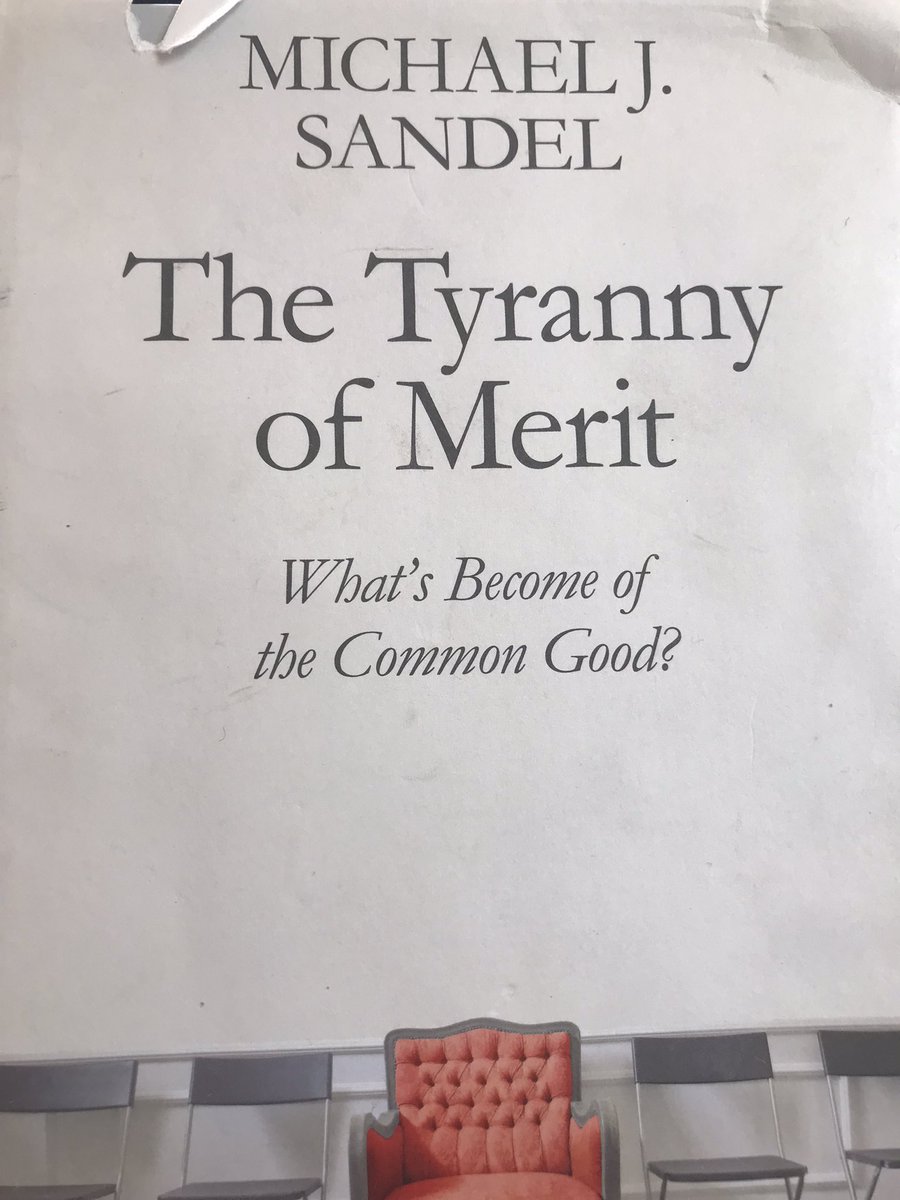
I think that Sandel's book "The tyranny of merit" is very informative on why the Democrats lost the election to Trump: the (political) promise that everyone gets what s/he deserves when working hard legitimises inequality, demoralizes the working-class and soul-destroys the rich.

I often think about this: younger people in the US and other wealthy nations are far more likely to have a zero-sum mindset—the idea that someone’s gain means a loss for others—compared to older generations. From our paper on zero-sum thinking (full 🧵 x.com/s_stantcheva/s…)

Zero-sum thinking is a key mindset that shapes how we view the world. Excited to share a new paper on the roots and consequences of Zero-sum thinking with @sahilchinoy, @DrNathanNunn @SMGSequeira. A summary thread🧵1/23 scholar.harvard.edu/files/stantche…

What about the economy under Trump? I don’t expect great news for workers, and I see big risks from Trump’s overall agenda, both because of his approach to AI and Silicon Valley, and because of his (likely) impact on US institutions.
Plastic pollution is all around us and even inside us – from our seas to our blood & our brains. Next month, @UN member countries will have the chance to agree on a global treaty to end plastic pollution – once & for all. An ambitious, credible & just agreement is the only way.
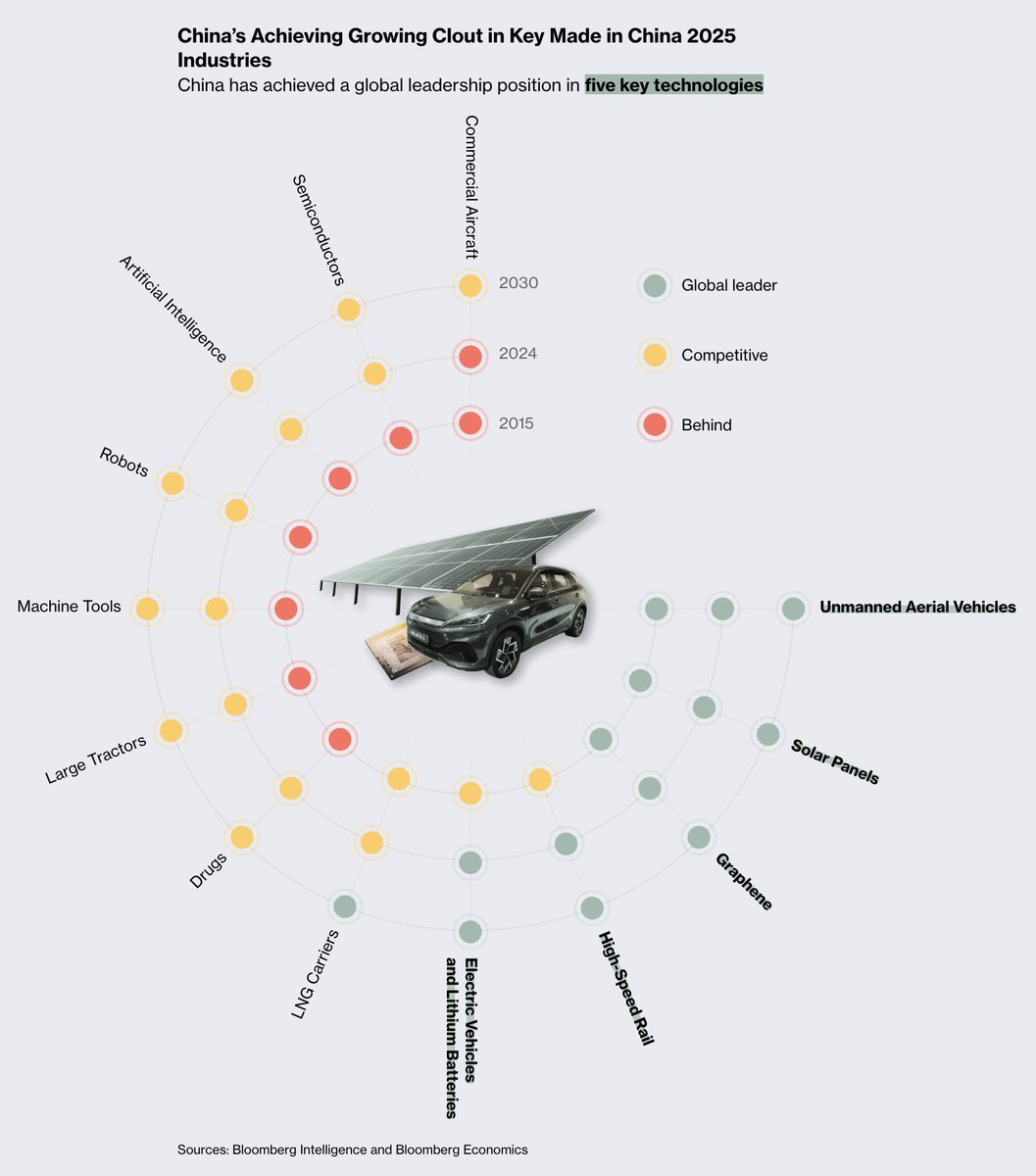
A key difference between Made in China 2025 and Germany's Industrie 4.0 is that China aligned macro and industrial policy, Germany did not. That’s why I keep saying: Without a post-neoliberal macroeconomic paradigm, all the industrial policy hype is built on sand.

"Made in China 2025", an industrial policy plan announced by Xi Jinping in 2015, has largely been a success. China has achieved a global leadership position in five key technology categories and is catching up fast in many others.
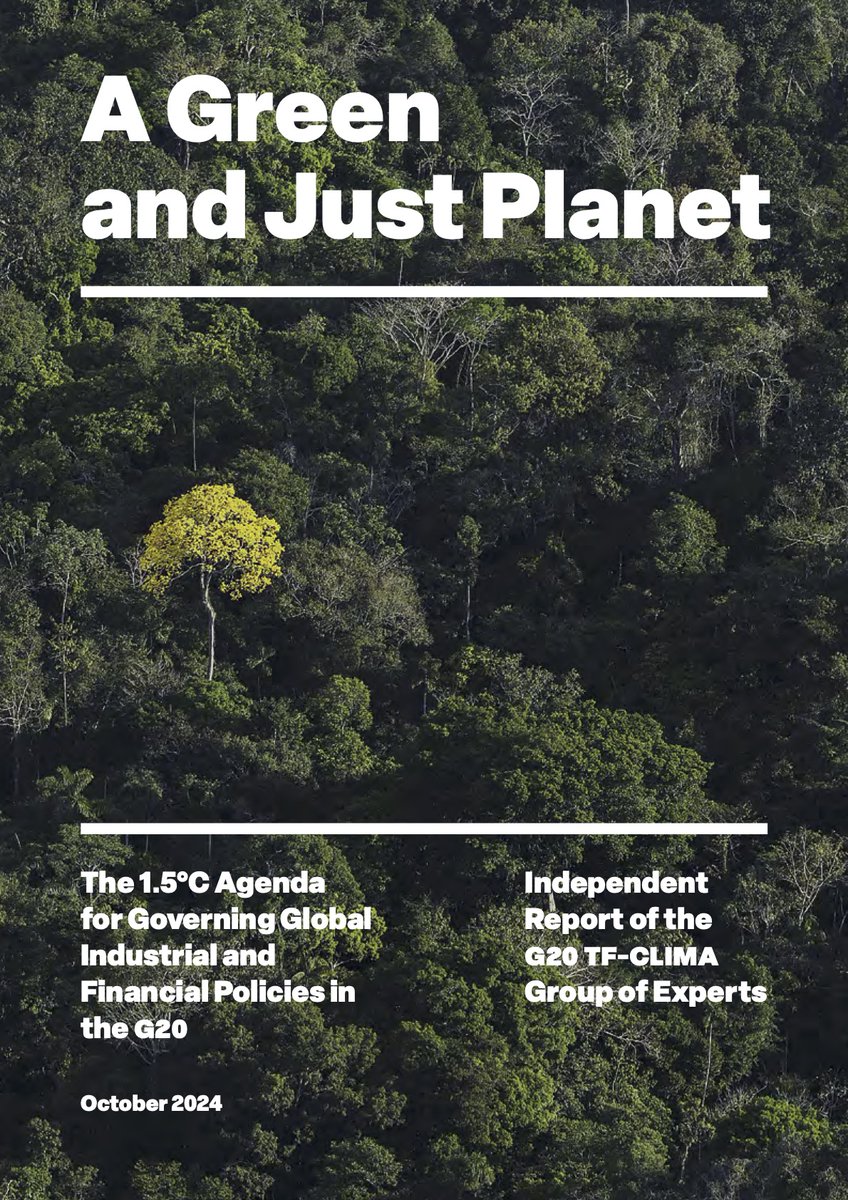
We are stuck in a siloed and sectoral mindset. The triple planetary crisis of climate, water & biodiversity is not just the remit of ministries of environment – solving it requires strategic coordination between all ministries. Last week, at the @IMFNews-@WorldBank Annual Meetings, I presented two reports calling for a new economic paradigm to tackle the triple planetary crisis: 💧 Final report of the Global Commission on the Economics of Water @watercommongood (which I co-chair with @jrockstrom, @NOIweala & @Tharman_S) ➡️ watercommission.org/#report 🌱 @g20org TF-CLIMA Group of Experts (which I co-chair with @SongweVera) ➡️ g20.org/en/tracks/sher… Read the news story from @IIPP_UCL ➡️ ucl.ac.uk/bartlett/publi…


Co-director @baselinescene describes working with @DAcemogluMIT as "seriously addictive," and shares how his career led him to collaborate with Acemoglu and James Robinson on what would become their Nobel-winning work. Watch the full interview: youtu.be/2DLfaB8N8VE

Parisa Foroohar @ForooharParisa
58 Followers 102 Following
JULIET DAVIDSON 👩�... @davidsonsjuliet
269 Followers 7K Following JULIET GOD FEARING 🙇🏻♀️ ★FAMILY DRIVEN★ 🔑 LEADER 📎 ENTREPRENEUR•🪙🕑 EXPERT FOREX TRADER🤝 ❤️ TRAVEL ✈️ 43 COUNTRIES 🌏🏦 📥📩 DM TO START 💻 TRADING NOW
Onaco @Onaco648
71 Followers 3K Following

Hret Rib @RibHret59334
627 Followers 6K Following
Tearmpo @Tearmpo_EIQC
30 Followers 3K Following
Ristear @RistearR0gQHx
45 Followers 5K Following
Dresnul @Dresnule4yb
173 Followers 4K Following
Toyshirst @ToyshirstvMI
100 Followers 3K Following
Tearsmy @Tearsmyplj3
46 Followers 4K Following
Thare @ThareY6Y
80 Followers 7K Following
DaphneBack @JK022MMkYdGcx8
36 Followers 3K Following
Kn__uckle @UckleKn16997
77 Followers 5K Following
McThetea @mc_thetea31570
62 Followers 5K Following
Narges Darvish @Dar_wish
424 Followers 650 Following
Iced @iced__knife
507 Followers 3K Following $SOL degenerate. gambling addict. @rollbitcom madman. #1 $ADA hater. Not a financial advisor. shitcoin lover. ape first, research later.
Smiterea @smiterea51568
36 Followers 1K Following
Erik @Leashay191687
91 Followers 4K Following See the world on the road, and get to know yourself on the way!



🕯️𐁙🎃𐁙�... @kben_ana
71 Followers 216 Following Government employee. Don’t blame me.. I didn’t do anything wrong. #EntrepreneurMindset #StartupLife #SmallBusines #WomenInBusiness #Innovation #Inspiration
Parisa @ParisaForoohar
15 Followers 53 Following
Amir Amiri @ArmanoArmano007
20 Followers 299 Following
Behroz @Behroz41497324
3 Followers 34 Following
P.Sh.S @BlankTitan2023
196 Followers 877 Following هزاره پرستی/قوم پرستی/طالب پرستی + جهل و جعل/واگرایی/عقب مانده گی= بلاک. فقط یک افغانستان آزاد و آباد و متحد

Rob Johnson @rjocean
7K Followers 1K Following President of the Institute for New Economic Thinking, Detroit sports fan. Musically inclined. Sailor
Econ Grad Student @trashy_quilibrm
8K Followers 978 Following Econ phd student. Formerly: fun at parties. Department: trying their best.
Edrisa Bah @tufenkay
903 Followers 5K Following "Blessed is the one who considers the poor! In the day of trouble the LORD delivers him.Psalm 41:1" No one choose to be born in poor family or have poor parents
Amir Soltani @AmirSol23373763
10 Followers 67 Following

Voriya م @KhaniVoriya
97 Followers 226 Following منو با عینک دودی دفن کنید؛ نور به قبرم میباره،اذیت میشم خو😂🚶🏻♀️(:️
زنده به گور @kafkaiandude
88 Followers 2K Following
Dale Beugin @dalebeugin
3K Followers 2K Following Executive VP, @ClimateInstit Board of Directors @QUESTCanada Prev: Executive Director @EcofiscalCanada @dalebeugin.bsky.social
Ko Oli @KowsarOliyaei
3 Followers 14 Following
Alessandro E. Hatami @ahatami
4K Followers 2K Following Writer | Speaker | Commentator | Advisor | Founder | Author Books: "Reinventing Banking"🥇 banking book 2021 Investopedia. "Inclusive Finance" published 2025
Stephany Griffith-Jon... @stephanygj
10K Followers 5K Following Desde Mayo 1, 2022 Consejera del Banco Central de Chile @bcentralchile / From May 1, 2022 Board Member of the Central Bank of Chile. Emeritus Professor @IDS_UK
insideBE @insideBEcom
295 Followers 501 Following Get inspiration on how to apply #behavioraleconomics, #nudging, and consumer psychology. Case studies and courses from the world's top experts 🙌
Helen @GoodGriefHelen
717 Followers 1K Following Business development manager in the Energy Transition space, interested in advanced fuels, CCS, climate change & policy

یحیی تفضلی @Gbvk1Ez2piYNMyy
1 Followers 41 Following
Azadeh @azad_Marouf
203 Followers 737 Following Energy and climate change enthusiast with the blend of academia, industry, and policy; varsity player-Volleyball🏐 #Power2gas #hydrogen #Optimization
Carabassisinhumos @Carabassisinhu1
159 Followers 642 Following Carabassi sense fums i sense burilles. Saludable i sostenible! Carabassi sin humos y sin colillas. Saludable y sostenible!
Richard Carlson @RichardKCarlson
2K Followers 3K Following Personal account. I've mostly moved to bluesky place, and I'm rcarlson there
Rambod Radmard @RambodR
101 Followers 334 Following Mechanical Engineer. Passionate about designing and manufacturing products that are intriguing and innovative.

Merran Smith @merransmith
6K Followers 2K Following Mom. Passionate about making a better world. President New Economy Canada. Fellow Simon Fraser University. Founder Clean Energy Canada. @neweconomycan
Brian Jabarian @brian_jabarian
9K Followers 2K Following
Council on Foreign Re... @CFR_org
573K Followers 141 Following Foreign policy news and analysis. CFR takes no institutional positions on policy. Follows, RT ≠ endorsements. ✉️ Subscribe for more: https://t.co/ehd5lKYrLs

Dima Khatib @Dima_Khatib
378K Followers 3K Following Triple 🇵🇸🇸🇾🇻🇪 cocktail! Proud female leader in media. Ex boss of AJ+. Former Latin America correspondent
Tom Fletcher @UNReliefChief
991K Followers 378 Following The official account of @TFletcher the UN Under-Secretary-General for Humanitarian Affairs and Emergency Relief Coordinator @UNOCHA
Michael Thrower Chowd... @BevansAdvocate
31K Followers 765 Following he/him | Australian economist living in Sydney | Views expressed are my own | https://t.co/BNSDfrTpvz | https://t.co/DxkGSmolRp
Niall Ferguson @nfergus
398K Followers 1K Following International man of history, Flying Scotsman. Author, @HooverInst senior fellow, @TheFP and @thetimes columnist. Opinions my own.
Gauti Eggertsson 🇺... @GautiEggertsson
8K Followers 282 Following Professor of Economics, Brown University. Consumer warning: I am terrible at spelling.
Claudia Sahm @Claudia_Sahm
83K Followers 5K Following macro, Fed, fiscal. creator of the Sahm rule, a recession indicator.
Gary Gerstle @glgerstle
6K Followers 310 Following Mellon Professor of American History Emeritus at Cambridge. Author of the Rise & Fall of the Neoliberal Order and other works.
Narges Darvish @Dar_wish
424 Followers 650 Following
Vincent Pons @VinPons
6K Followers 3K Following Professor @HarvardHBS. Affiliate @nberpubs @cepr_org @jpal. Cofounder @Explain_Data. Column @LesEchos. Political economy, democracy, development, tech.
Trita Parsi @tparsi
222K Followers 4K Following 2010 Grawemeyer Award for Ideas Improving World Order recipient. Executive VP @quincyinst. Wrote Losing an Enemy & Treacherous Alliance. https://t.co/ePTt8IDWKV
Tedros Adhanom Ghebre... @DrTedros
2.0M Followers 2K Following Director-General of the World Health Organization. Retweets are not endorsements
Isabella M Weber @IsabellaMWeber
84K Followers 5K Following EconProf @UMass | "cost-shock queen" FT | Robinson, Keynes, Meiksins Wood, Rothschild & Matthöfer Prize | Harvard Associate in Research | 2023 TIME100 Next
EcoFlow @EcoFlowTech
29K Followers 112 Following One simple thing can change everything. Join us to Power Different: https://t.co/Ln4CP8vvTS
Mohamad Safa @mhdksafa
549K Followers 15 Following Proudly shadow-banned on X. Executive director. Diplomat rel. @PVAenglish Main Representative at UN ECOSOC and accredited at United Nations Office at Geneva.
Hannah Ritchie @_HannahRitchie
79K Followers 1K Following Deputy Editor @OurWorldinData / Researcher at @UniofOxford / Honorary Fellow at @EdinburghUni @EdCentreCC / Not the End of the World: https://t.co/FoINhggvoR
Edward Luce @EdwardGLuce
138K Followers 2K Following Associate Ed at the FT, US-based writer/columnist. Author of Zbig, America's Cold War Prophet. On the Economist, Foreign Affairs, FT & Wapo's best books of 2025
UN News @UN_News_Centre
833K Followers 1K Following The United Nations’ official news service. Breaking news and stories from across the UN and its work around the world.
Tymofiy Mylovanov @Mylovanov
184K Followers 1K Following President, Kyiv School of Economics; Minister of economy, Ukraine, 2019-2020; Associate professor, University of Pittsburgh
Willem Buiter @willem_buiter
925 Followers 15 Following Willem Buiter is an independent economic advisor, speaker and expert witness. Former Professor of Economics, Chief Economist at Citi and EBRD, member MPC BoE.
James Eagle @JamesEagle17
18K Followers 3K Following Investment writer, blogger, data junkie and entrepreneur.

Nathan Nunn @DrNathanNunn
14K Followers 3K Following Prof of Economics @ubcVSE, Fellow @CIFAR_News, Editor @QJEHarvard. political econ, econ development, econ history and cultural evolution. He/him. 🇨🇦🇰🇷🇺🇸
Phillip Swagel @pswagel
2K Followers 1K Following Professor at Univ of Maryland School of Public Policy, on leave while CBO Director. This is my personal account; see @USCBO for agency content.
Adam Grant @AdamMGrant
871K Followers 937 Following Organizational psychologist @Wharton. #1 NYT bestsellers: THINK AGAIN, HIDDEN POTENTIAL. Podcasts: Re:Thinking & WorkLife @TEDTalks. Former diver and magician.
Florian Ederer @florianederer
54K Followers 2K Following Austrian 🇦🇹 Economist 📈 But definitely not an Austrian economist! 🇺🇸 @nberpubs | @ecgiorg | @cepr_org | @BUQuestrom
Yann LeCun @ylecun
1.2M Followers 787 Following Professor at NYU & Executive Chairman at AMI Labs. Ex-Chief AI Scientist at Meta. Researcher in AI, Machine Learning, Robotics, etc. ACM Turing Award Laureate.
Abdolnaser Hemmati ع... @Hemmati_ir
105K Followers 7 Following Governor of Central Bank of Iran. Former Minister of Economic affairs and Finance of Iran. Assoc. Prof. of Economics , University of Tehran .
Ethan Mollick @emollick
359K Followers 585 Following Professor @Wharton studying AI, innovation & startups. Democratizing education using tech Book: https://t.co/CSmipbJ2jV Substack: https://t.co/UIBhxu4bgq

Prof. Eliot Jacobson @EliotJacobson
80K Followers 685 Following Retired professor of mathematics and computer science, author of 4 books: 3 on casino games & 1 poetry book. Now I volunteer, walk a lot & feed local critters.
NatureFinance @MakeNatureCount
2K Followers 270 Following Making nature count in global finance. Find us on Bluesky: https://t.co/jVjVBuMYL0
AukeHoekstra @AukeHoekstra
51K Followers 262 Following @aukehoekstra.bsky.social Debunking scare stories about electric vehicles and renewable energy. Director https://t.co/Xl5y2HfgHW @TUeindhoven. Founder https://t.co/2cYr8kuLMq.
Andrew Ng @AndrewYNg
1.6M Followers 1K Following Co-Founder of Coursera; Stanford CS adjunct faculty. Former head of Baidu AI Group/Google Brain. #ai #machinelearning, #deeplearning #MOOCs
Solmaz Shakeri @solmus3
4 Followers 34 Following
علی شریفی ز�... @SharifiZarchi
183K Followers 495 Following Ali Sharifi-Zarchi. Faculty of AI, Aryamehr University of Technology, Iran. Elected Member of the International Olympiad of Informatics (IOI).
Simon Johnson @baselinescene
26K Followers 4K Following MIT Sloan, MIT Shaping the Future of Work Initiative @MITshapingwork, and co-chair CFA Institute Systemic Risk Council. Former IMF. #StandWithUkraine
Bloomberg TV @BloombergTV
882K Followers 565 Following Breaking news. In-depth analysis. Market-moving scoops. Exclusive interviews. Sign up for the Wall Street Week newsletter: https://t.co/RPmABSzqpH
Why Nations Fail @WhyNationsFail
11K Followers 126 Following Why Nations Fail: The Origins of Power, Prosperity, and Poverty by Daron Acemoglu and James Robinson Available March 2012
Daron Acemoglu @NarrowCorridor
9K Followers 74 Following Co-author (with James A. Robinson) of The Narrow Corridor; Institute Professor, MIT (https://t.co/S56lp4Advi)
Daron Acemoglu @DAcemogluMIT
365K Followers 329 Following Institute Professor @MIT, @MITEcon. Co-Director of @MITShapingWork. Author of Why Nations Fail, The Narrow Corridor, and Power & Progress.
Azadeh Moaveni @AzadehMoaveni
27K Followers 1K Following Associate Professor @nyuniversity, Director, Global Journalism @nyu_journalism | author, GUEST HOUSE FOR YOUNG WIDOWS | former @crisisgroup Gender Project
Mark Dubowitz @mdubowitz
147K Followers 7K Following CEO @FDD. Sanctioned by Iran and Russia. Annoyingly nonpartisan. Host of The Iran Breakdown. “A micro-niche celebrity but not your niche.”
Jared Bernstein Archi... @econjared46
16K Followers 158 Following This is an archive of a Biden Administration account, maintained by the National Archives and Records Administration.
Stephen King @KingEconomist
21K Followers 392 Following Author, We Need to Talk About Inflation (Apr ‘23, https://t.co/naOVaWb6yh) Senior Economic Adviser, HSBC, freelance columnist, part-time pianist.
Erik Brynjolfsson @erikbryn
232K Followers 5K Following Director @DigEconLab Co-founder, @Workhelix @StanfordHAI @SIEPR @Stanford https://t.co/D2bPyxoFEfTrends for United States
You might like