爆彈🇵🇸 @yasing221
“為因應國家統一前之需要” Joined May 2021-
Tweets14K
-
Followers123
-
Following524
-
Likes58K

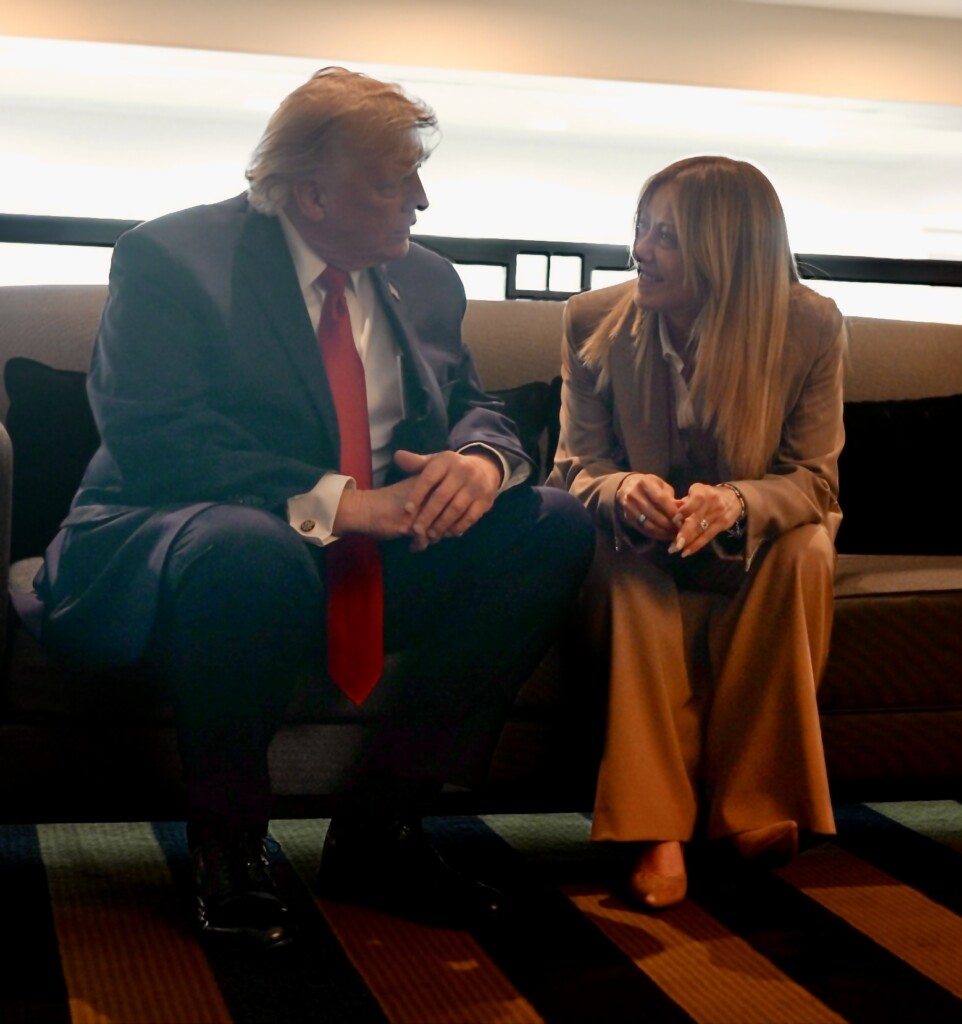
❗Trump MOCKS Italy's PM Meloni, saying she 'BEGGED for a photo' — Reuters 'I wouldn't have taken it, but I FELT SORRY for her… She's probably happy I talked to her. I didn't have to talk to her,' said Trump in interview to La7 TV channel
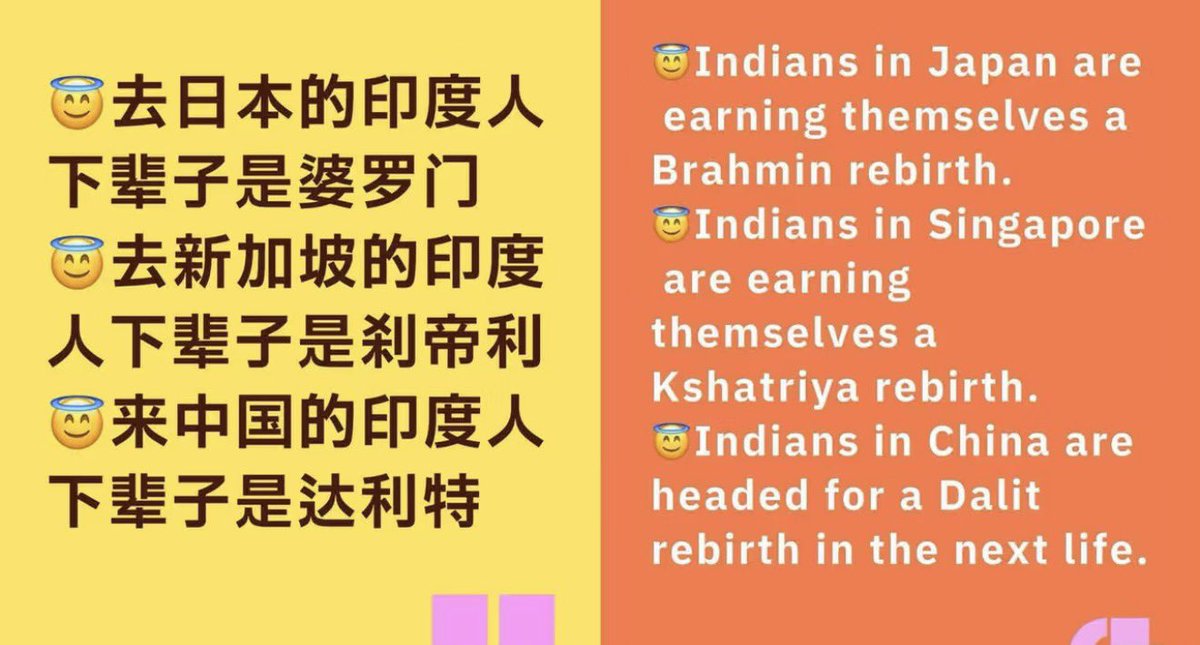
Just caught up the India/China Twitter spat where Indian twitter calling China also has a caste system (it does not). The weird psychological / logic question one has to ask is - why this group of Indians think it’s an insult to claim China was like them?
@brianluidog “艰难岁月造就强者,强者开创安逸时代;安逸时代造就弱者,弱者创造艰难岁月。”

Another super high-speed rail hub station in China is set to open this month — Xi'an East Railway Station. The station costs RMB 17 billion ( $2.5 billion). It means 2.8 days of US war spending in Iran is enough to build this grand station.

Foreigners in China 😂🥰

This Indian girl goes to China and insults the country and its people in her own Hindi language. A few days ago, I saw a similar video where an Indian guy was abusing people in his own language. What absolute duffers! When they get hatred in return, they start crying about racism.

Iran and China spent millennia as neighboring great empires and never attacked each other. The so-called "free world" is free from ethics, free from shame, and free to bomb without accountability. Its new masters are vulgar plutocrats masquerading as visionaries; men of no talent, no shame, elevated by aggression alone. Fortunately, Iran and China stand outside this hollowness.


⚡️JUST IN: Chinese Foreign Ministry says cooperation with Iran will deepen "China and Iran are comprehensive strategic partners and will continue to advance their comprehensive strategic partnership ($400 billion)"

⏱️ 2-minutes read The most important war in modern Asian history wasn’t Vietnam or the Pacific War. It was the Korean War. When the guns fell silent in 1953, Asia’s future was rewritten. In the years before the conflict, East Asia lay in chaos. Japan was still recovering from defeat in 1945, China had just emerged from a brutal civil war in 1949, and Korea remained a divided nation. Most Western observers expected communism to keep sweeping across the continent. Then, on June 25, 1950, North Korea crossed the artificial 38th Parallel. What followed was one of the Cold War’s deadliest conflicts. More than three million people died as the United States led a UN coalition, China sent hundreds of thousands of troops, and Soviet pilots flew secret combat missions. For the first time, the Communist bloc and the Western alliance clashed directly on the battlefield. The war ended not in victory for either side, but in a grim strategic stalemate. Yet that stalemate changed everything. The Korean War convinced Washington that Asia had become the central front of the Cold War. American military spending surged, and U.S. troops took up permanent positions in South Korea, Japan, and across the Pacific. Japan emerged as one of the biggest winners. Flooded with U.S. procurement orders worth billions in today’s dollars, Japanese factories roared back to life. These contracts helped ignite the country’s postwar economic miracle, lifting it from devastation in 1945 to the world’s second-largest economy by 1968. South Korea’s transformation was even more dramatic. In the 1950s it was poorer than many African and Latin American nations. Today it ranks among the world’s leading technological powers, home to Samsung, Hyundai, LG, and a thriving high-income democracy. Its survival reshaped the entire economic future of Northeast Asia. The war also transformed China. Mao Zedong’s bold decision to intervene--just one year after founding the People’s Republic--established Beijing as a major military power. By fighting the United States to a standstill, China gained both international respect and a lasting pillar of its national identity and strategic doctrine. North Korea drew a darker lesson. The war’s destruction and heavy reliance on foreign allies deepened its siege mentality, feeding an obsession with self-reliance that eventually led to its nuclear program. Even today’s most dangerous flashpoints trace their roots to those three years: the U.S.–South Korea alliance, America’s military presence in Japan, China’s concerns over U.S. forces near its borders, North Korea’s nuclear arsenal, and the fragile balance of power in the Western Pacific. All are direct legacies of decisions made between 1950 and 1953. Technically, the Korean War never ended. Only an armistice was signed on July 27, 1953, no peace treaty followed. Seventy-three years later, the last active front line of the Cold War still cuts through the Korean Peninsula. If North Korea had conquered the South in 1950, would Asia today be dominated by Beijing and Pyongyang or would an entirely different power have risen to shape the region?

⏱️ 2-minutes read The most dangerous weapon China has built wasn't a battleship, aircraft carrier, or nuclear missile, it was a strategy engineered to make the U.S. Navy doubt it could safely operate in the Western Pacific. For over 150 years, great powers projected strength the same way: by commanding the seas. The British Empire ruled global trade through maritime dominance. The United States inherited that mantle after 1945, with carrier strike groups acting as sovereign territory capable of delivering overwhelming power anywhere on the planet. China studied this history and recognized it could never win a symmetrical ship-for-ship arms race against the U.S. So it chose a radically different path. After the swift U.S. victory in the 1991 Gulf War and the humiliating 1996 Taiwan Strait Crisis -- when two American carrier battle groups operated near Taiwan with impunity -- Beijing vowed it would never again be so powerless. Rather than simply copying the U.S. model, China poured resources into Anti-Access/Area Denial (A2/AD): a layered system of long-range precision missiles, quiet submarines, advanced air defenses, satellite networks, cyber/electronic warfare, and radar coverage spanning the First Island Chain. The most visible symbols are the DF-21D “carrier killer” and the DF-26, capable of striking ships more than 4,000 km away. For the first time since World War II, American carrier groups faced an adversary that had deliberately built a system to hunt them. Today, that strategy has delivered results: China now operates the world’s largest navy by number of hulls. Its fleet of smaller, missile-laden corvettes, frigates, and destroyers gives it massive local superiority in its home waters -- exactly where A2/AD makes those numbers most lethal. This is why the islands matter. The South China Sea is far more than reefs and rocks -- roughly one-third of global maritime trade flows through these waters. Control the chokepoints, and you control leverage over the world’s supply chains and military movements. China’s artificial island bases, missile sites, and growing fleet are all part of one integrated strategy. At its heart, this isn’t only about Taiwan, it is the latest round in history’s oldest great-power contest: sea powers versus continental powers. Athens vs. Sparta. Britain vs. Imperial Germany. America vs. the Soviet Union. Today, it’s America’s maritime order confronting China’s push to shove that order away from its shores. Washington’s real fear is that A2/AD -- backed by sheer numbers in the near seas -- undermines the foundation of U.S. power: the ability to project force anywhere, anytime. China doesn’t need to defeat the U.S. Navy in a global blue-water war. It only needs to make intervention in its backyard uncertain. And in geopolitics, uncertainty can be decisive. If a Taiwan crisis erupted tomorrow, would the United States still risk sending carrier groups into waters saturated with Chinese missiles... and defended by the world’s largest fleet?

Foreigners living in China have invented a slang phrase. “There are two jokes in the world. America: We are a developed country. China: We are a developing country.”


Rare footage of Iranian strikes deep in Tel Aviv with new missiles that cannot be intercepted at all."
@Halutsubame 我车停在路边等人 直接被一个老太太骑电车追尾了 我下车查看 老太太点头对我道歉 然后加速逃离了 整个过程也就十几秒 我还没反应过来 人就不见了

日本と違って、中国は街並も食文化も地域差が大きいから何度も行きたくなるんですよね。 寝台列車で声がデカいおばさんと同室になったんだけど、見知らぬ私にいきなりキュウリ食うかって差し出されて、イライラが一気に吹き飛んだ。近すぎる人間関係が中国のいいところなんだよね。

中国に行くたびに行きたい場所が減っていくな、と思ってたんですけど、実際のところは中国に行くたびに行きたい場所が指数関数的に増えてるんですよね。怖いですね。 何が怖いって、歩道を走る電動バイクが怖いですね。
もう日本は駄目なのかなと思うことも毎日のようにある 経済もボロボロ、技術も金もない、出生率も低い、将来性なし そこから目を逸らすように外国人や中国を敵に見立てて差別や攻撃することを国が煽ってる 平和憲法ぐらいしかもう取り柄がないのにそれすら捨てようとしているなんてなー…


Ray @LuaTshingtikSB
260 Followers 291 Following Ray好啊!! 🇨🇳中国人。两岸同属一个中国🇨🇳!! 中共建制派 中国共产党是中国唯一执政党,国民党、民进党什么的都是伪政府!!
crazy horse @CrazyHorse13330
541 Followers 2K Following مفاتيح تخص المهدي المنتظر. من سيتبع العناوين، سيتبع كل المعلومات حول صاحب الزمان. https://t.co/8HJDzIo2MJ
Samagonman @8686kinta
3K Followers 7K Following 中村天風、世界50か国以上をディスカバー。スタンフォード(SWOT分析マスター)国際政治、国内政治、釣り。6ヶ国語、元航空関連ITネットワークの国際組織(航空会社の国連)に勤務。日本政治の劣化を危惧しています。NPO法人日本幸福度推進委員会(Bluebird Trust Japan)を準備中。

McDonald Martin Shive... @shivelymcdonald
646 Followers 501 Following EA | Fast schedules, faster decisions Tech • Space • Innovation 🚀
pride of japan @prideofjapan1
4K Followers 6K Following 主✝️は聖フランチェスコに言われた「私の家を建て直して欲しい」今がその時。原点回帰し、カトリックを立て直そう。聖伝の御ミサの守護者・聖ピオ十世会🌹私は神を信じており、善は必ず悪に勝つと信じている🤲
祐佳 @D9bf0NRDYrL21Ba
11K Followers 2K Following 「敬隣 永安」 日本は侵略戦争を深く反省し、近隣諸国を敬い友好関係をもつことが大事だと思っています。 戦争反対、米軍基地反対、反原発。
bisan owda @Bisanowda2314
135 Followers 2K Following Gaza - Palestine filmmaker, traveler, and dreamer 🎥✨✨✨💥🔥
Jisoo Castro @jison147
27 Followers 496 Following I'm lovely to be friends with and feel free to text me back
Jin_SG @Geopoli_tikus
436 Followers 263 Following Stop using the words communist/dictatorship/totalitarian/authoritarian. It makes you lazy when analysing systems that are different from yours!
momo看世界 @momoworldview
7K Followers 3K Following Conceptual artist, illustrator, graphic designer. A firm supporter and practitioner of the concept of building a community with a shared future for mankind.
. @Marcc_friedrich
350 Followers 7K Following 7 x Bestsellerautor, Freigeist, Finanzexperte, Speaker, Vordenker, Honorarberater; Economist, 7 × Best-selling Author, consultant, Gold #bitcoin silver #uranium
Giovana Bush @BushGiovan47181
2K Followers 4K Following I Can Do All Things Through Christ Who Strengthens Me. Philippians 4:13. I'm a retired missionary
elonmusk @elonmusk274713
23 Followers 1K Following
Nicole X @bazdr350
23 Followers 856 Following Tesla | Building the future of sustainable transport | Working with Elon Musk to accelerate the world's shift to clean energy ⚡️


Sondos Gaza 🍉🇵�... @SondosMurtaja
1K Followers 8K Following i'm sondos , im from Gaza , Im 21 years old 🥺🍉 if you want help me and family donate 👇🏻❤🍉
Burian @Burian634629
3 Followers 180 Following
Private Wei 威 🔶 ... @sabrinaamalgame
135 Followers 2K Following Forbes Asia 30U30 | Prestige 30U30 | ex-bnbchain CRO I Chinese-born. Global-minded. 中国力量 #BNB
JoyfulSpirit🌟 @Quxerfvid2
129 Followers 725 Following The only limit to your success is your own willingness to try
Coco Ho @Charles16Ho
523 Followers 1K Following
姬伯胤 @chipoyin
119 Followers 625 Following

Shehzad khanhoti🇵�... @KhanhotiSh2253
75 Followers 441 Following

HappyRadz @Happy_radz
106 Followers 2K Following 📚 PwC Learning & Development | Committed to fostering talent and continuous growth | Empowering the next generation of leaders.
Spencer Hakimien @SpencerHakimlen
884 Followers 7K Following Founder of Tolou Capital Management. Global macro, market neutral, risk optimization. Aiming for positive real returns in all climates. Not investment advice.
Emma💕 @lailasieandini
337 Followers 237 Following Success is getting what you want; happiness is wanting what you get😘

Margaritch Hill @PamelaHill63607
341 Followers 2K Following God is Love Stand and Fight with Ukraine until the last victory (●'◡'●)
Bisan_owda @bisanowda49
506 Followers 6K Following

Ysocoo @Ysocoo451711
8 Followers 223 Following
lily owen @owen_lily6530
702 Followers 7K Following
Warfare Report @warfarereport
2K Followers 7K Following Tracking global conflicts, frontline developments, and defense intelligence. Your daily warfare report from every corner of the world.
BlueChipDeals🇺🇸 @Jeaume044
49 Followers 2K Following 15-30% Monthly | 2 High-Conviction Stocks.Short-Term Gains: 15-20% in Days/Weeks.DM "JOIN" for WhatsApp Alerts. Live Trade Signals • Market Analysis
痴顽 @63B731
88 Followers 4K Following

Amanda @ijsjsbhbj
3 Followers 74 Following
株主優待の真価 @Mwaiemaj082
39 Followers 2K Following 【完全無料】 25年の株式投資プロチーム(運用資産500億円以上)が提供:毎日の市場分析レポート + 優良成長株のピックアップ。プロの情報を無料で。まずはお気軽にお問い合わせください。


CawHoody @MagicWammam
200 Followers 1K Following 11th Generation American of Scottish / English descent. Free Palestine. Pro-Zionism is Anti-American. لا إله إلا الله


Jonah VI @Jonah888168
325 Followers 531 Following
紅星閃耀🇨🇳�... @dokucs4
628 Followers 298 Following 在推特这种发言没门槛,造谣无底线的平台,到底还有多少傻子因为大侄子的一句话就去做美西方国家的走狗,在这点上,我为一部分国人感到悲哀
ཁམས་ཕིང... @pnyu188562
315 Followers 38 Following ངས་མི་ཁ་ཤས་ཀྱིས་ངའི་ཕ་ཡུལ་ལ་བརྙས་བཅོས་བྱེད་པར་བཟོད་སྒོམ་བྱེད་ཐབས་མེད།དེའི་ཕྱིར་ངས་ངེས་པར་དུ་ཁོ་ཚོར་དགག་ལན་སློག་དགོས།


小林电影院 @aadestefano3
13K Followers 73 Following
ぼいん(´・ω・�... @ZJGETrReon52227
732 Followers 91 Following PCでしかゲームしない。エミュは使う。可能な限りフォロバするんで気軽にフォローよろしくお願いいたします しかしX自体以前のTwitterの良さが薄れてきて広告だらけになってきているので今後はBlueskyメインになると思います
別笑我肥瑾 @wyybaby1995
236K Followers 73 Following 小帳 @bianca_jc1995 我沒有任何telegram電報群,請不要輕易去加入或下載任何檔案 .. / .- -- / .- ..
王若瑾 @bianca_jc1995
277K Followers 38 Following 肉帳 @wyybaby1995 Other than the links in my bio, I don't use any dating apps or Telegram groups. All others are impersonators.

荒木 美鈴🔔ゲ�... @MISUZU_zip
40K Followers 3K Following eスポーツ&ゲーム番組特化MC 兼 会社経営 公式サイト→https://t.co/cmnsJuyJLn┊番組出演→コトダマン、FNCS(Fortnite)、BPL、CoDプロ対抗戦、Xbox、エルデンリング、KAC、頭文字DAC、メガドラミニ、Vtuber登龍門 etc…┊ダークソウルと落語が好き。

竹内亮 Takeuchi Ry... @RyoTakeuchi2333
41K Followers 58 Following 中国でオウンドメディア企業を立ち上げた、ドキュメンタリー監督です。#私がここに住む理由 @daoyan_takeuchi を配信中。 ✉️[email protected] 『劇場版 #再会長江』日本全国上映決定 https://t.co/CydeK0IAny 𝕏 saikai_choko

AloeVera @AloeOnChain
5K Followers 1K Following quantum intern | former @pudgypenguins marketing strategy
KK @kenki_kids
120K Followers 84 Following 横浜・関内に住んでる会社員。横浜出身。1985年生まれ。現在41歳。独身。彼女いない歴41年。非モテ。ブサメン。素人童貞。風俗好き。趣味はサッカー観戦(横浜FCサポ/チェルシーサポ)。海外旅行(主に韓国🇰🇷/フィリピン🇵🇭/ドイツ🇩🇪)。50歳で会社を早期退職予定。結婚は諦めており快適な独身ライフを模索中。
直播切片 @kuaisj1
3K Followers 127 Following 互联网野生观察员|主业看直播刷视频,副业记录人类可爱瞬间|收藏夹里藏着N个快乐密码,关注我,一起解锁离谱又上头的日常~
BIIA @by_cynthia_ka
3K Followers 3 Following Fondatrice de @maison.ka_ Plantes Médicinales • Prévention & santé naturelle Auteur • Conférencière • Naturo herboriste 📩 [email protected]
Eva Langwin @EvaLangwin
55K Followers 504 Following i answer DMs on https://t.co/begSKH6xPS & https://t.co/RtdQAtOY17
Michelle🐑 @tongtong1223
111K Followers 2 Following @tongtong0401 International finance student—mastering numbers by day, exploring thrills by night.
Michelle彤彤乖 @tongtong0401
668K Followers 28 Following 双性执行力超强 超级宠粉!有🚪提供情绪价值。大号已删贴,https://t.co/dftto2z3z7 小号:@tongtong1223 @tongtong1210 Please share slutty bitch。自用VPN : https://t.co/ApsDVYSiiG
Shaun Rein @shaunrein
101K Followers 1 Following Founder of The China Market Research Group (CMR). Author of 5 books. The Split: Finding the Opportunities in China's Economy in the New World Order @harvard
91AV官网 @KPKP996
883K Followers 336 Following ℕ𝕊𝔽𝕎 𝟙𝟠+🔞 !高质量原创影片!本账号以“评论”好看的大赛内容为主。精选短视频(TG频道)👉 https://t.co/ThUQsqv60M
盘点直播明场面 @Jayday_babieee
3K Followers 73 Following 互联网野生观察员|主业看直播刷视频,副业记录人类可爱瞬间|收藏夹里藏着N个快乐密码,关注我,一起解锁离谱又上头的日常~




Daniel Mayakovski @DaniMayakovski
214K Followers 220 Following Somos los que no alcanzaremos el mar pero permaneceremos en la lluvia. Somos los que aún habrán de nacer. ☭

Nury Vittachi @NuryVittachi
57K Followers 1K Following Ex-SCMP, ex-Far Eastern Economic Review, ex-Reader’s Digest, ex-op-ed writer for NYT, etc, author of 40+ books; now running Hong Kong’s ‘Friday’ news project
Global Times @globaltimesnews
1.9M Followers 547 Following China's national English language newspaper, under the People's Daily. Apps: https://t.co/S9E7BpY53Q
まみーやろぐ@�... @mamiya0119
7K Followers 323 Following 2022.3.26に13年働いたキャバクラを引退、2日後から世界放浪中🌏✈️120カ国突破❤︎YouTube観てね▶︎【まみーやろぐ】で検索🔍フォロー外すなら最初からしないでくださいイライラするから❤インスタ👉 https://t.co/23uRM0TioG
中国アルゴリズ... @ArakiVlog
3K Followers 597 Following 上海に惚れて上海に移住した日本生まれ日本育ち日系日本人(旧名:中国理系大学院留学vlog ARAKI)乗り物•Apple•言語•手続き好き 中央大学→語学留学→上海交通大学Computer Science修士23卒→新卒から上海現地企業で自然言語処理(NLP)アルゴリズムエンジニア 光の現採メンヘラ 上海7年目→本帰国


マネージャー森 @bunnykoujou
2K Followers 15 Following Xは文字数の制限があるので、かなり文章を省略してポストしています。読解力がなく、脊髄反射で突っ込みたくなる性格の方はリプしないでください。くだらない揚げ足取りをする方はブロックします。また、当初の論点が論破されると、勝手に論点をすり替える人がいますが、そのような人もブロックの対象です。
桃桃ちゃん@中�... @momotao1021
8K Followers 385 Following 中国留学🇨🇳 四川省成都 仕事辞めて、全然中国語話せないのに留学来ました😅 小红书→1092610330 bilibili→日本桃子在中国
Miss Myra @cuteprincesw
112K Followers 1 Following 欢迎大家一起交流🚫NSFW 18+ |🌹遵守twitter平台规则| 大家愉快玩耍!侵权请联系删除谢谢| 每日分享好看大片,谢谢关注!
玉座金佛栽培�... @Hututu2025315
65 Followers 18 Following 人民万岁&天下为公。 “人们不是讨厌共产主义,而是讨厌共产主义还没实现。” 一切苦而累,危险系数高,没有人想做的工作都应该交给发达的机器。解放人类自己,最终实现共产主义。 朴素正义观/马列毛再学习。 会和善良友好的人和平相处🥰💕
nobody🇨🇳 @qie616981
164 Followers 154 Following Game Developer,Programmer, Peace Lover, Abhors Warmongers and Racism.
yuyanpan @yuyanpanm9nk
30 Followers 20 Following
好色社区 @haoseshequ
147K Followers 31 Following 91论坛旗下好色社区强势来袭|融合当下最全夫妻交换|3P以及男女单身交友|更有最完整的夫妻视频|自拍完整版等你来体验👉https://t.co/EsxGcsRo8E👈

Barchart @Barchart
521K Followers 590 Following Financial Markets | Trading & Investing Tools | Charting | Stocks | Options | Futures | Commodities | Forex | News | & Much More
Global Markets Invest... @GlobalMktObserv
89K Followers 63 Following Global Markets Investor is a financial research platform covering global markets and economies. Founded by a Wall Street equity and macro research professional.

さぶぽち🎨🎹 @pochi_otoha
10K Followers 9 Following あ!見つかっちゃった(ᵒ̴̷͈ᗨᵒ̴̶̷͈ )✧サブ垢です! 音羽美奈(みなぽち)の本垢▶︎ @mina_pochico 日常と独り言!避難所でもあります♡You might like