Porter @porterdotrun
Easiest way to deploy on AWS/Azure/GCP. A @ycombinator company. Old account: @getporterdev porter.run your own cloud Joined May 2023-
Tweets429
-
Followers2K
-
Following13
-
Likes211
@deploy_mom You can reach us at [email protected].
YC W26's @robby_assistant and co-founder @FerozeMohideen leverage Porter for automated infrastructure management so they can focus on shipping product. Redeem our startup deal and deploy effortlessly with your AWS/Azure/Google Cloud credits: porter.run/startups/aws-a…

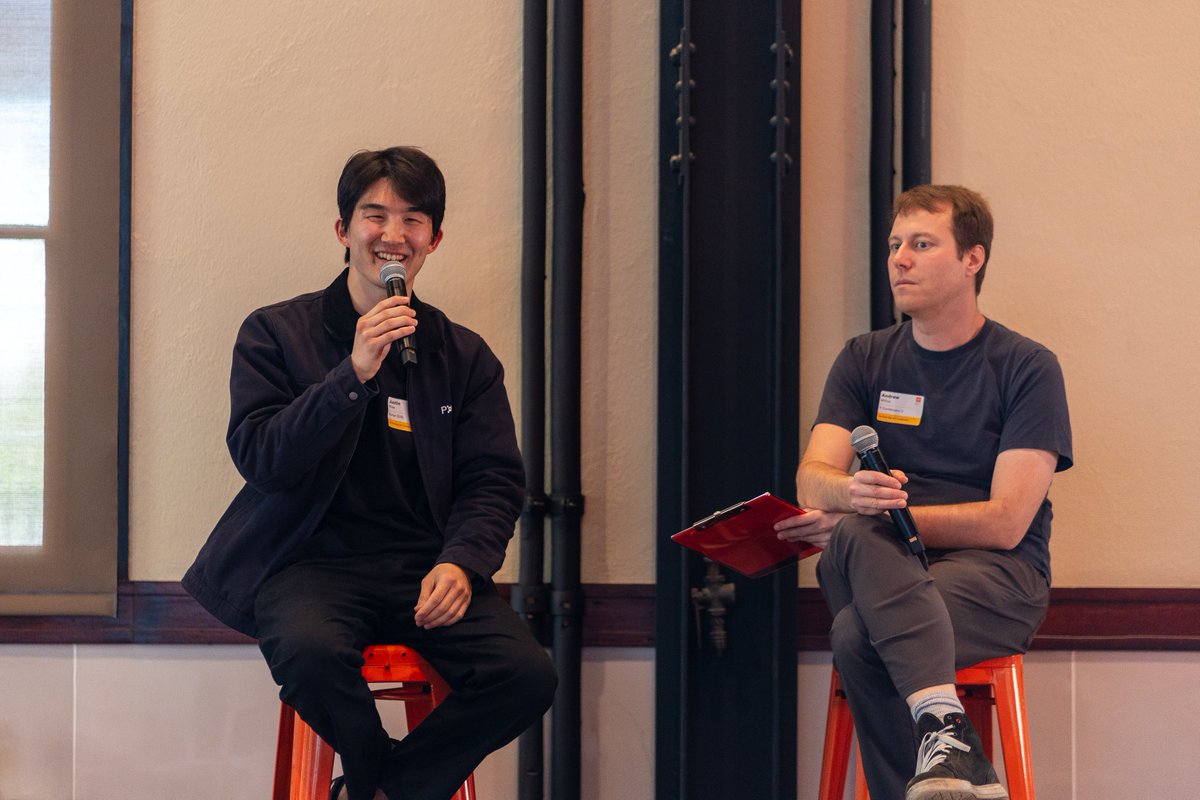
Last week I spoke at @ycombinator DevTool Day. The focus of my talk was a summary of the merits and demerits of selling to startups. A lot of people don't realize that in the beginning, Porter never intended to have startups as users. After years of pivoting we initially built a product designed to migrate Enterprise-tier PaaS users to the hyperscalers. I remember actively turning away early-stage companies looking to use us because they seemed too small to justify the migration effort. Eventually, a couple startups hell-bent on using us managed to self-serve even though we had no documentation and had exclusively built our "onboarding" flow as an internal tool to process white-glove migrations. We let those startups stay on the platform expecting nothing to come of it. Luckily for us, we had some rocket ships in that initial sample. A few of those users rapidly grew to a significant usage scale (with individual clusters on the order of terabytes of RAM and hundreds of nodes) within months of onboarding. This was larger and higher-value than most of the customers we were running through a multi-month sales process. That got our attention. Even still, we were initially pretty reluctant to bet the farm on startups. As any VC knows, all the growth is overwhelmingly concentrated into a tiny subset of companies. This gets to a key downside of pursuing this strategy: unless you have a product that an overwhelming percentage of startups can use (like payment processing, HR, or corporate card), you run the risk of not capturing enough mindshare to effectively guarantee there are some winners in your basket. If your carrying capacity for pre-seed startup adoption is something like 15% of all companies, you could struggle to get off the ground unless you're somehow indexing for only the best of the best. For devtools in particular, you're almost always better off going truly bottoms-up with indie devs if your product allows it. In retrospect, I believe we were fortunate that two things were the case: (1) frustration with DevOps overhead (i.e. having to manage AWS/GCP/Azure) is essentially ubiquitous, and (2) cloud infrastructure is a higher-order expense for virtually all startups (probably the 2nd or 3rd largest line item after payroll and tokens). The upshot is also massive. Winning startup mindshare means you are building for the next generation of public companies. If you can keep up with your best customers and preserve sufficient pricing power, you have the ultimate NRR engine. As a devtool company, there's also nothing better than getting to work with smart, high-growth teams at the bleeding edge of technology.
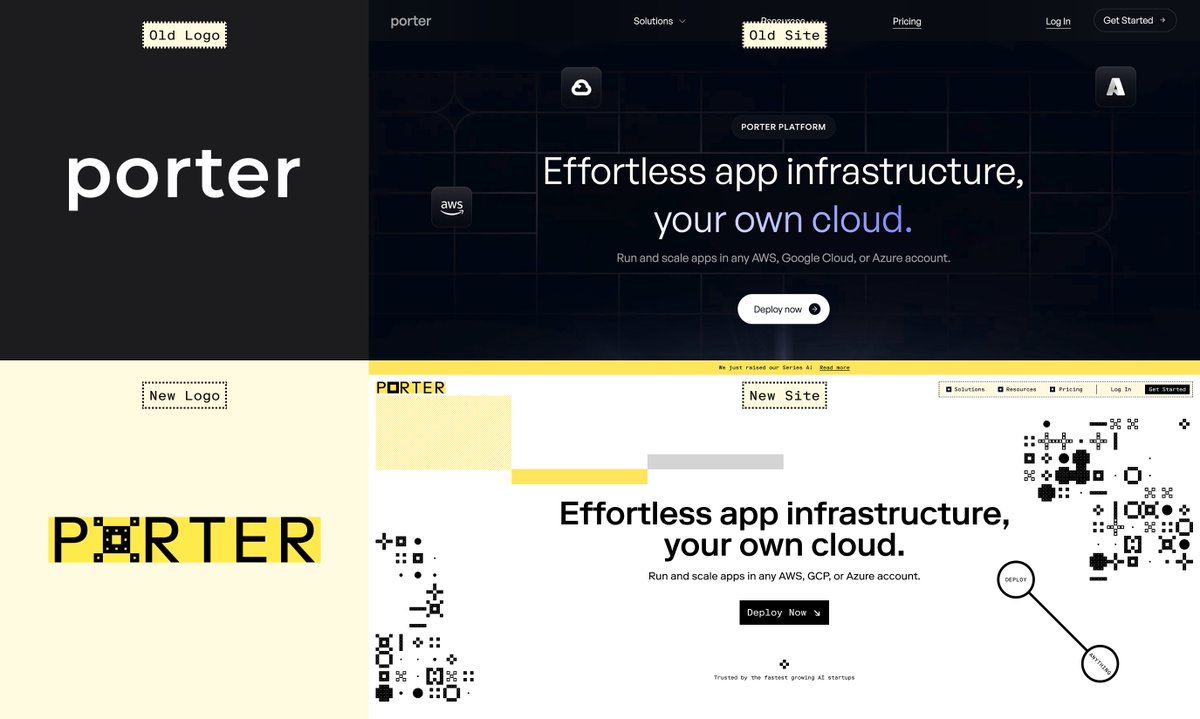
I received a cease and desist for our company logo, so we turned it into an opportunity to rebrand. A few months ago, I received an email from a large consumer company with a legal notice that our logos looked too similar. They were generally civil but insisted that we discontinue the use of our existing logo. In truth, this was mildly amusing to me given our logo's origin: a few years back during YC, I just typed "porter" in Figma using one of the default fonts (Montserrat). It was never meant to be a real logo, but we figured it wouldn't make or break Porter. Fast-forward to the present and I guess enough folks have heard about us for a large player in a different industry to care. At the end of the day, what really matters as a devtool company is your product, but a brand can set the high-water mark that you aspire to with everything else you do. We wanted the new identity to exemplify our more flat, graphic-leaning taste while featuring composable elements (or "atoms") that mirror how we think about compute. In retrospect, I'm really glad this happened and served as a forcing function for refreshing our brand.
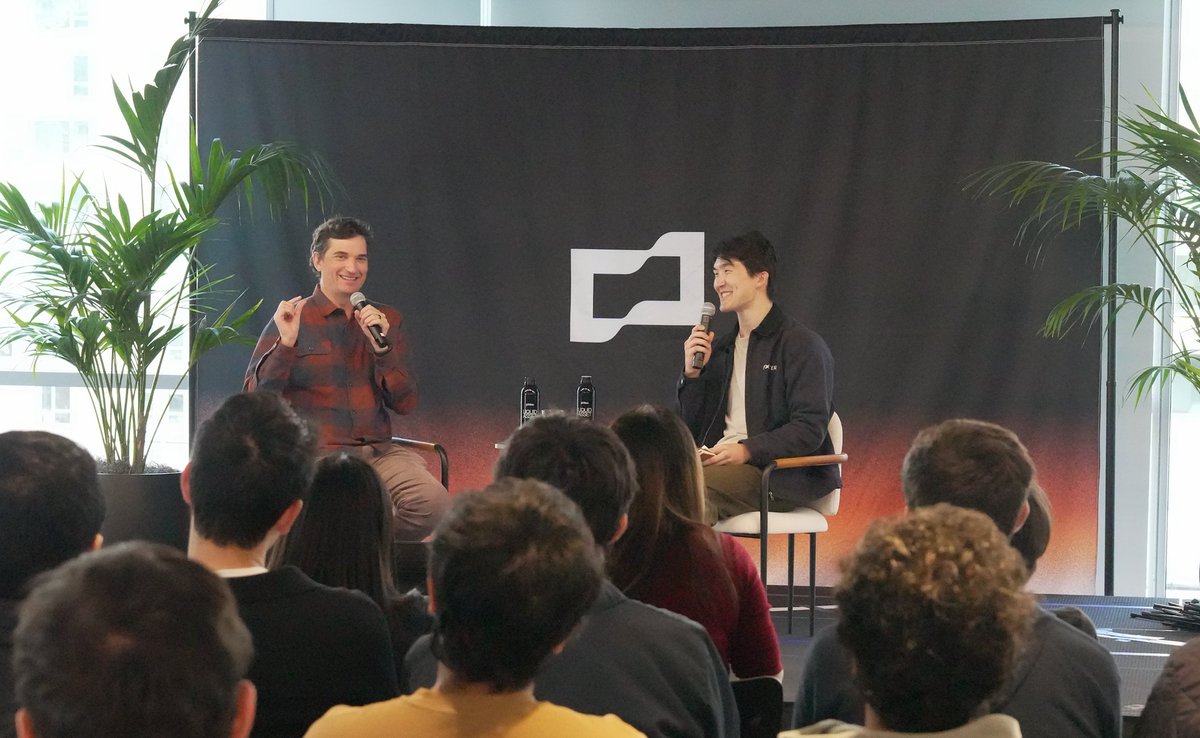
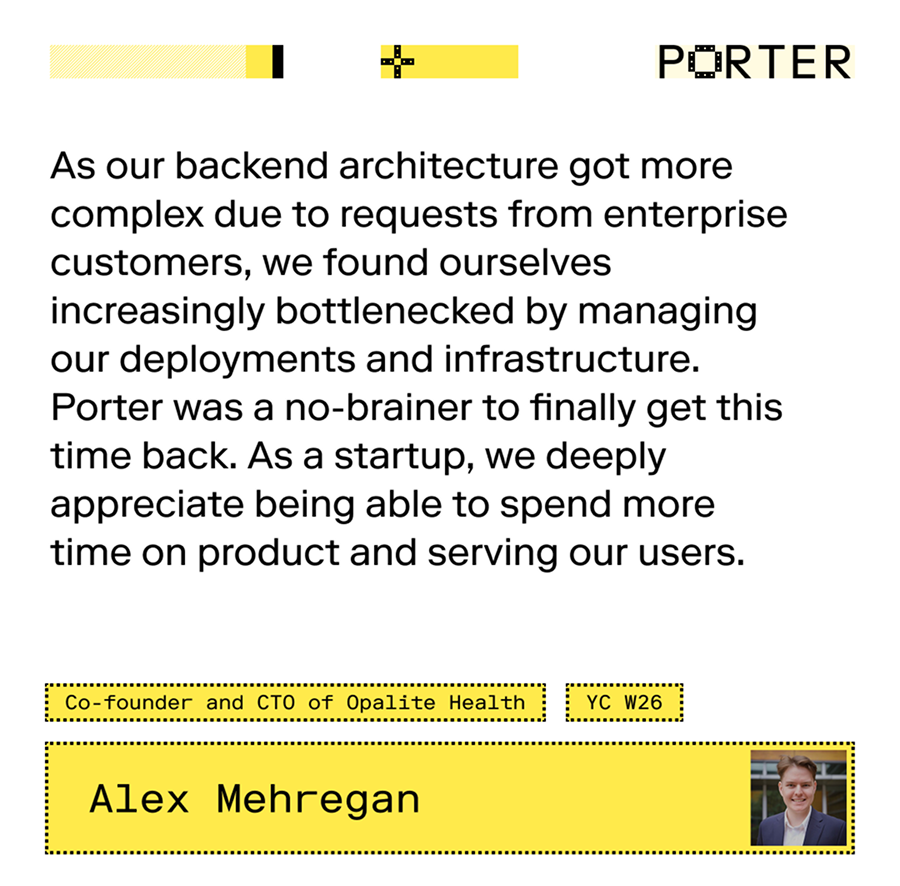
Opalite Health (YC W26) co-founder and CTO @akmehregan uses Porter to ship product for enterprise customers without DevOps overhead. Looking to deploy with your AWS/Azure/Google Cloud credits? Redeem the Porter startup deal: porter.run/for-seed-stage…
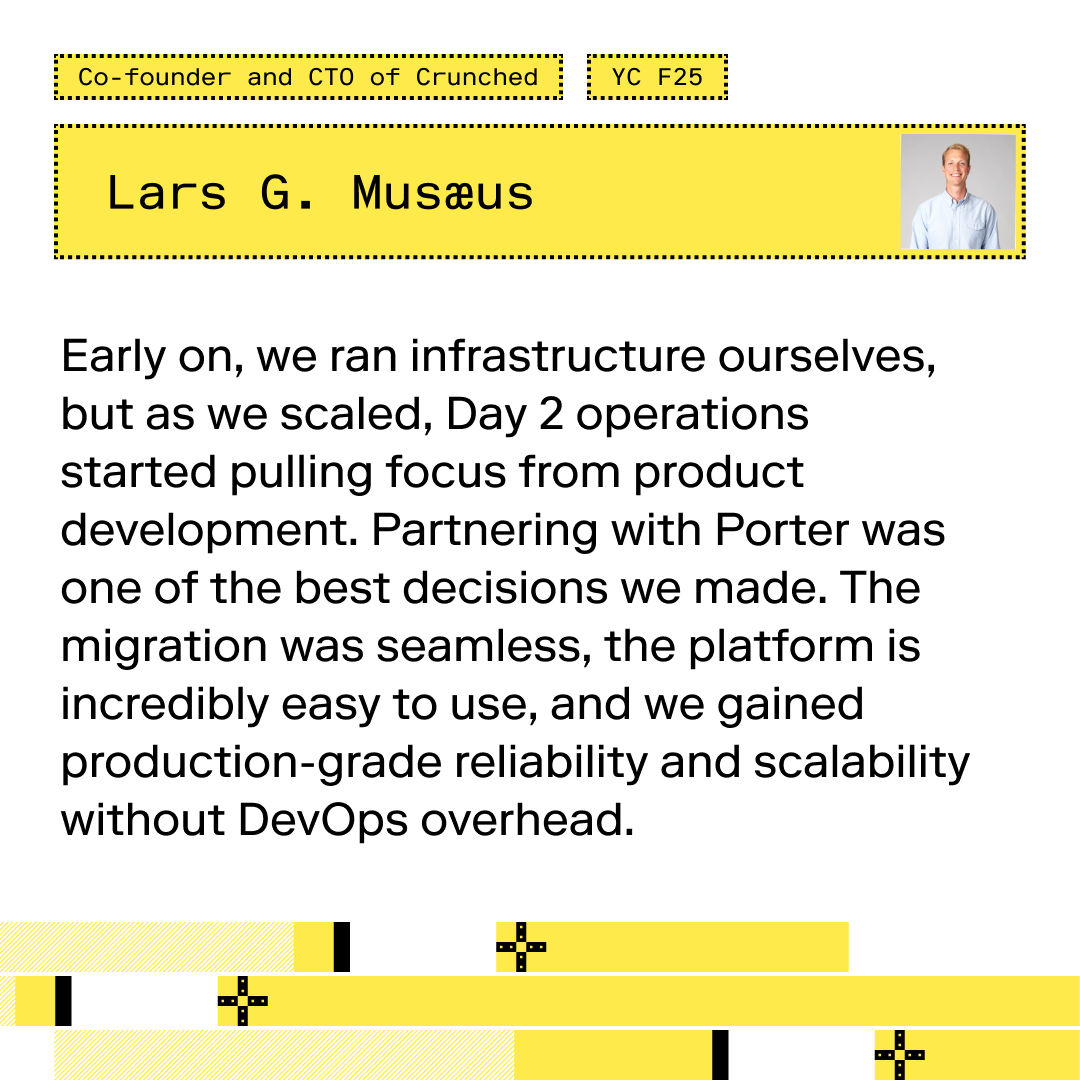
YC F25's @usecrunched chose Porter for the reliability and scalability of EKS with the simplicity of a PaaS. Looking to deploy with your AWS/Azure/Google Cloud credits? Redeem the Porter startup deal: porter.run/for-seed-stage…
There are only 2 types of founder advice here on X/Twitter. One is valuable. The other is almost worthless. Here's how to tell the difference: Let me say this out loud: I deeply discount founder advice. Yes, I'm fully aware of the irony of saying that as a founder who (sometimes) shares advice on X. Here's why I feel this way: for every founder who made it and is now dispensing wisdom from a position of success, there is a long tail of people who said the exact same things, followed the exact same playbook, and crashed. The advice was identical. The outcome was completely different. And even the founders who are currently winning, who knows where their companies will be in five years - there's so much luck involved, so much random chance, so many invisible variables that the signal-to-noise ratio on most prescriptive founder advice is extremely low. But I think there's a nuance here that matters quite a bit, and it's the thing I'd want any early-stage founder to internalize: Put all founder advice into two buckets before you decide how much weight to give it. Bucket 1: "Here's what I actually did." This is a founder telling you the specific story of how they handled a real situation. What they tried, what worked, what didn't. That's a genuine data point. You can collect those from many founders, aggregate them yourself, and draw your own conclusions. That has real value. Bucket 2: "Here's what you should do." This is a founder projecting their experience onto your situation and telling you the right answer. What they'd do in your shoes. How they'd solve your specific problem. This is shaped by survivorship bias, by luck, by a thousand variables they don't understand about your context. Heavily, heavily discount this. The distinction seems small but it's everything. Counterfactuals like “what I would have done differently” and “what I think you should do” are almost worthless because they're untested hypotheticals dressed up as wisdom. I try to stay in Bucket 1. You should hold me to that.
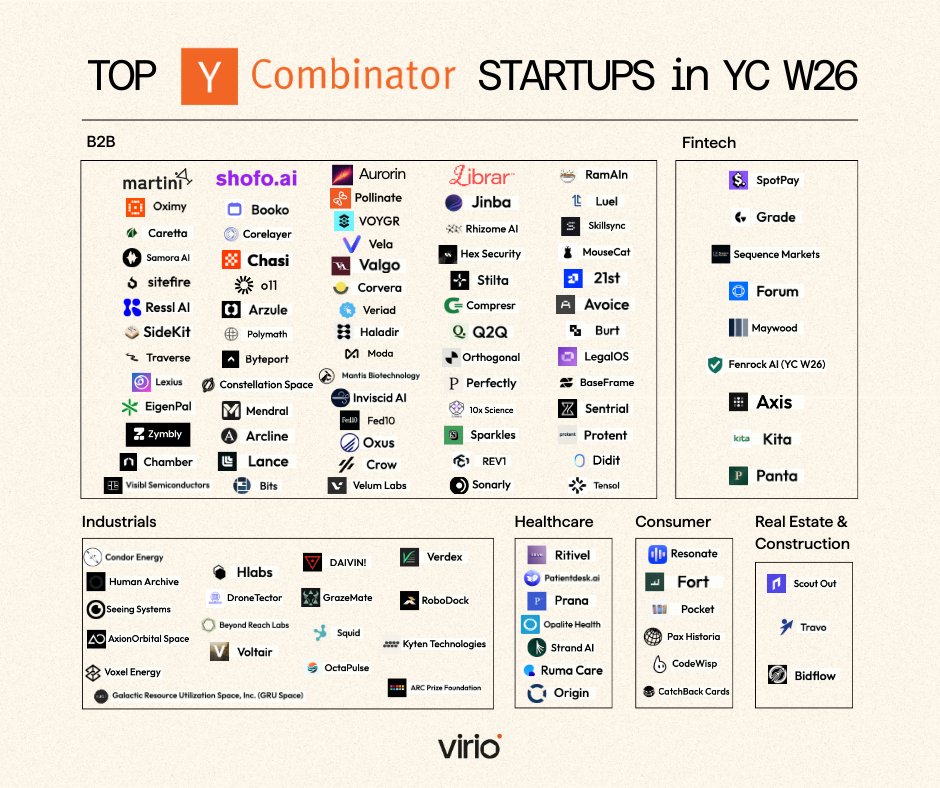
YC W26 Demo Day is six weeks away, and we're halfway through the batch. As a previous YC S20 founder, I wanted to give my shoutout to the 132+ founders publicly accepted! Here’s a sector breakdown and some of the companies we’ve got our eyes on: The B2B section dominates with 50+ companies including: → AI/ML Infrastructure: o11 (YC W26) , Chasi (YC W26) , Arcline (YC W26) → Sales & GTM Tools: Martini , @shofoai (YC W26), SideKit (YC W26), Constellation Space (YC W26) → DevTools: Oximy (YC W26) , @carettaso (YC W26) , Samora AI (YC W26) → Vertical SaaS: Booko (YC W26), Corelayer (YC W26), Arzule (YC W26), Polymath (YC W26) Fintech: → SpotPay (YC W26), Grade (YC W26), Sequence Markets (YC W26) → Forum (YC W26), Maywood → Fenrock AI (YC W26) → Kita (YC W26), Panta (YC W26) Industrials: → Energy: Human Archive (YC W26), @axionorbital (YC W26), Voxel Energy → Manufacturing/Hardware: HLabs, DAIVIN! (YC W26), GrazeMate (YC W26), Squid (YC W26), OctaPulse (YC W26) → Deep tech: Beyond Reach Labs (YC W26), Verdex (YC W26), RoboDock (YC W26), @arcprize, @gru_space (YC W26) Personally, I’m a huge fan of Srihan B. and Abhisheik Sharma from Protent (YC W26) , Gatik Trivedi, Gavin Brennen and Caleb Chan of Lance (YC W26), and Alex Mehregan and @KuoCathleen, MD of Opalite Health (YC W26). They were also the first few in their batch to run on Porter 😏 Image credits to Eric Lay at Virio!
Our Series A pitch deck was made in 45 minutes the night before the partnership meeting. The reason? We care about our product, not some fancy pitch deck. Trust me, it wasn’t because I procrastinated, but rather because I don’t think pitch decks are the important part of fundraising. Here's the thing about fundraising that most people get wrong: The deck is not why you get funded. You get funded because: → Your business is performing → You've built trust with the investors → The market opportunity is real → Your team can execute The deck is just documentation of those facts. I've talked to too many founders who spend weeks perfecting their pitch deck, obsessing over fonts and animations and storytelling arcs, while their product is mediocre and they have no existing relationships with investors. That's backwards. Build a good product. Get real traction. Develop relationships with investors over time (we spent over a year building trust with FirstMark before we raised). Then, when it's time to pitch, the deck is easy because you're just showing them what's already true. Our deck has all the important stuff - charts, growth metrics, market analysis, team background. Some of the sensitive numbers are scrubbed out, but you can see the structure. Is it the most beautiful pitch deck ever made? No. Did it work? We raised our $20M Series A, so I believe so. Comment "DECK" below and I'll send you the cleaned up version. --- Listen, I really don’t want you to follow what we did here. It’s not some masterclass in pitch deck design. It’s not a template you should follow, especially for new companies. What you should follow? Build a great product, get real traction, and just show investors what is already true.

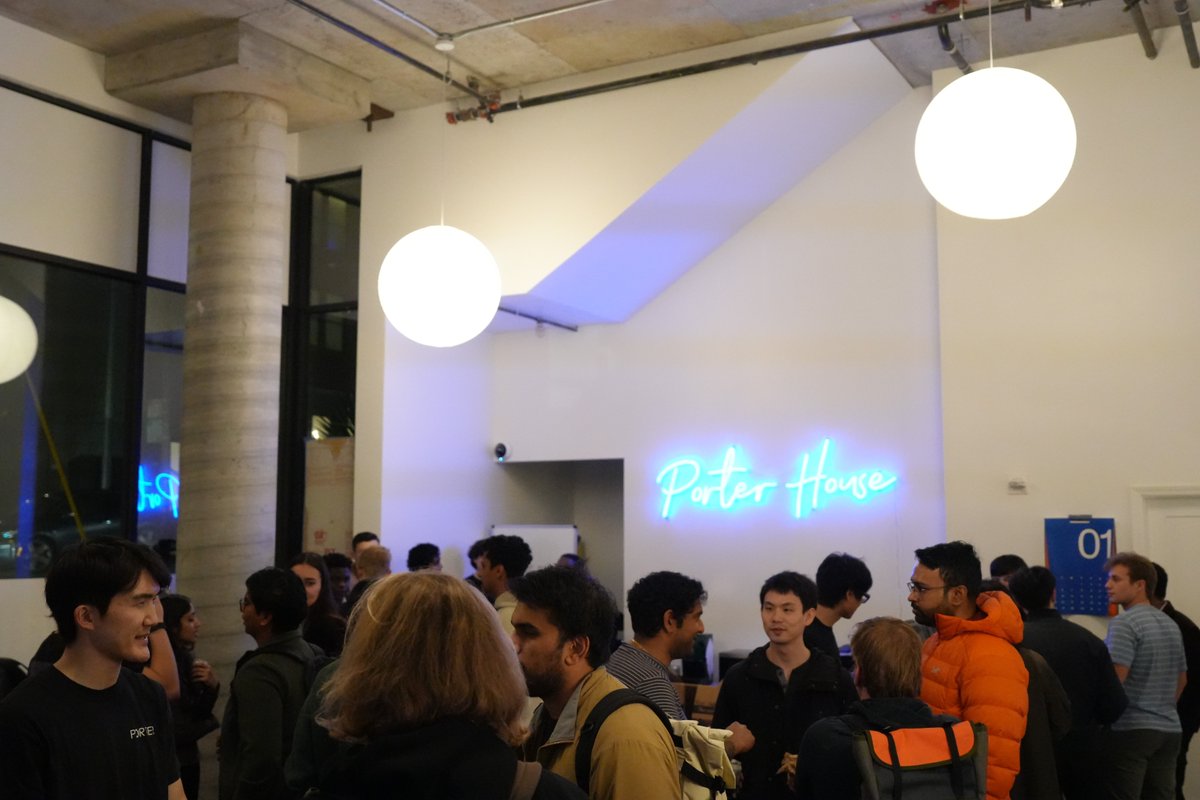
Excited to announce that we’ve OFFICIALLY moved into our new office here in New York. Are there any pool tables? No. Ping pong tables? Definitely not. Every startup magazine article will tell you the same thing: Ping pong tables = fun culture = happy employees = work life balance. Startup founders need to realize what this actually means: you’re encouraging people to spend their break time … still at the office … playing ping pong … with their coworkers … during hours they could be experiencing the city they live in. We’re in New York. One of the most vibrant cities in the world. If you want to play ping pong, there are FAR better options than our office. If you want to shoot pool, go to any of the TOP pool halls in the country. If you want to grab drinks, go to one of the thousand incredible bars in this city. The office is for work. We aren’t saying we’re some dystopian grind culture that doesn’t value our team’s wellbeing. We’re saying that real work-life balance means ACTUALLY having a life outside of work. When you're here, you're working on genuinely hard problems with exceptionally smart people. It's energizing, and exactly what we've built this space for. When you’re not here, we want you living an actual life: seeing friends, exploring the city, doing things that have nothing to do with Porter. The “fun office” thing has always felt like a trick to me. Almost like companies are trying to make the office so comfortable and entertaining that you never feel the need to leave. That’s not balance. It’s just work with extra steps.
RIP @heroku. One of the most loved developer platforms of all time was effectively deprecated today. Heroku's CPO just announced that no new features will be pushed and new Enterprise contracts will no longer be offered to Heroku customers. Despite everything, I actually want to give them their flowers: It's no secret that @porterdotrun has migrated a lot of Heroku Enterprise users over the years. We might genuinely have a more intimate understanding of their recent decline than anyone. But what a lot of people neglect to discuss is that Heroku nailed one thing from the very beginning: the product. The abstraction they made for developers was essentially perfect. A decade and a half since its launch and over a decade since its acquisition by (and stagnation under) Salesforce, Heroku is still best-in-class at developer experience. It's why despite the insane outages, inert product, and obscene pricing, developers still universally talk about the "Heroku experience." It's a fond and slightly distant memory for many of us, but it's still the reference point. Whether we like to admit it or not, the modern PaaS generation has, at best, mimicked the Heroku app experience: Render, Railway, Fly - even Porter. The remaining innovation is to solve the graduation hurdle that Heroku could never fully overcome as companies inevitably moved to the hyperscalers. That's what we obsess over at Porter, but make no mistake: they nailed the DevX. Heroku is dead. Long live Heroku.

Porter just raised a $20M Series A with ZERO salespeople. Here's why: There are two schools of thought post Series A: School 1: Open every channel. Sales, marketing, paid ads, content, partnerships. Throw money at everything. School 2: Find the one channel that's already working and max it out until it returns diminish. Then add new channels. We're strictly camp 2. Our one channel: bottoms-up startup adoption, word of mouth, organic growth in YC, and product-led growth. Right now? It’s working. Hundreds of companies have moved away from Render, Heroku, Vercel and Railway without us having to hunt them down. Could we get positive ROI from sales? Probably. But to quote Pedro from Brex: "All growth is about alpha." At Series A, our view is that the primary game is identifying the one channel where there's maximum alpha and exploiting it completely. You put all your chips on red and go after it. Saturate it, max it out, and do everything you can until it's depleted. ONLY when marginal returns start to taper do you mix in new channels like sales and paid ads. But not before. Focus is the most important thing a startup can have. We're not ready to dilute attention across five growth channels. We're still extracting massive value from the one that works. When we see it plateau, we'll dive deep into sales and marketing.
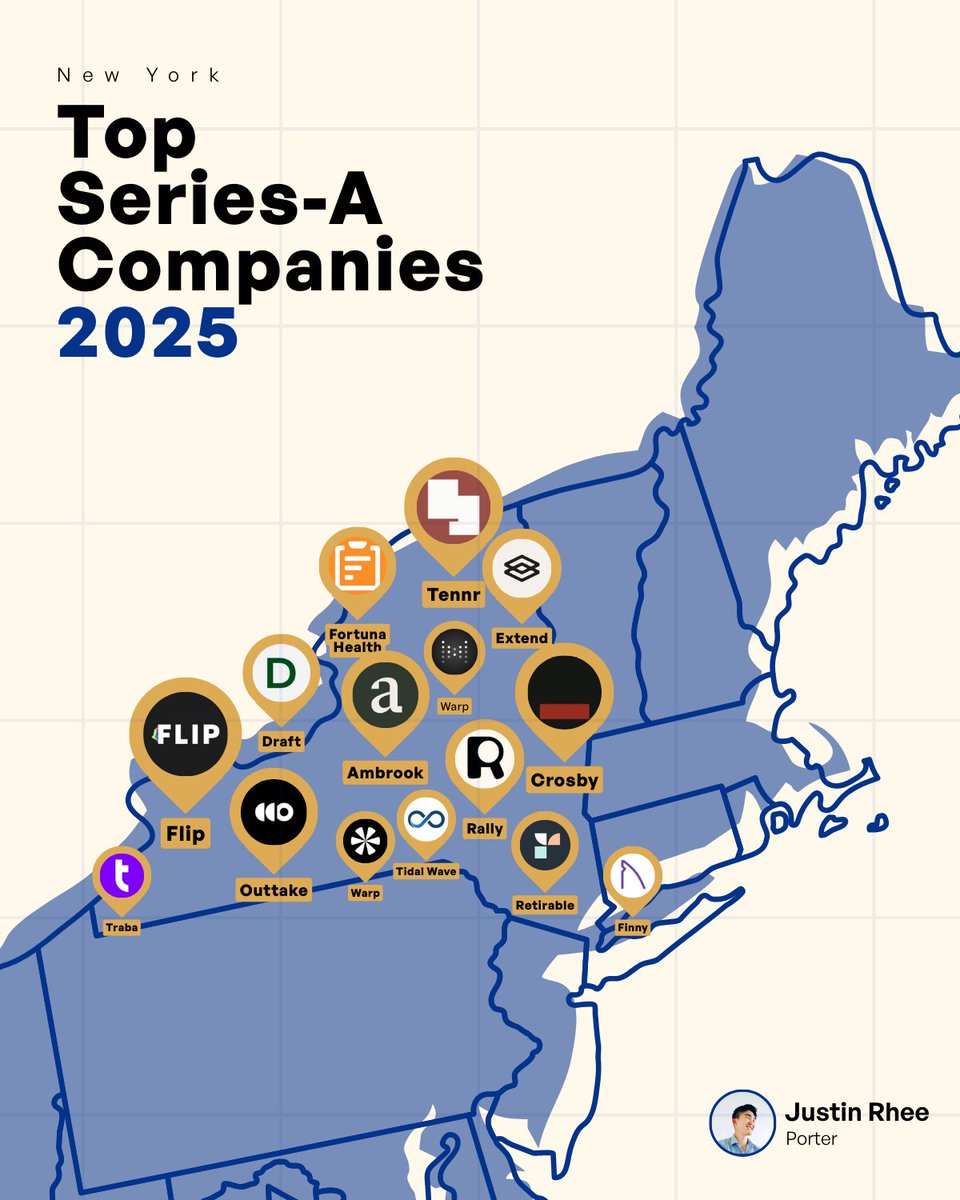
Silicon Valley gets all the Series A funding. But have you seen what’s being built in New York? Here are the companies I’m closely watching …make sure to keep your eye on them: @TennrOfficial – AI automation for healthcare referral workflows processing 10M+ documents/month @outtake_ai – Agentic AI that detects and removes phishing attacks and identity fraud @ModelML_ – AI that generates pitch decks and investment memos in under 3 minutes @Traba_Work – Labor marketplace for light industrial temp workers with 95%+ fill rates @FINNYAI – AI prospecting platform for financial advisors with automated outreach @flip_cx – Voice AI automating 90%+ of customer service calls @retirable – Retirement planning platform with fiduciary advisors for middle-income retirees @tidalwave_ai – AI mortgage platform with instant pre-approvals via Fannie Mae/Freddie Mac @hifortunahealth – Medicaid enrollment platform reducing coverage churn by 15% @warpdotdev – AI-powered terminal for modern software development workflows @draftwiselegal – Contract intelligence platform using firm precedent and AI @ExtendHQ – Extended warranty platform resolving 98% of claims in 90 seconds @rallyuxr – User research CRM automating recruitment and scheduling @crosbylegal– AI law firm reviewing contracts in under an hour @AmbrookAg – Farm accounting software with Schedule F integration Let me know if I’m missing any!
We put together our $20M Series A video in less than 2 days. Every agency we talked to quoted us 45/60 days minimum. Here's our story: We recorded/edited our Series A announcement video in less than 18 hours. Not because we’re production geniuses (we’re engineers). Because every agency we talked to quoted us 45/60 days minimum. I started reaching out to agencies 2-3 weeks ago, and every single one told me the same thing: “We’ve done fundraising announcement videos for YC companies in the past, and you can expect 45 to 60 days for edits, revisions, and overall feedback.” We weren't willing to wait that long for our Series A announcement. So I took things into my own hands: I grabbed some camera equipment one night the week before the announcement and just started filming. No professional lighting, no camera crew. Just me, some B-roll of the team, and whatever lighting we could rig up in the office that day. The next morning, I popped open Premiere Pro to whip together an edit and jerry-rig some passable motion graphics. The animations you see? Courtesy of a Youtube tutorial and some green tea. The music? The first royalty-free song I found usable enough to download to my laptop. Was it the most polished, professional looking fundraising video ever? Absolutely not. Was it good enough? Absolutely. Here's what I've learned: when you're building a company, there are two types of work: Things that directly impact your product and users (obsess over these) Everything else (make it good enough and ship it) A Series A announcement video falls squarely in category 2. If you need a professionally produced video and you have 60 days, hire an agency. They're great at what they do. But if you need something tomorrow and you're only willing to spend one night filming and one day editing, you can ship something that works. The fastest video of all time wasn't the prettiest. But it got the job done. We take care of our product and customers first. Everything else? Simply an afterthought.
At Porter, we killed leetcode and take-home assignments. Our hiring process is two 30-minute calls and a 2-day trial. No coding interviews. No leetcode. No take-home assignments. 18 people on our team. Every single engineer hired this way. WHY IT WORKS 99% of companies have their hiring process backwards. They put candidates through 6 rounds of interviews, coding challenges, and panel discussions. All designed to help the company de-risk the hire. We flip it. OUR PROCESS 30-minute call with myself 30-minute call with David (our most tenured founding engineer) 2-day in-person trial at the office That’s it. During those initial calls, we might ask technical questions. We're not testing if you memorized sorting algorithms - we're trying to understand how you think and if you'd be excited to work here. If those conversations go well, we fly you out to New York. We’ll put you up in a hotel, cover your meals, everything. Then you’ll work on actual Porter stuff. The exact work you’ll be doing if you joined tomorrow. Our reasoning is this: the best people have options, and joining any startup is a leap of faith. This is what the majority of companies get wrong: for the very best candidates, they need to de-risk you, not the other way around. Our 2-day trial lets them see if they can actually imagine working here. They meet the team. They experience our office space. They really get a feel for what it’s ACTUALLY like. We truly believe that we’ve built something special: a killer team, all working in an office in New York that we’re genuinely proud of. You can’t communicate that in a Zoom call. WHY THIS WORKS When you hire incredibly smart, disciplined people and then trust them to work on real problems from day one, they can tell immediately if it's the right fit. The interview theater that most companies do? It selects for people who are good at interviews. We prefer to select for people who are good at the actual work. If you’re interested in joining a company building infra for the top startups around the world, send me a DM, and let’s get you to New York.

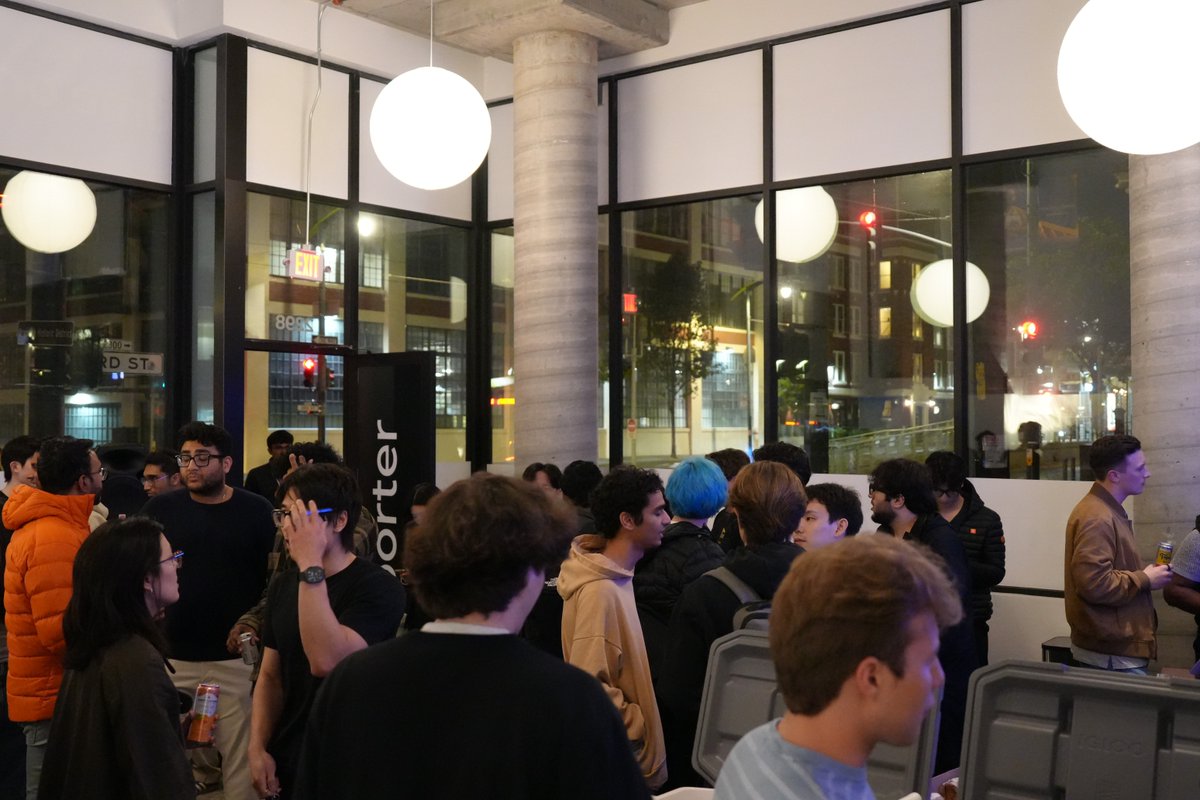
Last week we announced our $20M Series A. After years of grinding for our customers, we wanted to take a second to appreciate our users for getting us here: Most companies do the Series A announcement and then throw a big internal party. You usually see champagne, speeches - the whole works. We aren’t like other companies. We had our users who were in SF swing by from 5-10pm. We catered some food and chatted with them about what they’re building. It wasn’t even close to a formal event and there was no official agenda. Just people who use @porterdotrun coming to hang out. Because here’s the thing: the Series A isn’t about us at all. It’s validation that we’re building something that people actually want to use. And those people (our users) are the entire reason any of this matters. Over the next few weeks, we'll be highlighting some of these teams. It’s what we want to ACTUALLY celebrate. Not the funding round itself, but what the round represents: a bunch of really intelligent and driven people building killer companies, choosing to build on our infrastructure. This week, we’re doing another one with our users here in NYC. So much better than a $150 bottle of champagne.

Congrats to @rheejust and @porterdotrun on the $20M Series A. Most infrastructure tools promise simplicity. Porter actually delivers it. We've been using Porter since the early days. What would normally require a dedicated DevOps team (scaling clusters, managing multi-cloud deployments, handling the endless AWS/GCP/Azure complexity) just works. Our engineers ship products, not infrastructure configs. The best tools disappear into the background. Porter does exactly that. It's rare to find a company that serves seed-stage startups and IPO-track companies equally well. It's genuinely hard to build something that scales down and up at the same time. Excited to see what's next. Well deserved.
Here's the exact playbook I used to raise Porter's Series A: There’s a big misconception among founders when it comes to fundraising: most think the process starts when the business could use more money. It doesn't. It starts 18-24 months before you need any additional cash. Here's what your playbook should be: STEP 1: START CONVERSATIONS BEFORE YOU RAISE When investors reach out, don't always dismiss them because "we're not raising right now." If you see potential down the line, take the meeting. Build the relationship. @DavidWaltcher at FirstMark reached out to me long before we were ready to raise. I told him we weren't interested in fundraising at that point. But we kept talking over many months. The goal isn't to pitch. It's to let them watch you build. Let them see your thinking evolve. Let them understand how you view the business, where you're going, and what problems you're solving. STEP 2: ACCEPT INVITATIONS THAT ADD VALUE David invited me to FirstMark's programming well before we were a portco. I got to meet @severinhacker, the CTO of Duolingo. @armon, the founder of HashiCorp. Technical leadership at other portfolio companies. This was all before FirstMark invested in us. They were extending an olive branch, showing what working together could look like. These weren't pitch conversations. Just genuine discussions about the problem space and opportunities to learn from experienced operators. That's the relationship you want to build. STEP 3: WHEN READY TO RAISE, FOLLOW A DILIGENT PROCESS Even if you have a strong relationship with one firm, you owe it to yourself to run a proper process. You need to understand your market value. The only way to do that is to have multiple things in motion at the same time. It's almost exactly like recruiting: you want options so you can actually compare. I followed up with past investors from our seed. Other avenues through YC. We talked to multiple firms properly. By the time we officially started fundraising with FirstMark, it felt like a formality. The relationship was there. The trust was built. But running the process gave us confidence we were making the right choice. STEP 4: MOVE FAST FirstMark came back the fastest with an incredibly competitive offer. They were willing to compromise on some things and meet in the middle. Because we'd built up this trust over two years, because they'd been so speedy, because I appreciated that they'd supported us even before investing... First conversation → Signed term sheet in 10 days. STEP 5: CONSIDER GEOGRAPHY AND CULTURE FIT FirstMark being in New York mattered to me. Most of our team is here. I split my time in SF, but it's where I'm also based out of. Having investors who understand the market you're operating in, who can meet in person when it matters, and who are embedded in the same ecosystem you're building in? That compounds over time.

Michael Zhao @mikeyyyzhao
478 Followers 3K Following VC @ Eniac Ventures · Venture Partner @ Pioneer Fund · prev. Co-founder/CTO @ Vimcal (YC S’18)
Matt @mattespapier
5 Followers 977 Following
MMK @MMK2603
88 Followers 7K Following
Vicente Sanchez @vicentesandev
974 Followers 684 Following 17y high school dropout • foundation @ https://t.co/lOv9UlDmDu


A.Ali @AAliouche
63 Followers 1K Following #Professional #Services #cryptocurrency #blockchain #opensource #cloud #AWS #VMware #Cloud #Nutanix #Lyon
Joan DeGennaro @TheRioDeGennaro
2K Followers 2K Following startup events & community | formerly @ycombinator | mostly retweeting because I'm too verbose for Twitter 📍SF
Vagelis Viskadouros @VViskadouros
11 Followers 350 Following
bryonccex @double11234
7 Followers 183 Following


Gaurav Nardia @gaurav_nardia
429 Followers 940 Following The goal is to be the best engineer I can be | Ex-@Peerlist | mostly think about tech and universe
Mohd Mesum | SaaS Web... @mohd_mesum
35 Followers 79 Following Helping SaaS founders build high-converting websites & dashboards React • Next.js • API integrations Open for building new products
Rishab Bhandari @Bhandari725
91 Followers 2K Following

Alex Tracy @atracy18
298 Followers 655 Following I like to fly my airplane, ski, and work on an app I built to help families stay connected. Investments are fun too.
thecoinmaniac.eth �... @arun1337
2K Followers 6K Following MAYC 1954 | 🚀 Crypto enthusiast & trader | Expect DevOps tips, Kubernetes hacks, and occasional cat memes and lots of GM’s

Amol @amgundeti
5 Followers 961 Following
Matthew Graham @mattyryze
85K Followers 35K Following Founding and Managing Partner, @RyzeLabs. Ideas @Hey_Amiko. Digital twin: @martyryze. Digital Assets, AI, and Emerging Markets. Local Insights, Global Impact.
carlena schoepfer @carlenasch9802
9 Followers 88 Following
Kim-Mai Cutler @kimmaicutler
58K Followers 32K Following Partner at @initialized. When life hands me lemons, I make tarte au citron.

Gordon Ryoo @gordonryoo
2 Followers 20 Following
Nonye Ekpe @NonyelimEkpe
393 Followers 2K Following Founder, https://t.co/BzLl2l6AHS | On a mission to Cure PCOS

Mansour @founder_ma
29K Followers 618 Following
Shashank Balija @bshashank1998
6 Followers 440 Following
Sahana Vandayar @sahana1065
107 Followers 108 Following


Raj🥑 @Raj_ghj
195 Followers 502 Following rust & systems | gsoc'25 https://t.co/bbuNEL9i5U mail: [email protected]
Nisha Singhal @_nisha_yo
1K Followers 612 Following breaking code at https://t.co/6YbeHXLekY (yc s19)

luka @lukaivanovic
988 Followers 1K Following (design) engineer @lovable | previously worked with @daytonaio @tryprofound @akkiohq
David Ajudua @Dmajudua
610 Followers 2K Following UGA alumni. Prev fintech SAAS founder. Searching for a small business to acquire in the tri-state area.
mzk @mzkk9_
1 Followers 363 Following

Abhijitam Dubey @abhijitam_tw
1K Followers 722 Following AI can take my job , it was never mine Building - https://t.co/zgeUFtuIFp https://t.co/oEHfJuaPZD


Sagar Yadav @username_sagar
1K Followers 5K Following AI, biotech, blockchain, robotics = that's my world.

Ashwin Ashok @ashwinashok1998
9 Followers 4K Following Data & AI Engineer | MS CS @ SUNY - Buffalo Thoughts are my own.
arbs @arbs_42
117 Followers 3K Following ambivert | pro question asker | dragon ball fan | @bitspilaniindia alum

justin @int3q
107 Followers 2K Following Games in binary. Thinks in parallel. Agentic Engineer. CTO @backgrounderhq
Omkar A @cloudy_day___
249 Followers 4K Following Nature Seeker, Amateur photographer. Three lefts doesn't make it right, but the chaos. Speech is silver, silence is golden.
Nikunj Kothari @nikunj
39K Followers 1K Following partner @fpvventures - investing in seed/A. previous: early hire @meter, @opendoor, @atlassian & others. love @shimoleejhaveri + 👦👧
Cindy @cindywangders
11 Followers 84 Following

AI at Meta @AIatMeta
805K Followers 323 Following Together with the AI community, we are pushing the boundaries of what’s possible through open science to create a more connected world.
AWS Startups @AWSstartups
266K Followers 67 Following Get started, scale up. For founders and everyone in the build.
Microsoft Azure @Azure
1.1M Followers 21 Following Limitless innovation. ☁️ Follow along for the latest news and resources from the official #MicrosoftAzure team. For help, contact @AzureSupport.
Google Cloud @googlecloud
566K Followers 746 Following Welcome to the new way to cloud. Questions? ➡️ https://t.co/BFKBu3tEmS For do-ers & makers ➡️ @GoogleCloudTech Watch #GoogleCloudNext on demand ⬇️

CNCF @CloudNativeFdn
112K Followers 756 Following CNCF is the home of @kubernetesio, @prometheusio, @envoyproxy, and many more. Join us at #kubecon.io 18-19 June in Mumbai
Amazon Web Services @awscloud
2.2M Followers 434 Following AWS is the world's most comprehensive cloud, enabling organizations to accelerate innovation, reduce costs, and scale more efficiently.
Kubernetes @kubernetesio
323K Followers 86 Following #Kubernetes: open source production-grade container orchestration management. #CNCF #K8s

Y Combinator @ycombinator
1.6M Followers 364 Following We help founders make something people want. Subscribe to our newsletter: https://t.co/sjqjxxBeLcTrends for United States
You might like