
-
Tweets120
-
Followers21
-
Following213
-
Likes109
@cellier_ @ryolu_ Thank you for sharing @cellier_ This diagram is cool, what app do you use to make it?

We had @henrymodis to chat with our design team yesterday about AI design. Simple and interesting to for me was that at Perplexity they start projects by exploring LLM capabilities with very simple prototypes, even with just a command-line implementations. Only once there’s proof that the idea can work consistently, and that they can bend it to do what they want, do they start designing the experience. This flips traditional design best practices. Normally, you start with design to explore possibilities, and the tech follows. But in this domain, or this new era of software, LLM/AI is the tool for exploration, and design comes after. History rhymes here. It’s kind of like the early days of software, where you built first and then designed, because you had to figure first out the capabilities or push the tech to create the first web email or GUI. Design was moot if the tech wasn't feasible. This is also why people may struggle with AI design they try to approach it purely from a design perspective using pure design tools.
no need for another hot take on deepseek, but a few (quickly jotted) somewhat related convictions that are still quite resilient… (1) the next generation of products that will transform our work and lives will be made using orchestrations of various models and superior interfaces that conform to our needs and knowledge (see the "cognico" IMPLICATIONS article that posits the future role of orchestration engineers and designers, etc). the era of excitement around ONLY a couple mega-model players (awesome, but not the only games in town) was myopic, and may be remembered as the prodigy/compuserve era of AI. most importantly, the value of AI will accrue the most to the industries and people that use this new tech the most effectively (and as @GavinSBaker said, lowering costs "will increase the ROI on AI"). (2) the underlying models will be increasingly commoditized, increasingly client-side, and (to compete) will become increasingly specialized and move "up the stack" to provide more fine-tuned and personalized capabilities to developers and end-users. i am still bullish on our market leaders, but expect that they will increasingly take this route to stand out and capture margin in the process. (3) I have long considered technology USAGE to be a game of interface layers, where the layer at the top wins. existing applications/incumbents (and especially operating systems) have a golden opportunity ahead if they leverage AI (agnostic between models, give users choice), hyper-personalize experiences ("personalization effects" are the new network effects), and focus relentlessly on UX ("wrapper" is also packaging, which matters!). existing workflows that become consistently better and refactored are seldom replaced, we only endure the friction of switching when the benefits exceed the costs. (4) with the above context, lots to get excited about with high-performance open source LLMs running locally, but this is a small part of the larger picture of image/video/multi-modal models, and endless use-cases for cloud-based real-time data, cross-platform preferences profiles, and the list goes on. as we enter the world of AR and process (or generate) vision in real-time, as new immersive entertainment and gaming experiences emerge, as our AI partner in every part of work and life must process what we see and leverage all sorts of data in so many discrete places, this will all require high-performance hybrid (cloud and local) models working together in extraordinary ways. In short, we're gonna need more compute, infrastructure, and power after all. ;-) (5) let us not forget, as anything becomes ubiquitous, people crave scarcity and meaning. I expect we'll see more uses of craft and high-touch customer service to compete across industries, more world-class storytelling as brands, artists, and storytellers engage us emotionally to stand further apart from AI being used the "flood the zone" with content, and we'll see a resurgence of SMBs with surprisingly great businesses. while all of these new tools and possibilities are exciting, there is tremendous opportunity in leveraging our uniquely human capabilities to serve humanity in profound ways that computers cannot. while the science of business is scaling, the art of many businesses is the things that don't scale.
intelligent systems designer

we're hiring for a new kind of design role at @Humane: intelligent systems designer


venn diagrams are so back
Looking forward to design journaling with only pen and paper! 📝🙌 #DesignTherapy @hvost

haptic · pull for stats by @sekachov
Happy Monday! Inspiration of the day goes to marketing headlines: h1gallery.com
When exploring AI opportunities, focus on your business and user needs. It’s easy to get distracted by what AI can do or what's "cool," but that often leads to solutions without real value. Instead, clearly define your goals and ask, "How can AI help us achieve this better?" #AI
#Quoteoftheday #uxdebt "Product people should be less concerned with delivering new features (maximising) than with reducing UX debt (optimising). Poor, unresolved user experience is what drives away customers and destroys team motivation and commitment."
We’re excited to introduce the new Aspect! 🎉 With our strong heritage in workforce technology, we’re coming back with a fresh focus on innovation & enhancing the employee experience. Proud of what our team has achieved! aspect.com #product #workforcemanagement

A playlist for designers to get in the zone #design #uxdesign #designplaylist playlists.design
Daily design inspiration #webdesign @nextjs nextjs.org/conf

The Midjourney web experience is now open to everyone. We're also temporarily turning on free trials to let you check it out. Have fun!
More on Material Design: design.google/library/minima… #ux #google #products
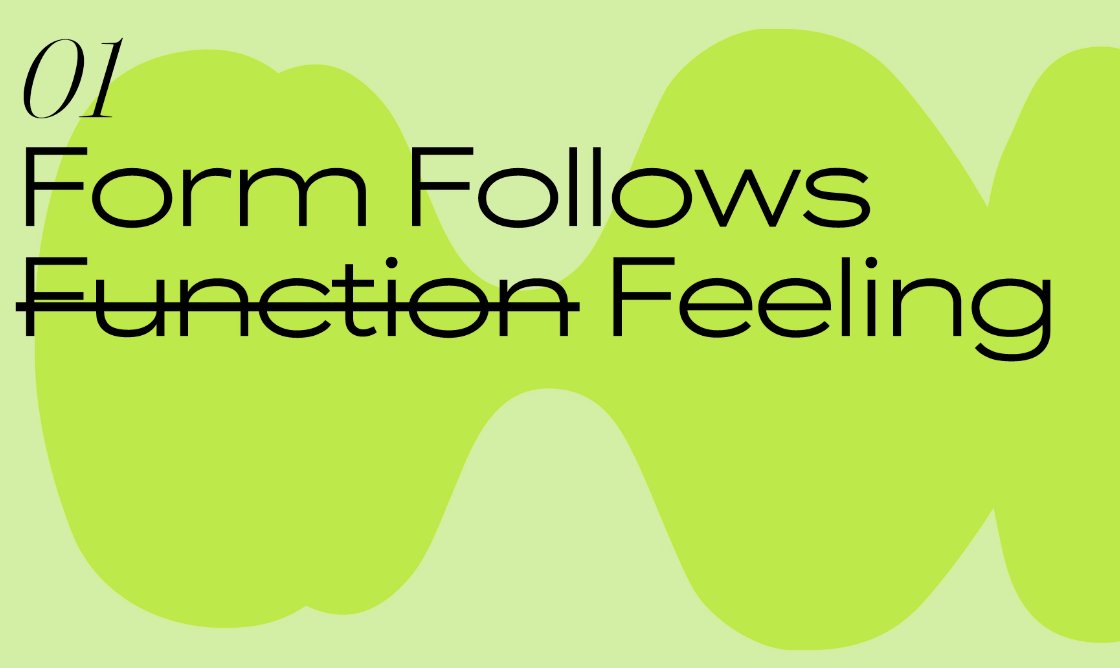

We’re never going there. Creativity is made, not generated. You can read more at procreate.com/ai ✨ #procreate #noaiart

17 things you must know to operate as a Freelancer/Agency well: #1 - $10k a month is hard to get to. The gurus tell you otherwise. After that it does get easier 👇
A great article on measuring design impact & ROI: uxpin.com/studio/blog/de…
How we designers can improve our ROI by learning beyond just pixels and craft. 🧵👇

If your title is Product Designer but you don't actually influence the direction of the product—you're a Product Decorator. Here's why it happens and what you can do about it:
You might like