Hillary W.H. Lo @HillaryLoWH
Joined December 2021-
Tweets10
-
Followers15
-
Following252
-
Likes41

As a 5th-year #UofG Applied Human Nutrition (AHN) student, Hillary Lo has been actively involved in research throughout her undergraduate studies. Her passion has led her to pursue a PhD in Nutrition after graduation. Read her Looking Glass article: bit.ly/4i2ui0g

Thank you for sharing your story @HillaryLoWH!
🧬Carriers of autosomal recessive conditions: Are they really 'unaffected?' 📰Published in @JMG_BMJ ✍️Hames A, Khan S, Gilliland C, Lo H, Magda K, Keathley J Stay tuned for more upcoming research in this area from our group @UofG_HHNS!#nutrition #genetics jmg.bmj.com/content/early/…


Nature rejected her paper for not being original, University of Pennsylvania (her employer) demoted her, and yesterday Katalin Karikó won the Noble Prize in physiology. In mid-2000s, Karikó and her Drew Weismann submitted their paper on mRNA (messenger Ribonucleic Acid) to Nature. Nature desk rejected their paper for being "an incremental contribution" only. The paper was later published in another journal, Immunity. Earlier in her career at the University of Pennsylvania, Karikó was demoted because her applications for grants kept getting rejected. But Karikó persevered and kept on going. In 2013, she joined BioNTech, a German company founded by two scientists, Uğur Şahin and Özlem Türeci. In 2018, BioNTech partnered with Pfizer to develop mRNA vaccines against the influenza virus. When the COVID-19 hit the world, Karikó's research helped Pfizer to produce the first vaccine against the disease. I don't know how the Nature editors who desk rejected Karikó's paper and the Penn administration who demoted her feel about Karikó Nobel Prize. Takeaway: Many academics and scientists worry about getting published in "prestigious" journals. Instead of worrying about prestige, we should try to put our work out as quickly as possible like Karikó did. Once you put your work out without caring about prestige, two good things happen: 1. Your work will lead to newer opportunities. 2. You will start getting feedback from the scholarly community, which you can use to iterate and improve. Here's another interesting Nobel Prize story. Peter Higgs, a British physicist, joined the University of Edinburgh in 1956. By 1964, Higgs has published his groundbreaking work about subatomic particles. After 1964, Higgs published less than 10 papers. When his department would ask him how many papers, he published in a given year, he would reply "None." It happened so often that he stared feeling like an "embarrassment to the department." The University of Edinburgh, however, never fired Higgs because in 1980 he had been nominated for the Nobel Prize. Higgs retired in 1996 and stayed on as an emeritus professor at Edinburg. In 2012, experiments conducted at the CERN laboratory confirmed Higgs work and the existence of Higgs Particle. And in 2013, Higgs was awarded the Noble Prize in physics and the University of Edinburgh got rewarded for being patient.

📢 SEASON 5 BEGINS! 🎙️ "Healthy Habits, Happy Homes" Podcast 🥼Evidence-Based Advice, Tips, Tools & Interviews with Experts! ⛹️♀️HELP YOUR FAMILY DEVELOP HEALTHY HOME ROUTINES! 🎧 Listen Here: guelphfamilyhealthstudy.com/healthy-habits… 🍏Guelph Family Health Study 🏛️ #UofG #UofGCBS

PKU carriers may have unknown health & cognitive risks, which researchers are trying to better understand. If you are a PKU carrier, or have undergone genetic testing and know that you are NOT a PKU carrier, you are invited to participate in a brief survey uoguelph.eu.qualtrics.com/jfe/form/SV_3v…

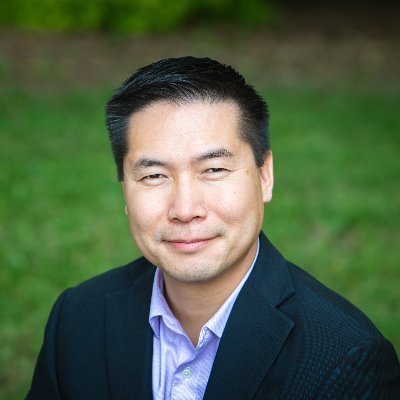
Amazing attendance by current and past UoG alumni at the 2023 CNS Annual Scientific Conference @CNS_SCN @UofG_HHNS @FRAN_UofG #CNS23QC


A PhD is mostly about thinking. So if you’re not physically doing something, it doesn’t mean that you’re not working. Make sure to give yourself credit for the time you spend thinking. That’s still work. #PhDVoice @PostdocVoice
We should normalize just how good PhD students are. You already have a bachelors (maybe a masters too). You’re already highly qualified, and now you’re researching something that very few people IN THE WORLD can do. You’re literally one of the best in the world in your field.
How To Use Email To Network Effectively In Academia: Nowadays, there are more ways of networking with people than you can even keep track of. But one way is severely underutilized by academics, and that is emailing. Sure, we use email all the time to communicate with people we already know, but how often have you emailed another researcher you don’t know, or even have someone in common with? Considering how frequently we use other networking platforms like LinkedIn and ResearchGate, we don’t use email for this purpose very much. As such, using email to expand your network is very effective because there aren’t many people doing it right now. So, how do you use email to expand your network? The answer is slowly. Some people are very successful at using emails to expand their network, others aren’t. Those who aren’t usually make at least one of two mistakes. The first mistake is that they try to achieve too much, too quickly. For example, let’s reverse the roles in the following situation to gain a better understanding of what the person being emailed is thinking: It’s Wednesday morning, and you’ve had dozens of emails already flooding in. You then receive another email, this time from someone whom you’ve never met, and asking for a position in your research group. So many questions then flood your mind about this person: Who are they? What are their skills? Do I like them? Will they be a good fit for my research group? Do I even have an opening? Do I know someone with an opening? Do I have time to address this? ...and so on. All of these questions flood in within a second. Who wants to do all of this work to answer these questions when you’ve got a million other things to do. And most of those million things are due soon, and hence, are more important right now. Instead, imagine if you receive an email from someone you’ve never met that went like this: "Dear Prof. …, We haven’t met, but my name is … I am emailing you because I do research in the same field as you, [Insert the field/topic], and I am simply trying to meet other people in my field, including yourself. All the best and hope to stay in touch, … [Add any credentials and information that are relevant in your sign-off]" This second attempt is far easier to deal with. All the person has to do is send a quick email back with a short response. Easy! Does this email immediately get you a position in this person’s group? No. But does it get your foot in the door that could lead to a position in the near future? Yes. By building your relationship slowly, you stand a far better chance of getting a position in their lab. This was the first mistake people often make when trying to network through emails. The second mistake is that their emails are often bland and boring. The email I wrote above is okay, but it could be better. For example, how about the following: "Dear Prof. …, We haven’t met, but my name is … I am emailing you because I do research in the same field as you, [Insert the field/topic], and I am simply trying to meet other people in my field, including yourself. I have read your research on [Insert field/topic] and really liked it because it helped me understand ...[Insert exact point] better. Because we research the same field, I thought you might find the following research of mine useful: [Add whatever link to your research here]. It covers ...[add a one line description of the exact question it covered] All the best and hope to stay in touch, … [Add any credentials and information that are relevant in your sign-off]" In this second email, there is not only a short introduction of yourself, but also something of value to the person you’re emailing – new information about a topic they are researching too. Every researcher wants to know more about their own field! This second email is not boring, it’s very interesting. From here, you can start to build your relationship. Just remember to make each exchange of value to the other person you are emailing otherwise they will not want to stay in touch. If you want to read more about how networking benefits your career and how to do it effectively, read our book, “100 Tips For Doing Your PhD” where we cover this, as well as 99 other tips to make other aspects of your PhD, like staying motivated, getting a job, and having a good work-life balance much easier and better. Read it here: Ebook: phdvoice.org/product/100-ti… Paperback: amazon.com/dp/B0BXMYVYCF (We also translated it into Arabic here: phdvoice.org/product/100-ti… And Spanish here: Ebook: phdvoice.org/product/100con… Paperback: amazon.com/dp/B0C1DN9ZG4)

Daniel Scirica @DanielIsho76001
25 Followers 641 Following
Justine Keathley (Hor... @JustineKeathley
679 Followers 450 Following Assistant Professor in nutrition, exercise & metabolism @UofG_HHNS. Nutritional Genomics & Precision Nutrition🥑🧬. Advocate for Evidence-Based Nutrition.
Kozeta Miliku MD, PhD @KozetaMiliku
806 Followers 2K Following Asst Prof @UofT Clinical Science Officer @CHILDStudy @McMasterU #DOHaD #womeninstem #newPI #newmom Founder & 1st President of ACCOM 🇦🇱🇽🇰 in 🇨🇦
Kubify - LTB for ePos... @LTBePosters
326 Followers 332 Following We are no longer using X. Please see our website if you want to find out more about Kubify's ePosters for conferences, communication and education.
Amy Hair MD @AmyHairMD
4K Followers 3K Following Neonatologist and Physician Scientist. Posts and opinions are my own. I specialize in Neonatal Nutrition. Scientific Advisor for @NECsociety
Brock Williams @BrockA_Williams
228 Followers 333 Following PhD, RD, CNSC. 👨🔬 Postdoctoral Research Fellow @UBCPediatrics, Division of Allergy. My work focuses on infant feeding, micronutrients, and food allergy
Nish☀️ Assistant ... @RDReflections
716 Followers 2K Following Mummy of 3 | Chronic disease prevention in children and adults | Tweets=my opinion
Ana Carolina Leme she... @anacarolphd
57 Followers 160 Following PhD, RD — anti-diet 🍩🍫🥤, running for life 🏃♀️ RD with a sweet-tooth 🍰 promoting healthy life style for Canadians individuals - opinions are my own
Paul Carter Rodman @Mosesmo132
143 Followers 3K Following Treat people the way you would want others to treat you.
Donald George @dg3701274
14 Followers 221 Following
GTLAST @Gtlast123
366 Followers 2K Following Technology website and online store (everything related to technology, programming, smartphones) - follow the latest technologies, your satisfaction is our goal
The Incubator Podcast @nicupodcast
7K Followers 4K Following A weekly #podcast about #neonatology where @drnicu and @doctordaphnamd review recent #neoebm and interview pioneers and innovators of the field🎙
Journal of Applied Ph... @japplphysiol
27K Followers 9K Following Original research in physiology with an emphasis on adaptive and integrative mechanisms | An @APSPhysiology journal
SMART Training Platfo... @smarttrainingca
99 Followers 107 Following
Marcus Brayden @MarcusBrayden2
2 Followers 46 Following
ISBNPA @ISBNPA
7K Followers 2K Following ISBNPA is the leading international research community in behavioral nutrition and physical activity. Follow @IJBNPA for our journal updates.
Lauren Ball @ProfLaurenBall
8K Followers 4K Following Professor of Community Health & Wellbeing @UQMedicine @UQHealth, Director @UQCCHW, @NHMRC Investigator. Championing knowledge leadership for a better world.
Journal of Human Nutr... @JHND_Official
7K Followers 144 Following The official journal of @BDA_Dietitians. Editor in Chief is @ProfLaurenBall. This account is no longer actively used. Please follow us on our other channels.
Keenoa @keenoanutrition
74 Followers 177 Following We empower dietitians with state-of-the-art technologies to increase their reach for a healthier population ✨
Prof Sharleen O’Rei... @OReillySharleen
3K Followers 2K Following Professor at @ucddublin 🇮🇪, Registered Dietitian, studying chronic disease prevention through better knowledge translation #WomeninSTEM
Laura Galante, Ph.D @LG15Dr
143 Followers 192 Following Lactation scientist and lecturer in physiology. I study mother-baby health in humans and Asian elephants :). Chair of the SoMe Committee @ISRHML
Martijn J.C. van Herw... @the_milk_EV_guy
783 Followers 461 Following Scientist studying milk's natural nanotechnology: Extracellular Vesicles and Exosomes at the @Waubenlab - Utrecht University
Icy Zhang @IcyZhang4
515 Followers 208 Following Assistant professor @UWMadison Teaching and Learning Lab @UCLA Data science education, embodied cognition, mental representation
Jennifer Canvasser @jenncanvasser
1K Followers 695 Following @NECsociety founder/ED, @PCORI awardee x3, @cziscience #RareAsOne, author of Forever Our Little One, @UCDavis grad student, Micah's mama, marathon runner x16
Air Canada @AirCanada
665K Followers 22K Following 🇨🇦 Canada’s flag carrier | Transporteur national du Canada 💬 Support: Send us a DM | Soutien : envoyez un message privé
Food Systems for Nutr... @FoodSysNutrLab
2K Followers 210 Following We are a USAID-funded activity as part of Feed the Future that supports evidence generation and uptake for nutrition-sensitive food systems
San Francisco Interna... @flySFO
59K Followers 3K Following ✈️ Official San Francisco International Airport (SFO) 📱 DM/tweet @flySFO: monitored M-F, 9AM-5PM; 📞 24/7 hotline (650) 821-8211
United Airlines @united
1.2M Followers 36K Following You’ve landed at the ✨official account✨ for United Airlines, where everyone is the main character on our flights. DM directly for assistance.
Toronto Pearson @TorontoPearson
103K Followers 5K Following Official account for Toronto Pearson. For assistance, email [email protected] or call 416-247-7678. Fr: @AeroportPearson Corp: @PearsonComms
UC Davis Nutrition @ucdnutrition
307 Followers 44 Following Transforming lives through nutrition discovery & education Solving complex nutrition challenges—from cells to communities https://t.co/W5roLimnwO | #UCDNutrition |
UC Davis @ucdavis
65K Followers 1K Following Official account of the University of California, Davis | California's College Town | Top tier public university | #GoAgs
American Journal of C... @AJCNutrition
9K Followers 114 Following The official account of the American Journal of Clinical Nutrition #AJCN from @NutritionOrg. Publishing rigorous, impactful human #nutrition research since 1952
Melinda Boss PhD @_MelindaBoss
168 Followers 138 Following Breastfeeding researcher, pharmacist, mother, lover of flamenco. #LactaResearch #LactaMap #LactaPedia Views entirely my own. She/her
MILK Lab NCSU @MILKlabNCSU
106 Followers 166 Following Breastfeeding research group out of Raleigh, NC. Interested in all things breastfeeding!
Hope Lima, PhD, RDN, ... @hopefeedsbabies
468 Followers 557 Following Assistant prof @WinthropU (#NIPLlab); DI @OhioState; Alum @MILKlabNCSU, @CGBI, & @WVWesleyan; fur-mama who helps babies eat 🤱🏿🤱🏽🤱🏼
Shelley McGuire @Nutr_Prof
371 Followers 464 Following Mom, wife, daughter, sister, friend, woman of faith. Academic. Nutrition/lactation researcher. Dogma doubter. Favorite day: when someone convinces me I'm wrong.
Allison Daniel, PhD @AllisonIDaniel
222 Followers 458 Following Nutrition researcher. Consultant @WHO. Adjunct professor @UBC @ubcLFS. Views my own. (she/her)
Miris AB @mirissolutions
650 Followers 2K Following Miris is a Swedish Medtech company developing instrument and solutions for human milk analysis. Our mission is to improve neonatal health globally.
MMBAL @Mothers_Milk_AL
132 Followers 11 Following HMBANA designated human milk bank, providing life-saving breast milk to premature and ill infants.
Mothers' Milk Bank @texasmilkbank
665 Followers 392 Following Mothers' Milk Bank of North Texas accepts donor human milk from screened moms to pasteurize & dispense by physician prescription to ill infants. #nonprofit
Mothers' Milk Bank No... @MMBNorthEast
814 Followers 731 Following @HMBANA4babies #nonprofitmilkbank. Pasteurized donor human milk for #preemie and #NICU infants. Hospital donor milk programs. Donate breast milk.
Mothers' Milk Bank Ca... @mothersmilksj
783 Followers 296 Following Mothers' Milk Bank California, a @HMBANA member #milkbank, provides evidence-based donor human milk in @California and beyond for premature and sick babies.
Misty Good @mistygoodlab
4K Followers 5K Following Neonatology Division Chief, UNC Chapel Hill | Neonatologist-Scientist saving the babies from NEC! | Scientific Advisor @NECSociety| @[email protected]
Jo-Anna Baxter, PhD @JoAnnaBBaxter_
164 Followers 149 Following Postdoctoral Fellow @uoftmedicine | Research Associate @sickkidsglobal | Alumna @uvic | Global Health and Nutrition | Views my own
Dr. Melissa Theurich @TheurichConsult
904 Followers 3K Following Public Health Nutritionist, Researcher @LMU_Muenchen, Consultant @WHO, @UNICEF, infant and young child feeding, #IBCLC #IYCF
Alecia-Jane Twigger @AJ_Twigger
574 Followers 846 Following Enthusiastic human #mammaryglanddevelopment research fellow and life lover extraordinaire | #lactation #cellbiology #research. Views are my own.
The Kids Research Ins... @TheKids_AU
6K Followers 1K Following The Kids Research Institute Australia is dedicated to improving the health and wellbeing of children and young people.
Centre for Human Lact... @uwa_chlrt
34 Followers 63 Following Our mission is to create knowledge that informs evidence-based education and improved care for women and their families throughout the lactation period.
mackenzie smith @kenzie_e_smith
71 Followers 137 Following PhD @uoftmedicine, PostDoc @ucdavis - interested in 🧠#neurodevelopment, #nutrition, #fattyacids, #lipids, #metabolism
Dr. Jane Francis @JaneDFrancis
223 Followers 452 Following Postdoctoral Research Fellow in Family and Early Childhood Food Insecurity @AcadiaU | Dietitian | @uoftmedicine and @AcadiaNutrition alum
Sanoji W, PhD @DrSanoji
316 Followers 288 Following Assistant Professor @uwinnipeg - I study milk EVs, milk microRNA, maternal obesity, neurodevelopment, and DoHAD 🥛 🤱🏽👶🏽 🧠
Carmen Jacqueline Ho @carmenjho_
595 Followers 601 Following Assistant Professor @uofg | PhD @UofT_PolSci | Formerly @HarvardTakemi | comparative politics, welfare state, social policies, health and nutrition
Dr. Verónica Espinoz... @Verukita1
5K Followers 3K Following 👥PhD Humanities 🧠 MSc Neurobiology 🧪BSc Chemistry #networkscience #gephi #neuroscience #chemistry #digitalhumanities #datasceince
Emily Seiger, PhD @emseigs7
237 Followers 485 Following lived experience is scientific evidence!!! she/her, PhD, Nutrition, UNC Gillings School of Global Public Health, BS, Penn State University
Ana O’Reilly Marsha... @AnaMars47726376
350 Followers 587 Following Neonatal & Paediatric Dietitian RD,Human Milk Enthusiast,Passionate about Vitamin D🌞 Proud Mum of 2 amazing girls,Views my own
Canadian Foundation f... @CFDRcan
726 Followers 625 Following The Canadian Foundation for Dietetic Research is a national registered charity that funds dietitian-led nutrition research that impacts the health of Canadians.
Josh Miller @JoshDoesScience
221 Followers 242 Following PhD candidate @UNC · food & water security · avid @stata user · water is life · he/him
meredith ✨ rootsinm... @MeredithBessey
623 Followers 2K Following a little bit of academia and a lot of taylor swift
Nutrition Internation... @NutritionIntl
20K Followers 3K Following We are global leaders in nutrition who focus on evidence-based, high-impact and cost-effective interventions that produce measurable results.
𝐉𝐨𝐬𝐞𝐩�... @drjosflynn
8K Followers 1K Following PGY-39 /Professor of Pediatrics @uwsomwwami /Editor in Chief, @Ped_Neph /Past-President, @ASPNeph / He/Him/His 🏳️🌈 /Also at @jostflynnmd.bsky.social
OHEA @OntarioHEA
2K Followers 1K Following The Ontario Home Economics Association assists families and individuals to achieve and maintain a desirable quality of life.
Pediatric Academic So... @PASMeeting
8K Followers 2K Following Annually hosted by @AmerPedSociety, @SocPedResearch, @AcademicPeds, @AmerAcadPeds, for pediatric research, education & networking. #PASMeeting #PAS2027
Bruce Kallenbach @BKallenbach
122 Followers 101 Following
National Academies @theNASEM
89K Followers 2K Following Providing expert advice on some of the most pressing challenges facing the nation and world. Non-partisan. Non-profit.You might like