The Golden Scripture @GoldenScripture
Join the REVOLUTION now! linktr.ee/goldenscripture Joined February 2025-
Tweets45
-
Followers491
-
Following35
-
Likes10
In November 1979, the United States froze $12 billion in Iranian assets and banned Iranian oil imports. The stated purpose: deny the Iranian regime the revenues it uses to destabilize the region. The organization those sanctions were designed to weaken now controls between one third and two thirds of Iran's entire economy. It did not survive the sanctions. It was built by them. The Islamic Revolutionary Guard Corps was founded in 1979 as a paramilitary force with no economic function. Its job was ideological enforcement. It had soldiers, rifles and commanders. It had no oil companies, no banks, no shipping fleet, no cryptocurrency wallets. Forty-five years of sanctions later, it controls construction, telecommunications, mining, banking, agriculture and energy. Every sector it entered was vacated by a foreign firm that sanctions forced out. The mechanism is documented. When sanctions cause foreign firms to exit a country, the vacuum does not stay empty. It is filled by the entities best positioned to operate under the conditions sanctions create: the organizations that control informal trade routes, security networks and port access that exist outside the legal frameworks making sanctions binding. In authoritarian states, those organizations are always the security and military establishment of the governing regime. Analyst Karim Sadjadpour described the IRGC's relationship with sanctions for NPR in a single sentence: "The Revolutionary Guards have really thrived in a more hostile, isolated atmosphere because it means less competition for them. I describe them as weeds that grow in the dark, in the sense that they blossom more as a result of isolation than sunlight." He said this in 2009. By 2026, the weeds control two thirds of Iran's economy. When the United States excluded Iran from the SWIFT banking system in 2012, Iran needed a way to sell oil and receive payment without using the international financial system. China needed a way to buy that oil. Both built what they needed. Iran now sells more than 80 percent of its seaborne crude to China, paid in yuan through a Chinese bank the US Treasury has no jurisdiction over. The sanctions that were supposed to deny Iran oil revenues built the payment architecture those sanctions cannot reach. Simultaneously, Iran assembled a shadow fleet of 155 ships to move its oil outside the Western shipping infrastructure that sanctions can target. In 2020, under maximum pressure, Iran exported 434,000 barrels of oil per day. By 2025, with the shadow fleet fully operational, Iran exported 1.6 million barrels per day. Three and a half times more oil under sanctions than under maximum pressure. The fleet that sanctions made necessary defeated the oil denial objective of those same sanctions. In March 2026, the Islamic Revolutionary Guard Corps began charging ships for the right to transit the Strait of Hormuz. The fee ran to $2 million per vessel. It was payable in Bitcoin, which clears in seconds and cannot be traced or confiscated under any existing sanctions authority or in Chinese yuan through the payment network that SWIFT exclusion forced Iran to build. The shadow fleet enforced collection. The IRGC's economic dominance provided the authority. Every element was built by the sanctions. Iran's parliament spokesperson described the Bitcoin payment option in a documented statement: vessels "will be given a few seconds to pay in bitcoin, ensuring they can't be traced or confiscated due to sanctions." The infrastructure that 45 years of sanctions made necessary is now collecting untraceable fees at the mouth of the strait through which one third of all the world's seaborne oil moves. The sanctions built the toll. The Bitcoin wallet became the receipt. On June 5, 2026, the United States Department of State published a press release titled "Sanctions to Strangle Iran's Energy Smuggling and Illicit Financial Networks." Its language was identical in structure to the press release issued in November 1979. Forty-five years. The same stated purpose. The organization those sanctions targeted controls between one third and two thirds of Iran's GDP, operates a 155-ship fleet, processes $7.78 billion annually in cryptocurrency and charges Bitcoin tolls at the world's most critical shipping lane. The first economic sanction in recorded history was issued in 432 BC. Pericles of Athens banned Megarian merchants from every harbour in the Athenian Empire to avoid provoking a war with Sparta. Sparta issued an ultimatum: withdraw the decree and there will be no war. Pericles refused. The Peloponnesian War began the following year. It lasted 27 years. The sanction designed to prevent the war became the mechanism that made the war inevitable. The pattern has not changed. The full investigation inside Revolution documents what this carousel could not carry. ➡ The three simultaneous outcomes that 45 years of sanctions produced and that every long-duration sanctions regime in documented history produces. ➡ Who gets richer inside the sanctioning country when sanctions fail. ➡ The specific prediction for which strategic waterway deploys the Hormuz toll model next and the named confirmation source that will verify or disprove it. Join REVOLUTION from below! [subscribe-to-revolution.netlify.app] Every mechanism in this carousel exists as a full investigation inside Revolution. ➡ Primary sources. ➡ Named frameworks. ➡ Falsifiable predictions tracked publicly, confirmed or disproved with identical visibility. ➡ Documented civic actions tied to each finding. ➡ Two documents every week. Tuesday and Saturday. ➡ 143 people inside. Six dollars per month. The price locks at joining and never rises for existing members. If one thread changed how one story reads, the full documents change how every story reads. Join REVOLUTION now! subscribe-to-revolution.netlify.app

The Federal Reserve does not control your mortgage rate. Japan does. Japan has for 30 years. The Bank of Japan meets June 16. The documented cost to you is $18,000 per $300,000 borrowed. Nobody published the mechanism connecting these facts until today ⬇️ Read the Article now: [x.com/GoldenScriptur…]
Step 4. Every 25 basis points the BOJ raises adds $18,000 to the lifetime cost of a $300,000 American mortgage, per Chase Bank's own documented arithmetic. The Bank of Japan meets June 16. The full investigation naming the 30-year mechanism behind these four steps, with primary sources, falsifiable predictions and the specific dollar cost, is here: [medium.com/@thegoldenscri…]
Step 3. The BOJ raised rates. When Japanese rates rise, Japanese institutions holding $1.19 trillion in US government bonds earn competitive returns at home for the first time in three decades. They stop buying US bonds. They start selling. The US Treasury offers higher yields to attract replacement buyers. Your mortgage rate rises.
Step 2. Japan imports 95 percent of its oil from the Middle East. When the Strait closed, Japan's import prices rose 17.5 percent in yen terms. Japan's inflation exceeded the Bank of Japan's 2 percent target. The BOJ had to act.
Step 1. February 28, 2026. US and Israel struck Iran. Congress never voted for it. 13 Americans died. The Strait of Hormuz closed within days. Japan routes 70 percent of its crude oil through that strait. The closure was the trigger.
The Federal Reserve cut rates three times in 2024. Your mortgage rate did not drop. Most people blame the Fed. The Fed is not the variable. Japan is. Here is the documented five-step chain nobody published. Thread ⬇️
I just published: The Federal Reserve Does Not Control Your Mortgage Rate. Japan Does. Japan Has For 30 Years. medium.com/p/the-federal-…
The Supreme Court ruled the government collected $166 billion illegally. Hours later, the government switched to a replacement authority its own lawyers had already told a federal court it also did not have. That transition lasted sixty seconds. Not sixty days. Not sixty hours. Sixty seconds. That one minute is the most consequential minute in American trade law history. On February 20, 2026, the Supreme Court ruled 6 to 3 that IEEPA does not authorize the president to impose tariffs. Chief Justice Roberts wrote that tariff power is "very clearly a branch of the taxing power" reserved for Congress. In forty-nine years since IEEPA was enacted, no president had used it for tariffs. The first one to try was wrong. IEEPA collection stopped at 12:00am on February 24. Section 122 collection started at 12:01am on February 24. The administration had the replacement proclamation prepared in advance. The sixty seconds between the illegal authority ending and the new authority beginning were not constitutional reflection. They were the time required to change the label on the collection mechanism. Nothing else changed. Inside the preparation for that sixty-second switch, someone read the government's own court filings. The Department of Justice wrote in a prior brief: Section 122 has "no obvious application here, where concerns arise from trade deficits, which are conceptually distinct from balance-of-payments deficits." The government switched to the authority its own lawyers had already told a federal court it did not have. Section 122 was written in 1972 for a specific monetary crisis: a country running out of gold reserves while defending a fixed currency peg. That monetary system was abolished by international treaty in 1976. The United States ratified that abolition in October 1976. The triggering condition Section 122 requires has not merely been absent for fifty years. It has been permanently abolished. Milton Friedman wrote in 1967, seven years before Section 122 was enacted, that floating exchange rates "completely eliminate the balance-of-payments problem." Reagan's chief economist Martin Feldstein told the Senate Finance Committee in 1984 that Section 122 "appears not even to apply to the current situation." He was describing 1984. The conditions he described are structurally identical to today. The states suing over Section 122 did not need to build a legal case. They found one already written. The Department of Justice's own prior court brief is now the plaintiff's first piece of evidence. The states are reading the government's own lawyers' words back to the government. The government's witness against Section 122 is the government itself. That witness cannot be cross-examined. Three legal clocks are running simultaneously and none fit inside each other. Section 122 expires July 24. Section 301 investigations started March 11 and require twelve months by statute. The administration's target is 135 days, half the fastest time ever recorded. If Section 301 slips by one week, a gap of 23 days minimum opens with no tariff authority on most consumer goods. The gap has been calculated. Section 122 expires July 24. Pharmaceutical tariffs announced April 2 take effect August 1. During those days and potentially weeks between them, the effective US tariff rate on most consumer imports falls from ten to fifteen percent to approximately three to four percent. The largest unannounced tariff reduction in modern American trade history will happen without a single press release. On April 1, Trump personally attended Supreme Court oral arguments to argue that nationwide court orders blocking executive action are constitutionally impermissible. On April 10, the same administration faces a motion for exactly that form of relief against its own tariffs. Every position available in the trade court directly undermines what is simultaneously being argued at the constitutional court. The trap was built by the government itself. Gabe Hagen roasts coffee in Arizona. He imports beans from three continents. He paid the tariffs. The Supreme Court ruled they were illegal. He should get his money back. The Treasury Secretary said publicly the American people "won't see it." Investment firms are now buying refund claims from businesses like Hagen's at forty cents on the dollar. The market believed the Treasury Secretary. If all 330,000 businesses sell refund claims at forty cents on the dollar, $99.6 billion transfers from American importing businesses to institutional capital. That transfer is not created by any statute. It is created entirely by the government's choice to dispute its refund obligation rather than fulfill it. The sixty-cent spread per dollar is the precise cost of the government's compliance failure, paid by the smallest businesses first. The April 2 pharmaceutical tariff was justified by a Commerce Department finding that the US depends dangerously on Chinese active pharmaceutical ingredients. The tariff fully exempts generics, which is where Chinese ingredient dependence is highest. It taxes branded drugs manufactured primarily by US allies. The tariff designed to protect against Chinese supply chain risk taxes the category with the least Chinese supply chain risk. The government collects revenue faster than courts can rule. It disputes the obligation to return what it collected. It switches to successor authorities in sixty-second gaps. It uses the constitutional challenge process as the revenue collection window while the determination is pending. Eleven frameworks name every part of this system. None of them existed anywhere before this week. All of them are provable from primary sources. This week inside Revolution I published the investigation that names all of it. Eleven frameworks built from Supreme Court opinions, DOJ appellate briefs, CBP court filings, Senate Finance Committee testimony from 1984, a Milton Friedman paper from 1967, the IMF's 1976 treaty amendments, and five recorded Bessent public statements. Every claim traces to a named primary document. Nothing in it exists anywhere else in print. What is inside: 14,632 words. The One-Minute Constitution. The Gold Window Ghost. The Government's Own Witness. The Three-Clock Gap. The Zero-Sum Swap. The Forty-Cent Dollar. The Two-Court Trap. The CAPE Collision. The Bessent Zero. The National Security Fiction. The Nondiscrimination Trap. The July 24 calculation. The $99.6 billion wealth transfer. Eleven frameworks. All documented. All original. All provable. Click on the link below to join REVOLUTION. [subscribe-to-revolution.netlify.app] No algorithm between you and it. No advertiser shaped what got written. Just eleven named frameworks, the sixty-second constitutional reset, the July gap calculation, and the clearest structural explanation available anywhere for what is actually happening to American trade authority right now. The investigation is waiting.
Yesterday morning, gasoline crossed four dollars a gallon in America for the first time since August 2022. At exactly the same moment, the Wall Street Journal reported that Trump privately told his aides he is willing to end the war without reopening the Strait that is causing it. Nobody has placed those two facts together. Until now. TACO was never a human trading strategy. It was an automated algorithm trained on fourteen months of Trump escalating, then rational counterparties accepting an exit. Machine learning systems, not investors, were executing positions in milliseconds. Iran did not beat the algorithm in negotiation. It deleted the one variable the algorithm requires to complete its cycle. The algorithm needed three conditions. Trump escalates. Trump offers an exit. The counterparty accepts. The opening strikes killed Khamenei, the only Iranian official with the authority to accept a compromise and the domestic legitimacy to survive having made it. The institution that replaced him exists because of the war. Accepting any deal dissolves its authority. BCA Research and Deutsche Bank each built a quantitative index to predict when Trump would reverse a policy. Both published the methodology and the threshold numbers. Iran's parliament speaker posted on X in the language of market indicators, calling Trump's pre-market announcements a reverse indicator. He was not speculating. He was reading the same indexes. On April 9, 2025, the ten-year Treasury yield hit 4.52 percent. Trump paused his Liberation Day tariffs. He called the bond market yippy. That threshold is proven by behavioral outcome and is public record. Iran's parliament speaker then threatened US Treasury bond buyers at 4.46 percent. Six basis points from the documented number. Not coincidence. Trump has three simultaneous countdowns. The April 6th military deadline. Gasoline already past four dollars this morning, with a physical supply cascade arriving around April 15th. And November midterms where 13 Republican-held House seats are now pure toss-ups. No path resolves all three favorably. Each resolution makes the others worse. This is arithmetic, not politics. Seven P&I clubs filed cancellation notices on March 1st. War risk premiums went from 0.15 percent of hull value to 10 percent in 48 hours. For a $100 million tanker, that is nine million dollars per transit. The Strait closed commercially before Iran fired a single drone. Insurance paperwork did what no missile needed to. Before the war, Lloyd's charged to insure against Iranian attack risk. Iran collapsed that market by making the attack credible. Into the gap, Iran inserted itself as the replacement. Now charging two million dollars per transit, in yuan, through a bank outside SWIFT. Iran captured Lloyd's revenue stream using its own weapons as the collateral. Iran is not closing the Strait temporarily. It is acquiring it. Parliament is legislating the toll system into law. Iran wrote to all 176 IMO members seeking administrative recognition. Ceasefire conditions demand formal sovereignty. Each step advances the acquisition from a wartime emergency measure toward permanent institutional governance. The war ends. The acquisition does not. Qatar produces one third of global helium. Force majeure was declared March 4th. Liquid helium stores for 35 to 48 days. Today is March 31st. The containers run empty between April 8th and April 21st. Samsung and SK Hynix produce two thirds of all memory chips. The AI hardware supply chain is on this clock. Brent crude is at $108. WTI at $101. Dubai physical crude, tracking actual Gulf delivery, has been trading between $126 and $166. JP Morgan says Brent and WTI are cushioned by inventory buffers, not reality. That inventory expires around April 15th. The price you see today is not the real price. It has a date. Trump's playbook requires a rational counterparty with a calculable break-even. China had one. Canada had one. Iran's IRGC does not. Its authority is constituted by the war. Accepting an exit dissolves that authority. Trump did not start a war he could not exit. He created the conditions that made his own exit mechanism structurally impossible. Today the Financial Times reported that Hegseth's broker contacted BlackRock in February about investing in the Defense Industrials ETF before the February 28th strikes. The investment did not proceed. Three sources confirmed it. The Pentagon called it entirely false and fabricated. The FT is standing by its reporting. This fits into a documented pattern. Iran closed the Strait of Hormuz to activate a machine. America's own political pain architecture, published in bank research, indexed to specific threshold numbers, proven by behavioral outcome. Then it removed the one component that machine needs to complete its cycle. The war is not the story. The machine underneath the war is the story. This week inside Revolution I published the investigation that names all of it. Seven frameworks. None of them existed before this article. Each one built from live market data verified this morning, Lloyd's maritime intelligence, published bank research, and the primary documents that the institutions themselves produced. Every claim is traceable to a named source. What is inside: 10,869 words. The Broken Machine Theory. The Published Trap. The Three Clock Collision. The Insurance Weapon. The Six Basis Point Theorem. The Sovereign Capture Theory. The Tariff Mirror Inversion. Seven frameworks you will use every time you watch a war, a market move, or a political decision unfold from this point forward. Join REVOLUTION now. [subscribe-to-revolution.netlify.app] No algorithm between you and it. No advertiser shaped what got written. Just the seven named frameworks, the live data and the clearest structural explanation available anywhere for why the machine that governed markets for fourteen months cannot complete its cycle. It is waiting. Join now.
The stock market has now lost five straight weeks. The Dow is in correction territory. Oil is sitting above $110. Everyone around you has a theory about why the Fed looks frozen. Rate cuts. Rate hikes. The war. None of those theories explain why the institution designed to act cannot seem to act at all. The confusion you feel watching this is not ignorance. The Fed has one main tool: interest rates. Inflation says raise them. The war debt says do not. But that is still not the full explanation. Something else is holding the whole institution in place. Something structural. And it started in a courtroom three weeks ago. On March 3, 2026, in a federal courtroom in Washington, a government prosecutor was asked directly by a federal judge: what evidence do you have of a crime? His answer is in the public court record. He said: we do not know at this time. The criminal investigation of the Federal Reserve chair is ongoing. The federal judge found that the government had produced essentially zero evidence to suspect the Fed chair of any crime. He quashed the subpoenas. He called the entire investigation pretextual. He said it seemed aimed at bulldozing the Fed's statutory independence. The Department of Justice appealed. The investigation continues. The institutional paralysis continues alongside it. The Federal Reserve chair did something genuinely unprecedented. He released a public statement naming the investigation for what it was. He said the threat of criminal charges is a consequence of setting interest rates based on economic conditions rather than the preferences of the president. He called the renovation and testimony pretexts. He was right. Here is the trap. The current Fed chair cannot be legally removed. Courts have blocked every attempt. His term runs through May, then he stays on the board until 2028. He cannot be fired. He cannot be pressured into resigning. The only thing that can be done to him is exactly what is being done. The replacement cannot be confirmed either. The president's nominee is ready. The Senate committee that votes on him has a Republican who said he will block every Fed nominee until the investigation of the current chair is resolved. The investigation the judge called pretextual. With zero evidence. The nomination sits. The institution sits with it. The Federal Reserve cannot raise rates. Every hike gets read as defiance of a president demanding cuts, inviting more legal pressure. It cannot cut rates. That looks like capitulation to the campaign it has publicly called an attack on its independence. It cannot hold rates. Inflation is rising. Every direction costs something it cannot afford. The dollar is the world's reserve currency because central banks trust that dollar policy is made independently. When a federal judge publishes a 27-page opinion saying the government tried to bulldoze the Fed's independence, every central bank holding dollar reserves reads that finding. They do not announce what they conclude from it. They never do. The United States national debt has crossed $39 trillion. Interest payments on that debt now exceed $1 trillion every single year for the first time in history. That exceeds the defense budget. Every percentage point that rates rise adds approximately $390 billion annually to that cost. This is not background noise. It is why the Fed has no clean move. Raise rates to fight inflation. The debt costs more. The government borrows more. Bond yields rise. Rates go up further. Repeat. Cut rates to ease the debt. Inflation expectations rise. Long-term rates go up anyway. Repeat. Both paths return to the same place. This is not a difficult political situation. It is a mathematical loop. In 1951, a president was pressuring the Federal Reserve to keep rates low to finance a war debt. Inflation was rising fast. The Fed resisted publicly. The resolution gave the Fed independence from Treasury for 75 years. That same agreement is now being invoked by name as the template for reversing the independence it created. The president's nominee to replace the current Fed chair has publicly called for a new Treasury-Fed Accord. That is the name of the 1951 agreement. Calling the new version the same thing makes it sound like a continuation. It is the opposite. The language of the liberation is being used to describe what replaces it. The nominee's credibility with markets comes from his record as an inflation hawk. His recent support for lower rates appeared after the president publicly demanded a rate-cutting replacement. If he cuts into a war inflation, he destroys the credibility that made him acceptable. If he does not cut, the entire operation was paid for nothing. This week inside Revolution I published an investigation into why the Fed is frozen. Not an opinion. A named mechanism, four of them, each one built from primary sources, each one provable, each one identifying something operating inside this situation that has never been named before. The courtroom transcript. The 1951 history. The mathematical loop. All of it documented. What you get inside is 8,000 words. The prosecutor's exact quote from the unsealed court transcript. The 1951 parallel laid out point by point against 2026. The $39 trillion debt spiral shown as a closed loop with no exit. The Warsh Paradox explained structurally. Four frameworks you will use every time you watch the Fed get pressured from now on. Join REVOLUTION by clicking the LINK below. [subscribe-to-revolution.netlify.app] No algorithm between you and it. No advertiser who shaped what got written. Just the investigation, the four named mechanisms and the clearest structural explanation currently available for why the most powerful financial institution in the world cannot seem to move. It is waiting.
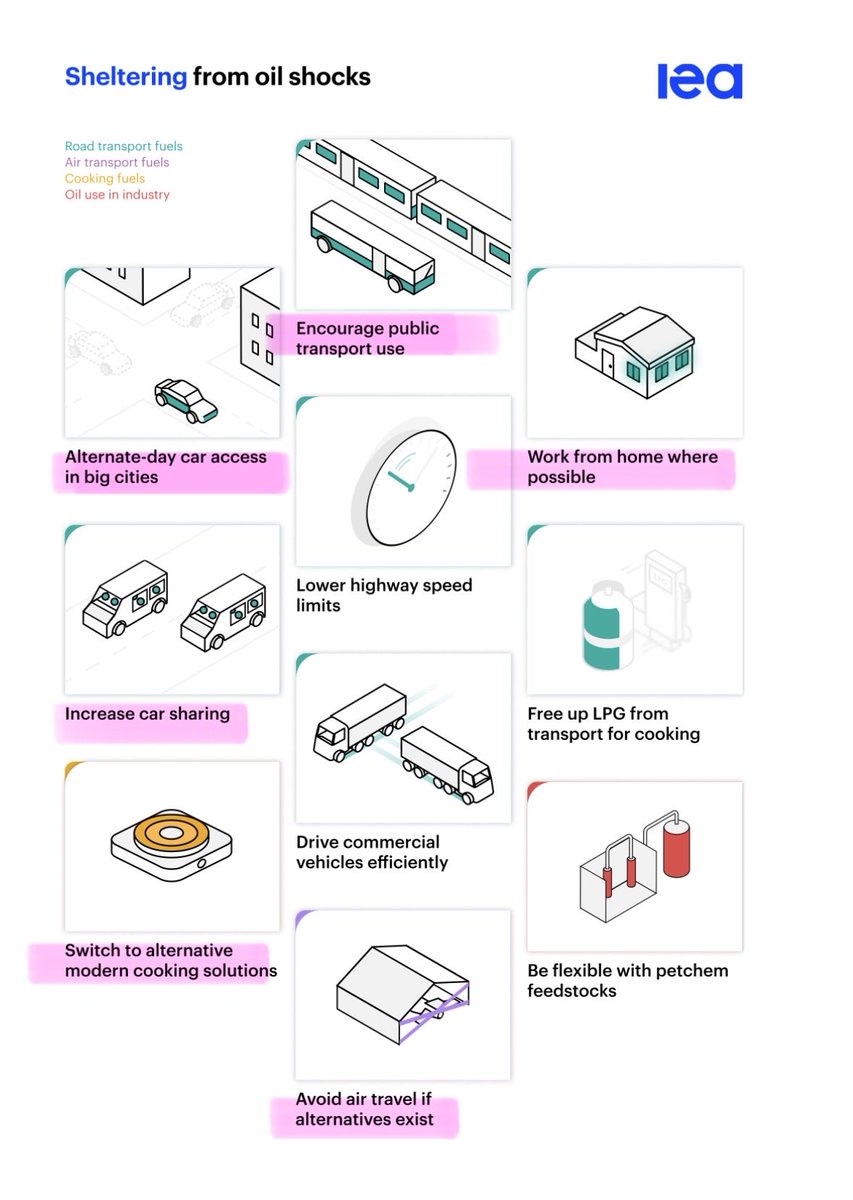
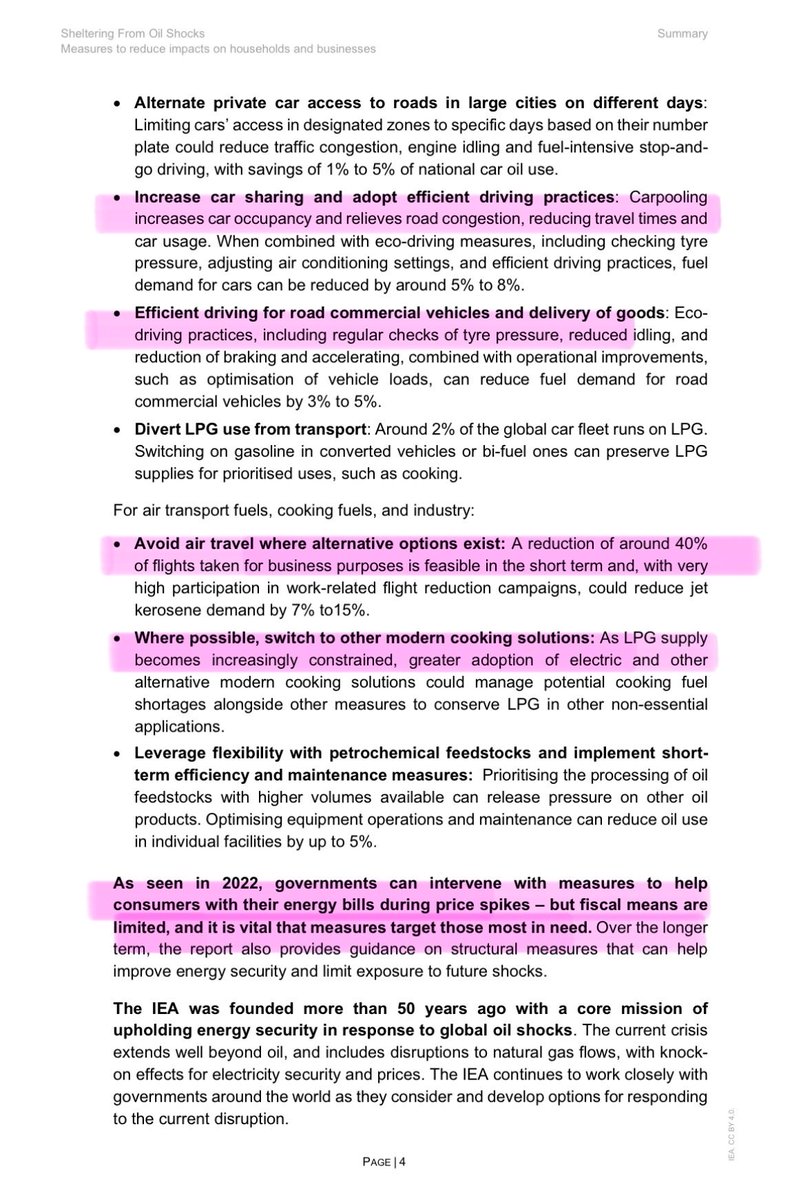
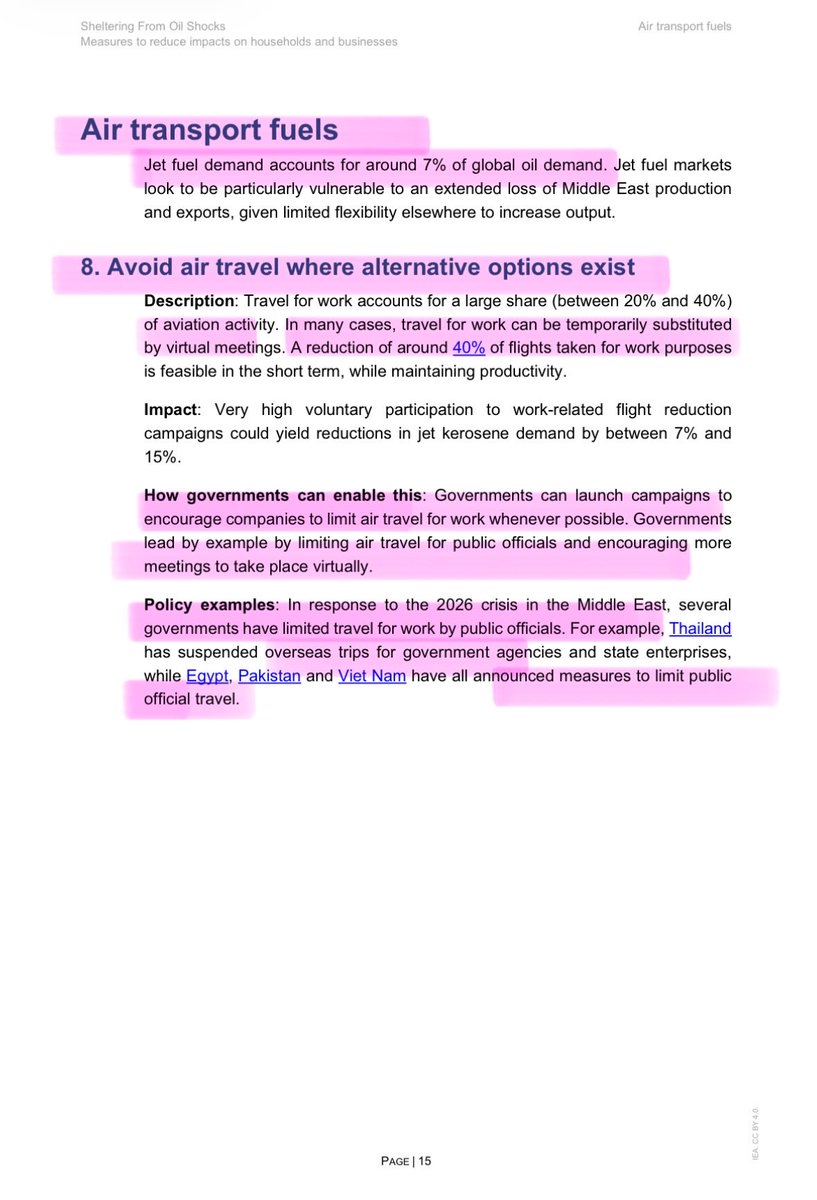
The reaction is correct. The analysis underneath it is almost always missing. Here is what is not being asked anywhere in that conversation. The IEA issued this exact plan before. Word for word, measure for measure, March 2022, in response to the Ukraine energy crisis. The same 10 points. The same plate rotation. The same speed limit reductions. The same remote work push. It was called a temporary emergency response to a specific crisis. The crisis eventually passed. Nobody is asking what happened to the infrastructure that was installed to make that plan work. The cameras. The vehicle databases. The employer compliance monitoring systems. The systems you need to enforce a license plate rotation scheme do not go away when the emergency ends. They are hardware. They are integrated into law enforcement databases. The people trained to run them are still employed. Ask that question, and the whole story changes. And that is before you get to what was happening in the financial markets at 6:50 AM on March 23, 2026, fifteen minutes before Trump posted on Truth Social that the United States and Iran had held productive conversations. Someone had already placed a $1.5 billion bet that the S&P would rise. A $192 million bet that oil would fall. Both positions paid out within hours. Iranian officials then denied any conversations had taken place at all. Bloomberg reported the volume spike. The SEC has not commented. And before you get to Cuba, where the entire national grid collapsed three times this month, where zero oil has arrived for ninety days, where surgeries are being postponed for tens of thousands of patients, where the UN Secretary-General has warned of collapse, and where the international response has been approximately zero. That is not a failure of empathy. That is a threshold being measured. Someone now knows exactly how far a country of ten million people can be pushed before the world moves. And before you get to Nebraska, where 820,000 acres of grazing land burned in two weeks, the largest wildfire in the state's recorded history and where nobody in the energy press or the financial press connected it to what is happening to input costs, to who buys distressed agricultural land when ranchers cannot hold on, to what the Ogallala Aquifer depletion timeline means for who will own that land in fifteen years. These are not four separate stories. This week I published a full investigation inside Revolution that builds five original analytical frameworks nobody has named before. Not angles. Frameworks. Complete structures with their own logic, their own formulas and their own predictive power for every crisis that comes after this one. The investigation uses public documents, timestamped market data and the words of the institutions themselves. No conspiracy is required to explain any of it. If you are reading this far, you are already the person it was written for. Join Revolution here: [subscribe-to-revolution.netlify.app]
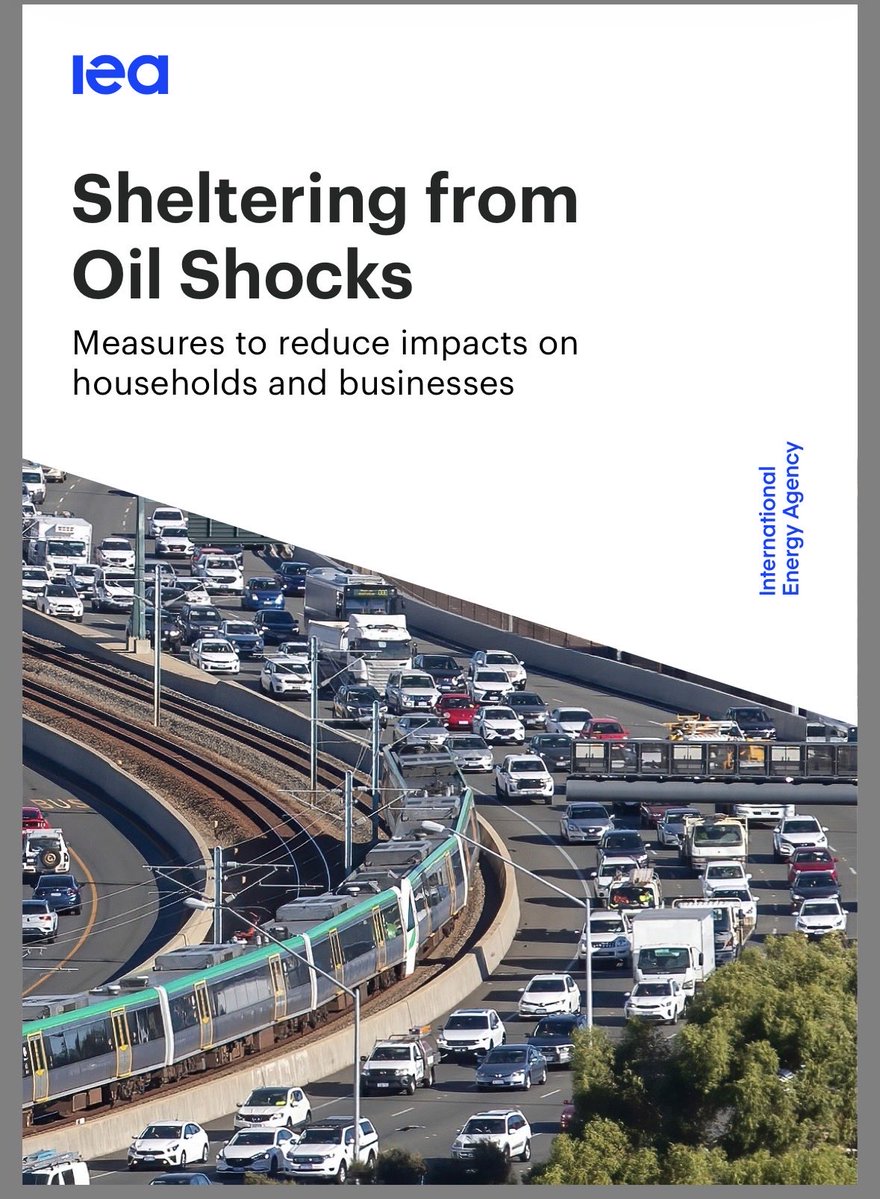
Something the IEA published four days ago has now been seen by tens of millions of people. The reaction is almost entirely the same everywhere you look. Outrage. Comparisons to 2020. Screenshots of the 10 measures. People reading the license plate restriction clause and posting it with fire emojis and red sirens.
₹160+ lakh crore extracted from Indians since 2017 in taxes. Oil companies bleeding. Rupee collapsing. Food prices loading. And now the PM uses the word coronavirus in a speech about an oil war. There is a full investigation behind this carousel. The mathematics. The patterns. The questions the mainstream won't ask. It's only inside Revolution. Click on the link below to get in. [subscribe-to-revolution.netlify.app]
Since GST launched in 2017, India has collected ₹133-140 lakh crore in GST alone. Fuel excise and VAT revenue is SEPARATE and additional, that's another ₹25-30 lakh crore over the same period. Combined tax extraction from Indians since 2017 through GST + fuel taxes alone: ₹160+ lakh crore. During COVID, when crude crashed to $20/barrel, the government raised excise by ₹10-13/litre. Collected ₹3.71 lakh crore extra. That same year, 14 crore jobs disappeared. When prices fell, you didn't get relief. When prices rise, you pay more. Where exactly is the money going?
When PM Modi addressed Parliament about an oil war, why did he reach for COVID as his metaphor for national resilience? There are dozens of crises India survived, Kargil, demonetisation, floods. Why COVID specifically? A Thread 🧵

Lucas 🔰 @goweyzs
1K Followers 3K Following
Devika @Devika73923105
1 Followers 186 Following
JonnyPauly @jonnypauly
121 Followers 1K Following Hypocrite—just like you. Has drunk from the hose. I ❤️ @Phogonzo, daughters, ⚽️, bread, soup, wine, Carlin, Bowden, RATM, 🇺🇸 🇬🇷 🇪🇨 fuck email
millie bays @bays_millie
114 Followers 2K Following


Rajattt @Rajat_Tatiya
2 Followers 36 Following

3DaysRisen @3days_risen
37 Followers 177 Following
Gll05T @Gll05T
76 Followers 658 Following

Dixie Normus @thatDixieNormus
106 Followers 422 Following stumbling through life and collecting experiences. I like jokes. I like pissing people off. my burner account. joined in May 2020 must be a bot!
Justin M @crescent_nola
1 Followers 18 Following
Gail @austinsadda
490 Followers 2K Following Anti-communist, politically homeless. How 'bout we give the Constitution another try? Politicians and cult followings suck...
Pablo G @PabsG06
171 Followers 496 Following

starkid @KalyaniHar11448
7 Followers 79 Following
Exhale @CafeEnema
4 Followers 13 Following
Make MAGA Great Again @MakeMAGAGreat
2K Followers 3K Following Conservative that's tired of politicians who pretend to be conservative
Randy Burgard @RandyBurgard
124 Followers 221 Following Father to three amazing sons. IT Program Manager & Business Relationship Manager. USMC Veteran. #FACPPM #FACCORIII #PMP #CSM #BRMP

Nicky Fintz @NickyFintz
17 Followers 94 Following

CryptoOverFiat @fiat_over
430 Followers 2K Following
Wen Jones @Wenger311
569 Followers 5K Following Trying to stay sane in a world where too many live their life believing: Reality isn’t real….that the Narrative IS Reality
Vani @kalaivani
401 Followers 390 Following Postdoc @unil | PhD Economics @heclausanne | Labor | Education | Gender | Actively Decolonizing & Re-indigenizing
Xavier 🔺 @sevendailysins_
208 Followers 692 Following Ag🧑🌾 Gastronomy🥘 Cannabis🍃 Reptiles🐍 Curiosity - Community - Education 👩🏽🌾 Creative Director 👉@agri_collective🍯 @TNM_Collective🐘
Luny @Lunywhw
0 Followers 37 Following
ᤁၔဂܢဢᛜ᥊ @Zen_Mox
141 Followers 171 Following ⊙ 'Give each other less to think about, not more.' Taken. Retired.
Jacquie Johnson @jacquiejohnson
14 Followers 264 Following
linRob1 @ziggyatx
40 Followers 187 Following
Nicky Fox @arcturiangurl
0 Followers 2 Following
Samuel Burda @HamSyde24
84 Followers 215 Following
RTA @AaaNnnnTttttZzz
10 Followers 73 Following
doseAGE @BarksdaleMD
104 Followers 891 Following
Luc Mac @lucthemac
18 Followers 327 Following
John Lamb @the1jl
145 Followers 408 Following Lover of fine wine, spirits and food. Trying to enjoy the finer points of life. Wish work didn't get in the way so often....
Rob Minogue @RobMinogue
13 Followers 157 Following
Talya Webb @pggtee
13 Followers 39 Following
Tili MAIAVA @maiava53974
57 Followers 185 Following
B @bigcheese778
208 Followers 487 Following will be a chef forever. puck,golf,wife....not in that order.
Nick Walker @noTalk_justWalk
13 Followers 532 Following
Caroline Brock @CarolineBrock13
0 Followers 8 Following
Michael X @michaelxxx007
109 Followers 458 Following For in much wisdom is much grief: and he that increaseth knowledge increaseth sorrow
McCormick Miller @MMcCormick_54
69 Followers 2K Following
Incognita Cate @nz_cate
2K Followers 1K Following #CivilDisobedience Clan of the #ConspiracyRealist #DoNotComply #MakeCommonSenseGreatAgain Everything is a lie. #1A #2A : Real/Woman
MichaelPaul @MikePaul2014
97 Followers 538 Following
Tony 🇺🇸✝️ @moneymonkey000
699 Followers 1K Following Conservative Father and Husband America First and Only. 3x Trump voter ultimately blackpilled by Trump. Revelation 2:9 Deport everyone who doesn’t eat bacon.
James Brand @Brand1James
13 Followers 307 Following
Pascal - The X Growth... @xgrowthpascal
272 Followers 3 Following Helping you grow on Twitter. Built @iampascio to 120K followers + helped 20+ clients get similar results. Growing this acc from 0 to 10K followers in 90 days 🚀
Aravind @aravind
302K Followers 385 Following I talk about issues long before they happen. Now and then in touch with Turiya. I post conspiracies and nothing I say is real. Don't believe anything I post.
Swarajya @SwarajyaMag
340K Followers 831 Following Igniting an Indian renaissance. Published since 1956.
Asra Nomani @AsraNomani
197K Followers 13K Following Senior Editor Investigations @FoxNews Digital • Fmr WSJ • Book: WOKE ARMY • Tips to [email protected] or 332-298-3475 • @DPearlProject • Fmr Georgetown Prof
Kirill Dmitriev @kadmitriev
142K Followers 337 Following Positive insights. CEO of the RDIF. Special Envoy of the President of Russia for investment & economic cooperation. Stanford and Harvard alum. Views my own 🕊️
Alex Mason 👁△ @AlexMasonCrypto
223K Followers 89 Following Master Builder of Generational Wealth in Crypto.
Tuki @TukiFromKL
116K Followers 400 Following 20 | The QUANT | I love AI Building https://t.co/FaBWVoVdjb
Shannon Joy @ShannonJoyRadio
84K Followers 12K Following Believer * Wife * Mom * Host of The Shannon Joy Show * Independent Political Commentary * Sign Up For SJ's Daily Newsletter At https://t.co/jFuiEb84Jn
HealthRanger @HealthRanger
387K Followers 1K Following IQ 150+ polymath. Founder of all Brighteon platforms, mass spec food lab director, #1 bestselling author of "Food Forensics," AI developer
CA Vivek Khatri @CaVivekkhatri
221K Followers 169 Following Daily Threads & Learning Articles | Algo Trader & Investor | Macro l Building Wealth Community l Founder & Partner @Stocki_zen –SEBI RA Firm (INH000017675)
Kim Iversen 🇺🇸 @KimIversenShow
302K Followers 1K Following Politically Independent = I think for myself. Watch The Rumble Exclusive Kim Iversen Show M-F ✉️[email protected]
Agnes Callamard @AgnesCallamard
98K Followers 3K Following Secretary General, Amnesty International. Ex UN Special Rapporteur and Columbia Univ. Tweets on human rights. Views my own. @agnescallamard.bsky.socia
Francesca Albanese, U... @FranceskAlbs
595K Followers 996 Following Int'l Lawyer | Scholar | Former UN Official | Sen.Adviser @ARDD @ar_renaissance Palestine has given me the opportunity to become a better person.

sarah @sahouraxo
716K Followers 608 Following Independent Lebanese geopolitical commentator. Join my ONLY Telegram channel: https://t.co/v4fQXfq2hQ
Mohamad Safa @mhdksafa
549K Followers 15 Following Proudly shadow-banned on X. Executive director. Diplomat rel. @PVAenglish Main Representative at UN ECOSOC and accredited at United Nations Office at Geneva.
Predictive History @Pred_History
128K Followers 53 Following Official account of @xueqinjiang's "Predictive History" Analyzing history to connect the past, explain the present, and predict the future.
ᴛʀᴀᴄᴇʀ @DeFiTracer
402K Followers 917 Following On-chain 🔎 | Web3 Developer 💻 | Airdrops 🪂 | Trading
Lex Fridman @lexfridman
5.0M Followers 686 Following Host of Lex Fridman Podcast. Interested in robots and humans.
Gunther Eagleman™ @GuntherEagleman
1.7M Followers 104K Following David J. Freeman - Political Commentator - America First - MAGA - Christian
Libertarian Mama 🔔 @LibertarianMama
46K Followers 4K Following Mom of 6. Come for the laughs, stay for the liberty. Toxic individualist. Ron Paul was right. No DMs.
unusual_whales @unusual_whales
4.2M Followers 2K Following Stocks/Options/Crypto/Market News/Tools. Not advice @Polymarket partner Open a tastytrade account: https://t.co/wGf2ZdlXpw Discord: https://t.co/0xJ9e0ZYYG More: https://t.co/nsxZlPV0pC
shirish @shiri_shh
41K Followers 1K Following Generalist | AI | Tech | Startups ▪︎ Locked in ▪︎ Building https://t.co/fRlOjnbxgz
Globe Eye News @GlobeEyeNews
891K Followers 155 Following International Affairs, Politics, Sports, Trends, and Global Happenings from South Asia to the Middle East and Beyond.
Mario Nawfal @MarioNawfal
3.6M Followers 51K Following Largest Show on X (Live Daily 10am-8pm ET) | 24x7 Writers Covering News | Investor 700+ Startups | Founder @ibcgroupio , https://t.co/sw7OQ5KOqu
Furkan Gözükara @FurkanGozukara
276K Followers 2K Following PhD Computer Eng. : AI, Wan, Qwen, FLUX, ComfyUI LTX, LLMs, Z-Image, LoRA, Tutorials, Fine-Tuning, DreamBooth, AI Lectures, Voice Cloning, Tech - Pro Humanity
Shadow of Ezra @ShadowofEzra
902K Followers 0 Following I am only on X and Telegram under the same handle. All other accounts are scamners and imposters.
Douglas Macgregor @DougAMacgregor
681K Followers 84 Following Army Colonel Retired Combat Veteran | CEO @TheNatConvo | SECDEF Advisor | Author | Consultant | Military TV Analyst | https://t.co/tLrnHgGR1x

Shanaka Anslem Perera... @shanaka86
309K Followers 4K Following Author of The Ascent Begins. Independent Analyst. Money, geopolitics, AI, science, and sovereignty. Mapping the collapse and the reconstruction of order.
Liz Churchill @liz_churchill10
887K Followers 3K Following Unofficial Queen of the World Economic Forum. Conspiracy Theorist. Bill Gates’ Best Friend. Communism Ruins Everything ™
Polymarket @Polymarket
1.6M Followers 6K Following The World's Largest Prediction Market. Trade politics, news, crypto, culture, sports, tech, & more. Discord: https://t.co/tzKrbDfF3x
William Makis @MakisMedicine
679K Followers 46 Following Relocating to FLORIDA. Cancer Researcher. Ivermectin & Mebendazole in Cancer Pioneer! 110+ Papers! EMAIL: [email protected] Substack: https://t.co/WRWcCQCN9x

Mahyar Tousi @MahyarTousi
452K Followers 101 Following Founder @TousiTVOfficial | Geopolitical News Channel | Christian | Free Speech, Free Markets, Free People | Media Enquiries: [email protected]You might like