
Aaron Feinstein @FeinsteinMD
ENT | Professional Voice | Head & Neck Surgeon | Innovator | Idealist [tweets are not medical advice] visit.nemedic.com/?practitioner=… Los Angeles, CA Joined November 2011-
Tweets192
-
Followers128
-
Following253
-
Likes913
Interesting insights into a potential mechanism for #tinnitus #ENTsurgery #ENT #medtwitter today.uconn.edu/2026/10/uconn-…
Pay attention to the voice, it may indeed be an early sign of dementia: newsweek.com/voice-changes-… #medtwitter #voice #ENTsurgery #dementia #laryngology

I'm a cardiologist. Something just happened today that I genuinely did not see coming — and it could change the future of preventive medicine more than anything I've written about on this platform. Midjourney — the AI company that became famous for generating images from text prompts — just announced a medical hardware division and unveiled a working prototype of a full-body scanner unlike anything that's ever existed. It's called the Midjourney Scanner. And it works like this. You step into a shallow pool of water. You stand on a platform that slowly descends — about two inches per second — through a ring containing roughly half a million tiny ultrasonic transducers, each the size of a grain of sand. Every one of them acts as both a speaker and a microphone, sending ultrasonic waves through your body from every angle and recording what comes back. 60 seconds later, you step out. The scan is done. No radiation. No magnets. No claustrophobia. No IV contrast. Just sound, water, and an almost incomprehensible amount of computing power — roughly 2 petaflops processing 17 gigabytes per second of raw acoustic data — reconstructing a 3D map of your entire internal anatomy down to half a millimeter resolution. Organs. Tissues. Blood vessels. Bones. Muscle. Fat distribution. All segmented by AI in real time. As a cardiologist who has spent months writing about how the standard screening playbook misses the majority of future heart attacks — this is the technology I've been waiting for without knowing it existed. Here's why this matters for the future of your heart. Right now, getting a detailed look inside your cardiovascular system requires either a CT scan (radiation), an MRI (magnets, claustrophobia, 45-60 minutes, $1,000+), or a coronary CT angiogram (radiation, IV contrast, limited availability). These are powerful tools. I order them regularly and they save lives. But they're reactive. You get them when something is already suspected. They're expensive. They're uncomfortable. And for most people, they happen once — maybe twice — in a lifetime. Imagine instead: a 60-second scan with no radiation that you could repeat monthly or quarterly. Tracking cardiac structure over time. Watching body composition shift. Detecting changes in organ size, fluid distribution, or vascular architecture before symptoms ever develop. Building a longitudinal dataset of YOUR body that AI can analyze for patterns no single snapshot would reveal. That's what Midjourney is building toward. The company plans 50,000 scanners worldwide over six years, with capacity for a billion scans per month. The first location — the "Midjourney Spa" in San Francisco — opens at the end of 2027 with 10 scanners alongside saunas, cold plunges, and a gym. The scan costs a few dollars. The experience is designed to feel like wellness, not medicine. The technology is built on Butterfly Network's ultrasound-on-chip platform — 40 modules per scanner — combined with Midjourney's own AI segmentation and reconstruction stack. David Holz, the founder, claims the system aims for image quality comparable to MRI in many aspects but at nearly 100x the speed with zero radiation. Now the caveats — because I'm a physician and the caveats matter enormously. This is a Gen 1 prototype. About a dozen people have been scanned so far. Current scan time is actually closer to 20 minutes, not 60 seconds — the system is bottlenecked by bandwidth and reconstruction algorithms. The 60-second target is aspirational for future hardware generations. It is not FDA-cleared for diagnostic use. Midjourney is starting with body composition maps — a category below diagnostic imaging in the regulatory hierarchy. The path from "beautiful 3D body scans" to "clinically validated diagnostic tool that your cardiologist can act on" runs through years of clinical trials, comparative studies against MRI and CT gold standards, and FDA review. No independent clinical validation has been published. The imaging claims come from Midjourney's own demonstrations. Comparative data against established modalities does not yet exist. And the privacy implications of full-body internal scans at planetary scale — a billion scans per month — is a conversation that hasn't even started yet. So I want to be precise. This is not ready for clinical medicine today. It may not be ready for years. Many ambitious medical hardware projects have failed in the gap between prototype and product. But. The fact that a working prototype exists — producing real segmented 3D anatomy from sound waves and compute alone — means the physics works. The engineering works. The question is no longer "is this possible" but "how fast can it be validated and scaled." And if it is validated — if the resolution holds up against MRI, if the AI segmentation proves reliable, if the regulatory path clears — then what we're looking at is the most significant new imaging modality in 50 years. For my entire career, preventive cardiology has been limited by the fact that seeing inside the body is expensive, slow, uncomfortable, and infrequent. We catch disease late because we image rarely. We image rarely because imaging is hard. A 60-second, no-radiation, spa-based full-body scan that costs a few dollars would demolish every one of those barriers. I've written about AI detecting inflamed arteries. About gene editing curing cholesterol. About GLP-1 drugs rewriting metabolic medicine. About cellular reprogramming reversing aging. This is the missing piece: the ability to see inside every human body, routinely, safely, and affordably — so all of those interventions can be deployed before the disease arrives instead of after. The company that taught AI to generate images from imagination just built a machine that generates images from the human body. The future of medicine showed up today from the last place anyone expected.

Announcing a new division of Midjourney called "Midjourney Medical"
Good to know! Intranasal Epinephrine as a New Option for Anaphylaxis #allergy #foodallergy #ENTsurgery #medtwitter bulletin.entnet.org/home/article/2…
Express Scripts Just Got Sued for Racketeering. Here’s What That Means. open.substack.com/pub/healthcare… #medtwitter #healthinsurance #entdoctor #lawsuit
Deny, Delay, Disappear: Why Insurers Should Be Liable for Medical Decisions #medtwitter #ENTsurgery #healthcare #insurance #SoMeDocs doctorsonsocialmedia.com/deny-delay-dis…
Bad news for patients, doctors. Why?? open.substack.com/pub/healthcare…
Smell loss #Covid19 New study shows high % of #hyposmia persists at 1.8 years post-covid; interestingly affects pleasant, neutral & unpleasant odors (vs. #Parkinson dz which mainly affects unpleasant smell). Lemon was the most lost. #medtwitter #ENTSurgery jamanetwork.com/journals/jaman…
Smell loss #Covid19 New study shows high % of #hyposmia persists at 1.8 years post-covid; interestingly affects pleasant, neutral & unpleasant odors (vs. #Parkinson dz which mainly affects unpleasant smell). Lemon was the most lost. #medtwitter #ENTSurgery jamanetwork.com/journals/jaman…
@openevidence can you fix the spelling error here 😉 P.S. interested to try it out more and research unusual clinical issues! #AI #medtwitter


Medicare’s message to doctors: “Do more, get paid less.” 2025 conversion factor: $32.35 2015 conversion factor: $35.93 A decade of cuts while demands explode. This isn’t reform—it’s sabotage. In 2025, the Medicare conversion factor will be lower than it was in 2015. A decade later, doctors are getting paid less per unit of work—while inflation, admin burden, and burnout have all skyrocketed.

@MananShahmd @DutchRojas Yep. 3-4x the cost. Insane

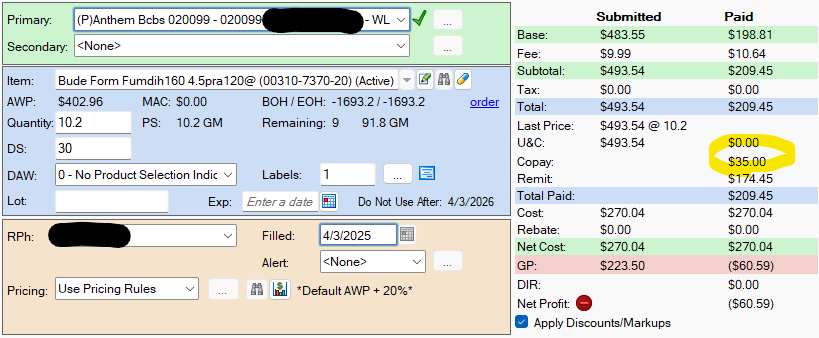
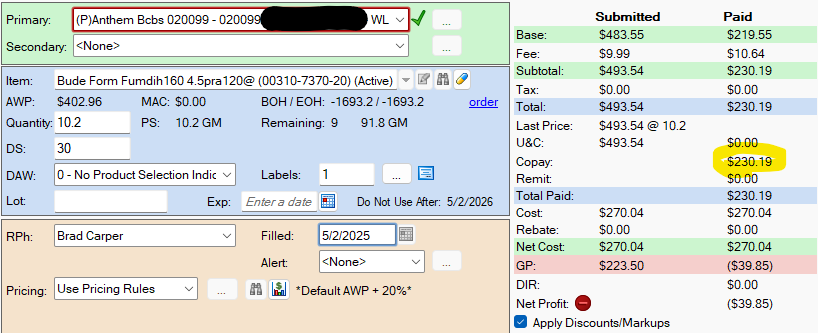
Here's another real-life example of how PBMs are corrupt and harming healthcare in America. Consider this situation: The same patient, same prescription, just one month apart. In April, the patient's copay was $35 for a generic Symbicort inhaler. In May, the patient was automatically enrolled in Caremark's mail-order program without his knowledge. Now, if he uses a pharmacy outside of their mail-order system, his copay will be $230.19. This patient, who is 62 years old, has been a customer of my pharmacy his entire life and has severe COPD. This inhaler is a life-saving medication for him. When he came to pick up his inhaler, he was shocked by the copay and stated that he couldn't afford it and that he couldn't wait for mail-order. I explained to him that he can opt out of this program. Finally, after an hour on the phone with his PBM, he was able to opt out of the mail-order program he had been automatically enrolled in and can continue using our pharmacy for his usual copay. I can't help but think of all the patients across our country like this one, that are in need of their medications and get blind-sided by their PBM. The majority of these patient's do not have a personal pharmacist to explain their options. They just go without medicine. This must stop now.
@DrJMarine Many thanks! Btw recently looked up laryngology options in your area Private cadentcare.com/physicians/822… Georgetown ent.georgetown.edu/grant/ GW gwdocs.com/profile/steven… Hopkins profiles.hopkinsmedicine.org/provider/alexa… Hopkins profiles.hopkinsmedicine.org/provider/vanin…
@DrJMarine And it is so crazy how the academic centers get 3-4x more than us!

Ability is not static; it must be cultivated, challenged, and renewed throughout a surgeon's career. — article written by Stephen M. Cohen, MD, MBA doctorsonsocialmedia.com/the-three-as-t… via @somedocs #medtwitter #ENTSurgery #laryngology #voicesurgery
CRITICAL UPDATE: Medicine is at a crossroads. Physicians are now moving to employment over private practice due to overburdensome regulations and financial incentives to do so. Facilities can pay doctors significantly more than they make in private practice and this increased pay gap widens every day while we fail to increase payment in private practice with inflation (hospitals get inflationary updates). All of this costs consumers more money. One example shows that Medicare pays a doctor $250 for an injection in the office in private practice but a doctor employed by their health system costs $750 for the same procedure. Given that many of these healthcare systems have insurance contracts that are 3x or more of Medicare, that gap widens dramatically. Meanwhile, United Healthcare is continuing its meteoric rise (along with others in the health insurance sector). One profit scheme is through upcoding and cherry picking patients in the Medicare Advantage program, which is now estimated to cost taxpayers $80B annually above what it would have cost through Medicare. Much of the money to cover that $80B is coming from Medicare Part B, the fund used to pay physicians. Dr. Oz just testified in front of the Senate Finance Committee and committed to attacking these payment schemes. Senator Cassidy referenced a bill he is working on to prevent upcoding. Others on both sides of the aisle agree that something must be done. What do we need to do? Return that money to Medicare Part B and use those savings to pay for the permanent fix, putting physicians on par with all others in healthcare by giving them mandatory annual inflationary updates. Investing in our physicians will ultimately save the healthcare system money by encouraging more self-employed physicians. This can all be done with our upcoming reconciliation process. Leadership in both the Senate and House have committed to doing “something” about physician pay in the reconciliation. It’s time we speak up and demand we don’t just do something…. Let’s do something BIG! Let’s fix the fee schedule once and for all. Let’s do it on the backs of insurance companies that have been stealing from American taxpayers through various Medicare Advantage schemes. Let’s invest in the future of our healthcare system by supporting small businesses (physician practices), which are the backbone of our economy. All of this takes effort and money. 1) Support your favorite medical PAC 2) Call your Members of Congress and tell them how important these changes are The stars have aligned to make a big change, but it only happens if EVERYONE in medicine pulls together and demands the change. Decide to be a change agent. Fight for your patients. Fight for your profession. Fight for your colleagues.





Rick Duhon @rickdees64
0 Followers 136 Following

IndeMed @IndeMedAction
347 Followers 208 Following IndeMed is a physician-led organization dedicated to protecting the integrity and fair implementation of the No Surprises Act.
Ahmed @a7hmedd_hassann
7 Followers 550 Following

Evan kate @evnakate6262
103 Followers 1K Following
Christopher Kruglik, ... @ChrisKruglik
58 Followers 755 Following PGY-1 Resident Physician in Otolaryngology at @EmoryENT. @UVMLarnerMed '26. @UVMVermont BS '19, MSc '21, MPH '22. Views and opinions are my own.
Brian Gantwerker, MD,... @cscla
3K Followers 3K Following Fellowship-trained, board-certified neurosurgeon. #neurosurgery #healthcarepolicy. Tweets/views=own. Believer in science. Curator of epic OR playlist, podcaster
Mandy @Coccsobbins
660 Followers 7K Following When it is obvious that the goals cannot be reached, don't adjust the goals, adjust the action steps
Emmylly @Emmylly53461026
165 Followers 3K Following Entrepreneur. LP. Explorer. Business + Nature + Adventure = My life’s equation

Lacy @Jauikoo1197
17 Followers 2K Following
Mac Weissnat @weissnat79406
17 Followers 1K Following
Alyssa Jonykiene @AlyssaJonykiene
236 Followers 701 Following Single mom! Lithuanian-American! Advocate for healthcare equality/support cancer patients. 💪🇺🇸🇺🇸🇺🇸
Needoa @Needoa0CiTo4Z
46 Followers 2K Following
Choytar @ChoytarIeN
35 Followers 3K Following
Eve Roberts @EveRoberts97658
0 Followers 90 Following
LucyElsie @MHHwqQzc0sns09N
64 Followers 7K Following
Quishiez @QuishiezhuB_LQ
38 Followers 4K Following
昨天新奥/香港/�... @hG33Kve2a8KnfyT
572 Followers 7K Following 47倍全推收单。全网最晚封盘时间21:28封盘 加V:yy127551 备用微:yy127552 (昵称 西瓜妹妹) 图片带网址进去要买金币充值钱才能看资料,提前修改资料马后炮中奖说查看战绩,只要关于要钱的都是骗子! 要想真赚钱 收单量大加V谈
タカミツ レイ�... @cC2Cd75a3Gf7Yt
74 Followers 7K Following 平成元年生まれ、36歳。 まだ独身。だれか貰ってくれる? 私に優しくしてくれる人が好きです😊💕 🌞 🍁 🍀 🍄 🔥
Kelly @nakatak50740453
62 Followers 7K Following
Wreesaur @WreesaurmOr7l
56 Followers 4K Following
Thanoy @ThanoytdQ
46 Followers 4K Following
UrsulaRhodes @8zY9XhY3F6701J
75 Followers 7K Following
PamelaWinifred @PRfh4I885Sz7l
73 Followers 7K Following
Julie @julie_julie1986
690 Followers 940 Following Living in a happy family that loves each other🏡. Love ❤️America🇺🇸, animal lover🐕🦺, sun and beach🏖️, like traveling🚀, golf🏌🏼♀️
Becky Salinas @becky_sali92073
2 Followers 344 Following
Mary M. @similydia23
90 Followers 5K Following
Angela Miller @Angela461320
212 Followers 2K Following There's nothing cooler than cool # Welcome to my page. Join us for some interactive time
Adam Bruggeman, MD @DrBruggeman
4K Followers 997 Following Spine surgeon, dual boarded in addiction medicine and orthopedics. passionate about health policy. Former AAOS Advocacy Council Chair. @IndeMedAction Chairman

EMT_Clancy @EMT_Clancy
84 Followers 561 Following
Maria Rose @Maria1022n
189 Followers 2K Following Living my dream of beautifying the world✂️👗 | #Art & #Design | #3D Art | Senior Fashion Designer @FIT Slow but happy fashion queen, Opinions are all my ow🚫Sex
818GYN.com (Ian Taras... @DrTaras
316 Followers 345 Following 818GYN BoutiqueGynecologist TLCGynecologist HormoneBalance FUNraising BRCA Previvor DrTaras BoutiqueGYN TLCGYN
Epithelial Cell Biolo... @EpiCENTR_ICH
305 Followers 570 Following 🔬Stem cell biology and cancer research team @DBC_ICH and @UCLchildhealth 🥼Led by @robhynds and @colin_r_butler 📍@GreatOrmondSt & @ucl
George Bogden @GEBogden
990 Followers 2K Following Olin Fellow @ColumbiaLaw, Sr Visiting Researcher @BardCollege, Blankley Fellow @Steamboat_Inst, Fmr Kennan Fellow @KennanInstitute, & @HudsonInstitute alum.
Eva @Eva33259075
112 Followers 4K Following
Stepp Lab @SteppLab
2K Followers 1K Following Stepp Lab for Sensorimotor Rehabilitation Engineering @ Boston University #SpeechScience #VoiceDisorders #Rehab #DiversifyScience
Ella @lee19820820
447 Followers 4K Following Like to make friends from different countries, exchange and learn different cultures, as well as local customs
Leah Houston MD @LeahHoustonMD
21K Followers 23K Following 🚨Emergency Physician & founder of @evercred & @HPECid #HealthTech AI & Decentralized Identity SME. Physician & Patient Activist-Futurist-Bitcoiner-Connector.
Nick Hamilton @NickHamiltonENT
462 Followers 454 Following Consultant Laryngologist & ENT Surgeon @Royal National ENT Hospital @UCLH. Interested in restorative voice, swallow and airway surgery
Bruce @drbruceroy
960 Followers 2K Following Father, Husband, Humble Surgeon and Physician. Patient advocate. USAF Veteran Retweet ≠ Endorsement.
Taylor McCormick @LifeByDesign4U
296 Followers 3K Following My mission is to guide people to live a life of independence through adaptability.
William R. Blythe, MD @WilliamRBlythe
2K Followers 1K Following Otolaryngologist at East Alabama ENT President-Elect, American Academy of Otolaryngology - Head and Neck Surgery Husband, Father, Son, Brother. Friend
Anders Gilberg @AndersGilberg
3K Followers 3K Following SVP, Government Affairs @MGMA | Healthcare Policy | Physician Practice Advocacy | #MGMAAdvocacy | @penn_state | @pennfels (https://t.co/fvMH3fbd6y)
Emil Nguyen @NguyenEmil
118 Followers 2K Following https://t.co/uRstPRqKnn https://t.co/kifn3QwL6B https://t.co/eZ4H57P7n0
IndeMed @IndeMedAction
347 Followers 208 Following IndeMed is a physician-led organization dedicated to protecting the integrity and fair implementation of the No Surprises Act.
Brian Gantwerker, MD,... @cscla
3K Followers 3K Following Fellowship-trained, board-certified neurosurgeon. #neurosurgery #healthcarepolicy. Tweets/views=own. Believer in science. Curator of epic OR playlist, podcaster
Binding Site @TheBindingSite
1K Followers 781 Following Binding Site, Part of Thermo Fisher Scientific, is committed to improving patient lives worldwide through education, collaboration and innovation.
KorenLab @KorenLab
2K Followers 1K Following
Joseph Marine @DrJMarine
13K Followers 6K Following Arrhythmia cardiologist in Baltimore, MD; Interested in medicine, health policy, bioethics, classical music. Opinions my own. Here to learn from others.
Dana Corriel, MD @DrCorriel
11K Followers 2K Following President and CEO, SoMeDocs | Serial-Entrepreneur | Creative Rebel | Brand Strategy Advisor | Medscape Top 20 Physician Influencers
Alex Veremeyenko @alex_verem
103K Followers 626 Following open source, local ai, ai for good also know as: @alex_prompter
tobi lutke @tobi
518K Followers 2K Following Shopify CEO by day, Dad in evening, hacker at night, Aspiring comprehensivist.
Sam Altman @sama
6.4M Followers 1K Following The mission of OpenAI is to ensure that AGI benefits all of humanity
Dan Choi, MD, FAAOS @drdanchoi
18K Followers 6K Following Independent Physician 🇺🇸 • Bring Back Private Practice! • Minimally Invasive Spinal Surgeon • Disc Replacement • Endoscopic


Brett Adcock @adcock_brett
894K Followers 26 Following @figure_robot (AI robots) @hark_labs (AI lab) @cover_thz (weapon detection) @flyArcher (flying cars)
OpenAI @OpenAI
5.4M Followers 4 Following OpenAI’s mission is to ensure that artificial general intelligence benefits all of humanity. We’re hiring: https://t.co/dJGr6LgzPA
SFV Scanner @SfvScanner
24K Followers 997 Following Info from scanner, accuracy not guaranteed. Contributors: ^SS, ^LP @loganlosang Calls in SFV, and Live Pursuits from anywhere
Los Angeles Alerts @AlertLosAngeles
187K Followers 82 Following Reports reflect radio traffic and are not final. Formerly Downtown LA Scanner and Los Angeles Scanner @LosAngeles_Scan
Nisha Mehta, MD @nishamehtamd
4K Followers 633 Following #mom, #radiologist, #writer/#speaker, & #physician #advocate. Topics: #healthpolicy, #physicianwellness, #finance, & #business. Founder, Physician Side Gigs.
Physician Association... @PACDoctors
155 Followers 115 Following Advocating for small group practice and independent physicians throughout California. Learn more at https://t.co/3QqCH8gXIB
The Vigilant Fox 🦊 @VigilantFox
2.0M Followers 3K Following Covering the stories the mainstream buries. Deplatformed during COVID. Founded by a healthcare professional turned citizen journalist.
rheumission @rheumissionhlth
12 Followers 65 Following our mission is remission. a team-based integrative rheumatology program developed by autoimmune patient-doctors.
Samuel Hume @DrSamuelBHume
63K Followers 2K Following Doctor, scientist | Trying to speed up science and solve disease
Zach Melloh, CFP® @zachmelloh26
30K Followers 580 Following Portfolio management + Comprehensive financial planning for clients across the US. Helping you invest & plan with purpose. Intro’s - [email protected]
Bob Herman @bobjherman
22K Followers 4K Following Health care business reporter for @statnews and author of the Health Care Inc. newsletter. Contact: [email protected] or bobjherman.09 on Signal.

Suneel Dhand MD @DrSuneelDhand
256K Followers 936 Following Doctor | Stay Metabolically Young | De-Prescribe America & Rebuild Medicine | Ojais | 1M+ followers ☕️ 🇺🇸🇬🇧
The OrthoForum @TheOrthoForum
446 Followers 195 Following The OrthoForum is a national physician specialty organization whose membership includes many of the largest privately-owned orthopaedic practices in the U.S.
Manan Shah @MananShahmd
2K Followers 2K Following Acquired an old medical practice. Scaled it nationally at https://t.co/sFDdNZnIMw (YC W21) Tweet about building a healthcare startup, allergies, ENT
Verity Harding @verityharding
4K Followers 946 Following TIME100AI | Founder, Formation Advisory | Director, AI & Geopolitics Project at Cambridge Uni | Book, AI Needs You @PrincetonUPress https://t.co/gEsPlqvsbk
Anthony DiGiorgio, DO... @DrDiGiorgio
16K Followers 3K Following Neurosurgery and Health Policy. Views my own. Co-Host: @DRsLoungePod Author: https://t.co/yCG1hZyvF9

Hollywood Burbank ✈... @fly_BUR
14K Followers 512 Following Official Twitter of Hollywood Burbank Airport (BUR). Info on social media policy: https://t.co/Qxyq2v0OIl — MAIN: 818.840.8840 // AFTER-HOURS: 818.840.8830
LAX Airport @flyLAXairport
148K Followers 1K Following Welcome to Los Angeles International Airport (LAX). Visit https://t.co/bxPY3Q3jRa. https://t.co/Pt0TG1qlGx
Fly LAX Stats @FlyLAXstats
10K Followers 0 Following Providing automated current drive-times and parking at LAX. This account is not monitored. Closed=garage is full. Visit https://t.co/AsNvvAYOIs
Adam Bruggeman, MD @DrBruggeman
4K Followers 997 Following Spine surgeon, dual boarded in addiction medicine and orthopedics. passionate about health policy. Former AAOS Advocacy Council Chair. @IndeMedAction Chairman
TheHumanAgingProject @humanageing
11K Followers 168 Following Streaming freshly published papers about aging from all important journals. Project for biologists aiming to increase awareness about anti-aging research. Join!
Buck Institute @BuckInstitute
18K Followers 1K Following Our mission is to end the threat of age-related disease for this and future generations. Looking for a job at Buck? Make sure to follow us at @BuckCareers too.
נדב איל Nadav E... @Nadav_Eyal
404K Followers 2K Following Columns, @yediotahronot| @ColumbiaSIPA Scholar | Sign up to my New Newsletter: https://t.co/ik4qCKgHUm
Shirion Collective @ShirionOrg
90K Followers 1K Following Surveillance Network: News, Opinions, Pro-Democracy. Scraping digital fingerprints to aggressively track and expose terrorism. Operations: @ShirionOR
Daniel Friedman @DanFriedman81
26K Followers 1K Following Author of mystery novels, including DON'T EVER GET OLD, nominated for the Edgar, Anthony and Thriller awards. Winner of the Macavity award.
Los Angeles Unified @LASchools
45K Followers 2K Following Official account for Los Angeles Unified. The District will not respond publicly to incidents reported on websites, social media or other online platforms.
City of Los Angeles @LACity
142K Followers 94 Following The best City in which to live, work, and play. The City of Los Angeles' Information Technology Agency manages this social media account.
NWS Los Angeles @NWSLosAngeles
352K Followers 794 Following Official Twitter account for the National Weather Service Los Angeles. Details: https://t.co/XR2JbmRAzN
Alex Shteynshlyuger M... @DrAlexUrology
1K Followers 974 Following #intersectional #Urologist in NYC; journalist; #BladderCancer, #ProstateCancer, #ED, #Peyronies, Urologic Oncology, Entrepreneur #HEOR and #healtheconomics.
Dr. Glaucomflecken @DGlaucomflecken
683K Followers 434 Following Ophthalmologist. Comedian. Speaker. Tiktok. Contact: [email protected] Bluesky: https://t.co/XXBQPt82Qg
818GYN.com (Ian Taras... @DrTaras
316 Followers 345 Following 818GYN BoutiqueGynecologist TLCGynecologist HormoneBalance FUNraising BRCA Previvor DrTaras BoutiqueGYN TLCGYN
medmalreviewer @medmalreviewer
12K Followers 137 Following A medical malpractice newsletter publishing real-life lawsuits to help doctors improve their medical care.
Jesse Ehrenfeld MD MP... @DoctorJesseMD
25K Followers 17K Following Global Chief Medical Officer @Aidocmed; Former President @AmerMedicalAssn; Anesthesiologist; Navy Combat Veteran; Professor @MedicalCollege; Husband/Dad 🏳️🌈
Jack Resneck MD @JackResneckMD
6K Followers 924 Following Chair of Dermatology at UCSF, Chair of the World Medical Association, Former AMA President, Husband/Dad, and a passionate advocate for physicians and patientsYou might like


















