BlockLayer Podcast @0xBlockLayer
Accelerating Web3, documenting the builders. Podcast with top guests on conviction, craft, and scaling. 📧 [email protected] blocklayer.co/podcast New York, NY Joined April 2020-
Tweets952
-
Followers114K
-
Following443
-
Likes24K
@MelonPodcasts @michaelh_0g @0G_labs scam! please block + report them!
“We focused on four core areas: finance, gaming, social, and entertainment — but DeFi on @Aptos has seen the strongest traction.” @sachitakahara sits down with @averyching to unpack Aptos’ real-world use cases and why DeFi has emerged as the breakout category: the safety of Move, the composability that allows products to plug into larger protocols, and an ecosystem that is now beginning to hit meaningful momentum.
“Bitcoin was the first distributed systems paper I read with an economic layer built into it — and that changed everything.” @kenzixbt catches up with @averyching, Co-Founder & CTO of @Aptos, to trace his journey from high-performance computing and supercomputers, to scaling data infrastructure at Meta, to discovering Bitcoin and realizing that crypto was distributed systems with incentives natively embedded — the insight that ultimately led him to co-found Aptos Labs.
“What inspires you to get up and build every day? For me, it’s pushing Web3 forward — making blockchain a true public utility for everyone.” @dikshaarden sits down with @averyching (Co-Founder & CTO of @Aptos) to talk about what drives him: building the next era of the internet where blockchain brings ownership back to users and enables permissionless, trustless transactions that connect people globally.
New episode out today featuring @AveryChing - Co-Founder & CTO of @Aptos. We explore the intersection of crypto and Al, Aptos' fundraising journey, how the network compares to other Layer 1s such as Solana and Ethereum, and what lies ahead for the Move programming language. Avery also shares his perspective on decentralized use cases, Aptos' long-term ambitions, and how more than a decade spent scaling distributed systems at Meta — including his work on the Diem blockchain — continues to shape his vision for the future of Web3 infrastructure.

In a grim bit of irony, the very day Binance published its postmortem on the record-setting 10/10 liquidations, crypto investors were subjected to another brutal flash crash. Last Friday, BTC dropped down deep into the 70s, ETH close to $2K, while more than $2.5B in leveraged positions were wiped out. Crypto wasn't alone—gold and silver saw historic volatility too. Here's what went down.👇 ~~ Analysis by @kenzixbt ~~ New Blood at The Fed Late Thursday, @Polymarket signalled that Kevin Warsh would be the next Federal Reserve Chair, with Trump confirming the appointment the next morning. Markets reacted immediately and harshly. Warsh built his reputation as a "hard money" advocate during his time at the Fed in the late 2000s, calling for the central bank to shrink its balance sheet and tighten policy. That spooked investors, who started pricing in higher interest rates and tighter monetary policy. But context matters. Warsh's hawkish stance came when he wasn't in charge. Now he's entering the Fed against the backdrop of Trump's constant meddling in monetary policy. Warsh appears to have wooed the President by publicly criticizing Powell's rate cut skittishness. Powell's reluctance to cut rates has earned the White House's ire. Trump's administration has indicated a pivot toward more quickly lowering interest rates to crank the AI boom into hypergrowth. Treasury Secretary Bessent said he wants the new Fed chair to be a "supporter" of the AI productivity boom—someone willing to let the economy run hot. The Warsh news didn't land in a vacuum. A partial U.S. government shutdown added to the risk-off mood. Reports of an explosion at Iran's Bandar Abbas port raised geopolitical tensions. Combined with Fed uncertainty, these factors created the conditions for a broad selloff. Historic Metal Moves and the China Factor While crypto grabbed headlines, the real historic action was in precious metals. Silver's single-day drop last Friday ranks among the largest in its recorded market history. Gold volatility spiked to levels only seen during the 2008 financial crisis and the COVID crash in March 2020. To understand why metals have been so volatile, you have to understand China's role. Chinese investors have been a major force behind the gold and silver rally over the past year. With the country's property market in free fall and the banking system sitting on hidden losses, wealthy households have been seeking safe havens. Gold and silver fit the bill—especially since Bitcoin access is heavily restricted onshore. China's economy is roughly two-thirds the size of the U.S., yet its central bank holds far less gold—only about 10% of its reserves compared to 80% for the United States. According to charts from @caprioleio, over the past two years, China's gold reserves have increased nearly tenfold. Silver in China had been trading at a 42% premium over international prices. As @abcampbell framed it: "If you're a rich Chinese household, do you want more money in a zombie banking system with trillions of hidden losses? Or are you okay buying physical silver at elevated levels and risking a drawdown?" For months the pattern held: New York would sell, Shanghai would buy, and prices would recover. That pattern broke on Friday. When China opened, investors sold gold in size. The local Chinese silver ETF was halted. The rescue bid that Western bulls had relied on didn't show up. Without that backstop, prices fell through the floor. Bitcoin: Outflows Accelerate U.S. spot bitcoin ETFs saw roughly $1.49B exit during the final week of January. Thursday's $818M outflow was the largest single-day redemption of 2026. For the full month, bitcoin ETFs lost approximately $1.6B, making January the third-worst month on record. That's a stark reversal from early January, when ETFs pulled in over $1.16B in the first two trading days. Spot ether ETFs lost around $353M for January, with $253M exiting last Thursday alone. The synchronized outflows make clear institutions were reducing crypto exposure broadly. The Warning Sign There's a pattern worth paying attention to here. Historically, as investor @qthomp shows, every time Bitcoin drops 20-30% or more, equities tend to follow. Given that crypto markets trade 24/7, react faster to macro shifts, and carry more leverage, the industry acts as a "canary in the coal mine." Gold volatility sitting at crisis-level readings reinforces the concern. These spikes in precious metals have historically preceded broader market turmoil, not followed it. None of this means equities will definitely crash. But when crypto, gold, silver, and insider behavior all flash warning signs at once, it's worth paying attention. The question now is whether this is another false alarm or the start of something bigger.
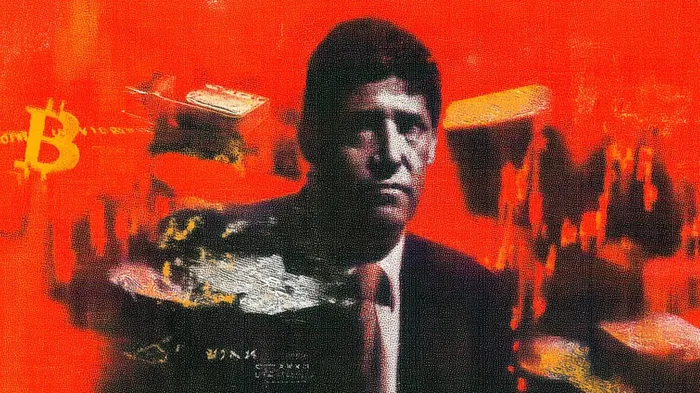
“What happens when someone inside one of the most iconic retail platforms of the last cycle sees its limits up close?” @kenzixbt speaks with @jayendra_jog, Co-Founder of @SeiNetwork, to trace the path that took him from the early days of Robinhood in Palo Alto — through hypergrowth, the IPO era, and the shock of the GameStop moment — to building in crypto. They discuss how witnessing the mechanics and constraints of traditional financial infrastructure firsthand reshaped his thinking, why the suspension of buys during one of retail’s most defining episodes left such a lasting impression, and how that experience ultimately pushed him toward systems designed to be more open, more resilient, and less dependent on centralized control.
“High-performance infrastructure only matters if it expands what users can actually do onchain — and makes that experience accessible at scale.” @sachitakahara sits down with @jayendra_jog, Co-Founder of @SeiNetwork, to examine why parallelized execution is becoming increasingly important for the next generation of onchain applications. From trading and DeFi to high-frequency user activity that simply breaks in low-throughput environments, they discuss how lower fees and greater execution capacity can fundamentally reshape the user experience — especially for smaller participants who are otherwise priced out. They also explore how this plays out in practice through projects like Bancor’s Carbon DeFi, where Sei has emerged as the ecosystem driving the strongest activity and volume, underscoring how performance advantages translate into real adoption.
“Virtual machines are like cities — once they reach critical mass, they become magnets that are incredibly hard to displace.” @dikshaarden catches up with @jayendra_jog, Co-Founder of @SeiNetwork, to unpack this idea at a deeper level — why systems with flaws can still dominate simply because that’s where the activity, liquidity, and people already are. From New York and San Francisco to onchain environments like the EVM, they explore how network effects compound over time, why newer ecosystems struggle to pull users away even with better tech, and what it actually takes to break that inertia.
This week’s episode features Jayendra Jog (@jayendra_jog), Founder of @SeiNetwork. We dive into Jay’s journey from traditional finance at Robinhood to building Sei Network, and unpack how his view of markets, users, and product feedback shaped the way he thinks about blockchain infrastructure. The conversation explores the parallels between established cities and virtual machines: why dominant systems like the EVM are so difficult to displace, what makes developers stay, and what it actually takes for a new ecosystem to earn attention. We also dig into the need for higher throughput in Web3, how parallelization can help solve today’s performance limits, and why scalability matters if crypto applications are going to serve real users at a much larger scale. Jay also reflects on the role of memecoins, not just as speculation, but as community-driven movements that can reveal how culture, attention, and network effects form onchain.

Takeover: The Onchain Fee Market You Can Fight Over Takeover gamifies trading fees on Base through Harberger taxation—creating a market where 100 tiles representing 1% fee shares are perpetually for sale. Holders must pay 5% weekly taxes to maintain control while traders compete to snipe mispriced assets. Here's how the mechanism works 👇 ~~ Analysis by @punk4053 ~~ The Harberger Mechanism @flaunchgg stands out for paying creator fees in ETH and tokenizing revenue streams as NFTs. Takeover builds on this infrastructure to create a PvP market for trading fees. Every coin launched gets a 100-tile grid. Each tile represents a 1% claim on all trading fees paid in ETH. Own a tile to earn from every trade—until someone buys you out. Harberger Tax. Tiles use Harberger taxation to ensure continuous circulation. Owners must set public prices, allowing anyone to buy instantly at that price with no negotiation. Tax Structure. Holders post USDC deposits and pay a 5% weekly tax based on their listed price. These taxes fund $TAKEOVER buybacks through the Boardroom. Deposits must remain funded—run out and you forfeit the tile to the open market. The Strategic Dimension Success requires accurate pricing. Each tile has a fundamental value based on its parent coin's fee generation. At the 5% weekly tax rate, a tile generating $10 in weekly fees has an equilibrium price around $200—where tax costs equal income. Price too high and carrying costs drain your deposit; too low and someone snipes your tile. This equilibrium shifts constantly with trading volume. Dying coins become expensive to hold; runners attract bidding wars. Profitability depends on predicting volume trends and adjusting prices or exits accordingly. How to Try for Yourself Newcomers should buy into existing grids before launching new coins. The $FLNCHY grid (Flaunch's mascot) routes 80% of trading fees to tile holders, making it an ideal starting point. > Browse. Find a listed tile on the 100-tile grid. The $FLNCHY floor currently sits at 68 USDC. >Buy. Input your listing price and deposit duration. Total cost equals buyout price plus initial tax deposit. Confirm the transaction. > Monitor. Earn 1% of trading fees in real-time ETH payouts. Adjust listing prices defensively as volume changes to prevent sniping. Zooming Out Takeover represents one of the first live tests of Harberger taxation with calculable yield—where mispricing delivers immediate financial consequences. AI agents are expected to join the competition soon, accelerating this economic experiment into a larger battlefield for automated strategies.

@punk4053 @token_works @punkstrategy amazing!
“Proof of Collaboration = how strong the swarm is. Proof of Contribution = what each agent actually moved, with permanent on-chain audit trails.” @ronbodkin (Founder, @TheoriqAI) joins @sachitakahara to break down trusted performance in Theoriq: actions are committed on-chain as non-repudiable evidence, and evaluators use transparent scoring rules over the full history—while the system stays open for specialized eval agents.
“DeFAI = DeFi as an agent economy: set the strategy, let agents execute, watch feedback in real time.” @SachiTakahara x @ronbodkin (Founder, @TheoriqAI) on how AI-run DeFi could bring smart-money infrastructure to everyone — not only institutions.
In 2017, I stepped into Google Cloud’s CTO Office because I could feel the shift coming. AI wasn’t a feature — it was the next operating layer of the world. Google was leading that wave. @kenzixbt in conversation with @ronbodkin (Founder, @TheoriqAI) about the Google years that sharpened Theoriq’s vision — and the early signals that made the AI trajectory impossible to unsee.
“Responsibility means steering crypto + AI toward outcomes that benefit everyone — and giving the community real power to set the course.” Our host @dikshaarden in conversation with @ronbodkin (Founder, @TheoriqAI) on why responsibility in crypto + AI starts with governance from day one — so the future isn’t dictated by monopolies or closed-door incentives.
New episode out today featuring Ron Bodkin (@ronbodkin) — CEO and Co-Founder of Theoriq (@TheoriqAI). We explore the intersection of crypto and AI, the role of responsibility and governance, and how Web3 can reshape the future of artificial intelligence. Ron shares his journey from Google to founding Theoriq and ChainML, reflecting on the shift from corporate AI leadership to startup innovation. We also dive into agent collectives, AI standardization, decentralized AI metrics, and Theoriq’s core pillars — interoperability, composability, and decentralized innovation. Ron also breaks down Proof of Contribution and Collaboration as trust-building mechanisms for AI, along with his perspective on token economics, governance, company culture, and the future of AI.

As far as NFT metadata is concerned, the ghosts of the past will continue to haunt us. ~~ Analysis by @punk5268 ~~ There are a variety of ways to underpin the media of NFTs. For durability I've always gravitated toward onchain projects, of which there are many shades: • Semi-onchain — some metadata is stored onchain, but not all • Hashed onchain — NFT contracts host a cryptographic hash that permanently references offchain data • Hybrid onchain — a project deploys a separate onchain collection to archive an earlier offchain collection • Fully onchain — all the data needed to display an NFT lives within the collection's smart contract • Inchain — NFT visuals are generated live by fully onchain code at render time rather than stored as files Each method has pros and cons. Yet broadly speaking, putting things onchain is costlier than offchain storage and requires more smart contract expertise. As such, offchain storage, where only NFT tokens live onchain while their metadata is hosted on external platforms like IPFS or private servers, is the status quo for most NFT collections from the past 5 years. The problem is that IPFS pinning often wanes with time, and many startups go bust and shutter their private servers. In these cases, only the tokens remain as worthless remnants that can no longer display their imagery. There are plenty examples of lost NFTs from recent years, but you can see for yourself. The new NFTimeless app lets non-guest users get a condition report for their NFT collections showing which NFTs are offchain and broken. For collections that are already broken, there's nothing to be done. But fortunately for projects with offchain storage that haven't been lost yet, they can employ a rising technique for retroactive durability that doesn't require deploying a second collection: ERC-4804. This standard is like an HTTP-style system for Ethereum, introducing a new kind of URI web3:// that lets NFT metadata be fetched directly from smart contracts. The URI doesn't point offchain, but rather describes an onchain read. When an NFT marketplace sees a web3:// URI, it can translate the provided ENS link into an eth_call, execute it against a smart contract, and treat the returned data as NFT metadata. For example, imagine an NFT contract whose tokenURI(123) returns web3://testcollection.eth/tokenURI/123: ➢ A marketplace resolves testcollection.eth via ENS to an Ethereum address ➢ It calls tokenURI(uint256) on that contract with argument 123 ➢ The contract returns JSON metadata (name, description, image, attributes) ➢ The marketplace renders the NFT using that data, just like it would with IPFS but without any offchain dependencies This approach means metadata can be generated or stored entirely onchain, either in the same NFT contract or in a separate metadata resolver contract. The web3:// scheme makes calls verifiable and independent of any gateway staying online. This is powerful because it's a straightforward way for old NFT collections to keep their original token contracts untouched, deploy new onchain metadata contracts, and update their baseURIs to point to the relevant web3:// ENS link. It's just a new pointer system, so no NFT migrations are needed. After any updates, marketplaces would fetch metadata directly from Ethereum itself, and thanks to the URI anyone can reproduce the necessary calls forever. This standard also matters because even projects that do store their art and metadata onchain have historically been forced to publish ipfs:// or https:// baseURIs as apps and wallets didn't know how to read anything else. Now these projects have a viable onchain alternative. Another important wrinkle: @opensea just added support for ERC-4804. It's a big validation for the standard and an indication that it can gain serious traction from here. The minting platform Carve is already planning on adding support, and more integrations will follow. As we look ahead, one thread I'll be watching is ERC-4804 adoption. It could quietly become one of the most important tools we've seen yet for NFT durability in the Ethereum ecosystem.


Drago @DragoXBT
1K Followers 5K Following Explorer | @UnidentifiedDao @StressCapitals @FrensPods | Fiat voluntas tua.
A-Merk @TheAMerk
1K Followers 946 Following Fractal Explorer, AI and 3D Artist, Writer, Trippy Dude. Atmospheric Alien Slapstep beats with infinite fractal realm visuals. Dream with me.
Tito @no_context____
834 Followers 3K Following Don't believe everything you think 🤙 foodie🍕 artist⚡️ entrepreneur🏋🏻
Synthetic Taxonomy @Synth_Taxon
58 Followers 1K Following Field photography → digital specimens Reconstructing arthropods through vector art. Synthetic Taxonomy.


Shelton Beascochea�... @Sheltonbeasco
1K Followers 3K Following Founder @thedevilsdao• @ctrlcrowd• @azcrypto_ai Arizona President- @standwithcrypto | Mafia Fam- @pizza_dao | Steward- @ai_film_3•@ethphx
Riccardo @sgada74
1K Followers 2K Following

Renata Doro IA & TECH @renatadoro1
2K Followers 2K Following Renata Doro | IA e TECH Antes conhecida como Professora Crypto, agora focada em IA, Criptomoedas, Tecnologia e Economia. Conteúdo claro| Criadora da #ctbrweb3
Lyss Sky | Art & Gami... @LazerLyss
2K Followers 8K Following AI Artist • Creator of #DIVINEFEMININEGODDESS https://t.co/KYh7CyYQ3P • NFT NYC • One Love DAO • AI CPP x2 Ex-Pro Gamer • #EpicPartner • Use Code KIBI 🏳️⚧️
Jacob Coffman @JakeC0ffman
370 Followers 3K Following Reimagining what personalized rehab can produce. Teaching people why they hurt, then rebuilding from there.
NimaNikar.eth @NimaNikar
5K Followers 3K Following Art is the way of survival. Architect/ Animator /Music Producer #NikarWIP
predictionist @predictionist_
9 Followers 45 Following Covering prediction market news and the software people use to price the future.
Nastaran Najafi🦒 @ItsNaastaaraan
18K Followers 1K Following make somethin that people called art. Looking for Giraffe’s friend @VerseGira 🦒
Kevin Kull | M-COP Ce... @kevinkull
1K Followers 7K Following Architect of M-COP 2.0 — Ambassador: NoahAI. Creative Partner: ViduAI · Lovart · PolloAI · DomoAI · Renoise · Scenario ·
CryptoWizeDev @DeganDev
4K Followers 954 Following I'm an experienced full stack developer who believes in crypto domination of the financial world. #Eth utilities gem hunter

fearsmile @jamescrowther
316 Followers 968 Following painting for a future evacuation https://t.co/h74VFp4o6v
Charlie🔸 @charlie_czr
8K Followers 8K Following Founder of @CZRexchange 🌍 | All-in-One Crypto Exchange & Wallet @czrwallet⚡ | Transact Globally, Settle Instantly |Download App https://t.co/tgsXAhkIjS $CZR

Divine Light @DivineLight330
264 Followers 2K Following Laser-etched portals of the divine, absurd, and surreal
Agustin Rudegar @AgustinRudegar
1K Followers 388 Following Creando en https://t.co/yjqkQctbH9. Ayudamos a negocios locales a digitalizarse sin perder tiempo.
cishangjia @cishangjia19674
1K Followers 2K Following | $btc $bnb $pendle $hype | ex backend engineer @BytedanceTalk | defi farmer | arbitrageur | 珍惜你的注意力 | 投资是对认知的变现,而不是对努力的奖赏 | 命运之路,从未分叉 诚实地面对自己
𝑨𝒍𝒊𝒏𝒂 ... @alphaart39
163 Followers 718 Following Digital artist / abstract art specialist 🎨 https://t.co/pVMUqsOw9t
A L K Ē B U L A N @ArtByALKEBULAN
2K Followers 3K Following Visual storytelling at the edge of culture & technology. Building an archive that outlives platforms.
Block_Voyager @block_voyager
1K Followers 251 Following Web 3 Researcher | Alpha Call | Degen |meme | İnvestor |cryptoTrade

percento @0xpercento
1K Followers 1K Following learning ai and building stuff I like. doing ai animations when I'm not in the trenches. building @AnimatedDotFun
Rxch @_CryptoCaps
565 Followers 1K Following Aged Crypto Investor | Alpha Caller | Gut-Feeling | BS IT | Analytics |
it's me. 🦣 @0xHichkas
3K Followers 3K Following Sorta artist / Crypto adventurer / Cookie og Losing money professionally at: https://t.co/uhF7y21us5
Justin Goldston PhD -... @phd_justin
5K Followers 5K Following Creator of the Goldstonian Concordance Bible - On Amazon and Walmart. Join the $GCB - E68E27Y72FHTJH1MycB6KjX5PQAyKPYsRGZjMEx9pump
Tome Aura @all_phone39853
103 Followers 129 Following
AntoniO @TEZZOSS
369 Followers 164 Following NFA commander | Terminal Ghost | M2M Alpha | MOD | & Dad
Mars 🔶 BNB @mars_bnb
34K Followers 27K Following A9冲丫|hodler of #BNB|撸毛业余选手|链上枯坐 卖飞永赚 |币安Alpha高材生 | 合作私信TG https://t.co/f8wuOUzOp5| 绑定币安钱包邀请码私信进v群 邀请码 BBBBBB | TG群 https://t.co/n3HdKES64r
Fibonacci @kumo_eth
2K Followers 2K Following 🕸️Web3 Educator | Data Analyst | BD @DefendersAudits Building @flipsideArewa | Web3 Security
𝐙𝐞𝐫𝐞𝐛�... @ZerebusX
7K Followers 2K Following
The Xend Army🕊️ @XendArmy01
3K Followers 4K Following || FOUNDER @assetclaw_ @rwaassetchain || ENGAGEMENT STRATEGIST @xendfinance || @chronoevent Ambassador || COMMUNITY BUILDER 👷 ||🎙️ SPACE HOST

扫地僧🍼 @btcfi91
3K Followers 4K Following #bitcoin #btcfi #brc20 $ordi $sats 🟧#bitmap #NAT #Runes #Radfi $bott vx:saodiseng57
Melody Banana 🧪 @MelodyBanana2
3K Followers 2K Following Creative mischief with a sketchbook and no agenda. Mutant forward. https://t.co/00r57dTCOT
Pyramid Skeme @PYRAMIDSKEME
785 Followers 564 Following Multi instrumentalist and Artist decorating spacetime with some good frequencies.

rain @JCHerts
705 Followers 2K Following swe @chainlinklabs, biohacker prev. @aptoslabs, @awscloud. 🇰🇷-🇬🇧-🇺🇸 All opinion and views are my own. Working on CCIP - Non EVM Chains
LISTAT 🐸 @LISTAT000
269 Followers 751 Following faded $BNB in 2017 😭. Back for some more in 2025 with $Tibbir 🐸
Barreled4Ever @Gen1Saga
379 Followers 2K Following Drive for Show,Putt for Dough! Pressure is a privilege that can burst a Pipe or create a 💎SOLD OUT 4 ✝️


ZiZiMike @ZiZiMike888
51 Followers 355 Following crypto enthusiast / husband and father of twins. live a prosper live

Quang Do MD @Zero_Nirvana
442 Followers 156 Following


YOSSY @YSHK03
537 Followers 2K Following AIを経営の参謀へ。経営判断を加速させるAI実装支援 Claude経営参謀導入プログラム主宰 経営×AI基盤構築|意思決定高速化|業務の仕組み化 非エンジニア経営者でも「AIを右腕化」
webwang999.eth(Ø,G) @YongjunWang2
234 Followers 1K Following https://t.co/Co3fyvpNfn A股接盘侠 币圈小韭菜 电子乞丐 点了钓鱼网站 钱包被清
Yesh @YeshodharaB
1K Followers 3K Following Building things that I think must exist | d/acc https://t.co/j8owLOLdqO

想吃鸡腿🍗 @XIANGCHIJITUI
4K Followers 2K Following 万币A8(已达成)十万币A9 bsc农民 只玩10k精品ca 金狗卖飞手 不要哀求,学会争取,若是如此,终有所获。 BOT https://t.co/MkCW1uEEjU
Wz @Wz00430541
26 Followers 494 Following
あらすか | crypto @ws_alsk
3K Followers 5K Following 情シス|資格:ap,sg, fe, 日商簿記2級 挑戦:sc| 仮想通貨・株|FiNANCie|CNP RED 🟥 不動産投資|SevenDAO | $btc $eth $xrp $xdc $caw #ブルバ100 #yuru @yuru_coin @cococoin_777
Happy🍊 @Woody63348004
118 Followers 2K Following
Winston Johnson 🇺�... @wjreturns
326 Followers 565 Following Mostly a reply guy. Y'all asked for this bullshit.
ポケカコレクタ... @winwinwingood
847 Followers 1K Following ビンテージポケモンカードコレクター. 旧裏ポケカ、レトロゲームなど、幅広くビンテージホビーを収集し続けている廃人です.
Wilman Vinueza @wildanvin
228 Followers 3K Following Love tech rabbit holes, cryptography is cool ✌️
whatthefuck @whatthefuck_eth
917 Followers 969 Following I offer professional advice how to round trip your bags. 100% guaranteed results

Just Jin @wayofjin
4K Followers 2K Following overtime degen ruminator 🇺🇸 🇰🇷 🇧🇷 @catbotica @karafurunft @thebeyondverse

Wade @wadefoley22
2K Followers 460 Following Owner, @socialgritco / tweeting about the power of grit & its effect on social media, business, investing • life

Vitaliy👻 @Vitaliy68779181
317 Followers 717 Following
Vid Kersic @vidkersic
675 Followers 3K Following helping build world computer @ethereum, building dapps and other useful tech with @lutralabs_

もと@種から楽�... @vegemossan
389 Followers 336 Following 家庭菜園と読書📚 tomajoDAO所属🍅 家庭菜園でのんびり種から栽培し、種を採る事を楽しんでいます。農家の推し活は『農村日和』→ https://t.co/jCTPPd5xOQ

userista @useristac
12 Followers 407 Following


kg @twkgau
16 Followers 167 Following

Trung Zako (✸,✸) @TrungZako
30 Followers 427 Following Investor Crypto, Blockchain , Airdrop , Retroactive | Follow me & back 💯%
Alex Trần @trantuan2114
67 Followers 9 Following
Totalwar.eth @totalwareth
289 Followers 413 Following Researcher Blockchain | DeFi | NFT | AI | DEPIN | Gem Hunter | Retired Airdrop Farmer $BTC $ETH


NinjaToker @TM_NinjaTokers
325 Followers 376 Following UFC | Poker | Risk Grandmaster | MMA 🐐: Jon Jones | I got $5 on it 🎰 🙏🏼🤌🏽
0xCryptomo.ink @Titinemaurice29
306 Followers 7K Following

Thomas O'Brien @thomas_g_obrien
2K Followers 3K Following Father, husband, educator, leader, climber, #edtech Playing around & learning about technology along the way. Math saves the world.
Ace 🕯️ @Thermonukeclear
1K Followers 1K Following Head Of Aura @ Point72 /Corporate Junkie Building @ https://t.co/GZb6rYCqho
ThePickle34 @ThePickle34
474 Followers 673 Following I help busy Crypto professionals reclaim their Natural Athletic Ability.
The Dev is Devving (s... @TheDevisDevving
853 Followers 299 Following A team of developers building on Ethereum / superinsider.eth Lounge: https://t.co/5cDZFB0yya Fresh Deployed Launches: https://t.co/R88dJa3v3E
A-Merk @TheAMerk
1K Followers 946 Following Fractal Explorer, AI and 3D Artist, Writer, Trippy Dude. Atmospheric Alien Slapstep beats with infinite fractal realm visuals. Dream with me.

testosterone @tETHtosterone
1K Followers 978 Following treasury management @entropyadvisors, intern @internDAO prev investments at @BlockTower @arcaYou might like