Zero Equilibrium @0Equilibrium
Macroeconomics || Markets || Fixed Income || Commodities. Views are Independent and Intellectually Genuine. DM for Academic & Non-Academic Research Assistance zeroequilibrium.com/?m=1 🌎 Joined February 2024-
Tweets9K
-
Followers2K
-
Following2K
-
Likes2K
Good Morning, my Leader, Please allow me to offer my vote of thanks for the engagement, I am extremely flattered. But this isn't without reservations and strong opinions. 1. It is true that you did not mention taxes, levies, quotas or bans explicitly. But it implies just that,neven if unintended. For the rhetoric domestic markets should consume domestic goods which you alluded to in the OP can only be achieved through government action and the above listed protectionist barriers. Cause; ii) absent these policy tools, no government authority can incentivize Nigerians to be made on Nigerian goods (import substitution), absent policy deterrentshy?? Because, as you rightly pointed out that: “Economic nationalists treat +234 like a homogenous entity. They don't think its individuals should be able to pick & choose what to consume at nigerian rice. Wear nigerian shirt. They don't think the consumer should want Beninoise fish or Ethiopian coffee” Now, you can agree that if an economy operates on Zero Tarrifs, levies, duties and taxes, there is no possible way you can incentivize consumers to switch their often higher quality or more efficiently priced external competition. The Beninoise fish and Ethiopian coffee would gain unfettered market access, making it impossible to enforce, encourage and incentivize the domestic market to consume local equivalents, for a given state of technology, cause xonsumers choose based on their own valuation (price, quality, variety, expected utility, and convenience). So, if Ethiopian coffee or Benin-sourced fish offers better value or preference to enough people, imports increases. Cause the "domestic market" consumes what individuals want. This outcome is impossible with full consumer autonomy and trade barrier eliminations. So though you didn't say it verbatim, the implication is unmistakable. It is impossible to separate consumer choice from trade liberalization which inturn is also impossible absent trade policies instruments: i.e., Tariffs/levies, duties, Quotas and [localized industry], subsidies...etc. The above makes it blatantly that the only way to discourage import demand and enhance import substitution (my stance but limited to “Strategic Industries”), - the proverbial ‘buy Nigeria made in Nigeria, or "economic nationalism” as you brilliantly coined -albeit from directionally opposing perspectives and ideological leanings - is to employ one or more of the above measures above. Likewse, the only way to encourage more imports or prioritized consumer choices, is tto employ the above measures, to allow for sufficient supply, and by extension consumer welfare and sovereignty, (your stance.) Neither outcome(s) is possible without using one or more of the above trade policy instrument(s) and! providing [tangible and intangible] infrastructure. Bottom Line? If voluntary efforts don't suffice (and they won't) and foreign/external output (iports) are significantly cheaper, and/or superior, achieving the desired aggregate consumption volumes and/or pattern requires changing relative prices which the [consumer] choice set itself. Hence the reason why I said: you cannot separate trade liberalism and free consumer choices, without government action. Regardless of the stance an ideological leaning. To separate them is akin to an attempt - by a carpenter - at eliminating the need for the use of nails and hammers in furniture construction.
Is Ethiopian coffee banned? No. It is taxed/levied. They don't think individuals should be able to pick and choose what to consume”? This doesn't hold for items that aren't outrightly banned. Your choice is not taken away. You can still buy Ethiopian coffee at a relative premium. What this does? It can potentially lead to informed industrial policy decision making, encouraging local and foreign real investments. If the demand holds somewhat amidst a price hike, then value resides in the said good. Tarrifs stabilize the domestic prices, raise revenue from which capex can be financed. This incentives production and by extension productivity growth. It's akin to saying because VAT is charged for locally produced and sourced goods, the government doesn't want you to purchase it.

Economic nationalists also treat +234 like a homogenous entity. They dont think its individuals should be able to pick & choose what to consume. Eat nigerian rice. Wear nigerian shirt. They dont think the consumer should want Beninoise fish or Ethiopian coffee. "our scarce fx"💀
@eta_habyb @SFAjayi Telling otherwise, how?
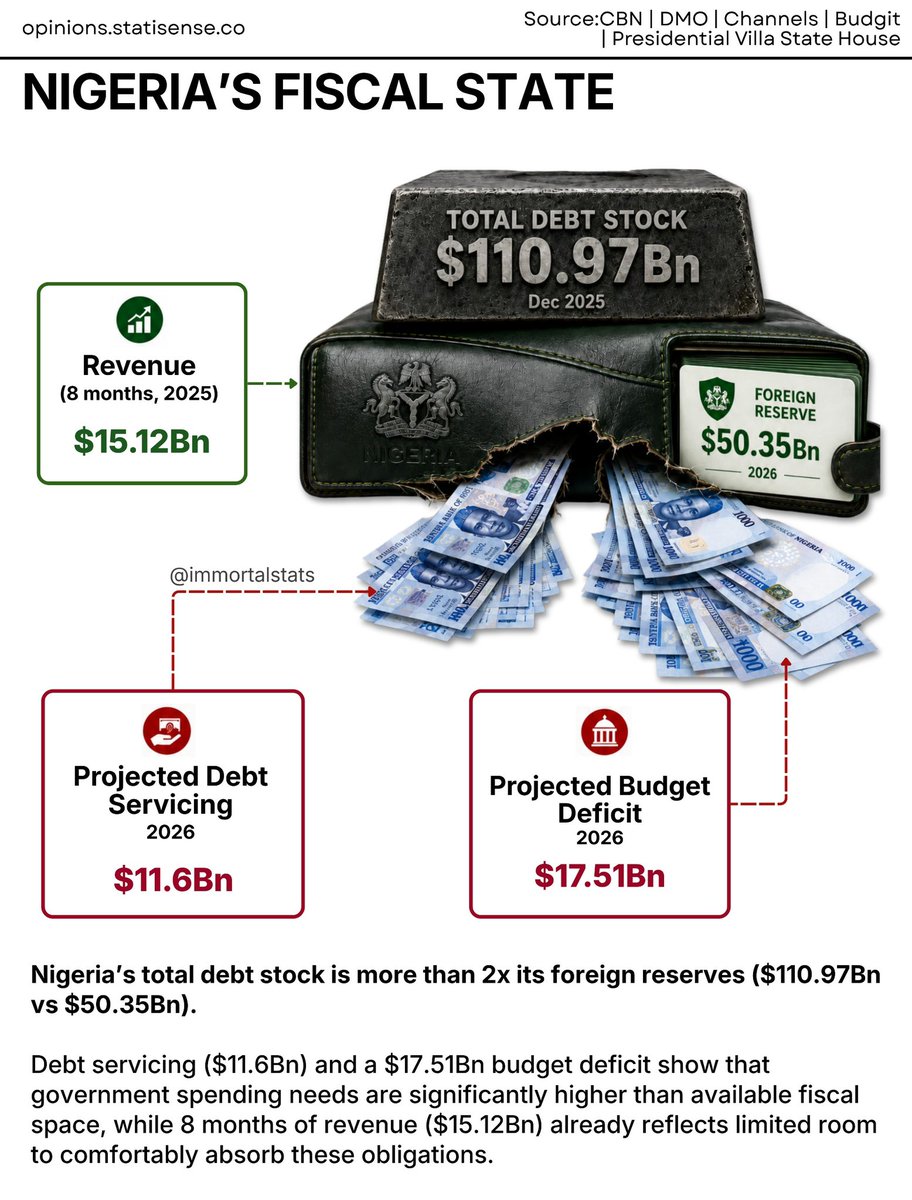
This Analysis is Lacking in Accuracy, Precision and Reality: First, off you're almost spot on, however, Tinubu Administration has a moderate net new borrowing, but high FX-driven valuation shift. The Buhari era Borrowed more, that's true, but with a 39% to 61% ratio of external and domestic debt, respectively, Nigeria is essentially less flexible and more exposed to external liquidity and sentimental conditions than the Buhari Administration. The comparison timeline is also not accurate or intellectually reasonable because you are comparing 8 years of new net borrowing to about 36 months of borrowing so far under this administration. This without normalization to debt per year is analytically misleading. You wanna chat Numbers? Let's talk numbers. From May end 2015-Mayend 2018 new external (USD Denominated) debt rose by approx. $12.5bn. Compare that to May end 2023-May End 2026 $8.5bn (approx.) When you do the Math it becomes less flattering. And you realize that Nigeria's FX sensitivity per unit of debt has increased significantly. This is also clear and highlited in the ratio of external to local currency debt. So what this means is at current exchange rate levels, the Naira cost of the net new external debt is higher than in the Buhari period. Yes it's denominated in USD, but we're bearing a higher Naira cost, this makes the Naira vulnerable to global liquidity shocks. Thus is cause the naira-denominated burden of the external debt stock is higher under current FX conditions. Yes there's been a brilliant piece of Financial Engineering, and lots of debt accumulated, but there hasn't been a tint of Deleveraging as debt-to-revenue ratios is nearing the 65-70% mark the accuracy of this ratio can be contested on precision, but not on direction. And with a negligible error margin. Your assertions from The Guardian is also in contrast to Business Day, Seeking Alpha, CNBC, Bloomberg, Reuters and Zero Equilibrium. Tinubu has only faired better mechanically but structurally nothing has changed materially volume wise. And revenue is still playing catch-up. From an Apolitical and Rational Standpoint: The The economic policy discourse by the Nigerian Economic Society, in the past 25 years, ( 2000-2026 ) has often either been shallow, unimaginative, misguided, and unreliable and inappropriate also could be a sign of neglect So, the key issue is not whether one administration borrowed more in absolute terms, but whether Nigeria’s fiscal structure and debt composition, has improved in terms of resilience. On that metric, the evidence suggests that whilst mechanical adjustments, if the fiscal reforms, remains largely unchanged. As structural vulnerability still persists. The reforms and debt accumulation – a necessary measure created fiscal space, the leverage and vulnerabilities have increased exponentially, as debt service continue to crowd out investment m public sector infrastructure. The debt overhang has dipped further, and the total debt in USD terms today is $3bn lesser than past debt In May 2023. So it's costing more to finance both NGN and USD debt, with vulnerabilities from the crowd out of budget and financial markets The infographic below shows that debt is not only higher as a percentage of revenue, but also 2× FX reserves. Meaning if we had to pay our debt today, wife will come up short in USD terms. As ”government needs are significantly higher than available fiscal space. This Administration has done necessary things, but left us in a more fiscally vulnerable. ✍🏾By @Muhammad_Okoye for Zero Equilibrium®

The appreciation of the naira and the steady rise in Nigeria's external reserves since the launch of the fourth edition of the Foreign Exchange Manual by the Central Bank of Nigeria (CBN) have attracted considerable attention across financial markets. Within days of the June 1 implementation of the revised framework, the local currency strengthened across key foreign exchange market segments, while external reserves climbed to a record $50.04 billion, reinforcing confidence in the country's foreign exchange management system. businessday.ng/banking/articl…
Zero Equilibrium ® Commodity Watch: Is the What's Driving Crude Prices? The War Reaction: The market's reaction to the latest Middle East headlines says less about geopolitics and more about how investors had already positioned themselves beforehand. Thursday's rally merely returned the S&P 500 to levels it had already reached before the news broke. Since equity markets largely discounted the conflict from the outset the rebound is therefore difficult to interpret as a genuine repricing of economic fundamentals. Instead, it looks more like a repositioning event than a reassessment of growth, earnings, or inflation. The more interesting signal comes from energy markets. While front-month crude softened, WTI continues to find buyers around established support levels. Markets have repeatedly tested these zones without managing a sustained break lower. This leads to the Zero Equilibrium summation that the elevated prices is not so much driven by fundamentals, but by market expectations, and positioning, in reaction to the developments in the middle east conflict. Geopolitics is therefore driving markets pricing. More telling per the chart below, show that deferred contracts remain elevated relative to what one would expect if the markets believed energy risks had fully disappeared. This far, ZE interprets the curve as market is willing to concede some easing in immediate supply concerns without embracing a materially lower long-run oil regime, as traders battle to hold above resistance or go believe support for both BRENT and WTI (US Crude (WTI) is used, given it's status and market share in the global market from war-induced scarcity.) [See Chart 1 👇🏾: WTI Crude Oil Futures] Consumer-facing Fuel Markets Signalling: Despite weakness in crude, gasoline futures have been considerably more resilient. The pass-through from lower crude prices into end-user energy costs remains incomplete, suggesting that refining margins, inventories, logistics, or demand expectations continue to provide support. [See Chart 2 👇🏾: Gasoline Futures] Neither crude nor gasoline has convincingly broken support, nor escaped their broader trading ranges. That matters because disinflation is ultimately delivered through prices paid by households and businesses, not merely through lower geopolitical risk premiums. Long Way to Normalcy: Even if regional tensions fade and major shipping routes normalize, energy markets may simply settle into a higher range than policymakers would prefer. That creates a challenge for inflation. Month-on-month readings may continue to moderate, but without a more meaningful decline in energy prices, the final elementary condition for disinflation becomes significantly harder. Why ZE Expects Aggressive or Relatively Hawkish Monetary Policy Stance: Though base effects can improve the optics temporarily, a return of CPI below 3% would require more than stable energy prices, it requires cheaper energy prices. For that reason, the hurdle for aggressive monetary easing remains high. At this point holding is the best course of action, as too much a hike or too low cut (in benchmark rates), may have the unintended consequence of keeping inflation sticky. Hence the ZE Lead Economist Chinedu Muhammad Okoye's position that: in the time being, the @federalreserve might not need additional rate hikes, (see Paragraph above) as the persistence of energy-linked inflation pressures (which are volatile and nonmonetary) could make a rapid cutting cycle difficult to justify. In addition tighter spreads below $2.50 throughout the week indicates sustained high demand volumes, with the Brent premium low, as a result of continued reliance and /or substitution from the BRENT benchmark. On the political end markets don't seem to out much stock in the US deal assertions. ✍🏾Zero Equilibrium® Economics Inc. And edited by @Muhammad_Okoye (Lead Economist and Founder). #CrudeOil #OilPrices #Geopolitics #Inflation #MonetaryPolicy


This aligns with Zero Equilibrium ® Economics Position: This aligns closely with Zero Equilibrium’s analysis from Nov 2025 over six months ago. In the paper ZE Economists framed Nigeria’s debt challenge as a classic debt overhang (à la Krugman): were “high public debt crowds out private credit and fiscal space, locking in weak balances and dependency.” Zero Deleveraging: Reforms delivered some relief subsidy removal and nominal revenue gains created breathing room via financial engineering, not pure deleveraging. Yet, as we noted: interest + recurrent spending still dominate, leaving little for capex or growth projects. [Frame 1/2] On the Reforms; We opined that: “debt burden reduction is less of a deleveraging and more of financial engineering. A great chunk of budgetary spending (fuel subsidies) were eliminated and more revenue raised in nominal terms.” [See Frame 1 👇] [Basically fiscal Space isn't a blank check absent efficiency in resource allocation or capital inadequacy. Nigeria historically suffered from both] [The policy credibility, on the fiscal side, structural challenges and risk premium problem still lingers.] On the Overhang Effect; We also pointed that: “Despite improvements in headline ratios, interest payments and recurrent spending dominate the budget, leaving limited space for development projects.” [See frame 2 👇] Risk Premium justification in a Nutshell: The article argued that despite the fiscal space creation, thnke underlying economic issues persis. This is a worry cause; infrastructure deficits sustain high risk premia, revenue uncertainty, and a double crowding-out effect. Fiscal space isn’t a blank check without efficiency gains. Governance and structural execution remain the binding constraints. Because they lack the funding, or rather fiscal space absent any improvements in revenue and income sources. Nigeria suffers a double crowding out. First in the financial markets as private sector gets squeezed or priced out, and the in budgetary share (%) dominance. [Article on Reference 👇🏾 zeroequilibrium.com/2025/11/nigeri… ] #NigeriaEconomy #EmergingMarkets #SovereignDebt #DebtOverhang #FiscalPolicy #GlobalMacro

@BusinessDayNg This aligns with Zero Equilibrium ® Economics Position: This aligns closely with Zero Equilibrium’s analysis from Nov 2025 over six months ago. In the paper ZE Economists framed Nigeria’s debt challenge as a classic debt overhang (à la Krugman): were “high public debt crowds


This aligns with Zero Equilibrium ® Economics Position: This aligns closely with Zero Equilibrium’s analysis from Nov 2025 over six months ago. In the paper ZE Economists framed Nigeria’s debt challenge as a classic debt overhang (à la Krugman): were “high public debt crowds out private credit and fiscal space, locking in weak balances and dependency.” Zero Deleveraging: Reforms delivered some relief subsidy removal and nominal revenue gains created breathing room via financial engineering, not pure deleveraging. Yet, as we noted: interest + recurrent spending still dominate, leaving little for capex or growth projects. [Frame 1/2] On the Reforms; We opined that: “debt burden reduction is less of a deleveraging and more of financial engineering. A great chunk of budgetary spending (fuel subsidies) were eliminated and more revenue raised in nominal terms.” [See Frame 1 👇] [Basically fiscal Space isn't a blank check absent efficiency in resource allocation or capital inadequacy. Nigeria historically suffered from both] [The policy credibility, on the fiscal side, structural challenges and risk premium problem still lingers.] On the Overhang Effect; We also pointed that: “Despite improvements in headline ratios, interest payments and recurrent spending dominate the budget, leaving limited space for development projects.” [See frame 2 👇] Risk Premium justification in a Nutshell: The article argued that despite the fiscal space creation, thnke underlying economic issues persis. This is a worry cause; infrastructure deficits sustain high risk premia, revenue uncertainty, and a double crowding-out effect. Fiscal space isn’t a blank check without efficiency gains. Governance and structural execution remain the binding constraints. Because they lack the funding, or rather fiscal space absent any improvements in revenue and income sources. Nigeria suffers a double crowding out. First in the financial markets as private sector gets squeezed or priced out, and the in budgetary share (%) dominance. [Article on Reference 👇🏾 zeroequilibrium.com/2025/11/nigeri… ]
@Nairametrics Apologies @DivineAlex6 , I didn't mean to interrupt or override the rules of the spaces. I just wanted to check the data . You know I am a big fan and I respect you. It won't happen again.
@uadeahimie Is spitting fire! If I do say so myself
@Nairametrics @DivineAlex6 please pass me the mic
Join this space 👇🏾👇🏾👇🏾

Fixed Income however are fairly stable as at the time of this thread, (see frame 1 👇) Zero Equilibrium ® Economists Remarks: Markets Pricing in Inflation and Interest Rate Risks: EM assets under normal circumstances trade on expected value, efficiency and export demand, and exchange rate risks. With the pace of income growth being slower or stagnant, nominal income, until it increases, becomes less capable of financing expenditures and debt for both households and businesses, as well as the Government through taxes. Therefore: This is not driven by country or even company fundamentals of the Korean macro and industrial complex from; 1. global tech derisking (and because this had been the anchor growth sector in Q1), 2. The greenback reclaimed anchor as the global USD Liquidity tightening, prompting, 3. EM bet reduction. ZE economists expect prices of these commodities to be rocked by the war, creating value for long term holdings. Crude is expected to stay higher for longer, whilst inflationary pressures stifle business and consumption expenditures. Equities in the ASEAN group of countries show signs of continued volatility or decline based not on fundamentals but expectations. As a result we are overweight Fixed income, Moderately weighted on equities. Nuetral on Gold, but bearish on Silver. Natural gas and crude oil will continue to be driven by inflationary expectations and liquidity tightening . A decent exposure to US Treasuries and UK Gilts provides FX hedges, and offer higher price appreciation potential relative to European or Japanese peers, whilst hedging the more risky fixed income holdings in the EM and most especially the FM Soverigns. 4/4 ✍🏾By Chinedu Okoye for Zero Equilibrium ® Market Watch.

ZE attributes this to; - Profit-taking from y-t-d highs. - Portfolio Rotation and Geo-tensio in escalations which affect costs of output for producers (PPI)and consumer (CPI), and - Currency Exposure fears Hardest hit industries include; Semiconductors; Autos and Parts (KIA Motors, Hyundai and top distributors and suppliers of motor parts). Driven by global economic demand in key markets across the Globe, as consumer powers weakens from a direct effect of geopolitical tensions-Induces energy price inflation. EV Batteries declined on policy uncertainty in key and/or desired markets; namely Europe. And, Financials saw pullbacks as markets took profit and priced in a possible hit to Net Interest Income, and Asset quality. Commodities: Commodities weren't spared in this selloff as Gold continued its weekly slide declining from around $4,300 to $4,092, (frame 2) and silver going lower to $63.67 (frame 3) and Natural Gas holding above $59 (frame 4. 3/4

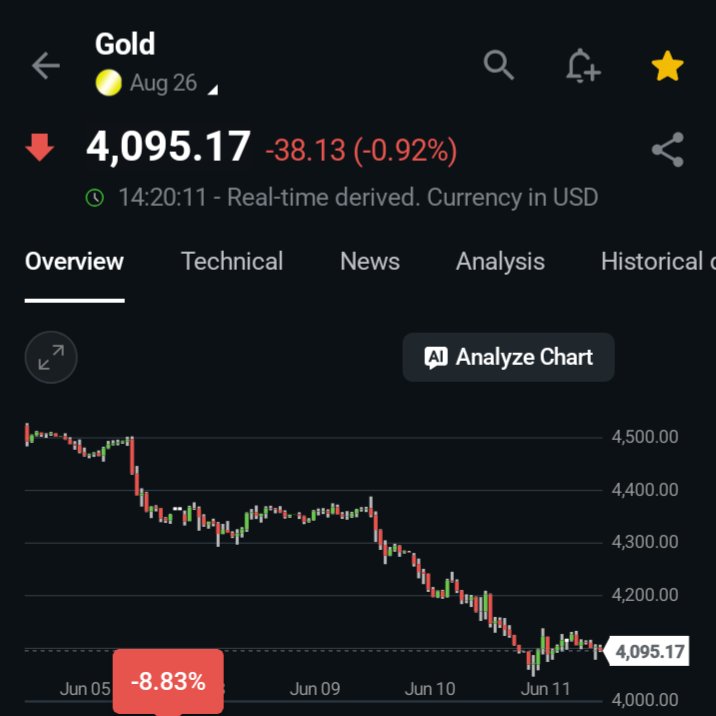


Zero Equilibrium ® Market Watch Per Asset Class: Thursday 11, June saw declines across board in Asian EM, Commodities, Equity and fixed Income Sovereigns. This is as the war escalates, prompting investors to shiver. Yesterday we posted about [See post referenced 👉🏾👉🏾x.com/i/status/20641… ] the performance of Indexes in Asia, with a focus on; Indonesia, South Korea, and NIFTY 50 which were under less pressure and little changed at the Close. However the market selloff continued today with Asian EM Major Indexes in the red atnthe close. [SeeChart 2 👇.] The South Koreas KOSPI has maintained an Intraday positive close, even int he midst of a huge selloff, suggesting that the EM effect is uneven. However when looking at the last month KOSPI has seen a significant selloff especially in the Semi-Conductor, Auto and Spare Parts, machinery on profit-taking, and spillover sentiments from key markets namely China. This is as Industrial demand (Solar and EV batteries) have slowed significantly, on liquidity and inflationary pressures emanating from the escalation of the middle eastern conflicts has seen Equities, Bonds and Currency (DXY) decline materially. [Chart 3 is credited to @GlobalMktObserv 's thread.] 1/4


Is Indonesia a Lone Wolf if this Equity Markets Slide? IDX Composite -21% decline in one month isn't just an EM correction as the broader Asian story has been relatively resilient. Read to see how IDX has performed relative to Asia EM peers 👇🏾👇🏾👇🏾👇🏾 1/4

The Real Macroeconomic Question is? "Why is Nigeria failing to move higher up the value chain and capture a greater share of the processing, branding, and distribution margins associated with the products it already produces?" That is a productivity, industrial policy, infrastructure, financing, and competitiveness question, and not simply a comparative advantage question. It is shallow to think that way. DISCLAIMER: The above is not acrimonious but to educate you and your audience on the dangers of obsolete and unimaginative policy thinking. Cause reducing a 21st-century trade system to a single 19th-century theory is not economic analysis. It is economic nostalgia. And discuss like these are more harmful to the economy cause you have a large following and so policy makers present or future absent solid Econ grounding would see this as gospel. ✍🏾 @Muhammad_Okoye Chief Economist and Editor at Zero Equilibrium® Incorporated. The Real Macroeconomic Question is? 6/6
d). Trade in the modern economy operates through global value chains, and advantages based more on production efficiency, consumer preferences etc. These are the foundational conditions lacking not a Comparative Advantage Neglect. This is why a country like Ghana, may export cocoa beans while importing cocoa derivatives because processing capacity, technology, quality standards, certification requirements, financing costs, or supply-chain economics make that arrangement commercially rational. (I am a Trade Negotiator and Analyst, I would know, productivity is more important than natural endowments. Case in Point? The United States imported crude oil for decades despite being one of the world's largest producers. The objective was not merely production; it was refinery optimization, supply diversification, reserve management, and consumer price stability. 5/6
Dear @FinPlanKaluAja1 , You've yet produced an incoherent and illogical opinion. reason Why a Financial educator has Another reason why being a financial educator does not automatically qualify one to conduct macroeconomic analysis. Your sentiment is correct, but your argument is filled with political innuendo and an overly simplistic interpretation of trade economics. AGAIN this exposes your inadequacies in Macro as you're using centuries old models for the modern economy. Why? 👇🏾👇🏾👇🏾👇🏾👇🏾 1/6
The post isn't about import but about imports of cocoa powder and palm oil, both long-standing exports of the Southern Protectorate, Southern Nigeria, and Nigeria. Cocoa powder is cocoa with added sugar. Are you suggesting we can’t do that in Nigeria? Palm oil? Don’t get me


Uade Ahimie @uadeahimie
20 Followers 106 Following
Daw Chi @dawchi_52hz
725 Followers 839 Following Insight Crypto - Data Off-chain - Trader - Shitposter DMs for collab : https://t.co/frZR5vHf22 Giảm 30% phí trade + hoàn 100% phí giao dịch
SKATEBOARDING @SkaterGains
80K Followers 26K Following i sell artificial tulips and roses hit my dm to get em for the low

Opsy @opsy2favour
37 Followers 935 Following Engineer | Financial and Investment Enthusiast | Process Automation | Project Management | Real Estate
Ediomo Joshua @EdiomoJose
356 Followers 2K Following Founder @thegrowthloopp | making growth happen @assessworth | Software Developer | Sales | Growth | Strategy
Igwebụike Finance @IGBK_Finance
3 Followers 53 Following A financial research service focused on corordinating personal and group fiance for profit and human capital development.
ABDUL-AL-WAHAAB @Olawale_grey
490 Followers 502 Following || Muslim || Pro yoruba || Mason || Technical analyst || iAnalyze || iTrade || Baldchelor || Pro Ngx ||
Evans Adonis @irregularadonis
30 Followers 171 Following Building greatness amongs the top 1% Trade | Strategy | Growth | Wealth
Khewve @Khewveyn
2 Followers 34 Following



Akinyode Abiodun O @AbeyAkinyode
12 Followers 98 Following Akinyode Abiodun Olutunji Simeon A Student of University of Ibadan, Ibadan Nigeria. A Political Scientist An Educator (In Christ Alone My All Is Found)
Didie Babatunde David @DavidDidie
4 Followers 83 Following
Aywhy @AyoSonekan35821
9 Followers 247 Following
Jayakumar @Jayakumarravich
23 Followers 144 Following
𝐓𝐡𝐞 𝐓𝐫... @TruthHunters
26K Followers 22K Following ᴜɴᴄᴏᴠᴇʀɪɴɢ ʜɪᴅᴅᴇɴ ᴛʀᴜᴛʜs • ʙʀᴇᴀᴋɪɴɢ ɴᴇᴡs • ʀᴇᴅ-ᴘɪʟʟ ɪɴsɪɢʜᴛs • sᴀᴠᴀɢᴇ ᴍᴇᴍᴇs & ғᴀᴄᴛs • ʟᴇᴛ's ᴡᴀᴋᴇ ᴜᴘ ᴛʜᴇ ᴡᴏʀʟᴅ ᴛᴏɢᴇᴛʜᴇʀ! 🌎ɴᴏᴛɪғɪᴄᴀᴛɪᴏɴs ᴏɴ + ʀᴇᴘᴏsᴛ ɪғ ɪᴛ ʜɪᴛs🙌
OLAMIDE MUIZ SABITU @olamidemuizz
7 Followers 25 Following

Miftaudeen Abdulhamee... @MiftaudeenAbd12
838 Followers 857 Following Muslim. Software developer. Good governance enthusiasts

Jeleel @Jeleelatunwa
795 Followers 3K Following Be content with what Allaah has given you, and you will be the richest of all people
Adewuyi David (Jr) @dharvido_Lavida
613 Followers 390 Following After all said and done, ensure you have the right answer to the most famous question... are you born again?


Ms Makor @msmakor
314 Followers 411 Following Designer (womenswear). Instagram: @msmakor Email: [email protected] call/watsapp 08035062284 worldwide delivery
Dami Aaron @aaron_dami007
26 Followers 33 Following
Hamma Modi 🇳🇬�... @modibbo_0
216 Followers 3K Following
Judah MD @ThatJuDaH
2K Followers 789 Following Equity Investor || Medical Doctor || Arsenal Fan I talk about investing and personal finance. ✉️ [email protected]
FéMi | NGX BUFF @the_goodfemi
3K Followers 115 Following NGX Buff |Breaking down Nigerian stocks with relatable stories | Value plays, simple market analysis, and market memes. | #NFA! Building @pentarchasset
Olufemi Olajide @OlufemiOlajide
42 Followers 593 Following Views here are all my own and not those of any organisation
Bashir Usman, FCA @senatorbash
54K Followers 23K Following Nigerian, Sunni-Muslim, Husband, Father, ABU Alumnus, Madridsta
Ifeanyi of Harvard �... @bablookriss
600 Followers 845 Following LLB (Nig), First Class | Tax, Finance & Dispute | CV Expert | Professional Writer
Not the regular zeitg... @dee4ordamola
169 Followers 279 Following Life as i'd have it. Godly Immortally Effortlessly. 💕🙏🎶⭐❣️

Mojeed Olayemi @MojeedOlayemi1
2 Followers 51 Following



Splendid Tunlezy @Tunlezy
153 Followers 186 Following The mentality is to keep going and in the end if you fail you fail, if you succeed you succeed, But you can always become better.
haruna moh'd @harunaalhaj
394 Followers 2K Following software engineer/ Business Development specialists/ Director of Logistics services.

SA Adetomiwa @Ola_oluwaASA
11 Followers 120 Following Capital Market | Web3 | Wealth | Business | Finance | Entrepreneurship
Oluwatola Toluwani @Tolu_oluwatola
550 Followers 1K Following Christian | Dentist | Health Services Research | Health Economics | Health Policy | Research
Lai @__Web3Nun
3K Followers 5K Following Team lead @BB__club || promoting Tech|| web2/web3 Community manager|| programming||web3 KOL manager
Daw Chi @dawchi_52hz
725 Followers 839 Following Insight Crypto - Data Off-chain - Trader - Shitposter DMs for collab : https://t.co/frZR5vHf22 Giảm 30% phí trade + hoàn 100% phí giao dịch
Uade Ahimie @uadeahimie
20 Followers 106 Following
SKATEBOARDING @SkaterGains
80K Followers 26K Following i sell artificial tulips and roses hit my dm to get em for the low
Kalu Aja @FinPlanKaluAja1
349K Followers 2K Following CFEI. Author, Making Money, Economy and Personal Finance easy to understand. YouTube https://t.co/gD2tZWJzLh
Opsy @opsy2favour
37 Followers 935 Following Engineer | Financial and Investment Enthusiast | Process Automation | Project Management | Real Estate
Ediomo Joshua @EdiomoJose
356 Followers 2K Following Founder @thegrowthloopp | making growth happen @assessworth | Software Developer | Sales | Growth | Strategy
ABDUL-AL-WAHAAB @Olawale_grey
490 Followers 502 Following || Muslim || Pro yoruba || Mason || Technical analyst || iAnalyze || iTrade || Baldchelor || Pro Ngx ||
Evans Adonis @irregularadonis
30 Followers 171 Following Building greatness amongs the top 1% Trade | Strategy | Growth | Wealth
Didie Babatunde David @DavidDidie
4 Followers 83 Following
Akinyode Abiodun O @AbeyAkinyode
12 Followers 98 Following Akinyode Abiodun Olutunji Simeon A Student of University of Ibadan, Ibadan Nigeria. A Political Scientist An Educator (In Christ Alone My All Is Found)
Aywhy @AyoSonekan35821
9 Followers 247 Following
Jayakumar @Jayakumarravich
23 Followers 144 Following
𝐓𝐡𝐞 𝐓𝐫... @TruthHunters
26K Followers 22K Following ᴜɴᴄᴏᴠᴇʀɪɴɢ ʜɪᴅᴅᴇɴ ᴛʀᴜᴛʜs • ʙʀᴇᴀᴋɪɴɢ ɴᴇᴡs • ʀᴇᴅ-ᴘɪʟʟ ɪɴsɪɢʜᴛs • sᴀᴠᴀɢᴇ ᴍᴇᴍᴇs & ғᴀᴄᴛs • ʟᴇᴛ's ᴡᴀᴋᴇ ᴜᴘ ᴛʜᴇ ᴡᴏʀʟᴅ ᴛᴏɢᴇᴛʜᴇʀ! 🌎ɴᴏᴛɪғɪᴄᴀᴛɪᴏɴs ᴏɴ + ʀᴇᴘᴏsᴛ ɪғ ɪᴛ ʜɪᴛs🙌
Jeleel @Jeleelatunwa
795 Followers 3K Following Be content with what Allaah has given you, and you will be the richest of all people
Ms Makor @msmakor
314 Followers 411 Following Designer (womenswear). Instagram: @msmakor Email: [email protected] call/watsapp 08035062284 worldwide delivery
Hamma Modi 🇳🇬�... @modibbo_0
216 Followers 3K Following
Judah MD @ThatJuDaH
2K Followers 789 Following Equity Investor || Medical Doctor || Arsenal Fan I talk about investing and personal finance. ✉️ [email protected]
Olufemi Olajide @OlufemiOlajide
42 Followers 593 Following Views here are all my own and not those of any organisation
Aye | Nigerian Invest... @AyeTheAnalyst
1K Followers 43 Following 🎙️ Co-host of @TNIpodcaster | 📊 Fundamental Analyst | 🪙 Retail Investor | Helping Nigerians make smarter investment decisions 🇳🇬
Bashir Usman, FCA @senatorbash
54K Followers 23K Following Nigerian, Sunni-Muslim, Husband, Father, ABU Alumnus, Madridsta
Ifeanyi of Harvard �... @bablookriss
600 Followers 845 Following LLB (Nig), First Class | Tax, Finance & Dispute | CV Expert | Professional Writer
Not the regular zeitg... @dee4ordamola
169 Followers 279 Following Life as i'd have it. Godly Immortally Effortlessly. 💕🙏🎶⭐❣️
Mojeed Olayemi @MojeedOlayemi1
2 Followers 51 Following
Splendid Tunlezy @Tunlezy
153 Followers 186 Following The mentality is to keep going and in the end if you fail you fail, if you succeed you succeed, But you can always become better.
haruna moh'd @harunaalhaj
394 Followers 2K Following software engineer/ Business Development specialists/ Director of Logistics services.

Nexidus Capital @NexidusCapital
83 Followers 119 Following A private portfolio that focuses on the Equity Market, Stable Assets & Web3 technology.
Oluwatola Toluwani @Tolu_oluwatola
550 Followers 1K Following Christian | Dentist | Health Services Research | Health Economics | Health Policy | Research
Lai @__Web3Nun
3K Followers 5K Following Team lead @BB__club || promoting Tech|| web2/web3 Community manager|| programming||web3 KOL manager

Somto @somto102
979 Followers 812 Following
Sf Samyks @SamuelSamyks
35 Followers 266 Following Always aiming at improving. Humanist | Minimalist | Capitalist

T̷O̷N̷B̷R̷A̷™ @thisisTonbra
2K Followers 2K Following Growth + Rev Ops | Validating Social Signals | Cohort 1 @Safaryclub 🦁 | Quant | Prev. @AllstarsNG 🇳🇬
Captain 👨✈️ @_ARCHIBONG_
118 Followers 296 Following Posts probe philosophy to awaken nuanced thoughts on life and nature.
Henry Gym @HenryGym001
50 Followers 304 Following

KAMARA🍀 @thekamara_
720 Followers 767 Following Events Host| Financial Education Advocate| Presenter| Creative |Hosted the biggest web3 conference in Africa!

Lukotun Zak’ Bakare... @OloyeZB
464 Followers 479 Following Entrepreneur | Social Investor | African Union Ambassador | Media Personality| Humanitarian | The Lukotun of Owu [email protected] Retweet = Endorsement
ifeoluwa💙❤️ @ibrovio390
285 Followers 1K Following #Luminaroot | Blockchain geek | crypto lover| wizkid fc| music lover| a volunteer| a Rotaractor|You might like