L. P. @LP83124
MA, JD, novice in life. Joined May 2026-
Tweets643
-
Followers19
-
Following32
-
Likes2K

On the afternoon of 17 July 1974, 15-year-old Norma Jean Countryman was sitting by the side of the road in Ridgefield, Washington, smoking a cigarette. She was dealing with abuse at home and needed to get away. A blue van pulled up. The man inside started chatting with her. She thought about leaving, but eventually accepted his offer of a ride home. The driver was Warren Forrest, a 28-year-old employee of the Clark County Parks Department. Once she was in the van, he abducted her at knifepoint and drove her into the forests of southern Washington, where he hog-tied her in the back. He bound her with coarse rope, gagged her, and strung her between two trees like a human hammock. Norma Jean said she knew she was going to die that day. She recalled learning every prayer she knew and repeating them over and over in her head. Forrest left her there and told her he would be back. Instead of waiting, Norma Jean chewed through the ropes binding her and hopped through the dark woods all night, hands and ankles still tied, until she reached help. She went to the police and gave them everything: his name, his face, his van, the ropes, the weapon. No one believed her. Unbeknownst to investigators at the time, 20-year-old Krista Blake had been kidnapped by Forrest a week before Norma Jean, and her body was already buried in the same patch of woods, just feet from where Norma Jean had been tied. In the silence that followed Norma Jean’s unbelieved report, more girls would vanish. Forrest is believed to be connected to a series of homicides from the early 1970s, though he was not apprehended until later that same year, after kidnapping and raping a 19-year-old woman near Lacamas Lake. She survived and helped identify him. Forrest was eventually found guilty of killing 20-year-old Krista Blake. In 2023, nearly 50 years after Norma Jean’s abduction, he was convicted of killing 17-year-old Martha Morrison, also from 1974. Investigators continue to examine other unsolved cases linked to him, including the murder of 20-year-old Carol Valenzuela, whose remains were found near Martha’s. It would be nearly 2” years before Norma Jean Countryman publicly shared her story. She lived with the trauma her entire life and was never offered therapy. She has since testified at multiple parole hearings. She said she was there not only for herself, but for everyone affected by Forrest's crimes, including people she had no awareness of when she sat in his van, and the children of his victims.


🌼 Meet Daisy — the giant, escape-artist, trash-panda porch cow and absolute best friend to her favorite human on the Dakota Funny Farm! Born in December 2023, this sweet girl decided her person was hers from just 3 days old. She kept busting through fences to find her… so they finally gave in and let her claim the porch as home. She’s more Labrador retriever than cow — her person’s therapy, constant shadow, and the best soulmate a farm girl could ask for. 🐮❤️
No one is more hated than he who speaks the truth.
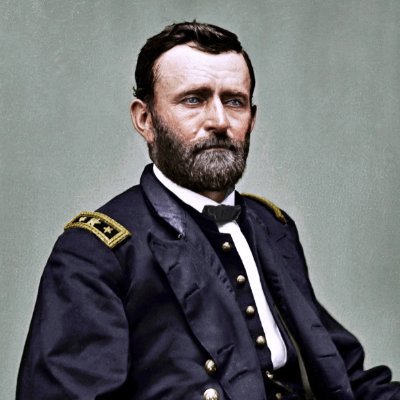
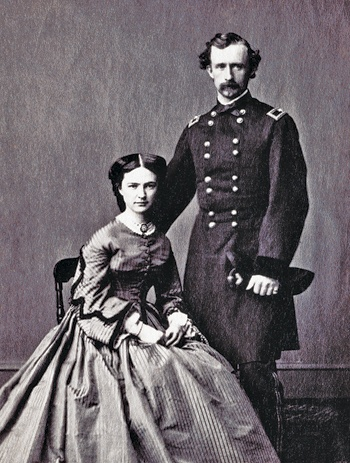
When George Custer died at Little Bighorn in 1876, his wife Libby was 34. She had followed him everywhere. Lived in tents on the open plains. Slept in forts on the edge of nowhere. Then in one afternoon he was gone, and she was a widow with almost no money and a husband whose name was already being dragged through the mud. Most women in 1876 would have remarried. She had offers. She turned every one down. Instead she picked up a pen. Three books. Lecture tours. She built his legend with her own hands. And she defended him so fiercely that the officers who blamed Custer for the disaster just kept quiet. They were not afraid of the Army. They were afraid of her. So they waited. Year after year, for the widow to finally pass so they could talk without her tearing them apart in print. She made them wait almost 57 years. Libby Custer died in 1933, four days short of 91, having outlived nearly every man who ever doubted her husband. She is buried right next to him at West Point. That is what loyalty looks like.

Aniden uyanıyor ve sahibinin kollarında güvende olduğunu anlıyor, bir şeyler söyleyip tekrar huzurla uyuyor❤️

One morning, while I was out walking this big heart on four legs, he suddenly stopped at the foot of a bush. Normally, he pulls on the leash to run, sniff, explore. But this time, he froze. His gaze locked in place, ears standing tall. And then, very slowly, he moved closer. Three tiny bundles were trembling beneath the leaves. Thin. Dirty. Abandoned. They were only a few weeks old—two gingers and a tabby—huddled together, clinging to each other to survive the night. There was no mother. Nothing. Just them. Fragile. Alone. Silent. I wanted to pick them up, to place them gently in a box. But my dog—this big, often clumsy giant—lay down on the ground instead, resting his muzzle beside them. He didn’t growl. He didn’t fidget. He simply lay there, as if he understood that they needed warmth, calm, protection. That day, I didn’t make a decision. He made it for me. Since then, they never leave his side. They sleep curled against him, hide between his legs, climb onto his back like a soft, living mountain. He doesn’t mind. He watches over them. He lets them nibble his ears, play with his tail, fall asleep on his chest. Sometimes I watch him—the old one, the survivor of a hard past. This dog I took in when no one else wanted him, when people said he was “too big,” “too old,” “too difficult.” And now, I see him transformed—into a guardian, a guide, a gentle giant of a father to a tiny litter he saved himself. They’re not his puppies. They’re not even the same species. And yet, he loves them as if they were his own. As if, in those three little lost beings, he recognized a piece of himself. Today, they are a family. A strange, living puzzle—unlikely, but perfect. A reminder that love has no shape, no breed, no logic. It just needs a heart big enough to hold it. Credit: Everything Sina Now



Horses somehow swim just as gracefully as they run — amazing creatures! 🐴

The woman who spent years cleaning hotel rooms — helped raise the man who now represents America on the world stage. And if we fail to honor her today, we are overlooking one of the most inspiring stories of sacrifice and love. Hardly anyone talks about Oriales Rubio. Few people share her story. Few remember the long days she spent making beds, stocking shelves, and working tirelessly so her son, Marco, could have opportunities she never had. She arrived from Cuba in 1956 with very little. Yet she devoted her life to building a better future for her family. Every early morning, every exhausting shift, every sacrifice was made with one goal in mind — giving her children a chance to succeed. Marco Rubio witnessed that dedication firsthand. And everywhere life took him — the Senate, the White House, the State Department, and across the world — he carried the lessons and values his mother gave him. She was always with him. On September 27, 2019, Oriales Rubio passed away peacefully at the age of 88, surrounded by the family she loved so deeply and worked so hard to support. After her passing, Marco shared words that touched countless hearts: “God blessed her with almost 89 years of life filled with love. The love she had for her children is but a glimpse of the even greater love God has for His.” From a woman who worked humble jobs to support her family... to seeing her son become one of America’s most recognized leaders — it is a story of faith, perseverance, and hope. Only God can write stories like that. Today, let us take a moment to remember Oriales Rubio and the countless mothers whose sacrifices helped shape the future of their children.


This is a battery caged chicken the day she was let out of her cage - and the same chicken 3 months later. A chicken isn't supposed to live on a patch of wire smaller than a sheet of printer paper, but that is basically the reality for millions of egg-laying hens. A hen is an animal built to scratch, dust bathe, perch, stretch her wings, forage, explore, choose a nest, and spend her day doing chicken things. A cage takes all of that away. That's why rescued caged hens can look so rough when they first get out. But given bedding, food, safety, room to move, dirt to scratch, and time, they often start looking like chickens again. If you buy eggs, learn the labels. "Cage-free" is better than a battery cage, but it doesn't mean pasture. "Free-range" can vary a lot. "Pasture-raised" with a real third-party welfare certification is usually the stronger choice. Or buy from someone local whose hens you can actually see.


“What must have happened to you in your life to make you want to kill a beautiful animal and then lie next to it smiling? ~ @rickygervais. #BanTrophyHunting NOW! 🚫

White cardinals are one of the rarest birds you can spot in the wild Their unusual white feathers are caused by a rare pigment condition, making them look completely different from the bright red cardinals most people know


Good people...


She was so scared at first, and then she found her safe spot and her buddy. Sweetness overload.

À ceux qui refusent de louer un logement à cause de la présence d’un chien… j’aimerais simplement dire ceci : Je ne peux pas l’emmener à la plage, parce que ça vous dérange en vacances. Je ne trouve pas de maison à louer, parce que “on ne veut pas d’animaux ici”. Je ne peux pas prendre le bus ni le train, parce que “les chiens, ça embête les gens”. Et pourtant… C’est à lui que je pourrais demander de traverser des décombres après un tremblement de terre pour vous retrouver. C’est lui qu’on envoie en montagne ou dans les bois quand quelqu’un est perdu sans réseau. C’est encore lui qui plongera dans une eau glacée pour venir vous sauver, là où personne n’ose aller. Oui, pour certains, ce n’est “qu’un chien”. Mais si un jour vous avez besoin d’aide… ce sera peut-être ce chien-là qui viendra à votre secours. Et il le fera. Sans jamais vous demander si vous l’auriez laissé monter sur le canapé. 🐾

Orangutans share 96.4% of genes, 28 physical characteristics, and a number of behavioral traits with humans. No wonder things like this happen so easily. [📹 minorcrimes]
He had never wanted children. He had never imagined himself surrounded by toys scattered across the floor. He had never pictured himself reading bedtime stories, checking fevers at night, making soup, comforting tears, or learning how to braid a little girl’s hair. His life was simple. Silence. Order. Work. Habits. A kind of solitude that had never felt like a burden. And then, in 1892, a telegram arrived. Thomas Brennan was alone in the guest room of a small boarding house in Denver when he read the few lines that made his hands begin to tremble. His younger brother had died. That alone was devastating. But hidden inside those words was another sorrow. Three children had been left alone. Eight years old. Six years old. Four years old. No mother. No father. No home that would ever feel the same again. Thomas was 34. Unmarried. Childless. Inexperienced. With no plan whatsoever for becoming anyone’s father. But there are moments when all our plans suddenly become small. And life simply places three children on a train platform in front of you. When the train arrived, they stepped down one by one. Tags sewn onto their coats. One suitcase in each hand. Fear in their eyes — the kind of fear that should never live in a child’s eyes. And in that moment, Thomas was no longer the same man. Something inside him cracked. And through that crack, love began to enter. The first months were chaos. He burned dinners. Ruined laundry. Forgot who liked what. Did not know how to speak to a child’s grief. Did not know what to do when a child cried not from pain in the body, but from emptiness inside. Margaret silently tied her hair, as if trying to hold together some small piece of order in a world that had fallen apart. James carried anger inside him — not childish stubbornness, but the rage of a boy who had lost everything. And little Samuel asked every evening, in a trembling voice: “When is Mama coming back?” Thomas never found an answer. One evening, he searched the whole house for Samuel and finally found him inside a wardrobe. The little boy was asleep, curled up tightly, with the door slightly open. Thomas quietly asked why he was there. The boy whispered: “I feel safer here.” So Thomas sat down on the floor beside the wardrobe. He did not say, “Come out right now.” He did not scold him. He did not explain that this was “not normal.” He simply stayed. All night. He told him about courage. About kindness. About strength. About how fear does not disappear all at once, but becomes smaller when someone sits beside you. And from that moment on, Thomas understood: leaving was no longer an option. He began to learn. Slowly. Clumsily. Imperfectly. But every day. He learned who needed silence and who needed an embrace. He learned how to make soup exactly the way Margaret liked it. He learned how to speak to James without wounding him even more deeply. He learned how to hold Samuel’s hand when the world felt too frightening again. He did not become perfect. But he became present. And sometimes, that is what saves a child most. Over time, he was no longer just a man “taking care of three orphans.” He became their home. Not through walls. Not through a surname. Not through documents. But through a daily, quiet: “I am here.” Years passed. Margaret grew up and became a teacher — gentle, but strong, with that special light carried by people who have once survived darkness. James fell in love with stones, earth, mountains, and became a geologist. And Samuel — the same fragile boy who once hid inside a wardrobe — grew up and found the courage to serve, to stand straight, and to stop running from the world. And at every important moment of their lives, Thomas was there. Always a little to the side. Hands folded together. Eyes wet. Never asking for thanks. Never using too many words. He never married. He never had children of his own by blood. But he was never alone again. Many years later, one evening, Margaret took his hand and said: “You gave us a life when ours seemed to be over.” And in that moment, Thomas finally understood everything. Family is not always what we plan. Sometimes family is what we choose. Day after day. When it is frightening. When it is inconvenient. When you do not know how to do it right. When dinner is burned, a child is crying, and you are barely holding yourself together. Family is not always blood. It is the hand that did not let go. It is the person who stayed. It is love that did not arrive fully formed, but grew from responsibility, patience, and a daily choice. Thomas Brennan had never wanted children. But he became a father. Not because he was ready. But because they needed someone who would not run away. And perhaps that is one of the deepest truths of love: not every father is born a father. Some become one the moment they decide to stay.

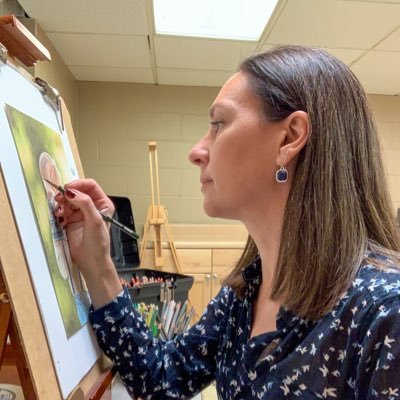
@AMAZlNGNATURE my colored pencil drawing ✍️

Today is Cat World Domination Day A reminder that cats have spent centuries convincing humans to feed them, house them and cater to their every need while making humans believe they are the ones in charge


🚀🚀 @SpaceXElon0182
240 Followers 533 Following

Mr X @MrX404495558750
2K Followers 5K Following

Eva petals @xeva1573
3 Followers 65 Following soft girl with big internet feelings 💗 always follow back
X ✪ @X57aovz
23 Followers 165 Following OWNER AND LEADER OF TESLA $TOCK MINING AND STAR-LINK CONNECTION #star-link🧑🚀.
ROCKET MAN 👨�... @treffortsebasti
286 Followers 7K Following
Elon the great 😊 @TheElon32295
881 Followers 3K Following
!MR _ELON_ @MR_ELON_n1
1K Followers 4K Following
Star Ship 🚀 @starship95228
463 Followers 2K Following Say less, do more; balanced mindset. Invest, stay humble, & keep the humor. Proud Tesla Owner *Fan Account*X-Files Fan: human/robot/Al/Quantum/ Art/SpaceX 🚀
X🚀 @Elon_prime5332
330 Followers 1K Following


Charlotte @Charlottebv1j
1 Followers 66 Following
Dianapolmiller22 @Omolara236281
71 Followers 482 Following I'm new 💗💗on here 💓💕looking for a serious relationship ❤️
Greg J. Marchand MD @MarchandSurgery
300K Followers 123K Following Dual board certified #MIGS & #OBGYN CV: https://t.co/l3Aixp5wxK My opinions are my own. (They're also correct.)
Star Ship 🚀 @starship95228
463 Followers 2K Following Say less, do more; balanced mindset. Invest, stay humble, & keep the humor. Proud Tesla Owner *Fan Account*X-Files Fan: human/robot/Al/Quantum/ Art/SpaceX 🚀
!MR _ELON_ @MR_ELON_n1
1K Followers 4K Following
Elon the great 😊 @TheElon32295
881 Followers 3K Following
ROCKET MAN 👨�... @treffortsebasti
286 Followers 7K Following
X ✪ @X57aovz
23 Followers 165 Following OWNER AND LEADER OF TESLA $TOCK MINING AND STAR-LINK CONNECTION #star-link🧑🚀.
Eva petals @xeva1573
3 Followers 65 Following soft girl with big internet feelings 💗 always follow back
Mr X @MrX404495558750
2K Followers 5K Following

Reverend Jordan Wells @WellsJorda89710
140K Followers 10K Following Pastor, Zionist—featured on Real American Voice, Dr. Phil, Fox, Jubilee, TMZ & Jubilee debates. For Booking Email [email protected]
Dianapolmiller22 @Omolara236281
71 Followers 482 Following I'm new 💗💗on here 💓💕looking for a serious relationship ❤️
Charlotte @Charlottebv1j
1 Followers 66 Following
Emma offline @emma43326
96 Followers 1K Following honey heart, hurricane mind 🍯 follow back guaranteed
X🚀 @Elon_prime5332
330 Followers 1K Following
Sassafrass84 @Sassafrass_84
635K Followers 103K Following Unapologetically conservative.Wife.Patriot. Menace to the mainstream.Traditional wife with a modern mouth.America First. Red, white, and done with the nonsense.
Mindset Machine @mindsetmachine
1.0M Followers 98 Following Building warriors in a world of worriers.
Juanita Broaddrick @atensnut
2.0M Followers 13K Following Author, "You'd Better Put Some Ice On That" retired RN & business owner, Speaker. 🇺🇸🇺🇸
Greg J. Marchand MD @MarchandSurgery
300K Followers 123K Following Dual board certified #MIGS & #OBGYN CV: https://t.co/l3Aixp5wxK My opinions are my own. (They're also correct.)
Jessica @Lj73075
1K Followers 1K Following
Crazy Vibes @CrazyVibes_1
133K Followers 3K Following ✨ Stories that make you feel something. 🌸 | Kindness. Positivity. Humanity.
Cats for Happiness. @JoyfullCat
485K Followers 6 Following Meow moments captured! 📷 🐈Your daily dose of cat videos || Dm for Credit.
Massimo @Rainmaker1973
4.3M Followers 171 Following Engineer. Selecting and curating pictures and videos trying to awaken your sense of wonder since 2014. Science, tech, art, weather, space, the unusual around us
National Geographic A... @NatGeoAnimals
1.3M Followers 234 Following Explore the wonders of the animal kingdom with National Geographic.

Ted Cruz @tedcruz
7.1M Followers 5K Following Father of two, @heidiscruz's husband, fighter for liberty. Representing the great state of Texas in the U.S. Senate.
Nature is Amazing ☘... @AMAZlNGNATURE
6.4M Followers 54 Following Animals 🐿️ Nature 🦋 Discovery 🦖 📧 submit clips & inquiries to [email protected]

You might like