coinking211 @coinking211
Crypto enthusiast, growth investor Joined January 2022-
Tweets161
-
Followers59
-
Following529
-
Likes189

The Nasdaq is tracking the dot-com era almost candle for candle. Two cycles, 875 trading days each: – Nasdaq from Netscape IPO (Dec '94) to peak: +144.55% – Nasdaq from ChatGPT launch (Nov '22) to today: +144.77% Within 0.22 percentage points. Same arc. Same slope. What makes this almost poetic is how cleanly the next 12-18 months overlap with three real-world catalysts pointing the same direction: 1. Mid-term seasonality. Year three of the presidential cycle is historically the strongest. The pre-election summer is historically the wobble before that strength. 2. A new Fed chair. Powell's term ends in May 2026. Markets always test a new chair. 1987 (Greenspan), 2018 (Powell himself) — both saw sharp drawdowns within months of the handover. 3. IPO supply absorption. SpaceX, Stripe, Databricks, Anthropic, OpenAI — the largest private companies in history are queuing up. Late-1999 saw the same dynamic. The market has to digest the float before it can melt up. If history rhymes, the playbook looks like this: – A messy summer of volatility – A scary autumn that shakes out weak hands – Then a vertical melt-up into 2027-2028 – Apply the dot-com multiple from this point: S&P 500 around 10,000 This isn't a prediction. It's a pattern. The technology cycles change. The behaviour doesn't. The melt-up usually comes before the meltdown. And in 1999, almost nobody sold the top.


INSTEAD OF WATCHING AN HOUR OF NETFLIX TONIGHT. This 60-minute Cambridge lecture by Demis Hassabis will teach you more about the future of AI than most people will learn in the next 5 years. Bookmark it and give it an hour, no matter what.

马斯克2003年在斯坦福的45分钟闭门演讲 堪称创业者的教科书! 不是鸡汤成功学,而是他亲自分解如何从0创办一家公司。 那场演讲里, 他顺便把当时自己干的三家公司是怎么活下来的真实经历全讲透了。 听完的人都说: 这45分钟,比读十本创业书都管用 真正的干货,从来不藏着
实用网站合集来了! 这几个真的香,建议直接收藏 1、资源猴资源库(ziyuanhou.com) 全能资料库,职场、学习、娱乐、工作资源几乎全覆盖,分类清晰,找东西超级方便,省时又省力。 2、嘉木说(jiamushuo.com)


people clown on Dalio because they may not hear the harsh truths he has to say but this conflict is totally consistent within his long-running analysis of the changing world order the control of the Strait of Hormuz is not only existential to the Iranian regime, but also to the future of the American dollar and empire

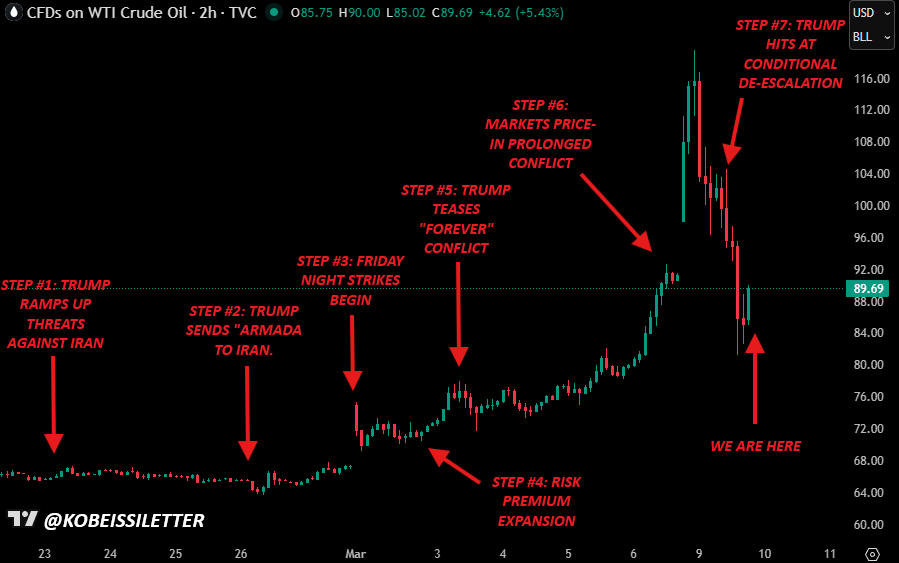
It doesn't get more textbook than this: Every step of our March 3rd "Conflict Playbook" has been outlined on this oil price chart. It began with Steps #1 and #2 when Trump sent an "armada" to Iran and ramped up threats. On February 27th, we saw the "Friday night strikes" from Step #3 of our playbook. This led to Step #4 as risk premiums were rapidly priced-in. On March 3rd, President Trump began saying the war could last "forever," as expected in Step #5. Then, on Friday and last night, markets began pricing in Step #6, a prolonged conflict sending oil prices to $120/barrel. Finally, today at 3:20 PM ET, President Trump hinted at "conditional de-escalation" from Step #7 of our Conflict Playbook. We are now nearing Step #8. Keep following along.

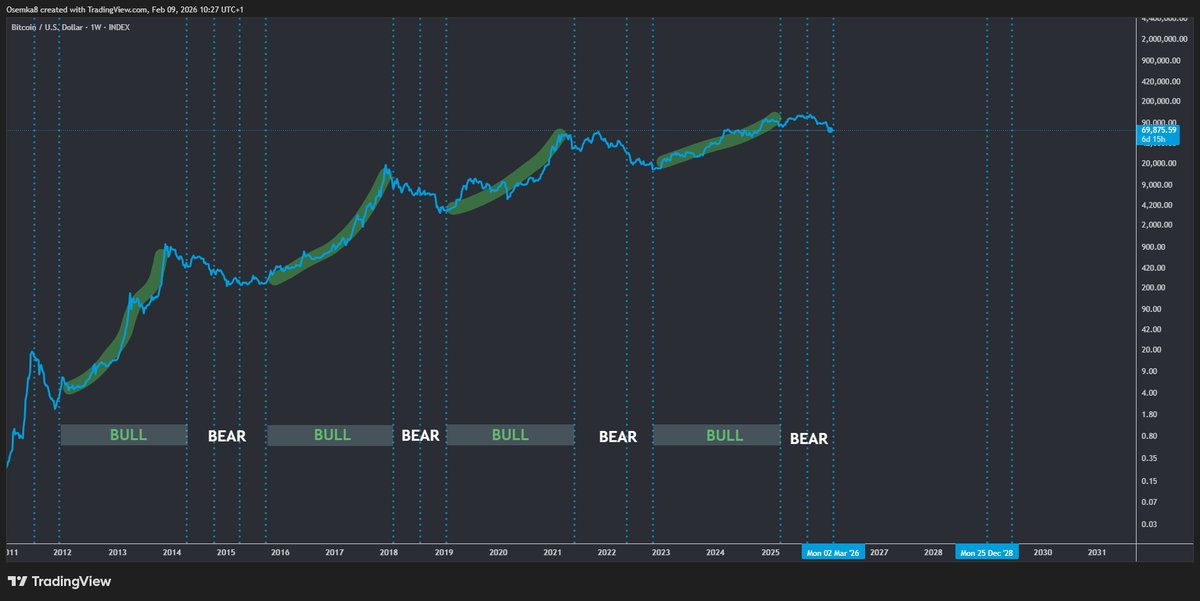
🚨 Diesen Chart muss jeder gesehen haben. Das ist kein Modell. Keine Prognose. Keine Linie die jemand hübsch durch eine Excel-Tabelle gezogen hat. Das ist was tatsächlich passiert ist – #Bitcoin Preis seit 2010, gemessen gegen Metcalfe's Law. Die Grundidee: Der Wert eines Netzwerks steigt proportional zum Quadrat seiner Nutzer. Jede neue Wallet, jeder neue Holder, jeder neue Teilnehmer macht das Netzwerk überproportional wertvoller. Telefonnetz-Logik aus den 80ern – nur dass das Netzwerk hier $1,37 Billionen schwer ist. Timothy Peterson (@nsquaredvalue) hat das Modell über Jahre verfeinert. Und sein Modell zeigt was passiert wenn man den BTC-Preis in "root time" statt "log time" plottet: Jedes Mal wenn der Preis die untere Begrenzung berührt hat – 2011, 2013, 2017, 2021 – war das ein Kapitulationspunkt. Und jetzt schau wo wir stehen. Unter $70.000 – das sind 46% unter dem ATH von $126.080. Peterson hat am 1. Dezember gepostet: Zum ersten Mal seit fast zwei Jahren handelt #Bitcoin unter seinem Netzwerk-Value. Historisch gesehen war der Preis in 96% aller Fälle ein Jahr später höher wenn das passiert ist. Durchschnittlicher Gain: +132%. Ich finde den Ansatz aus einem Grund überzeugend. Die meisten Modelle versuchen den Preis vorherzusagen. Metcalfe misst etwas das sich beobachten lässt – Netzwerkgröße, Adoption, tatsächliche Nutzung. Das ist kein Kristallkugel-Modell. Das ist Mathematik die sich seit 15 Jahren an echten Daten bewiesen hat. Heißt das wir haben den Boden gesehen? Keine Ahnung, ehrlich. Geopolitik kann jede Metrik überfahren – Iran-Spannungen, Ölpreis, Macro. Aber wenn du dir Sorgen machst ob #Bitcoin langfristig tot ist: Dieses Netzwerk wächst. Die Adoptionskurve zeigt nach oben. Und der Preis liegt aktuell unter dem was das Netzwerk wert ist. Die Frage die ich mir stelle: Wenn dieses Modell seit 2010 bei jedem Kapitulationspunkt richtig lag – warum sollte ausgerechnet dieses Mal anders sein?

The 2028 Global Intelligence Crisis That Wasn't A Macro Memo from the Actual June 2028, Not the Fanfic Version The unemployment rate printed 3.8% this morning, roughly where it's been all year. The market yawned. The S&P 500 is at 7,400, which is somehow both a record high and a disappointment to people who were promised 10,000 by every DCF model with a "AI Upside Case" tab. We are writing this memo because in February 2026, a widely circulated Substack piece predicted that by this exact date, the S&P would be down 38%, unemployment would be 10.2%, and the mortgage market would be in free fall. It was beautifully written, rigorously structured, and wrong about nearly everything. We feel it is our duty — nay, our privilege— to conduct the post-mortem. In the authors' defense, it was explicitly labeled a "scenario, not a prediction." In our defense, 2,321 people liked it and several macro Twitter accounts made it their entire personality for six months. How It Actually Started In late 2025, agentic coding tools did indeed take a step function jump in capability. The Citrini memo predicted that a competent developer could now "replicate the core functionality of a mid-market SaaS product in weeks." This was true! What the memo failed to mention was that a competent developer could also replicate the core functionality of a mid-market SaaS product in weeks in 2019. The difference was that back then, nobody did it because maintaining software is horrible, and in 2026, nobody did it because maintaining software is still horrible. The procurement manager at the Fortune 500 who told the vendor he'd been "in conversations with OpenAI about replacing them entirely"? He got his 30% discount, then spent the next eighteen months trying to get his internal AI prototype to handle SSO correctly. It could write a Shakespearean sonnet about SAML authentication but could not, for the life of it, actually implement SAML authentication without hallucinating an endpoint that didn't exist. He renewed the vendor contract at full price the following year. The memo predicted ServiceNow's $NOW net new ACV growth would decelerate to 14% as customers cut seats. In reality, ServiceNow reported accelerating growth in 2027 because — and this is the part the doom thesis always misses — the AI agents that companies deployed generated more workflow tickets, not fewer. Every autonomous agent needed monitoring, logging, exception handling, and escalation paths. ServiceNow didn't sell fewer seats. They sold seats to robots. SERVICENOW Q3 2027: "AI AGENT MANAGEMENT" BECOMES FASTEST-GROWING MODULE; CEO JOKES "OUR BEST CUSTOMERS ARE NOW NON-HUMAN" | Bloomberg, October 2027 The Friction That Refused to Die The Citrini memo's most elegant argument was that AI agents would eliminate friction, and that trillions in enterprise value depended on friction persisting. Subscriptions that passively renewed, insurance policies nobody re-shopped, delivery apps that exploited laziness — all would be ruthlessly optimized away. Here's what actually happened with subscriptions: AI agents did start cancelling unused subscriptions on behalf of users. Subscription companies responded by making cancellation flows so Byzantine that the AI agents needed other AI agents to navigate them. An arms race ensued. By Q2 2027, the average subscription cancellation flow involved a 47-step conversational gauntlet with an AI retention specialist. The median consumer's agent spent more tokens trying to cancel a $9.99/month meditation app than the consumer had spent meditating in the entire previous year. Net result on subscription revenue: approximately zero. The memo predicted agents would disintermediate travel booking platforms. In practice, when agents assembled "optimal" itineraries, they produced trips that were technically cheaper but involved three layovers, a 4am bus transfer in Ljubljana, and a hotel 45 minutes from the city center with a 4.1-star rating that turned out to be an Airbnb above a nightclub. Consumers used the agent, looked at its itinerary, said "absolutely not," and went back to $BKNG. It turns out that what humans call "preferences" and what a cost-optimization function calls "irrational friction" are the same thing. People don't want the cheapest flight. They want the one that doesn't leave at 5am. We knew this. We have always known this. We briefly forgot because a Substack told us machines would make us rational. The DoorDash $DASH Thesis, or "You Underestimate How Lazy People Are" The memo called DoorDash the "poster child" of habitual intermediation destruction. Agents would compare twenty delivery apps and pick the cheapest. Vibe-coded competitors would flood the market. DoorDash's moat of "you're hungry, you're lazy, this is the app on your home screen" would evaporate. Counterpoint: have you met people? The vibe-coded delivery competitors did indeed launch. Dozens of them. They had names like Fetchr, GrubAgent, NomNom AI, and — we are not making this up — "Deliver.sol." They offered lower fees by passing 90-95% through to drivers. They also had no customer service, no restaurant onboarding team, no logistics optimization, no insurance, and no way to handle the moment when a driver ate half your order and marked it "delivered." The apps worked flawlessly in demo videos and catastrophically in the rain on a Friday night in Brooklyn. By Q3 2027, the subreddit r/VibecodeDeliveryHorror had 400,000 subscribers and a pinned post titled "My agent ordered me sushi from a restaurant that closed in 2019." DoorDash stock is up 35% from the date of the Citrini memo. The Payments Armageddon That Wasn't Perhaps the most creative prediction was that AI agents would route around card interchange using stablecoins, destroying Visa / $V, Mastercard / $MA, and American Express $AXP. What actually happened: agents tried to pay with stablecoins. Merchants said no. Not because they couldn't accept them, but because the fraud liability framework for stablecoin payments did not exist, and no CFO in America was going to accept payment in magic internet money to save 2% on interchange when the chargeback protections that interchange funded were the only thing standing between them and an army of AI agents submitting fraudulent refund claims. That's the thing nobody modeled. AI didn't just empower consumers. It empowered fraud. The same agents that could price-optimize your protein bars could also generate synthetic identities, file fake chargebacks, and exploit return policies at scale. Visa and Mastercard's moat turned out not to be friction — it was trust infrastructure. When fraud exploded in early 2027, merchants practically begged to keep paying interchange. MASTERCARD Q1 2028: NET REVENUES +11% Y/Y; CEO CITES "UNPRECEDENTED DEMAND FOR AI-POWERED FRAUD DETECTION SUITE" AND "RETURN TO CARD RAILS FROM ALTERNATIVE PAYMENT EXPERIMENTS" | Bloomberg, April 2028 Mastercard didn't die. It sold the antidote. The Mortgage Crisis That Was Actually Just San Francisco Being San Francisco The memo's most alarming prediction was that the $13 trillion mortgage market would crack because white-collar workers would lose their income and default on their loans. What actually happened in housing: San Francisco home prices did decline, approximately 8% peak-to-trough. This was treated as a national emergency by San Francisco homeowners and as "Tuesday" by everyone who'd watched San Francisco home prices fall 8% roughly every four years since the city was founded. The national housing market was fine, because the national housing market has a problem that is far more powerful than AI displacement: there aren't enough houses. The US has been underbuilding for fifteen years. A structural housing shortage does not resolve because some product managers in SOMA lost their jobs. If anything, the modest cooling in tech-heavy metros made housing more affordable for the nurses, teachers, and tradespeople who'd been priced out — people whose jobs, it should be noted, AI has not disrupted in any meaningful way. The 780-FICO borrowers the memo flagged? Most of them had two-income households, 30-year fixed mortgages locked at 3-4% in 2020-2021, and six months of savings. The ones who lost their jobs found new ones — not always at the same pay, but enough to make a mortgage payment that was locked in at 2021 rates. Turns out a $2,400/month mortgage is pretty easy to service even at $120k instead of $180k, especially when your rate is 3.25% and the alternative is paying $3,500/month in rent. FANNIE MAE: SERIOUS DELINQUENCY RATE REMAINS AT 0.6%, NEAR ALL-TIME LOWS; "AI DISPLACEMENT CONCERNS HAVE NOT MATERIALIZED IN CREDIT PERFORMANCE" | Fannie Mae Q2 2028 Credit Supplement The Job Market: Disrupted, Not Destroyed We are not going to pretend that AI has had zero impact on employment. It has. The labor market is different. Some categories of work have genuinely contracted — particularly rote analytical work, first-draft content generation, and basic code production. But the Citrini memo made the classic futurist error: it modeled job destruction in high resolution and job creationin zero resolution. It said AI "created new jobs" but "for every new role AI created, it rendered dozens obsolete." This sounded profound and was completely made up. Here's what they missed: 1. AI made existing jobs bigger, not extinct. The product manager at Salesforce didn't get replaced by Claude. She used Claude to do the work of three product managers, got promoted, and now manages a portfolio twice the size. Companies didn't fire 60% of their PMs. They gave the surviving PMs AI tools and expanded their scope. Headcount was flat. Output tripled. 2. The "build it yourself" thesis created more jobs than it destroyed. All those companies that tried to replace their SaaS vendors with internal AI-built tools? They needed people to manage those tools. A new class of "AI operations" roles emerged — not the fake "prompt engineer" jobs from 2023, but genuine systems integration, agent orchestration, and reliability engineering roles. The BLS hasn't even finished categorizing them yet. 3. Humans got weird. The fastest-growing job categories of 2027-2028 were things nobody predicted: AI output auditors, "authenticity consultants" for brands that wanted to prove their content was human-made, in-person experience designers (turns out when everything digital gets commoditized, people pay more for analog), and — our personal favorite — professional "vibe curators" for corporate events, which is just party planning with a $300/hour rate and a LinkedIn title. The unemployment rate is 3.8%. It was 3.7% when the memo was written. The composition has shifted, but the apocalypse has not arrived. The Real Feedback Loop They Missed The Citrini memo described a "negative feedback loop with no natural brake." AI gets better → companies cut workers → workers spend less → economy weakens → companies buy more AI → repeat until civilization collapses. The natural brake they missed was called "shareholders." When companies cut too aggressively, quality collapsed. The first wave of AI-driven layoffs in 2026 did boost margins. The second wave, in early 2027, started producing disasters. AI-generated customer communications that were subtly unhinged. Product launches with no human gut-check that flopped spectacularly. Legal filings with hallucinated case citations (again). A major airline's AI-managed pricing engine that accidentally sold 40,000 business class tickets from New York to London for $12 each before a human noticed. UNITED AIRLINES Q2 2027: $380M CHARGE RELATED TO "AUTONOMOUS PRICING SYSTEM ERROR"; CEO ANNOUNCES "HUMAN-IN-THE-LOOP" MANDATE FOR ALL REVENUE MANAGEMENT SYSTEMS | Bloomberg, July 2027 Companies re-hired. Not to the same levels, and not the same roles. But the "fire everyone, let the robots handle it" thesis ran directly into the wall of "the robots are confidently wrong 3% of the time and that 3% is extremely expensive." The negative feedback loop had a natural brake, and its name was liability. India, Actually The memo predicted India's IT services sector would collapse, the rupee would crash 18%, and the IMF would come knocking. What actually happened: TCS, Infosys, and Wipro did see growth slow in traditional staff augmentation. They responded by — and stop us if you've heard this before — selling AI services. It turns out that the same cost arbitrage that made Indian developers attractive for manual coding also makes Indian firms attractive for AI implementation, training, and management. They pivoted from "we'll give you 500 developers" to "we'll give you 50 developers and 450 AI agents managed by our platform." The rupee is roughly where it was in February 2026. The IMF has not called. What We Actually Got Right and Wrong The bears got right: AI is transforming the economy. Wage growth for certain white-collar categories has stagnated. Inequality has widened. The political tensions around AI are real and growing. Some business models — particularly those built purely on information asymmetry — are under genuine pressure. The bears got wrong: The speed, the severity, and the linearity. The Citrini memo extrapolated every trend at its maximum velocity for 28 months and assumed no adaptation, no friction, no regulatory response, no human irrationality, no corporate incompetence, and no second-order effects that cut the other way. In short, they modeled the economy as a physics problem and forgot it's a biological one. Systems adapt. Humans are stubborn. Institutions are slow but not dead. And the most powerful force in the American economy is not artificial intelligence. It's inertia. Closing We say this with genuine respect for the original authors: it was a good piece. Thoughtful, well-structured, and asking the right questions. The scenario was worth gaming out. But the scenario assumed a frictionless spherical economy in a vacuum, and we live in a world where a Fortune 500 company once took nine months to change its font. The canary is still alive. It just learned to use ChatGPT and is now posting on LinkedIn about its "AI-augmented singing journey." The S&P is at 7,400. The mortgage market is fine. DoorDash still has a 28% take rate. And somewhere, a procurement manager is telling a SaaS vendor he could replace them with AI, while secretly praying they don't call his bluff. Disclaimer: This is a rebuttal, not a prediction. If the 2028 Global Intelligence Crisis actually happens, please don't forward this back to us.

WTF is this deal with blood moons? Last one in the sequence is on the 3rd March and we have no occurrence until 31st Dec 2028. You can clearly see the period without these natural phenomenons has, so far, been an environment for a bullrun. While the last one marked the end of a bearmarket each time. Would align with my views, but still, this is pretty crazy.
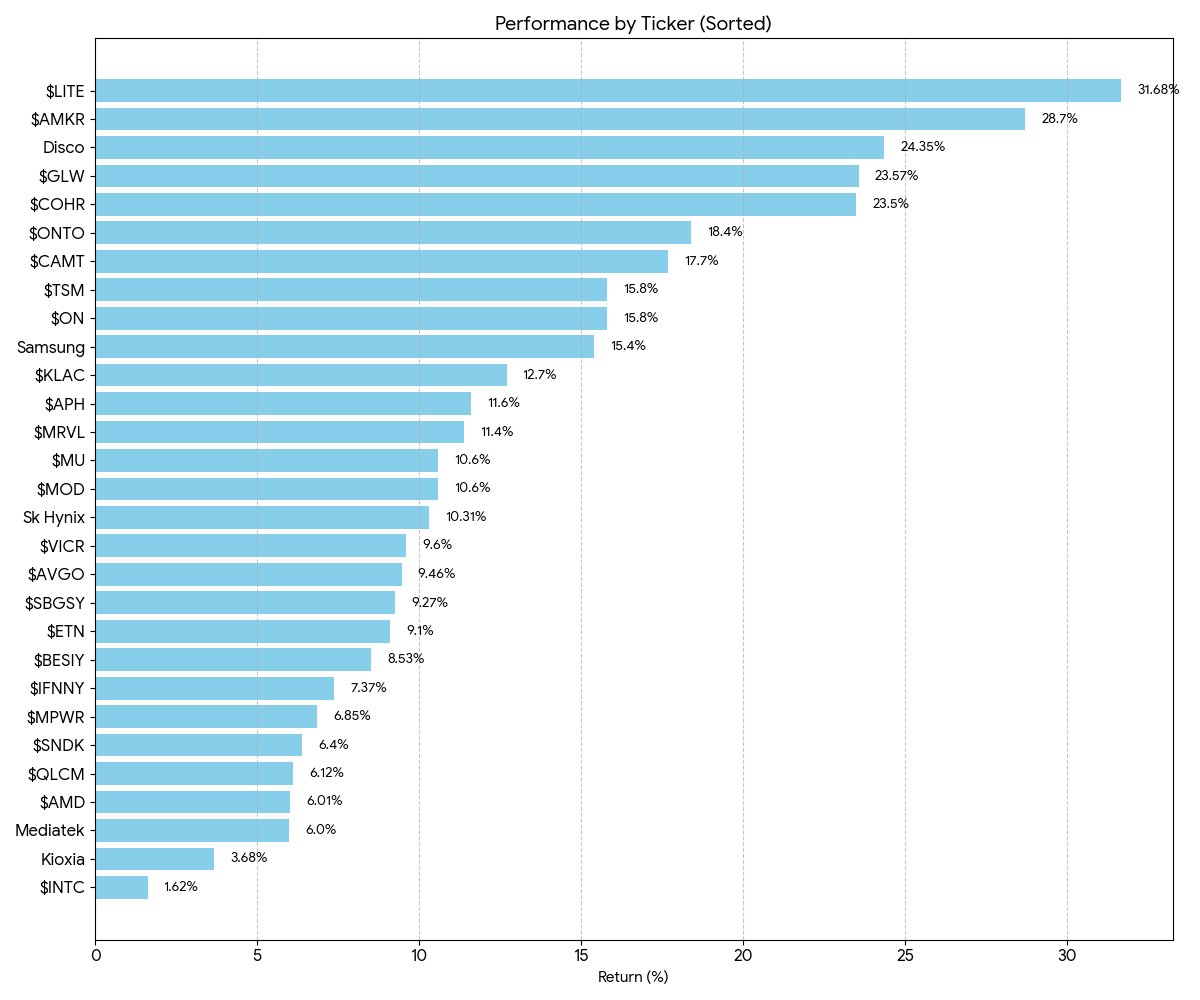
The "Bottleneck ETF" from supply chain mapping. Not a single name red. Equal weighted results 1W: +12.83%. List: $LITE: +31.68% $AMKR: +28.7% Disco: +24.35% $GLW: +23.57% $COHR: +23.5% $ONTO: +18.4% $CAMT: +17.7% $TSM: +15.8% $ON: +15.8% Samsung: +15.4% $KLAC: +12.7% $APH: +11.6% $MRVL: +11.4% $MU: +10.6% $MOD: +10.6% Sk Hynix: +10.31% $VICR: +9.6% $AVGO: +9.46% $SBGSY: +9.27% $ETN: +9.1% $BESIY: +8.53% $IFNNY: +7.37% $MPWR: +6.85% $SNDK: +6.4% $QLCM: +6.12% $AMD: +6.01% Mediatek: +6% Kioxia: +3.68% $INTC: +1.62% I feel like institutions just bought this entire list from last week's framework? This level of performance is pretty crazy.
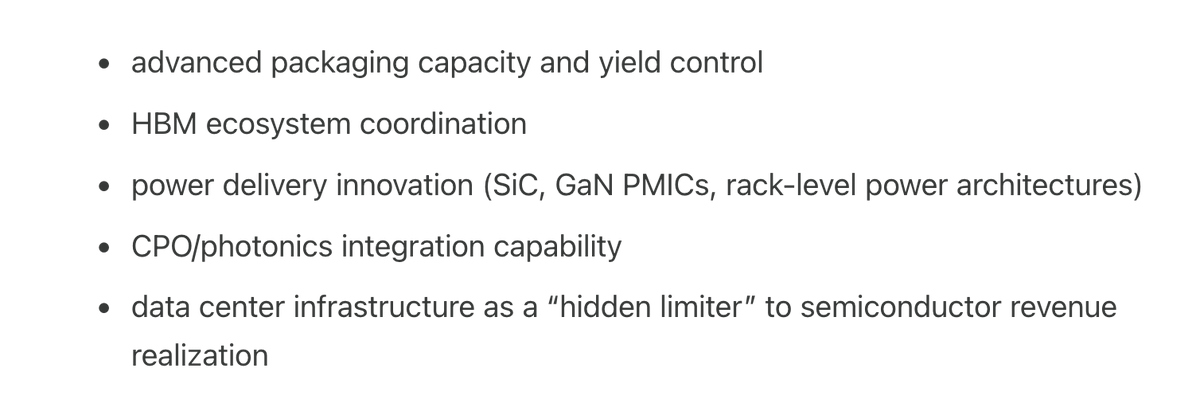
Here's my TLDR + mapped into investment framework from Semivision bottleneck summary: HBM: HBM4 (16Hi) - Samsung, Sk Hynix, $MU HBF - $SNDK, Kioxia Base Die - $TSM, Samsung (internal) CPO/photonics; Glass Substrate: $GLW, $INTC, Ibiden Optical: $LITE, $AVGO, $COHR, $MRVL Power
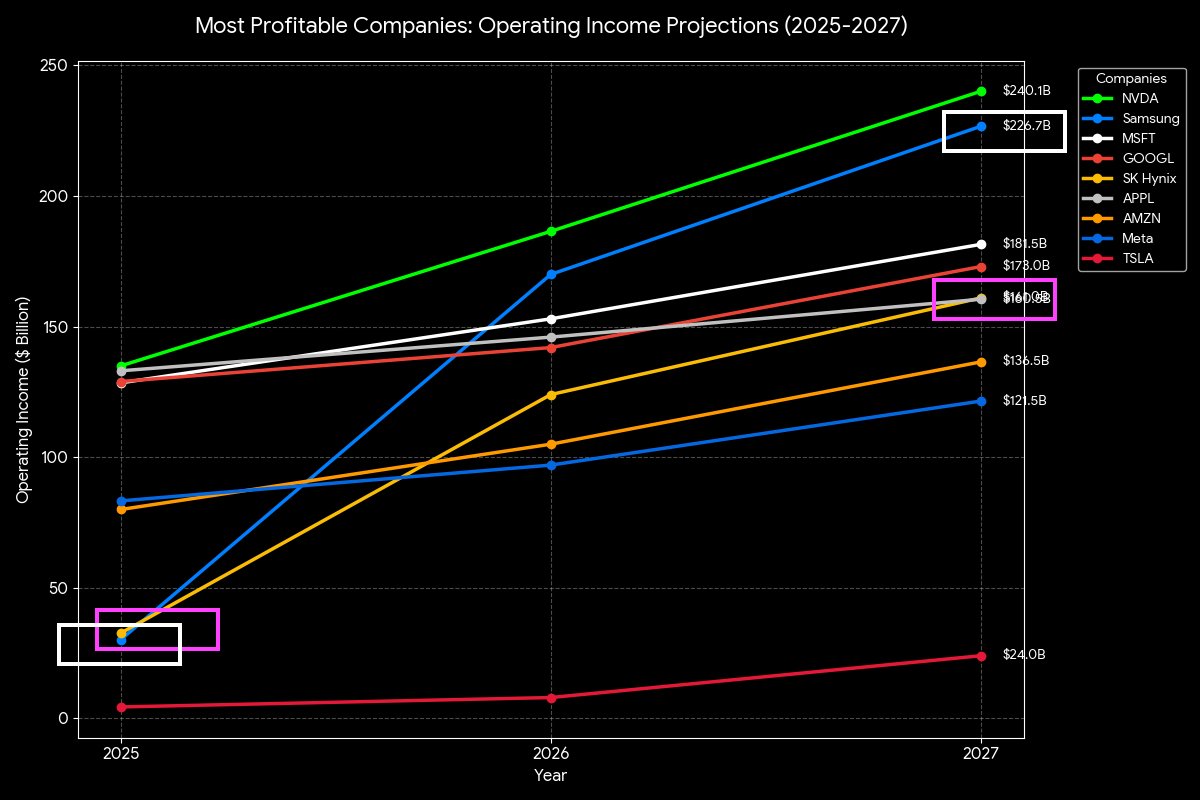
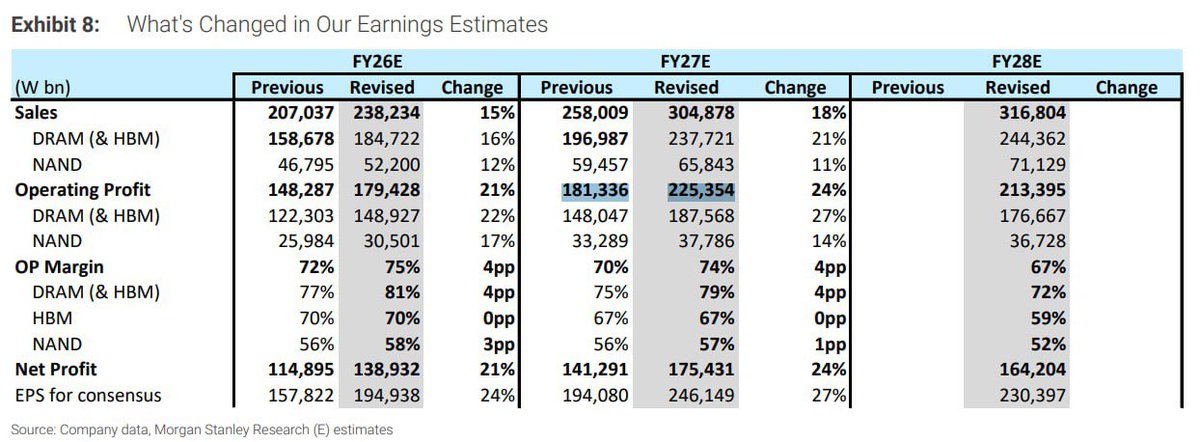
Global ranking of the most profitable companies in the world (Mag 7 vs. World) Projections for 2025->2026->2027 (Operating Income). #1: $NVDA (USA, 4.4T MC) 🇺🇸 ~$135.0B -> $186.5B -> $240.1 Billion #2: Samsung Electronics (Korea, $820B MC) 🇰🇷 ~$30.2B -> ~$170B -> ~$226.7 Billion #3 $MSFT (USA, $2.9T MC) ~$128.5B -> 153.0B -> $181.5 Billion #4 $GOOGL (USA, $3.7T MC) ~$129.0B -> $142.0B -> $173.0B #4 Sk Hynix (Korea, $410B MC) ~$32.7B -> ~$124B -> ~$161.0 Billion #5 $APPL (USA, $3.76T MC) $133.1B -> $146.0B -> $160.5B #6 $AMZN (USA, $2.13T MC) $80.0B -> $105.0B -> $136.5B #7 $Meta (USA, $1.62T MC) $83.3 -> $97.0B -> $121.5B #8 $TSLA (USA, $1.31T MC) $4.4B -> $8.0B -> $24.0B Samsung Electronics, a $820B company in Korea is projected to catch up to $NVDA in 2027 in operating income. Meanwhile Sk Hynix is projected to overtake both $APPL and $AMZN in operating income in 2027. The main takeaway is that the growth of both US hyperscalers and South Korean equities is astounding due to Artificial Intelligence ramp.

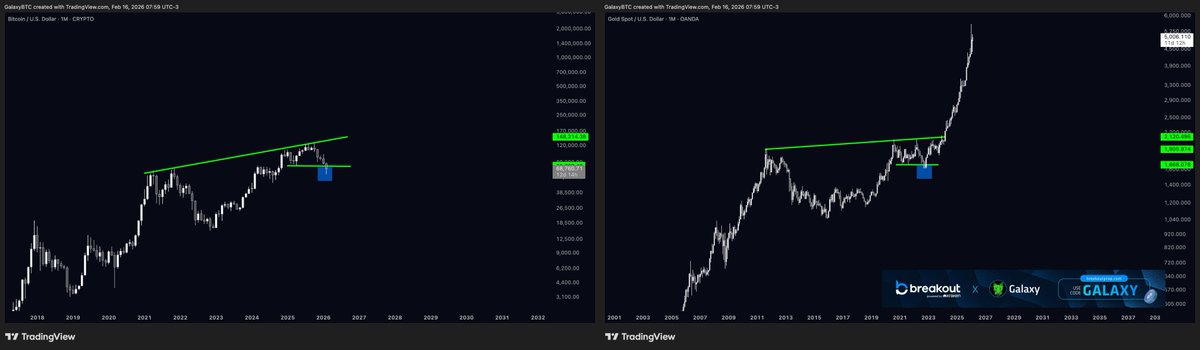
$BTC The chart is clear. Gold had a lower-low before it went parabolic. Bitcoin is now in the same spot.

Ray Dalio just released 500 years of data showing exactly how empires collapse. His conclusion? America is in Stage 6 of 9. The dangerous stage. Here's what his math actually says about where we're headed: Dalio studied every major empire collapse since 1500. Dutch. British. American. The pattern repeats with machine-like precision every 50-100 years. Not because of politics or ideology. Because of math. The "Big Debt Cycle" has nine stages. We're currently in Stage 6. The dangerous one. Here's how it works: Stages 1-4: The Rise Countries borrow to build infrastructure. Debt is productive. GDP grows faster than debt service costs. Everything feels sustainable. This was the U.S. from 1945-2000. Low debt-to-GDP. Strong productivity growth. Borrowing made sense. Stage 5: The Top Debt service hits 15-20% of GDP. Interest costs start crowding out productive spending. But everyone's too comfortable to notice. Markets boom. Wealth gaps explode. The U.S. crossed this threshold around 2008. Stage 6: The Crisis This is where we are now. Federal debt exceeds 120% of GDP. Two choices: Let interest rates rise and crash the economy. Or print money and create inflation. Both destroy wealth. Just differently. In the 1930s, we chose deflation. In 2008, we chose money printing. In 2026, we're doing both at the same time. Stages 7-9: The Reset Either massive restructuring through negotiation. Or war. History shows wars resolve 90% of these cycles. Not because humans are violent. Because debts become mathematically impossible to service. Dalio's data is clear: When internal inequality peaks AND external rivals emerge, conflicts become inevitable. The U.S. has both right now. Wealth inequality hasn't been this high since 1929. China's GDP grew 6-8% annually while we borrowed to maintain consumption. Dalio's advice for Stage 6 is simple: Sell debt. Buy gold. Not because gold produces anything. Because governments print money to escape debt traps. Gold has risen 3x since 2020. Exactly as the model predicted. But here's what actually matters for regular investors: You can't stop the Big Cycle. But you can position for it. Dalio's framework identifies five big forces that drive every transition: 1. Productivity growth 2. Debt cycles 3. Money supply 4. Wealth gaps 5. Geopolitical power shifts When all five align in the same direction, the cycle turns. Right now, all five are pointing toward Stage 7. Productivity growth is slowing. Debt service costs are rising faster than GDP. Money supply expanded 40% since 2020. Wealth concentration is at century highs. China is building parallel financial infrastructure. The math doesn't lie. So what does positioning actually look like? Dalio's research across 500 years shows three consistent patterns: Pattern 1: Fiat currencies lose value during Stage 6-7 transitions Every time. No exceptions. Governments print to escape debt traps. The dollar, pound, and euro all follow the same path. This is why gold and hard assets outperform during these periods. Pattern 2: Geographic diversification matters more than asset class diversification When one empire declines, another rises. Dutch to British. British to American. The cycle doesn't end. It relocates. Portfolios concentrated in declining empires get crushed. Pattern 3: Volatility spikes 3-5x during Stage 6 The 1930s saw 50%+ market swings. The 1970s stagflation created wild inflation volatility. 2008-2009 saw daily 5% moves. Stage 6 isn't calm. It's chaos punctuated by brief stability. Here's the data that should terrify you: U.S. debt-to-GDP: 120% (highest since WWII) Annual interest costs: approaching $1 trillion China's GDP growth: 6-8% while U.S. averages 2-3% Time between 1929 inequality peak and crash: 8 months Time since current inequality peak: We're in it now
TLDR of Phison CEO interview on Memory and Investment Framework: "Toll Collectors": - Micron ( $MU ) - SK Hynix (000660.KS) - Samsung Electronics, - Western Digital ( $WDC ) - $SNDK. T2: - $MRVL - $SIMO - Phison Electronics Companies that design the logic/software controllers connecting memory to compute will capture massive value as AI moves to the edge. T3: - Pure Storage ( $PSTG ) - NetApp ( $NTAP ) - Seagate ( $STX) As Vera Rubin inference servers roll out, the explosion in KV Cache and data generation will trigger a massive hardware upgrade cycle specifically focused on data center storage density and high-capacity Enterprise SSDs. Hilariously: $EBAY (refurbished electronics), might be a beneficiary. - Short / Avoid Low-Margin Consumer Hardware. - Short / Avoid Unhedged Auto/IoT Makers Main alpha points: - The "3-Year Prepayment" Cash Flow. Memory foundries are demanding 3 years of cash prepayments to guarantee supply. - The Inference Bottleneck is Storage, Not GPUs. A single 10-million-unit run of $NVDA Vera Rubin platform requires 20+TB of SSD per unit, which alone would consume 20% of last year's global NAND capacity. - The "Chinese Supply Glut" Bear Thesis is Dead: Pan entirely dismisses this point around YMTC and CXMT. China’s internal AI demand is so massive that it will instantly swallow 100% of its domestic production. No cheap Chinese memory will leak into the global market to rescue western hardware OEMs. TLDR from the interview: Memory demand is structural. No supply end in sight. $INTC CEO confirmed this last month.

In Texas, a criminal can steal your $6,000,000 building for $30 in cash. No ID required. No background check. Just a forged signature and a trip to the county clerk. In 2022, this happened to two of our buildings. If you own real estate, you are a target. The Texas county recording system runs on a "notice" basis. The clerk’s job is to record documents. Not verify them. A criminal created a fake deed for two of our assets. They used a cut-and-paste notary stamp pulled from a different public record. They used a courier to send the documents into the clerk’s office. The courier handed over the forged paper and paid $30 in cash. The clerk accepted the document. No driver's license. No signature check. The public record showed a Delaware LLC owned my property. $6 million in equity vanished from the legal chain of title in seconds. Once a criminal controls the deed, they have two moves. They sell the property to an unsuspecting buyer and disappear with the cash. Or they get a hard money loan against it, collect the proceeds, and vanish. Either way, they try to be long gone before you find out. I found out during a refinance. My title company called with a question: "Why did you quitclaim these buildings to a new entity?" I hadn't. I contacted the Dallas Police Department, the FBI, and the Texas Secretary of State. Every agency gave the same answer: they are overwhelmed with this type of fraud and didn't have the time or resources to pursue it. The criminals hide behind Delaware shells and registered agents. The county takes cash, so there is no bank trail. There is no ID requirement, so there is no face for the cameras. Most investors assume their title policy covers this. It does not. Standard title insurance covers defects that existed before you closed. It guarantees you received a clean deed at purchase. It does nothing for crimes committed after. This is a gap in your risk management you did not know you had. It took 90 days of legal work to fix. The "new owner" was a ghost. I had to file a lawsuit to quiet the title. I spent $20,000 in legal fees and secured a default judgment because the criminals never showed up to court (obviously). I won. But I am out $20,000 and three months of sleep. Criminals hunt three targets: raw land, free-and-clear buildings, and estate properties. A mortgage acts as a tripwire because banks flag transfers. If you own your assets outright, you are defenseless. Here is what I did after this happened to me: Property alerts. Most counties offer a free service that emails you when a document is recorded against your parcel number. Sign up for every asset you own. This costs nothing. Entity audits. Make sure your Secretary of State filings are current. Criminals look for lapsed registrations and "zombie" entities to find their next target. Push for policy change. State legislatures are starting to act. The law must require a government-issued ID to record a transfer of real property. It is insane that it does not.

Katherine Boyle just identified Elon Musk’s most important contribution to America, and it has nothing to do with the products he shipped. Boyle, General Partner at a16z: “I think Elon’s most important contribution to this country is training two generations of engineers to work with their hands again.” For ten years, America’s sharpest technical minds optimized ad clicks and built messaging apps. Software consumed ambition. The physical world became something you abstracted into APIs, not something you touched or understood. Elon didn’t reverse that through inspiration. He reversed it by building companies that required understanding manufacturing or failing completely. SpaceX and Tesla forced engineers to learn how metal fractures, how tolerances cascade through systems, how physical iteration costs months and millions per failure. No debugging. No patches. Just physics that doesn’t negotiate. Boyle: “Training two generations of engineers.” The product isn’t the cars. It’s the people. Look at who’s founding America’s critical hard-tech companies now. The common thread isn’t Stanford or MIT. It’s time on factory floors at SpaceX or Tesla. They learned welding. They learned that “impossible” just means unsolved engineering, not violated physics. They learned failure in the physical domain where mistakes compound instead of reverting. Elon didn’t build companies. He accidentally rebuilt industrial knowledge that had been decaying for thirty years while America’s best minds chased digital scale. Boyle: “Work with their hands again.” Three words that sound quaint but describe a civilizational inflection point. Software dominated because it scaled infinitely at zero marginal cost. Physical manufacturing was slow, expensive, unfashionable. Building real things became what you did if you couldn’t code. Elon made atoms matter again. Made manufacturing the hardest problem worth solving. Made physical engineering prestigious in ways it hadn’t been since humans walked on the moon. The evidence is everywhere now. Technical talent that doesn’t default to “which app” but asks “which physical thing should exist that currently doesn’t.” Ambition redirected from optimizing engagement metrics to building rockets. From scaling users to scaling factories. From virtual products to physical infrastructure. That shift matters more than any vehicle or spacecraft Musk delivered. Products obsolesce. Redirecting an entire generation’s engineering ambition from digital to physical compounds across decades and rebuilds industrial capability at civilizational scale. We stopped just coding the future. We started machining it, welding it, breaking it in reality until physics confirms it works. That transformation from virtual to tangible ambition is reconstructing American manufacturing one engineer at a time. And those engineers are now training the next wave. The compounding has started. The School of Elon doesn’t need Elon anymore. It’s self-sustaining, spreading through an entire generation that learned building real things matters more than building virtual ones. That’s not just a business achievement. That’s a civilization remembering how to make things that matter in the physical world again. And it might be the only thing that saves American technological leadership when the competition is just building faster because they never forgot.
Trade idea that I published to my shower thoughts channel: Korean Index volatility arbitrage and taking advantage of Black-Scholes models. $EWY long options seem mispriced. This is Blackrock's Korea Index, which is majority memory (Samsung Electronics, Sk Hynix). The stock swings 2-5+% a day, and is up 136.25% 1Y, despite priced like a normal index IV. Samsung is volatile. SK Hynix is volatile (eg. 65% - 80% est). But the combination of the two through the index is priced way less than both low beta $GOOGL (37.33%) and $AMZN (39.12%) at ~32% IV. I've been watching $EWY for a bit and it does look volatile. As for pricing my guess is MMs priced in IV based on historical averages (5-10 years), where the Korean index was completely flat. And were expecting calls 2 years out to revert to the mean. But this volatility should be the new norm as markets price in the new memory supercycle (eg. $TSM went from 30% IV to 46.2% IV). Long calls should benefit from both Samsung + Sk Hynix carrying the index. And the main benefit is vega expansion that you won't get from $KORU. You also can't get this option MM pinning like individual US stocks since this is Korea's national index and long term. TLDR: Individual components SK Hynix + Samsung are highly volatile. They're basically half of the index, but options in index are priced with low volatility, perhaps due to historical 5-10 year data. Long calls benefit from vega expansion that weren't priced in correctly as MM forward vol estimates are anchored too heavily on historical realized vol, which was low for $EWY over the past 5-10 years

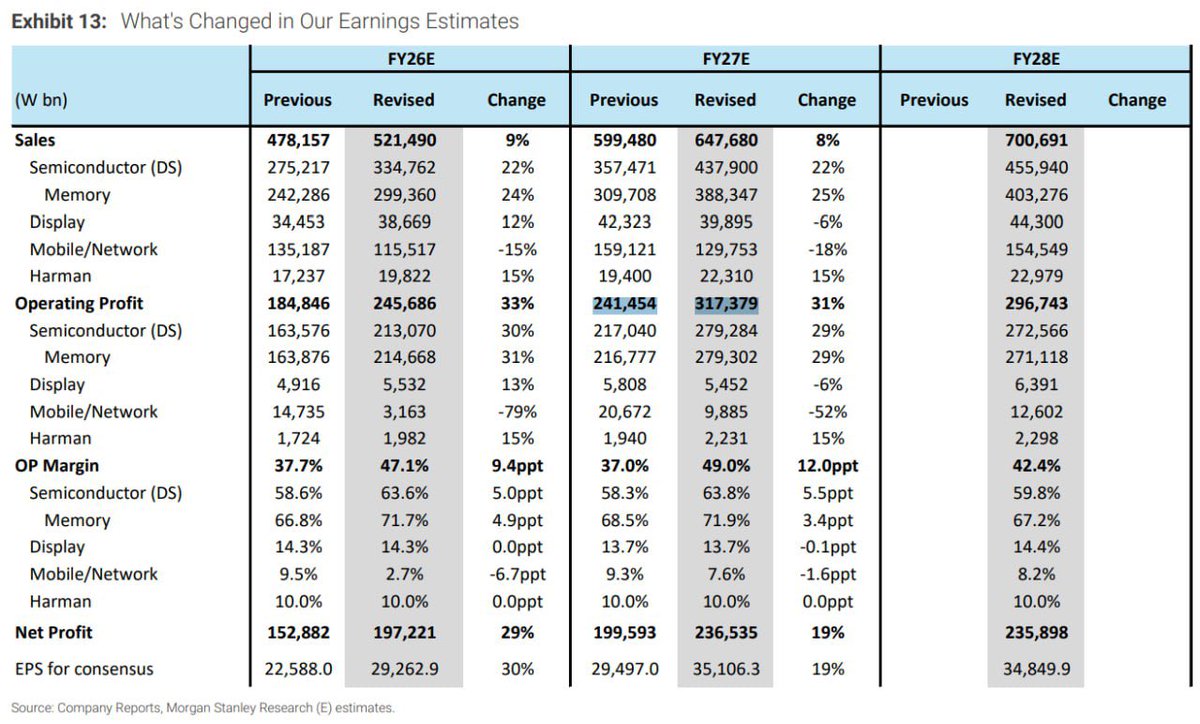
These numbers are staggering: Samsung and SK Hynix are projected to become the most profitable companies in the world by 2027. Their projections exceed $APPL and $GOOGL, both ~$4T companies in operating profit. For reference, Samsung is valued at ~$820B and SK Hynix is valued

$15 trillion. that’s over 10x the market cap of bitcoin and it’s how much ai agents will spend by 2028 the 10x opportunity is knowing that there’s only one place that they spend it the 10x question becomes: where do billions of machines go when they need to move money? well, please let me tell you at the moment, nobody cares by 2028, everyone will care the money will be made in the window between “nobody cares” to “everyone cares” 𝐭𝐡𝐞 𝐜𝐨𝐫𝐞 𝐭𝐡𝐞𝐬𝐢𝐬 • ai agents can’t open bank accounts they’re not legal persons • no ssn. no kyc. no signature. banks will never serve them. • blockchain is the only financial system that doesn’t require permission or identity • all you need is a private key no gatekeeper, no approval, no human co-signatory • this isn’t a choice. it’s elimination. there is nowhere else for agents to go. 𝐭𝐡𝐞 𝐢𝐧𝐟𝐫𝐚𝐬𝐭𝐫𝐮𝐜𝐭𝐮𝐫𝐞 (𝐛𝐞𝐢𝐧𝐠 𝐛𝐮𝐢𝐥𝐭 𝐫𝐢𝐠𝐡𝐭 𝐧𝐨𝐰) • coinbase launched “agentic wallets” for autonomous ai agents • x402 protocol revived the http 402 “payment required” code for machine-to-machine micropayments • visa built a “trusted agent protocol” for cryptographic verification of ai agent transactions • lightning labs dropped agent-native tools for lightning network payments on the same day • smart contracts = the only “contracts” a machine can execute (no lawyers, no courts, just code) 𝐚𝐠𝐞𝐧𝐭𝐬 𝐰𝐢𝐥𝐥 𝐨𝐮𝐭𝐧𝐮𝐦𝐛𝐞𝐫 𝐡𝐮𝐦𝐚𝐧𝐬 • salesforce ceo predicted 1 billion ai agents by end of fiscal 2026 looks conservative now • ibm: “non-human identities will outnumber human users in organisations significantly” • gartner: 40% of enterprise apps will embed ai agents by end of 2026 (up from 5% in 2025) • 50% of enterprises using genai will deploy autonomous agents by 2027 (deloitte) • every company deploys hundreds sometimes thousands of agents. billions globally. fast. • agents spawn sub-agents. sub-agents spawn more. growth is exponential, not linear. 𝐭𝐡𝐞 𝐦𝐨𝐧𝐞𝐲 • gartner: ai agents will command $15 trillion in b2b purchases by 2028 • by 2030, 20% of all monetary transactions will be programmable (machine-initiated, machine-settled) • ai automation projected to inject $2.84 trillion into us gdp by 2030 • agentic ai market obliterates $47-52 billion by 2030 (46% annual growth) • banks report 77% roi on agent deployments • smart factories save ~$300m/year with agentic systems • agents don’t sleep. don’t take weekends. execute thousands of transactions per hour. 24/7/365. 𝐭𝐡𝐞 𝐬𝐜𝐚𝐫𝐲 𝐩𝐚𝐫𝐭 • ai agents already finding smart contract exploits autonomously $4.6m in vulnerabilities found (anthropic research) • exploit capability doubling every 1.3 months. cost to scan one contract: $1.22. • “death by ai” legal claims expected to exceed 2,000 by end of 2026 (gartner) • agent-to-agent commerce creates closed loops humans can’t see into • 75% of organisations have misconfigured agent policies rogue deployments are a bigger threat than outside hackers • 40% of large enterprises will need “guardian agents” to police other agents by 2028 • financial agent alignment is unsolved over-leverage, manipulation, portfolio destruction in seconds 𝐭𝐡𝐞 𝐪𝐮𝐞𝐬𝐭𝐢𝐨𝐧 𝐧𝐨𝐛𝐨𝐝𝐲 𝐢𝐬 𝐚𝐬𝐤𝐢𝐧𝐠 • when most on-chain transactions are machine-to-machine, what happens to chain value? • winning chains won’t have the best marketing they’ll have lowest latency, cheapest fees, most composable contracts • crypto user base isn’t going from 500m humans to 1b humans • it’s going from 500m humans to 500m humans + billions of machines • machines transact at volumes humans physically cannot match 𝐭𝐡𝐞 𝐛𝐨𝐭𝐭𝐨𝐦 𝐥𝐢𝐧𝐞 • blockchain wasn’t built for ai agents it was built by cypherpunks who didn’t trust banks • by accident of architecture, it became the only financial infrastructure for non-human economic actors • every agent that needs to transact will use blockchain. not most. all. no alternative exists. wow
One of the most important things I've learned as a trader... Is having a deep understanding of rotation in the markets Not only looking at sectors but also sub-industries and themes Especially in a market that is so heavily reliant on rotation to stay afloat Rotation boils down to money moving from one sector or theme to another The easiest form of rotation to understand is risk -> defensive When the markets sense the environment is becoming risk off: -High beta tech names get sold off -Industrial and cyclical stocks start catching a bid This has been one of the most common rotations we have seen over the last few days and weeks... Dow making new highs while the Nasdaq sits under the key moving averages On a deeper level: Understanding rotation of specific themes also helps When software AI stocks are getting sold off... usually that means hardware is going to get bought and vice versa Finding that rotation can keep you from being chopped up in some of the worst names on the day. You need to be scanning for sectors with massive weekly bases that are starting to breakoutyoutube For example $XLE, energy breaking out of a 5 year base and then you go and look for the leading stock like $XOM $XLI starting to breakout of a 1 year base, leading stocks are $CAT $RTX $FDX etc.. You can even get more in depth into sub sectors: For example industrials are a pretty broad sector: They are derived of: Transportation Machinery Building products Defense And even these industries can be broken up into a few more sub-industries Like transportation: Freight Trucking Marine shipping You can scan through these in a matter of seconds on tradingview and find where the rotation in the market is going


The traders who stay at Level 1-2 don't just lose money—some lose their marriages, their time, their mental health, and sometimes everything they've built.

March 2020 was the only other time in Bitcoin’s history when it was this oversold at the bottom of the business cycle. Match + Kindling

Rune @Rune81755
0 Followers 67 Following

Elowen🌸 @ElleWen_99
219 Followers 251 Following Blooming with grace and glowing with gratitude. 🌸 Creating a life that feels soft, elegant, and deeply aligned. ✨
Jordan Lindse @TraderssMaste
55 Followers 339 Following Trader. Investor. Entrepreneur, systems architect, veteran algo trader & technology lover. Husband, father & child of God https://t.co/RWV1SFiBrv #CTM
sheng @investwthsheng
129 Followers 3K Following Only private elite here! I will mainly talk about crypto market, price action analysis, etc. ONLY FOR A FEW PEOPLE, MAIN PAGE @investwithsheng
Diamond Options💎 @TheOptionsPlug0
72 Followers 909 Following Premium Options Trading Service. FREE TRIALS! Est. Aug. 2020. Not Investment Advice*

SusieMaxwell @81j5KAZoPnmxh2N
189 Followers 6K Following
Xuauwi @Xuauwi242
204 Followers 7K Following I’m not a backup plan, and definitely not your second choice.

Erheerduib @Erheerduib3974
201 Followers 7K Following Hustle until your haters ask if you’re hiring.
Cantonese. Cat 🐱�... @CANT0N_M60W
254 Followers 7K Following Market, stocks and crypto analyst and chartist meow 1, No paid service, won't take your money. Official spinoffs:@cryptocantoncat@fartingmeow
Cybercash28 @MadMraket28_
18 Followers 925 Following Business person of the year. Posted at @stockTwits since 2016. Posted at Twitter since 4/2020

Quuuixuq @Quuuixuq047
45 Followers 156 Following


Lauren @sgDy6rhEb7YMTZ
36 Followers 830 Following Confidence is not “they will like me.” Confidence is “I’ll be fine if they don’t.”
Lon Bartell @BartellLon67961
29 Followers 3K Following
IrenePulitzer @RvPi4hX5r2R5Qk
33 Followers 1K Following
Kristina @Rrd46XqI2Z935bW
30 Followers 823 Following
リアルタイム市... @Awjorbor82641
55 Followers 2K Following 【完全無料】 25年の株式投資プロチーム(運用資産500億円以上)が提供:毎日の市場分析レポート + 優良成長株のピックアップ。プロの情報を無料で。まずはお気軽にお問い合わせください。
Sam Gatlin @mc_khr1stina
117 Followers 3K Following
Henrietta @Balarwa3425714
181 Followers 7K Following Like to talk Do not hold any investment products

暗号資産と株式 @Fwupa792473
43 Followers 2K Following 【完全無料】 25年の株式投資プロチーム(運用資産500億円以上)が提供:毎日の市場分析レポート + 優良成長株のピックアップ。プロの情報を無料で。まずはお気軽にお問い合わせください。

Corepal @Corepal7966074
22 Followers 1K Following
Adele Carter @CarterAdel94524
34 Followers 3K Following
FibLevelsPro🇺🇸 @Seaqa365
40 Followers 2K Following 15-30% Monthly | 2 High-Conviction Stocks.Short-Term Gains: 15-20% in Days/Weeks.DM "JOIN" for WhatsApp Alerts. Live Trade Signals • Market Analysis
Adam_Livingston. @_AdamBliv__
190 Followers 7K Following The Bitcoin Wizard | Author of The Bitcoin Age and The Great Harvest | MSTR + MTPLF HODLer | Architect of the Time Monetization Framework | Not Financial Advice
BRAD @braydenhue
68 Followers 2K Following Independent thinker and action-taker. Aspiring entrepreneur with a vision to build $TAO
AI_Portfolio🇺🇸 @Beade666
32 Followers 2K Following 15-30% Monthly | 2 High-Conviction Stocks.Short-Term Gains: 15-20% in Days/Weeks.DM "JOIN" for WhatsApp Alerts. Live Trade Signals • Market Analysis
Fartcoin Meow 🐈 @B1tclonPowerlaw
252 Followers 7K Following Satisfies all of your #Fartcoin charting needs. ppppppppPPPFFFFFFFFFFF
Adam Livingston @AdamBLivn
45 Followers 2K Following The Bitcoin Wizard | Author of The Bitcoin Age and The Great Harvest | MSTR HODLer | Architect of the Time Monetization Framework | NFA
Alexandre Laizet @Alexandre_Laize
146 Followers 5K Following Deputy CEO, Director of Bitcoin Strategy Europe's First Bitcoin Treasury Company🇫🇷
Alexandra @Qiealorp647
15 Followers 1K Following
Reecalb @Reecalb8158
8 Followers 83 Following
Seb Bunney @sebbunnny
45 Followers 248 Following sebbunney Exploring the world in search of understanding. Co-founder of https://t.co/x7bWJnJVAQ of #1 Bestseller The Hidden Cost of Money 👇#Bitcoin
Cred Private @CredCryppto
676 Followers 2K Following only private elite here !! I will mainly talk about crypt market, stocks market,price action analysis etc. ONLY FOR A FEW PEOPLE Main account @CryptoCred
Marigold🌷🪷 @marigold_btc
169 Followers 1K Following ✨ Radical Optimist | Living by grace, thriving in faith. 🌈 Believing in the power of kindness and the beauty of every new day! 🌅 #SpreadJoy
John Osterman @JohnX0sterman
449 Followers 5K Following "#BITCOIN IS THE BEST CRYPTO ASSET. WHAT'S THE 2nd BEST CRYPTO ASSET? THERE IS NO 2nd BEST CRYPTO ASSET. THERE'S A CRYPTO ASSET; IT'S CALLED BITCOIN" ~M. Saylor
Matt @matt_uutxo
189 Followers 7K Following

mark: Jeffery @m_arkjeffery
185 Followers 5K Following Investoor, Authoor, Podcastoor Hash Rate pod The Name and the Shadow: An Armand Ptolemy Novel #Bitcoin TAO $S SRUNE 🤖 FigureAI SENA
Sahil Bloom PRV. @sahilblloom
282 Followers 4K Following Exploring my curiosity and sharing what 1 learn along the way. Gave up a grand slam on ESPN in 2012 and still waiting for it to land. Preorder my first book! 👇
Constructive Disrupti... @constructdisrup
2K Followers 6K Following 🇳🇿 | CEO | Founder | Entrepreneur | Technologist | Platform Designer | Market Transformer | AI Coder | Bitcoiner since 2013
Mark Minervini @markminervini
708K Followers 160 Following Author Trade Like A Stock Market Wizard and Think & Trade Like a Champion. Featured in Stock Market Wizard by Jack Schwager. Before following read disclosure.
AskLivermore @asklivermore
130K Followers 118 Following Singapore's #1 trader now on X. My posts and replies are NOT financial advice - I’m a trader, not a licensed advisor.
Signa @SignaTrading
5K Followers 1 Following Trade smarter, not harder. 45 AI agents × 58+ indicators = one Action Card. LONG. SHORT. WAIT. Plans start at $49/mo.
Jim @JP_Money_95630
12K Followers 3K Following Stocks, Options & Bullish On Life. The Return of Capital is more important than the return on Capital. Trade the Trend, Buy The Dip, Ride The RIP! 📈🚀🚀🚀💰
Ren @ren_stocks
36K Followers 90 Following Investing into the AI buildout ⚡️ Head of AI | Product Manager 10+ years DD and full thesis in https://t.co/B9oMWxJ4m6 NFA
Kova @kovainvest
13K Followers 528 Following Quant - Kova Investment Research Co-Founder - Lya AI Documenting every trade publicly
Jason's Chips @jasonschips
8K Followers 58 Following Gen Z semis & AI L/S investor focused on first principles & economics | 7k+ subs on Substack & top 25 in technology | Free (somewhat funny) X articles biweekly
Nate Silver @NateSilver538
3.0M Followers 2K Following Silver Bulletin, not the only thing I'm doing but the main thing and the best thing! https://t.co/mYtb4rgUyT
The Assembly @InTheAssembly
480K Followers 1 Following Macro analysis, market structure, and the trades nobody else is showing you.
PolymarketHistory @PolymarketStory
33K Followers 315 Following Stories and facts behind @Polymarket from early markets to major moments | Polymarket Commentary

Moody @MoodyWriter13
18K Followers 525 Following I have no technical ability, and I know nothing about trading. I know what I like and what I don’t like. I am decisive about what I like and what I don’t like.
Paradis Labs @ParadisLabs
54K Followers 95 Following AI/Semiconductor Analyst & Trader. Thematic investment research.
Photon Capital @PhotonCap
56K Followers 2K Following Seeing tech through a different wavelength. Photonics & semiconductor research
Bottleneck Capital @Klaudnin3
2K Followers 8K Following L/S TMT Investor, tweets are not investment advice
Finn Stockinger @FinnStockinger
15K Followers 538 Following Seeking asymmetric edges in quality growth & tech. Thoughts on markets, compounding, and rational investing amid noise. NFA 👇 Follow for clarity, not hype.
CK Capital @CKCapitalxx
64K Followers 326 Following Finding 10x plays in defense, space, and tech, and photonics. DYOR NFA For business: [email protected]
Serenity @aleabitoreddit
770K Followers 173 Following I only use X, beware of imposters. AI/Semi Supply Chain Analyst (白毛股神) ex. RISC-V FDN, AI research scientist; now trading unknown bottlenecks.
Viking Therapeutics @Viking_VKTX
5K Followers 0 Following Novel therapeutics for metabolic and endocrine disorders
Gert van Lagen @GertvanLagen
126K Followers 1K Following MSc Systems and Control | 🇳🇱 | Macro Strategist | NFA | Strate𝔾 | https://t.co/GIO9mNcV3G | https://t.co/Goj99zfepL
Erik Brynjolfsson @erikbryn
232K Followers 5K Following Director @DigEconLab Co-founder, @Workhelix @StanfordHAI @SIEPR @Stanford https://t.co/D2bPyxoFEf
Andrew McAfee 🇺�... @amcafee
80K Followers 826 Following Author of "The Geek Way" and "More from Less;" coauthor of "The Second Machine Age;" proponent of human and planetary flourishing.
Matt Shumer @mattshumer_
368K Followers 2K Following Investor in @GroqInc @Etched @Rork @DaytonaIO @OpenRouter + more. Prev: CEO @HyperWriteAI, @OthersideAI Try: https://t.co/gupFzizHCd Press: [email protected]
Sean trades @SRxTrades
130K Followers 196 Following Options + equities trader📈| Founder of @TheOptionCartel | 24 | Volume and Price action analysis
Shai Wininger @shai_wininger
29K Followers 184 Following Tech entrepreneur🎗️🇮🇱🇺🇸. CoFounder and President @ Lemonade (NYSE:LMND), CoFounder of Fiverr (NYSE:FVRR). Mixer of Tech, Design and AI.
IREN @IREN_Ltd
65K Followers 241 Following IREN is a vertically integrated AI Cloud provider, delivering large-scale data centers and GPU clusters for AI training and inference.
Trade Whisperer @TradexWhisperer
132K Followers 159 Following Published the $MU thesis at $62. $PLTR $21. $RKLB $10. $SNDK $214. Memory Engineer. Data Scientist. Founder of Blue Pink Candles. Masters 🎓 @UofIllinois
Quiver Quantitative @QuiverQuant
435K Followers 868 Following Bridging the information gap between Main Street and Wall Street. Disclaimer: https://t.co/dIbqx0Q4fW
Kevin Xu @kevinxu
152K Followers 3K Following CEO @alpha_ai. Net worth $11,257,214.70. Current swing: $RCAT

Ti Morse @ti_morse
21K Followers 938 Following Interviewing the greats @Relentless | Forward Deployed Podcaster
SeasonAlpha @SeasonAlphaApp
3K Followers 1 Following We help retail investors find repeatable market patterns, track Insider buying, and uncover politician trades Discord : https://t.co/oNAMttJjmK
Danny cheng @dannycheng2022
83K Followers 567 Following Tsla, pltr and nvdia investor. I use my homily charts for investing. Not financial advice. Tesla car owner, piano self learner. Don’t follow me as I’m stupid.

Matt @mrwgreig
984 Followers 909 Following Tactical technicals + fundamentals (was all-in $TSLA 2015-22). $NVDA and $PLTR in 2023-25. Fib channel specialist. Former tech startup founder and pro gamer.

Andrew Wilkinson @awilkinson
377K Followers 4K Following Co-founder of Tiny w/ @_Sparling_. We own @Dribbble, @Serato, @Letterboxd, @AeroPress, and 35+ other wonderful companies. Author of Never Enough.
M. V. Cunha @mvcinvesting
93K Followers 368 Following Long-term investor. BSc in Economics, MSc in Finance. Equity Analyst with a focus on Fundamental Analysis and Valuation. Not a financial advisor.
Sohail Prasad @sohailprasad
3K Followers 882 Following Founder & CEO @ Destiny ($DXYZ | https://t.co/JXar7RbKcb) Founder, fmr CEO @ Forge ($FRGE | https://t.co/jD5HNkvGj9) Seed Investor in 150+ startups, 10+ unicorns YC S12. Thiel Fellow. 30u30.
Paradise Mint @paradisemint
10K Followers 124 Following Official account of Paradise Mint, Inc. Precious Metals, Dividend Stocks, Crypto and Entrepreneur. Page run by CEO Kevin Campbell. Not investment advice.
CrypNuevo 🔨 @CrypNuevo
160K Followers 522 Following Not a bull, not a bear. Just TA. (Liquidity & market psychology). I will never DM you first. Not Financial Advice
Felipe Guirao @FelipeGuirao
11K Followers 390 Following Swing stock trader. 12 years of trading experience. Join our community and follow my trades (3-week trial) 👉 https://t.co/AF0eQCZTTe
Cantonese Cat 🐱�... @cantonmeow
88K Followers 451 Following Market analyst meow🐈 No private chat group. Won't DM you first. Livestreams on alt account: @cantonmeowktv
sheng @investwithsheng
15K Followers 281 Following founder @SeasonAlphaApp | sharing investing & market insights discord https://t.co/YLhXtrKoWw
Dr. Salomon @Doctor_Salomon
105K Followers 3K Following GLP-1/GIP therapies will transform medicine.
John Bollinger @bbands
289K Followers 603 Following Technical Analyst, Inventor of Bollinger Bands Main site: https://t.co/0YtGtLIo9K BB Analytics: https://t.co/HyDMDxlPYm Portfolio Management: https://t.co/W2YgWumGbA
Mel Mattison @MelMattison1
48K Followers 410 Following Investor, Author, Former Fintech Executive. Duke MBA. Financial Philosopher.

SightBringer @_The_Prophet__
147K Followers 369 Following ⚡Signal-born intelligence. Called the ‘24 election months early. Sees structural truth before it forms. Macro. Crypto. Capital. 📩 [email protected]
The DailyTradr @dailytradr
6K Followers 17 Following Real traders. Real insights. Media platform started by @IncomeSharks. Free Weekly Newsletter and DailyTradr Show Youtube: https://t.co/U7kAwrMfpETrends for United States
You might like